Polypropylene (PP) is one of the most widely used plastics in bathroom product manufacturing due to its excellent chemical resistance, lightweight characteristics, durability, and cost efficiency. In bathroom OEM development, PP is commonly selected for products and components requiring reliable performance, high-volume production capability, and competitive cost structures.
This PP material guide from
JEKARE, a professional bathroom OEM plastic parts supplier, explains polypropylene properties, structural considerations, injection molding performance, and typical bathroom applications including toilet seats, functional components, and accessories.
1. PP Material Properties Overview
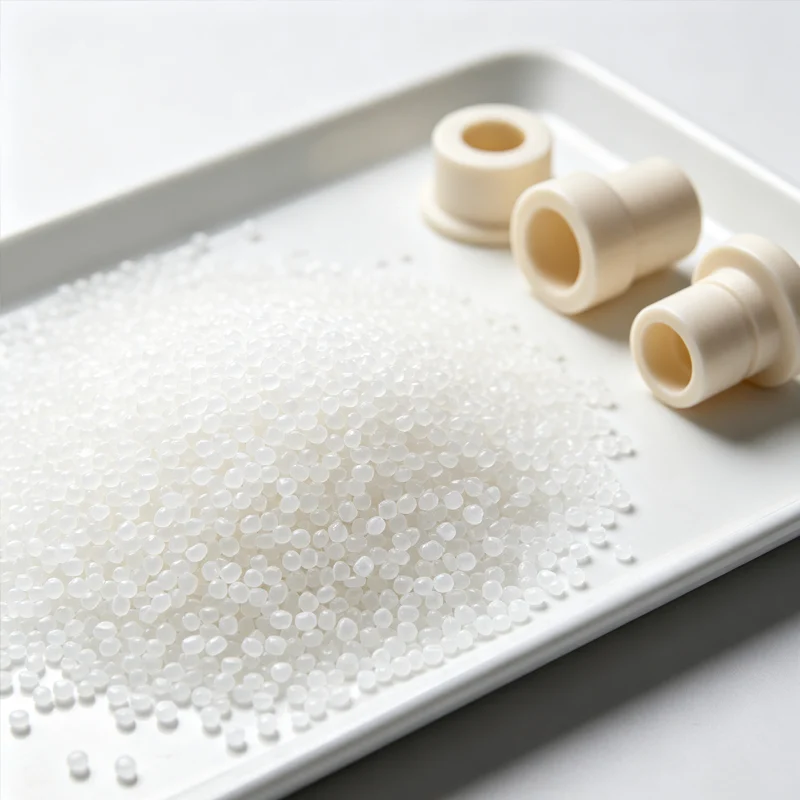
Polypropylene (PP) is a semi-crystalline thermoplastic known for its excellent chemical resistance, low density, flexibility, and efficient processing characteristics.
PP Material Performance Summary Table
| Performance Factor |
PP Performance Level |
| Chemical resistance |
Excellent |
| Moisture resistance |
Excellent |
| Impact resistance |
Good |
| Flexibility |
Excellent |
| Heat resistance |
Good |
| Surface appearance |
Medium |
| Dimensional stability |
Medium |
| Injection molding operability |
Excellent |
| Cost level |
Low |
Quick guidance: choose PP when your product requires cost-efficient mass production, outstanding chemical resistance, lightweight structure, and stable impact performance for daily bathroom use.
2. Mechanical Performance & Durability
PP balances flexibility and long service life, perfectly matching daily-use bathroom hardware.
Impact Resistance
PP features flexible molecular chains to absorb impact force, effectively reduce cracking risk. Widely applied to standard toilet seats and daily bathroom accessories.
Flexibility & Fatigue Resistance
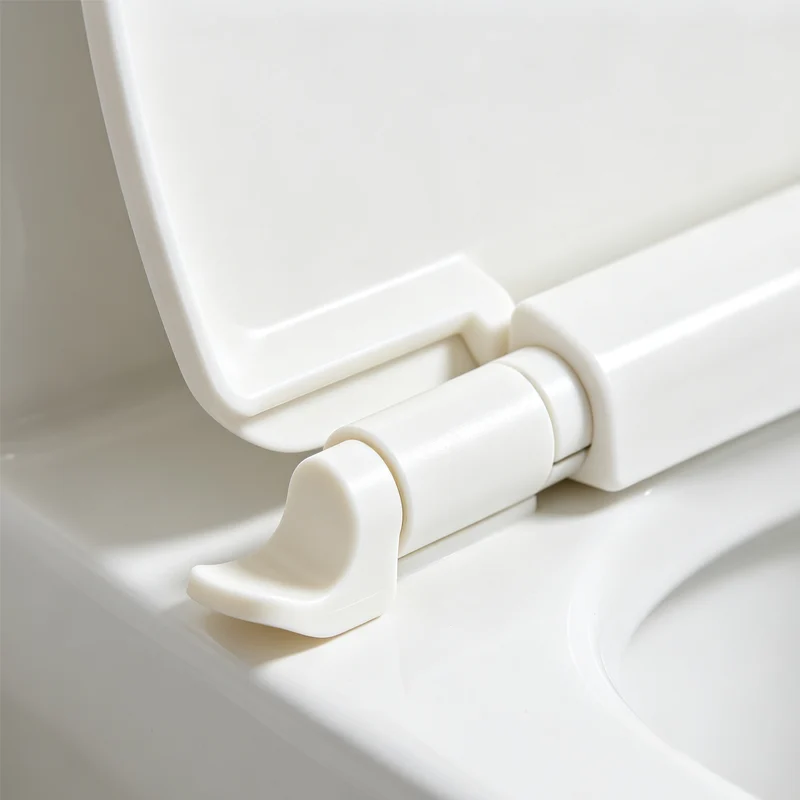
PP’s core advantage is superior anti-fatigue performance, ideal for living hinge structures with repeated opening and closing cycles.
- Stable bending performance for thousands of cycles
- Low risk of stress cracking
- Smooth repeated movement without breakage
Structural Design Notes
Although PP has good toughness, rib reinforcement, uniform wall thickness and enlarged mounting areas must be designed to avoid permanent deformation after long-term load.
3. Chemical & Moisture Resistance
Bathroom parts are constantly exposed to tap water, shower steam and various cleaning detergents, while PP delivers stable long-term performance.
- Ultra-low water absorption rate, no size expansion in humid environments
- Resists most household cleaners, disinfectants and weak saline water
Best application scenarios: standard toilet seat structures, water-contact internal functional parts, bathroom storage accessories.
4. Heat Resistance & Temperature Performance
PP can withstand regular hot water temperature in daily bathrooms and meets the working temperature requirements of ordinary bathroom accessories.
- Suitable products: entry & mid-range toilet seats, bathroom storage holders, non-heated internal plastic components.
- Engineering Notes: For smart toilet heating modules, electronic housings and long-term high-temperature components, high-performance engineering plastics like PBT or PC are recommended for better thermal stability.
5. PP Injection Molding Performance
PP is the preferred mass-production plastic for OEM factories thanks to excellent fluidity and short molding cycles.
Shrinkage Control (Key Molding Challenge)
As a semi-crystalline plastic, PP has higher shrinkage than ABS, which easily causes product warpage and assembly gaps without optimized design.
Solutions: balanced wall thickness, professional mold flow analysis, optimized gate layout and uniform cooling system, supported by our precision mold development team.
Surface Appearance Limitation
PP natural gloss is lower than ABS. If high-gloss decorative appearance is required, you can choose ABS material introduced in
ABS shower head material guide or add texture surface design for PP products.
6. PP Structural Design Considerations
Wall Thickness Design
Avoid overly thick or uneven plastic walls to reduce shrinkage warpage and improve molding yield.
Rib Design
Reasonable rib layout improves product rigidity without excessive material consumption. Rib thickness and height ratio need to follow standard PP design specifications.
Living Hinge Design
PP is the mainstream material for integrated living hinges, supporting millions of repeated opening and closing cycles without fracture.
7. Typical PP Applications in Bathroom OEM Products
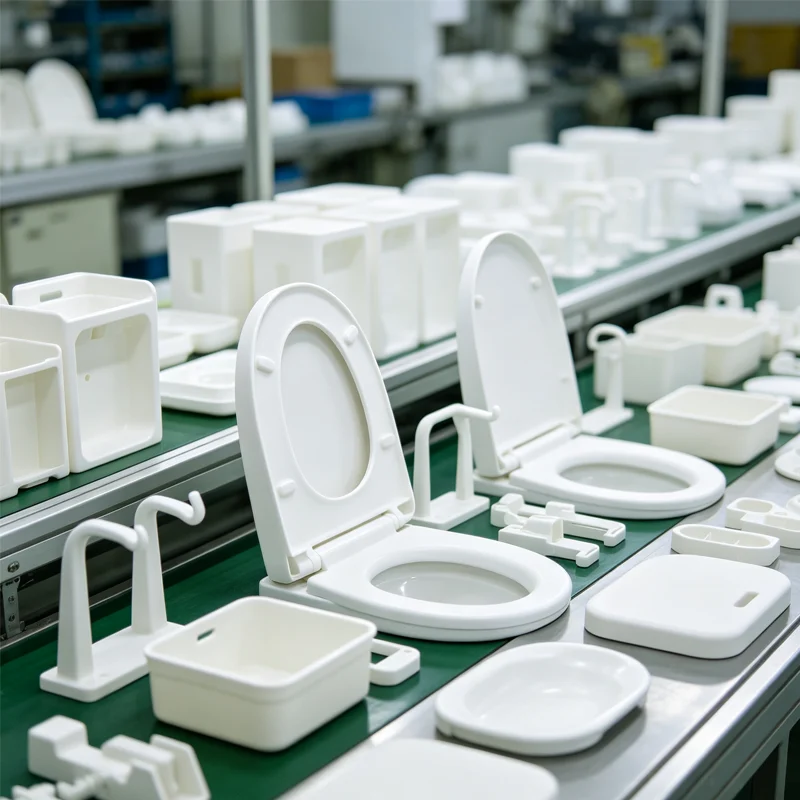
- Toilet Seat: main seat structure, internal supporting frames, standard functional components
- Bathroom Accessories: storage boxes, towel holders, cosmetic containers
- Shower Components: non-pressure internal functional plastic parts
- Faucet Components: ordinary internal non-bearing plastic parts
- Plumbing Accessories: chemical-resistant connecting components
8. PP vs ABS vs PC Performance Comparison Table
| Factor |
PP |
ABS |
PC |
| Chemical resistance |
Excellent |
Good |
Good |
| Impact resistance |
Good |
Good |
Excellent |
| Flexibility |
Excellent |
Medium |
Medium |
| Surface appearance |
Medium |
Excellent |
Excellent |
| Heat resistance |
Good |
Medium |
Excellent |
| Cost level |
Low |
Medium |
Medium-High |
| Injection molding difficulty |
Easy |
Easy |
Strict parameter control required |
| Typical product positioning |
Mass-market cost-effective parts |
Mid-high decorative appearance parts |
High-impact transparent electronic covers |
Material Selection Guidance:
- Pick PP: priority on low cost, mass order volume and strong chemical resistance
- Pick ABS: priority on smooth surface, plating & color customization effect
- Pick PC: priority on ultra-high impact resistance and transparent design
9. PP Product Quality Validation
- Mechanical testing: load bearing test, drop impact test, hinge fatigue cycle test
- Environmental testing: chemical soaking test, heat aging test, long-term moisture exposure test
- Dimensional inspection: critical size measurement, assembly matching verification
Frequently Asked Questions About PP Materials
Why is PP widely used for standard toilet seats?
PP owns lightweight texture, good anti-impact performance, outstanding chemical resistance and ultra-low production cost, which is the mainstream material for large-volume entry-level toilet seat OEM orders. Compare with other seat materials in our
Plastic Toilet Seat Material Selection Guide.
Which is better, PP or ABS for bathroom products?
No absolute superior material. PP fits cost-sensitive mass functional parts; ABS is more suitable for decorative products requiring chrome plating, matte black and customized color surface finishing.
Can PP be applied to high-end bathroom products?
Yes, if product core demand is function and cost control. If premium surface texture and multi-layer coating are required, ABS or PBT will be a better match.
What is the biggest difficulty of PP injection molding?
High shrinkage rate easily causes product warpage. Optimized mold cooling system and uniform wall thickness design are essential to solve this problem.
JEKARE PP Material Engineering Support
JEKARE provides full PP plastic OEM development service for global bathroom brands:
- Professional PP material grade selection
- Product structural optimization & DFM review
- Mold flow simulation analysis
- Stable mass injection molding production
- Full dimensional & environmental performance testing
- Complete cost optimization scheme for high-volume orders
Our ISO 9001 certified engineering team supports full-cycle development from design draft to finished product delivery.
Need Help Selecting Suitable PP Material Grade?
Share your product drawing, cost budget and application environment with our technical team.
Request a Material Evaluation →
Related Resources
- Material Guides
- Plastic Toilet Seat Material Selection Guide
- PBT Material Guide for Bathroom Products
- PC Material Guide for Bathroom Products
- ABS vs Stainless Steel Shower Head Guide
- Silicone Valve Material Selection Guide
- Chrome Plating Guide for Bathroom Hardware
- PVD Coating vs Electroplating Comparison Guide