Material selection is one of the most critical decisions in toilet seat development. The right plastic material directly affects product strength, surface appearance, durability, comfort, manufacturing efficiency, and long-term user experience.
Different toilet seat applications call for different material solutions — standard toilet seats, premium bathroom products, soft-close seats, and smart bidet toilet seats each carry different engineering requirements. This toilet seat material selection guide from
JEKARE, a professional
OEM toilet seat manufacturer, helps bathroom brands and product teams understand the advantages and limitations of PP, ABS, UF, and PBT, so you can choose the right solution for your OEM toilet seat program.
1. Polypropylene (PP) Toilet Seat Material
Cost-Effective Solution for High-Volume Toilet Seat Programs
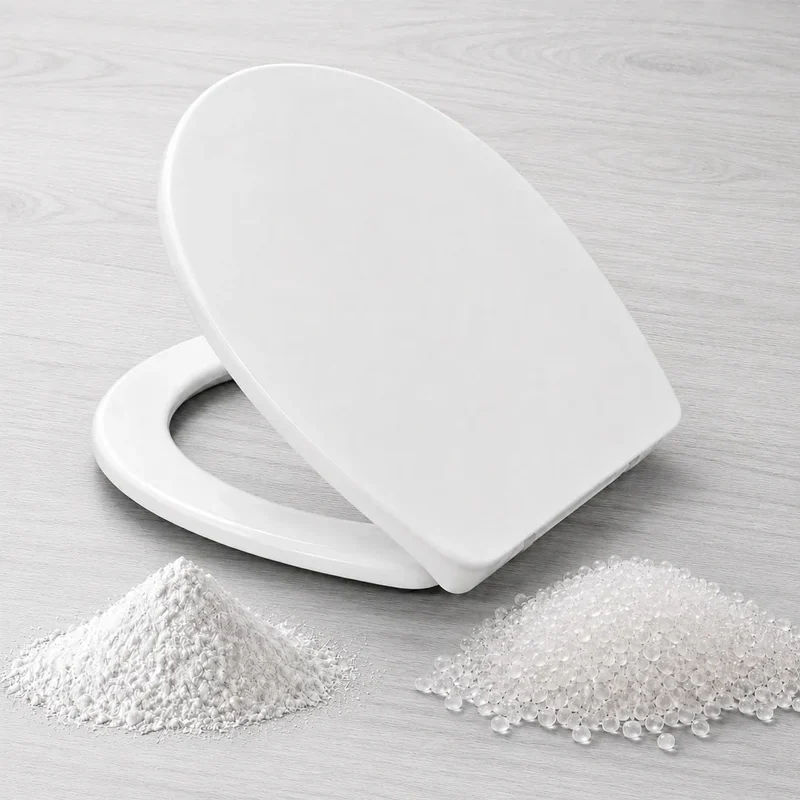
Polypropylene (PP) is one of the most widely used materials in toilet seat manufacturing, valued for its lightweight structure, chemical resistance, and excellent injection molding performance.
Advantages of PP toilet seat material:
- Lightweight performance: Reduced product weight, lower shipping cost, comfortable feel, efficient handling
- Excellent chemical resistance: Stands up to water, cleaning chemicals, household detergents, and moisture
- Good injection molding capability: Stable mass production, efficient cycle times, complex structural designs, cost-effective tooling
Best suited for: standard toilet seats, commercial bathroom projects, large-volume OEM programs, entry- and mid-range product lines.
Engineering considerations: structural reinforcement design, long-term deformation control, surface texture requirements, hinge mounting strength matched with our soft-close hinge assembly solutions.
2. ABS Toilet Seat Material
Flexible Design Material for Customized Bathroom Products
ABS offers a strong balance of appearance, impact resistance, and manufacturing flexibility — making it a preferred choice for customized toilet seat OEM designs.
Advantages of ABS toilet seat material:
- Excellent surface appearance — smooth surface quality, premium visual finish, good coating compatibility, easy color customization
- Good impact resistance — better toughness than many standard plastics, reliable daily-use performance, good structural stability
- Design flexibility — supports complex shapes, ergonomic designs, and customized brand products
Best suited for: premium toilet seats, smart toilet seat covers, bidet toilet seat housings, customized OEM designs.
Engineering considerations: UV resistance, chemical resistance, heat exposure, surface durability.
3. Urea Formaldehyde (UF) Toilet Seat Material
Premium Hard-Surface Material for Traditional Bathroom Products
UF has traditionally been the material of choice for premium toilet seats thanks to its ceramic-like appearance and excellent surface hardness.
Advantages of UF toilet seat material:
- Premium appearance — ceramic-like surface, high-gloss finish, premium product feel
- Excellent surface hardness — strong scratch resistance, good wear resistance, long-term appearance stability
Best suited for: premium residential toilet seats, European bathroom collections, high-end traditional designs.
Engineering considerations: UF requires careful design control due to higher material brittleness, impact sensitivity, and specific mold development requirements.
4. PBT Engineering Plastic Toilet Seat Material
Advanced Material Solution for Smart and Heated Toilet Seat Systems
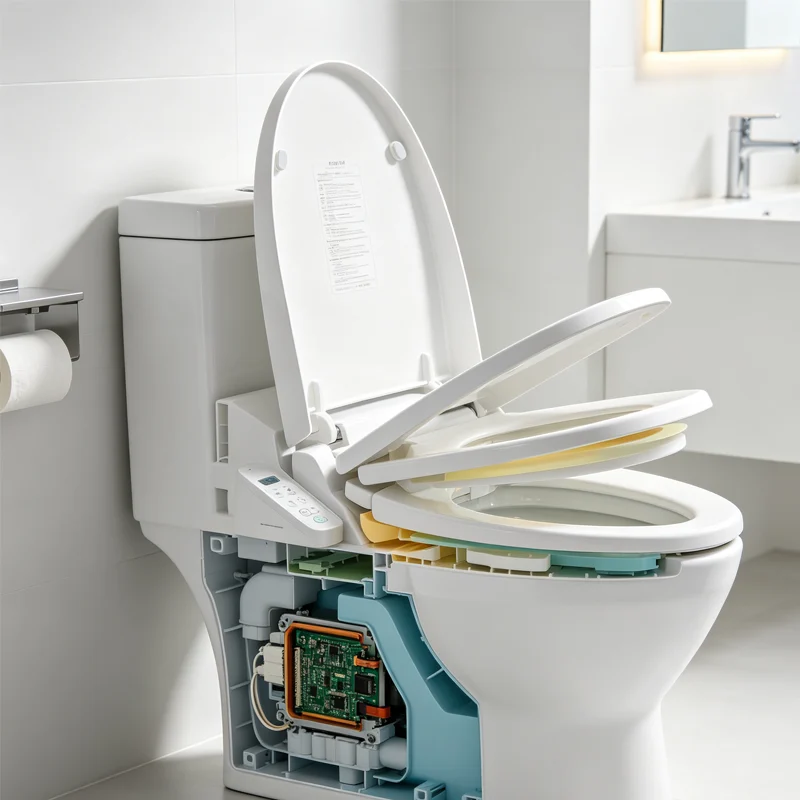
Polybutylene Terephthalate (PBT) is an advanced engineering plastic increasingly used in high-performance smart toilet seat applications requiring excellent dimensional stability, heat resistance, and mechanical performance.
Advantages of PBT toilet seat material:
- Excellent heat resistance — ideal for heated toilet seats, bidet toilet systems, electronic bathroom products
- Superior dimensional stability — helps maintain precise assembly, stable component fitting, long-term reliability
- High mechanical strength — suited to structural components, precision parts, load-bearing applications
- Excellent chemical resistance — stands up to bathroom cleaners, moisture, and environmental aging
Best suited for: heated bidet toilet seats, smart toilet seat structures, electronic housings, precision bathroom components.
Engineering considerations: glass fiber reinforcement may be required; injection parameters must be tightly controlled; surface appearance requirements should be evaluated; material compatibility must be confirmed.
5. Toilet Seat Material Comparison: PP vs ABS vs UF vs PBT
- PP: Strength Good, Appearance Medium, Heat Resistance Good, Cost Level Low, Typical Application Standard toilet seats
- ABS: Strength Good, Appearance Excellent, Heat Resistance Medium, Cost Level Medium, Typical Application Customized products
- UF: Strength High, Appearance Excellent, Heat Resistance Good, Cost Level Medium-High, Typical Application Premium toilet seats
- PBT: Strength Excellent, Appearance Good, Heat Resistance Excellent, Cost Level High, Typical Application Smart / heated systems
6. How to Select the Right Toilet Seat Material
The best material depends on product positioning, manufacturing requirements, and target market.
By Product Positioning
Standard Product Line Recommended: PP Focus: cost efficiency, large-volume production
Premium Bathroom Brand Recommended: UF or ABS Focus: appearance, surface quality, user experience
Smart Bathroom System Recommended: ABS or PBT Focus: heat resistance, dimensional stability, electronic integration
Manufacturing Requirements to Consider
- Injection molding capability
- Tooling cost
- Production volume
- Assembly requirements
- Quality consistency
Market Requirements to Consider
Different export markets may require material compliance documentation, chemical resistance validation, long-term durability data, and surface performance testing. All verification work can be completed in our
quality testing laboratory.
7. Toilet Seat Plastic Material Testing
Material selection should always be supported by performance validation before mass production:
- Mechanical testing: load testing, impact testing, hinge durability testing, structural strength evaluation.
- Environmental testing: chemical resistance testing, aging testing, heat resistance testing, moisture exposure testing.
- Appearance testing: color consistency, surface defect inspection, scratch resistance, gloss evaluation.
8. Material Selection Impact on OEM Toilet Seat Development
Choosing the correct plastic material helps bathroom brands achieve:
- Better product performance
- Stable injection molding production
- Reduced tooling risks
- Improved customer experience
- Optimized product cost
Frequently Asked Questions About Toilet Seat Materials
What is the best material for a standard toilet seat?
PP (polypropylene) is the most common choice for standard toilet seats because of its low cost, chemical resistance, and efficient injection molding for large-volume production.
Which material is best for a heated or smart toilet seat?
PBT engineering plastic is preferred for heated and smart toilet seats due to its excellent heat resistance, dimensional stability, and mechanical strength around electronic components.
Is UF or ABS better for a premium toilet seat?
Both work well for premium products. UF offers a ceramic-like, high-gloss finish with excellent scratch resistance but is more brittle. ABS offers better impact resistance and more design/color flexibility for customized shapes.
Can toilet seat materials be customized for different export markets?
Yes. JEKARE supports material compliance documentation, chemical resistance validation, and durability testing tailored to different regional market requirements as part of OEM development. You can discuss your market demands via our
contact us page.
JEKARE Toilet Seat Material Engineering Support
JEKARE supports complete toilet seat OEM development, including:
- Plastic material selection
- Product structure optimization
- Mold development
- Injection molding
- Soft-close mechanism integration
- Surface finishing
- Quality validation
- Mass production support
Our engineering team helps global bathroom brands select the right materials and manufacturing solutions for reliable, market-ready toilet seat products — backed by ISO 9001:2015 certified manufacturing.
Need Help Selecting Toilet Seat Materials?
Share your product concept, target market, or design requirements with our engineering team.
Request a Material Evaluation →
Related Resources
- Silicone Valve Material Selection Guide
- Soft-Close Hinge Mechanism Engineering Guide
- Shower Head OEM & ODM Manufacturing Guide