Call us: +86-18965139230 | Mail to us: info@jekare.com

Engineering plastics are designed for applications where standard plastics cannot provide sufficient mechanical strength, heat resistance, dimensional stability, or wear performance. In bathroom product development, engineering plastics are increasingly used for precision components, smart bathroom systems, moving mechanisms, and high-performance structural parts.
This engineering plastic guide from JEKARE compares the most commonly used engineering plastics — POM, PA (Nylon), PBT, and PC — and explains how material properties influence product reliability, manufacturing performance, and long-term durability.
Each engineering plastic provides a different balance of strength, temperature resistance, chemical resistance, and processing performance.
| Factor | POM | PA (Nylon) | PBT | PC |
|---|---|---|---|---|
| Mechanical strength | Excellent | Excellent | Very Good | Excellent |
| Wear resistance | Excellent | Good | Good | Medium |
| Dimensional stability | Excellent | Medium | Excellent | Good |
| Heat resistance | Good | Excellent | Excellent | Excellent |
| Chemical resistance | Excellent | Good | Excellent | Good |
| Moisture absorption | Very Low | High | Low | Low |
| Impact resistance | Good | Excellent | Good | Excellent |
| Injection molding | Excellent | Good | Good | Requires control |
| Typical positioning | Precision moving parts | High-strength structural parts | Heat-resistant precision parts | Impact & heat applications |
Engineering plastics are selected when bathroom components require higher mechanical performance than standard plastics can deliver.
Components such as hinges, mounting structures, internal mechanisms, and support brackets require high tensile strength, fatigue resistance, and stable dimensions.
For parts with repeated movement:
Glass fiber reinforced materials can further improve mechanical strength, dimensional stability, heat resistance, and structural rigidity.
Typical examples include:
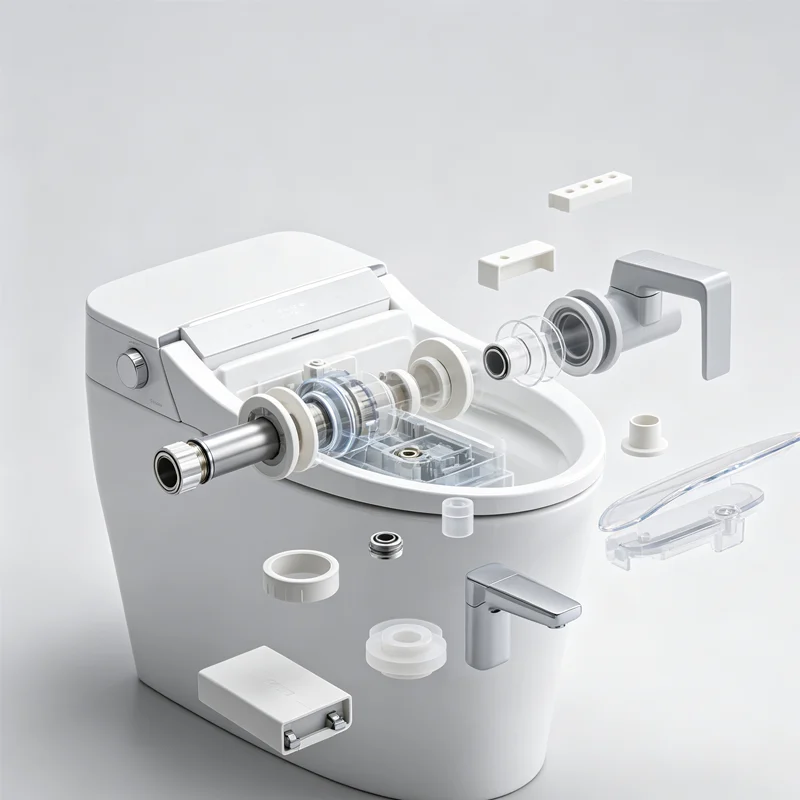
Bathroom products increasingly include heating systems and electronic functions, making thermal performance an important material selection factor.
| Material | Performance | Applications |
|---|---|---|
| POM | Good temperature resistance, stable mechanical properties | Moving mechanisms, precision internal components |
| PA (Nylon) | Excellent heat resistance, high mechanical strength (moisture absorption affects dimensions) | Structural parts, high-load components |
| PBT | Excellent thermal stability, low moisture absorption | Heated toilet seats, smart bathroom components, electrical housings |
| PC | Excellent heat resistance, high impact performance | Electronic covers, transparent components, high-temperature areas |
For precision bathroom components, dimensional stability directly affects assembly accuracy, product reliability, and long-term performance.
| Material | Dimensional Stability |
|---|---|
| POM | Excellent |
| PBT | Excellent |
| PC | Good |
| PA | Medium |
PA absorbs more moisture than other engineering plastics, which can cause dimensional changes, tolerance variation, and assembly issues over time.
PA components therefore require:
Some bathroom components require repeated movement and low-friction performance.
POM (Acetal) is the best choice for:
It provides:
PA (Nylon) is suitable for:
It provides:
However, it has less inherent wear resistance than POM in pure sliding-friction scenarios.
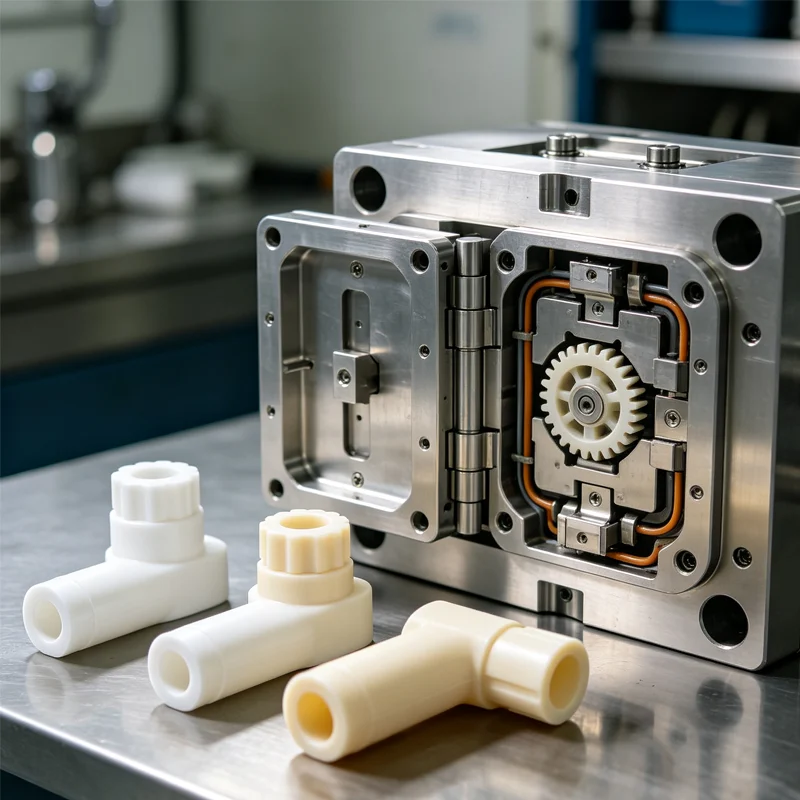
Material selection must match manufacturing capability.
| Material | Advantages | Key Process Considerations |
|---|---|---|
| POM | Excellent flow performance, high precision molding | Processing temperature control, mold venting |
| PA | Good general moldability | Moisture drying requirements, shrinkage control, dimensional compensation |
| PBT | Good precision molding | Drying control, crystallization control, precision tooling |
| PC | Good moldability with proper control | Strict drying control, higher processing temperature, mold temperature management |
| Material | Common Applications |
|---|---|
| POM | Hinges, gears, moving mechanisms, precision parts |
| PA | Structural brackets, reinforced components, load-bearing parts |
| PBT | Heated toilet seats, smart bathroom components, electrical parts |
| PC | Transparent covers, electronic housings, impact-resistant components |
For demanding applications, reinforced engineering plastics provide improved performance:
| Grade | Typical Applications |
|---|---|
| PA GF30% | Structural components, mechanical supports |
| PBT GF30% | Precision heat-resistant components, electrical applications |
| PC GF | High-impact structural components |
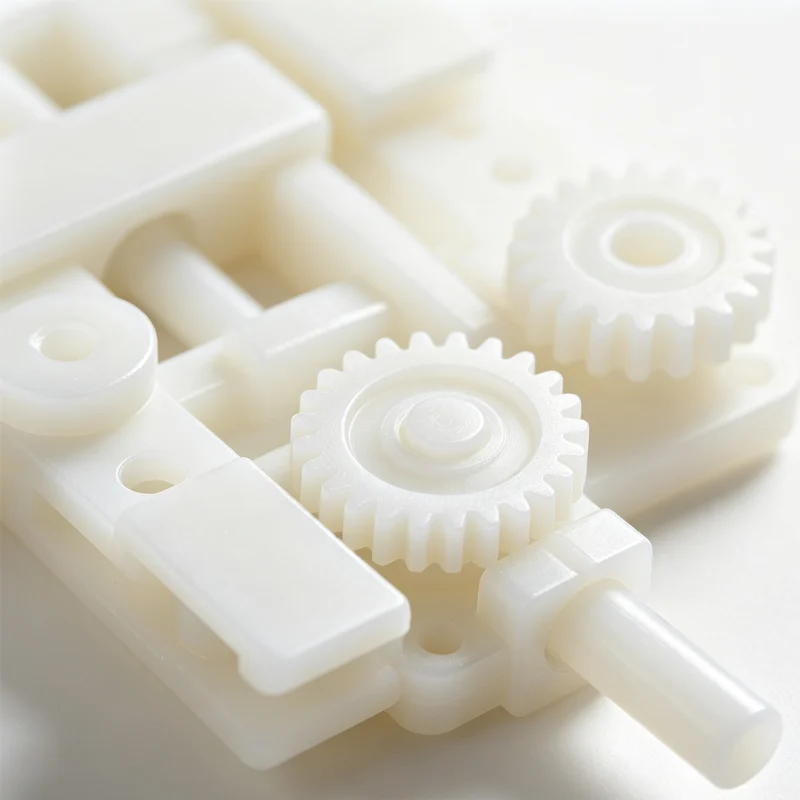
Standard plastics such as PP and ABS focus on cost efficiency and general applications.
Engineering plastics provide:
for demanding components.
It depends on the application.
POM is preferred for:
PA is preferred for:
PBT provides:
These characteristics make it suitable for smart bathroom applications.
See JEKARE’s Plastic Toilet Seat Material Selection Guide for how PBT compares with PP, ABS, and UF specifically for toilet seat development.
In some applications, yes.
Engineering plastics can replace metal when requirements include:
However, material selection still depends on load, environment, and lifecycle requirements specific to the component.
JEKARE supports engineering plastic selection and development for advanced bathroom OEM products, including:
Our engineering team helps global bathroom brands select the right engineering plastics for reliable, cost-effective, and scalable OEM production — backed by ISO 9001:2015 certified manufacturing.
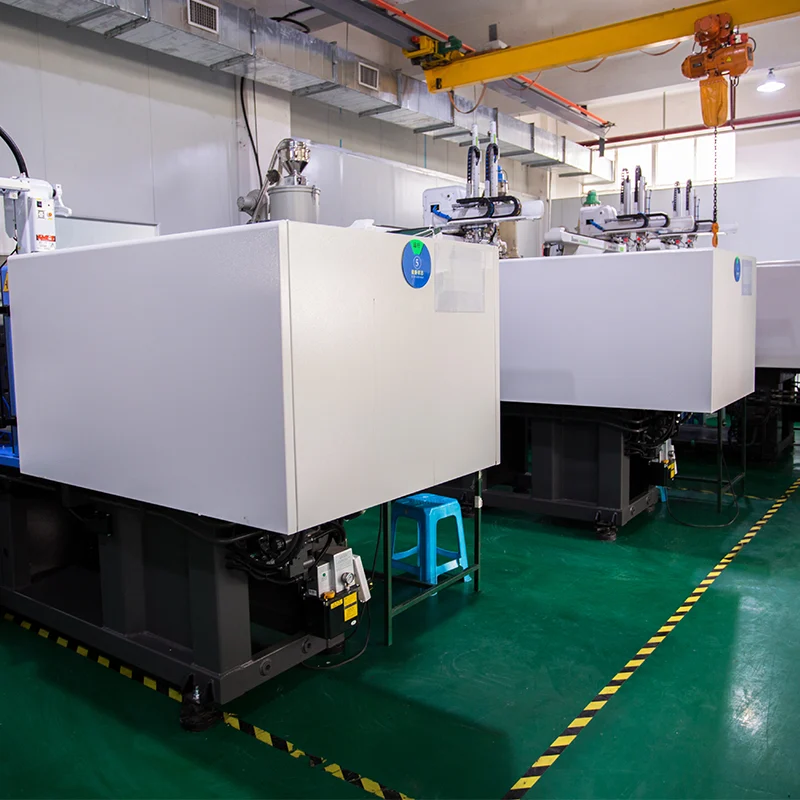
Share your product design, performance requirements, and application conditions with our engineering team.
We can recommend suitable engineering plastics and manufacturing solutions for your bathroom OEM project.