Call us: +86-18965139230 | Mail to us: info@jekare.com

Choosing the right material is critical to bathroom product performance, durability, appearance, and long-term reliability. This comprehensive resource library from JEKARE, professional bathroom OEM manufacturer, helps bathroom brands and product teams understand material options, application requirements, and manufacturing considerations when developing customized bathroom products.
From plastics and metals to silicone sealing materials and surface treatments, these guides provide practical engineering insights for OEM product development.
Selecting the right engineering plastics for bathroom applications
Plastic materials play an important role in bathroom product design, affecting strength, appearance, chemical resistance, and production stability.
Covers: ABS vs PP vs PC material selection, structural requirements for bathroom components, impact resistance and durability considerations, heat and moisture resistance, injection molding performance. Typical applications: toilet seats, shower components, faucet covers, bathroom accessories.
Why ABS is widely used in bathroom product manufacturing
ABS is one of the most common materials for bathroom products due to its excellent balance of strength, appearance, and processability.
Covers: ABS material properties, surface finishing compatibility, chrome plating suitability, impact resistance, injection molding considerations. Typical applications: shower heads, shower handles, faucet covers, bathroom components.
Understanding polypropylene for durable bathroom components
PP provides excellent chemical resistance and lightweight performance for specific bathroom applications.
Covers: chemical resistance performance, moisture resistance, fatigue resistance, living hinge design considerations, cost-effective product development. Typical applications: toilet seat components, internal parts, functional plastic components.
Selecting high-performance plastics for advanced bathroom systems
Certain bathroom applications require enhanced mechanical performance and dimensional stability.
Covers: PA (Nylon) applications, PC material advantages, POM material properties, temperature resistance, wear resistance requirements. Typical applications: mechanical components, hinges, moving parts, precision assemblies.
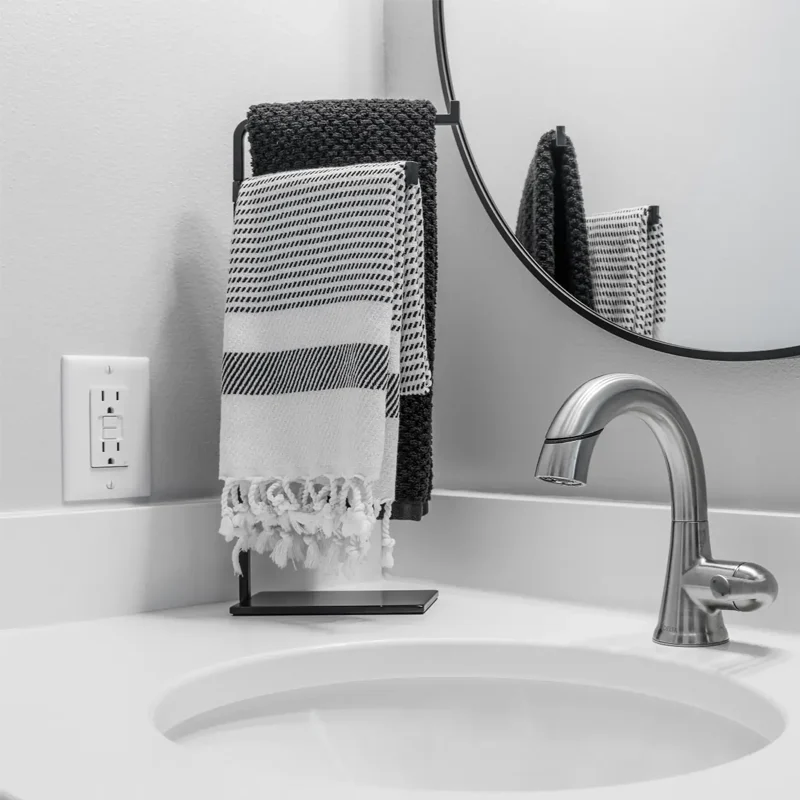
Brass and stainless steel are the two primary metal materials used in premium faucet manufacturing — brass for its machinability and finishing versatility, stainless steel for its corrosion resistance and modern appearance.
Full engineering coverage of these materials — including 304 vs 316 stainless steel grades, lead-free brass requirements, machining performance, and surface finishing compatibility — is available in JEKARE’s dedicated faucet material guides:
Silicone materials are widely used where flexibility, sealing performance, and durability are required — including Shore A hardness selection, LSR injection molding, and VMQ/HCR material types for valves and sealing components.
Full engineering coverage — including Shore A hardness selection, LSR injection molding, and material comparison tables — is available in JEKARE’s:

Surface finishing directly impacts product appearance, corrosion resistance, and brand perception — covering chrome plating, PVD coating, matte finishing, spray coating, and adhesion/durability testing.
Full engineering coverage of every finishing technology is available in JEKARE’s dedicated hub:
Ensuring bathroom materials meet global market requirements
Material compliance is essential for bathroom products entering international markets.
Covers: REACH requirements, RoHS compliance, lead-free material considerations, material traceability, supplier documentation. Typical relevance: any brand exporting to the EU, US, or other regulated markets requiring documented material compliance.

Choosing the right material for your bathroom product should account for:
The right material choice helps brands achieve:
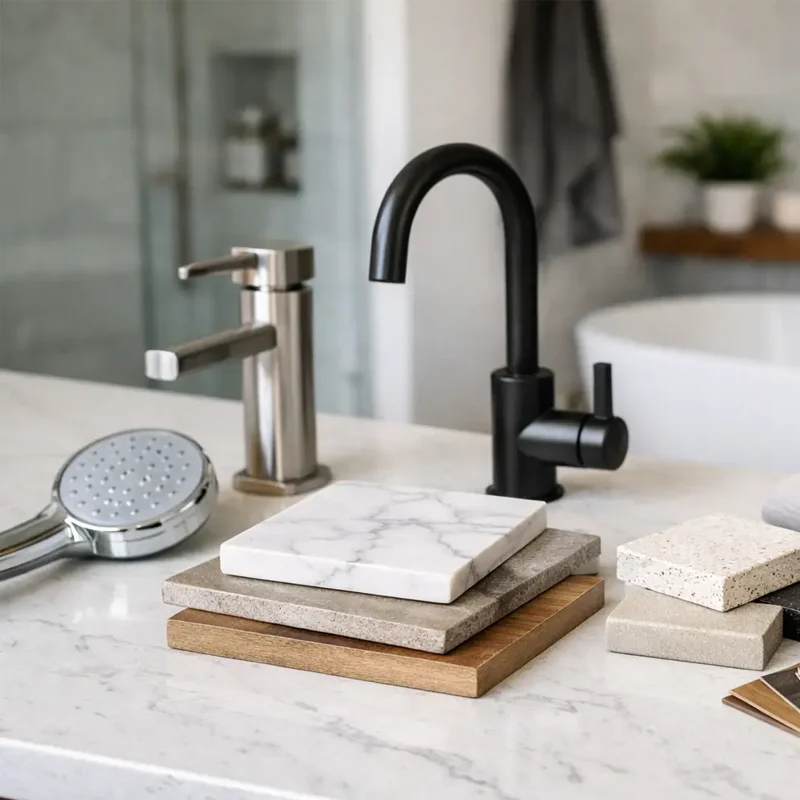
What plastic is best for bathroom products: ABS, PP, or PC? It depends on the application. ABS offers the best balance of appearance and impact resistance for visible components like covers and handles. PP is more cost-effective with excellent chemical resistance, suited to standard-volume components. PC (polycarbonate) and other engineering plastics like POM and PA are reserved for precision or high-mechanical-load parts such as hinges and moving components.
Do I need RoHS or REACH compliance for bathroom products? If you’re exporting to the EU, RoHS and REACH compliance documentation is typically required. Requirements vary by material and component — brass parts commonly need lead-free compliance documentation, while plastics and coatings may need separate substance declarations. Confirm specific requirements early with our quality testing team.
Where can I find brass vs. stainless steel comparison details? See JEKARE’s dedicated Brass vs Stainless Steel Faucet Material Guide and the broader Faucet Material Comparison Guide for full engineering comparisons, grade selection (304 vs 316), and surface finish compatibility.
Is silicone or plastic better for sealing components? Silicone is generally preferred for dynamic sealing applications (valves, flexible seals) due to its elastic recovery and temperature resistance, while engineering plastics like POM are better suited to rigid, low-friction moving parts. See JEKARE’s Silicone Valve Material Selection Guide for detailed hardness and material-type guidance.
JEKARE supports material selection and evaluation across the full range of bathroom product materials, including:
Our engineering team helps global bathroom brands select the right materials and manufacturing solutions for reliable OEM products — backed by ISO 9001:2015 certified manufacturing.
Need Help Selecting Materials for Your Bathroom Product? Share your product design, application requirements, or existing samples with our engineering team.