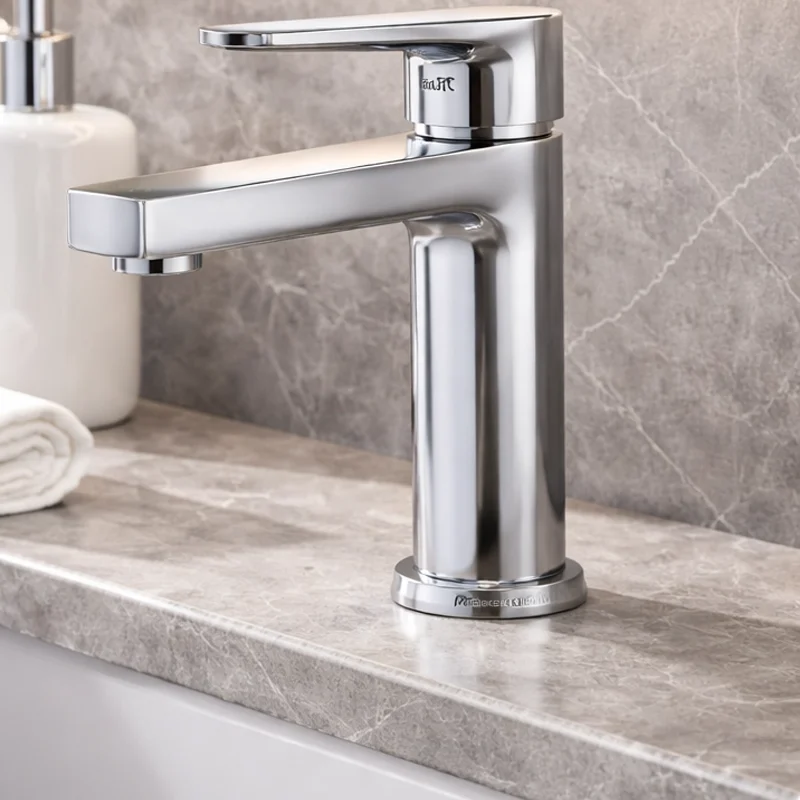
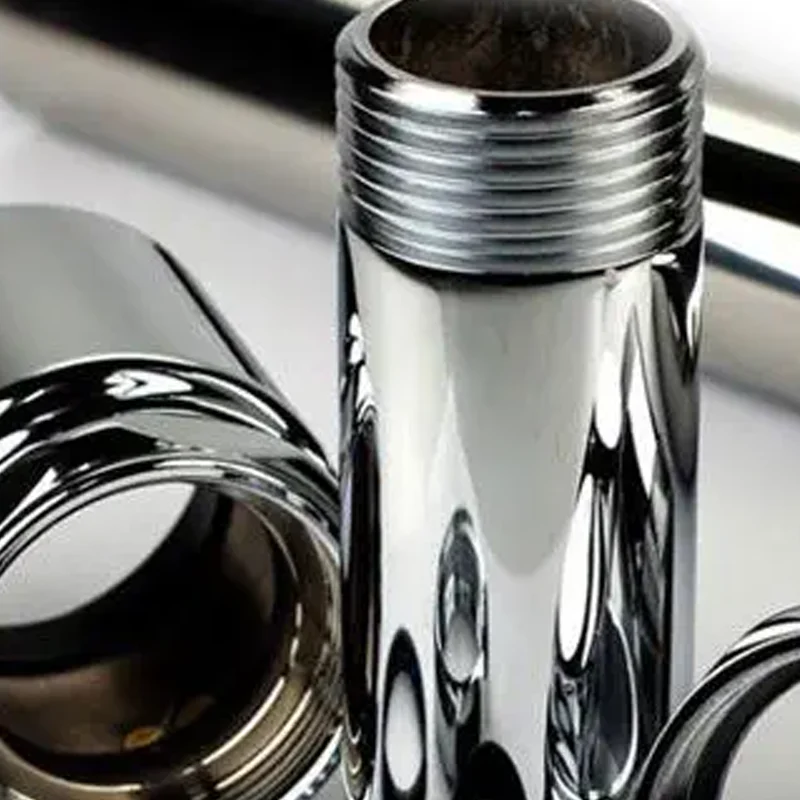
Chrome plating remains one of the most widely used finishes for bathroom products due to its bright appearance, corrosion resistance, and cost efficiency. From basin faucets to shower systems, chrome is the default premium finish across nearly every price tier of bathroom hardware — but achieving a consistent, durable chrome finish depends on tightly controlled process engineering, not just the plating step itself.
This chrome plating guide from
JEKARE, a professional bathroom OEM hardware supplier, covers the full process for bathroom OEM products: the plating process itself, surface preparation requirements, nickel and chrome layer structure, adhesion performance, corrosion resistance testing, and how to prevent common finishing defects.
Quick navigation: Process Overview | Surface Preparation | Layer Structure | Adhesion Performance | Corrosion Testing | Common Defects | FAQ
1. Chrome Plating Process Overview
Chrome plating is an electroplating process that deposits a thin, hard, bright chromium layer onto a metal or metallized plastic substrate. For bathroom faucets and shower systems, the process is rarely a single step — it’s a layered system engineered to deliver both appearance and long-term corrosion protection.
Typical process sequence:
- Substrate preparation — cleaning, polishing, and surface conditioning of the base material (brass, zinc alloy, or metallized ABS)
- Copper plating (optional, substrate-dependent) — improves leveling and adhesion on certain substrates
- Nickel plating — the primary corrosion-resistance layer, typically applied in one or two sublayers
- Chrome plating — a thin, hard, bright top layer that provides the final appearance and scratch resistance
- Post-plating inspection — visual and dimensional checks before parts move to assembly
Why it’s still the industry standard: chrome plating offers a reliable combination of bright appearance, hardness, corrosion resistance, and relatively low cost compared with advanced coatings like
PVD coating — which is why it remains the default finish for standard and mid-range bathroom faucet manufacturing, even as PVD gains share in premium product lines.
2. Surface Preparation Requirements
Surface preparation is arguably the single biggest factor in long-term chrome plating quality — more plating defects trace back to inadequate preparation than to the plating process itself.
- Mechanical polishing — removes casting marks, machining lines, and surface irregularities before plating; polishing quality directly limits the final gloss level achievable
- Degreasing and cleaning — removes oils, fingerprints, and contaminants that would otherwise cause adhesion failures
- Surface activation — chemical treatment (particularly on zinc alloy or plastic substrates) to promote plating adhesion
- Rinsing control — thorough rinsing between each process stage to prevent chemical carryover and staining
Substrate-specific considerations
- Brass: Polishing consistency, removal of casting porosity near the surface
- Zinc Alloy: Surface activation, careful control due to lower base hardness
- ABS (metallized): Chemical etching and catalytic activation before metal deposition
3. Nickel and Chrome Layer Structure
Understanding the layer structure is essential for specifying the right chrome plating system for a given product’s environment and warranty target.
Standard Layer System
- Base layer (substrate): brass, zinc alloy, or metallized ABS
- Nickel layer(s): the primary functional layer for corrosion resistance — often applied as a dual-nickel system (semi-bright nickel + bright nickel) for premium bathroom products, since dual-nickel systems significantly improve corrosion protection over single-layer nickel
- Chrome layer: a very thin (typically under 1 micron) hard chromium top layer providing brightness, scratch resistance, and tarnish protection
Why layer thickness matters: nickel layer thickness is the primary driver of long-term corrosion resistance, while the chrome layer is primarily responsible for appearance and surface hardness. Specifying nickel thickness appropriate to the target market and warranty period is one of the most important — and most commonly under-specified — decisions in OEM chrome plating projects, which we validate fully in our
in-house testing lab.
4. Adhesion Performance
Poor adhesion is one of the most common causes of chrome plating failure in the field — typically showing up as peeling, blistering, or flaking after the product reaches the customer.
Factors affecting adhesion:
- Surface cleanliness and preparation quality
- Substrate material consistency (casting porosity, alloy composition)
- Plating bath chemistry and process parameter control
- Layer-to-layer bonding between copper, nickel, and chrome stages
- Thermal cycling resistance (hot/cold water exposure over time)
Standard adhesion test methods:
- Thermal shock testing (rapid temperature cycling)
- Bend/impact testing
- Tape adhesion testing
- Cross-cut adhesion testing
5. Corrosion Resistance Testing
Bathroom products face continuous exposure to water, humidity, and cleaning chemicals, making corrosion resistance testing a mandatory step before mass production — not an optional quality check.
Standard test methods introduction:
- Neutral salt spray (NSS) testing: Simulates long-term corrosion exposure; results typically expressed in hours to first visible corrosion
- CASS copper-accelerated salt spray testing: More aggressive test for high-performance or export-market products
- Boiling water resistance testing: Tests plating integrity under thermal stress typical of hot water exposure
- Chemical resistance testing: Confirms plating holds up against household cleaning chemicals
Market note: different export markets often specify different minimum salt spray test durations as part of compliance or retailer quality requirements — confirm target-market testing standards early in the OEM development process rather than after
tooling is complete.
6. Common Chrome Plating Defects and Prevention
- Peeling / flaking: Root cause: Poor adhesion, inadequate surface preparation; Solution: Strict pre-plating cleaning and activation control
- Pitting: Root cause: Substrate porosity, contaminated plating bath; Solution: Casting quality control, bath filtration and monitoring
- Dull or uneven gloss: Root cause: Inconsistent polishing, poor current distribution; Solution: Polishing standardization, fixture/rack design review
- Discoloration / staining: Root cause: Rinsing carryover, chemical contamination; Solution: Controlled multi-stage rinsing
- Micro-cracking: Root cause: Excessive chrome layer thickness or stress; Solution: Layer thickness control, process parameter validation
- Corrosion after use: Root cause: Insufficient nickel layer thickness; Solution: Nickel thickness specification matched to target market/warranty
Frequently Asked Questions About Chrome Plating
How long does chrome plating last on a bathroom faucet?
With proper nickel layer thickness and surface preparation, chrome-plated bathroom faucets commonly carry warranties of 5–10+ years against corrosion. Actual lifespan depends heavily on nickel layer thickness, water quality, and cleaning chemical exposure.
What is the difference between chrome plating and PVD coating?
Chrome plating is a cost-effective electroplating process producing a bright, reflective finish with strong corrosion resistance. PVD coating is a vacuum deposition process that offers a wider range of colors (matte black, brushed gold, gunmetal) and generally higher wear resistance, typically at a higher production cost. See
JEKARE’s PVD Coating Guide for a full comparison.
Can zinc alloy or plastic parts be chrome plated?
Yes. Zinc alloy is commonly chrome plated with additional surface activation steps. ABS plastic can be chrome-finished through a metallization and plating process, which is common for shower heads and other lightweight bathroom components from our
faucet & shower product line.
Why does chrome plating sometimes peel over time?
Peeling is almost always traced back to inadequate surface preparation, contamination during plating, or insufficient adhesion between layers — not a flaw in chrome as a material. Proper process control at every plating stage prevents this.
JEKARE Chrome Plating Capabilities
JEKARE supports complete chrome plating development for bathroom OEM products, including:
- Substrate preparation and polishing
- Multi-layer nickel/chrome plating systems
- Adhesion and corrosion performance testing
- Defect analysis and process troubleshooting
- Material compatibility evaluation (brass, zinc alloy, metallized ABS)
- Mass production quality monitoring
Our engineering team helps global bathroom brands specify the right plating system for their target market, warranty requirements, and product positioning — backed by ISO 9001:2015 certified manufacturing.
Related Resources
- Surface Finish Guides
- PVD Coating Guide for Premium Bathroom Products
- Brass vs Stainless Steel Faucet Material Guide
- ABS vs Stainless Steel Shower Head Guide
- Plastic Toilet Seat Material Selection Guide for OEM Development
- Silicone Valve Material Selection Guide for Bathroom OEM Products