Call us: +86-18965139230 | Mail to us: info@jekare.com

PVD coating (Physical Vapor Deposition) provides enhanced durability, an expanded color palette, and a premium appearance for modern bathroom products — which is why it has become the default finishing technology for luxury faucets, designer shower systems, and premium bathroom hardware over the past decade.
This PVD coating guide from JEKARE covers the technology itself, available color options, wear and scratch resistance performance, adhesion requirements, and material compatibility — everything a bathroom brand needs to specify a PVD finish for OEM bathroom product development.
Jump to: Technology Overview | Color Options | Wear & Scratch Resistance | Adhesion Requirements | Material Compatibility | PVD vs Chrome | FAQ
PVD (Physical Vapor Deposition) is a vacuum-based coating process in which a solid coating material is vaporized and deposited onto a product’s surface as an extremely thin, dense metallic film — typically just a few microns thick, but significantly harder and more wear-resistant than traditional electroplated finishes.
Typical PVD process sequence:
Why brands are shifting to PVD: compared with chrome plating, PVD coatings offer substantially higher surface hardness, a much wider color range without the environmental byproducts of some traditional plating chemistries, and a premium appearance that supports higher price positioning.
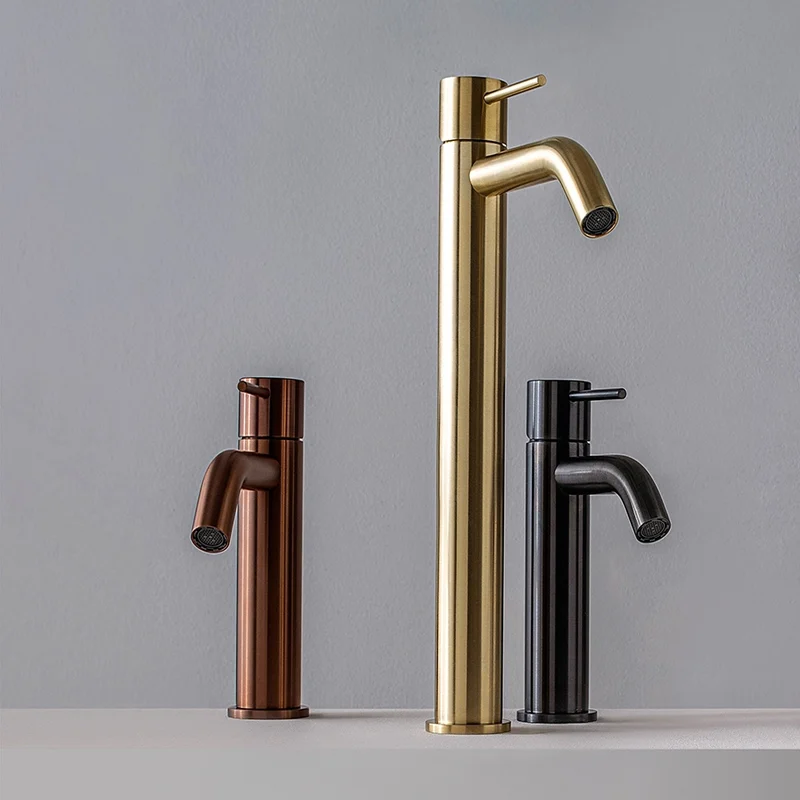
One of PVD’s biggest advantages over chrome plating is color range — a single production process can produce a wide variety of premium finishes by adjusting the reactive gas composition and deposition parameters during coating.
Popular PVD finishes for bathroom products:
| Finish | Typical Positioning |
|---|---|
| Brushed Gold | Luxury, warm-toned premium collections |
| Matte Black | Modern, minimalist designer collections |
| Gunmetal | Contemporary, industrial-inspired designs |
| Brushed Nickel | Transitional, understated premium finish |
| Chrome (PVD) | High-durability alternative to traditional chrome plating |
Appearance control factors: color consistency depends on tightly controlled deposition time, chamber temperature, gas flow ratios, and target material purity — batch-to-batch color variation is one of the most common quality complaints in PVD production when these parameters aren’t tightly monitored.
PVD coatings are significantly harder than traditional chrome or nickel plating, which is a major reason premium bathroom brands specify PVD for high-touch products like faucet handles and shower controls.
Key performance advantages:
Testing methods used to validate wear performance: Taber abrasion testing, pencil hardness testing, and cross-hatch scratch testing are commonly used to confirm PVD coating hardness and wear resistance before mass production approval.
Like any surface finish, PVD coating performance depends heavily on the quality of the layers beneath it — poor substrate preparation or base plating will undermine even a well-executed PVD deposition.
Factors affecting PVD adhesion:
Standard adhesion and durability test methods: cross-cut adhesion testing, thermal shock testing, salt spray corrosion testing, and chemical resistance testing — the same core validation approach used for chrome plating, applied to the PVD-coated surface.
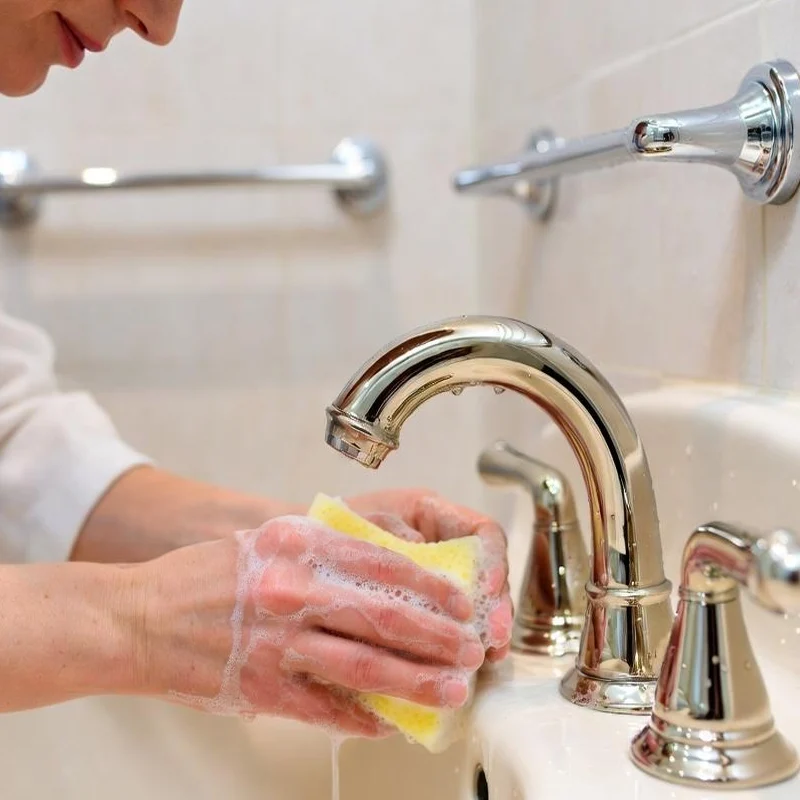
PVD coating performance and cost vary depending on the substrate material.
| Substrate | PVD Compatibility | Notes |
|---|---|---|
| Brass | Excellent | Widely used base material for premium PVD faucets |
| Stainless Steel | Excellent | Strong natural corrosion resistance pairs well with PVD durability |
| Zinc Alloy | Good | May require additional base plating for best results |
| ABS Plastic | Limited | PVD is primarily a metal-substrate process; ABS typically uses spray coating or vacuum metallization instead |
Bathroom brands frequently need to decide between PVD and traditional chrome plating when specifying a finish for a new product line.
| Factor | PVD Coating | Chrome Plating |
|---|---|---|
| Color range | Wide (black, gold, gunmetal, nickel, chrome) | Limited (bright chrome only) |
| Hardness / scratch resistance | Higher | Good |
| Production cost | Higher | Lower |
| Typical market position | Premium / luxury | Standard to mid-range |
| Process complexity | Higher (vacuum-based) | Lower (electroplating) |
For a full breakdown of the chrome plating process itself, see JEKARE’s Chrome Plating Guide.
Is PVD coating better than chrome plating? “Better” depends on positioning. PVD offers a wider color range, higher hardness, and stronger scratch resistance, making it the preferred choice for premium and luxury bathroom products. Chrome plating remains a cost-effective, reliable option for standard and mid-range products where a wide color palette isn’t required.
Does PVD coating fade or change color over time? High-quality PVD coatings with proper process control are highly resistant to fading, tarnishing, and color change, which is a key reason they’re used for long-warranty premium products. Poor process control (inconsistent deposition parameters) is the main cause of color instability, not the technology itself.
Can PVD coating be applied to plastic bathroom components? PVD is primarily suited to metal substrates like brass and stainless steel. Plastic components (such as ABS shower head bodies) typically use spray coating or vacuum metallization to achieve a similar premium metallic appearance at lower cost.
How is matte black PVD different from other black finishes? Matte black PVD is a vacuum-deposited metallic coating, offering better hardness and wear resistance than sprayed or painted black finishes on plastic. See JEKARE’s Matte Black Finish Guide for engineering considerations specific to black bathroom products.
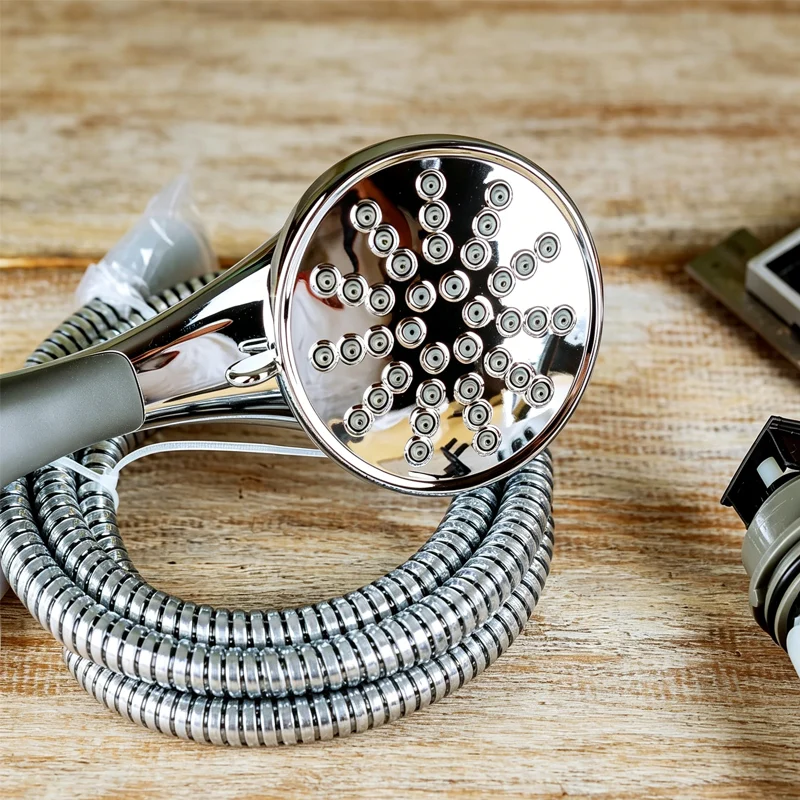
JEKARE supports complete PVD coating development for premium bathroom OEM products, including:
Our engineering team helps global bathroom brands specify the right PVD finish for their target market and product positioning — backed by ISO 9001:2015 certified manufacturing.
Need Help Specifying a PVD Finish? Share your product design, target color, and market positioning with our engineering team.
[Request a Surface Finish Evaluation →]