Call us: +86-18965139230 | Mail to us: info@jekare.com

The global physical vapor deposition (PVD) faucet finishes market was valued at USD 12.04 billion in 2023 and is projected to grow at a CAGR of 7.3% from 2024 to 2030, according to Grand View Research — growth the report attributes to manufacturers adopting PVD in response to buyer demand for durable, attractive finishes across residential and commercial bathroom products, alongside expanding construction and renovation activity globally.
Electroplating has been the dominant finishing method for bathroom fixtures for decades, and it remains widely used today. But PVD’s growth trajectory reflects a genuine shift in how manufacturers and brands are weighing finish technology — not as a simple cosmetic choice, but as a decision that touches durability, environmental compliance, and long-term supply chain exposure differently depending on which process a product line relies on.
Finish failure — pitting, discoloration, or coating breakdown — is one of the more visible ways a bathroom fixture disappoints an end customer, and it’s a common driver of warranty claims. The finishing process a manufacturer uses has a direct bearing on how a product performs under years of water and mineral exposure, which makes finish technology a materially different kind of decision than choosing between, say, two similar-looking base colors.
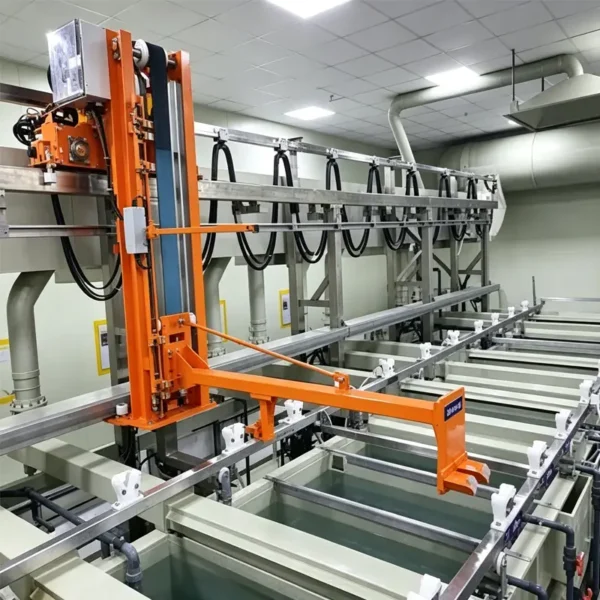
Finishing processes carry different regulatory footprints. Electroplating, particularly chromium electroplating, involves wastewater discharge that is subject to federal environmental regulation in the U.S. — and that regulatory landscape is actively changing, which creates a compliance variable for brands sourcing from electroplating-dependent suppliers that doesn’t apply in the same way to PVD.
Both processes can produce excellent results, but they fail differently when process control is weak. Electroplating bath chemistry and PVD chamber parameters both require tight control to avoid batch-to-batch color or thickness variation — a detail that matters more to a brand managing multiple SKUs and finish options than a single-product buyer might assume.


Beyond the overall market size, Grand View Research’s analysis notes that faucet manufacturers are adopting PVD specifically in response to consumer demand for durable, attractive finishes, and that ongoing technological advancement — including improved coating consistency — is making PVD a more viable option across a wider range of price points than it was in earlier product cycles.
Corrosion resistance for both PVD and electroplated finishes is commonly evaluated using ASTM B117, the Standard Practice for Operating Salt Spray (Fog) Apparatus — a controlled test in which specimens are exposed to a continuous 5% sodium chloride fog at an elevated temperature to produce comparative, repeatable corrosion-resistance data. Because ASTM B117 is one of the most widely recognized corrosion test methods internationally, it gives buyers a common reference point for comparing finish durability claims across different manufacturers and different finishing processes, rather than relying on a supplier’s own unverified description of “long-lasting.”
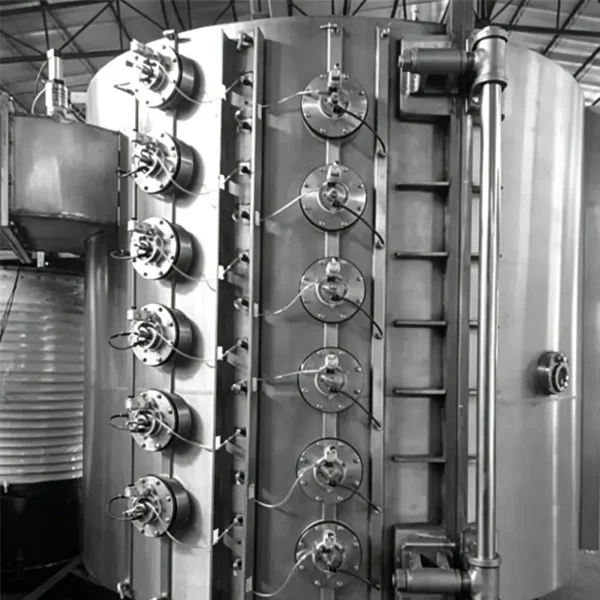
In the United States, the EPA has announced plans to issue a proposed rule in July 2026 revising the Metal Finishing Effluent Limitation Guidelines at 40 CFR Part 433 specifically to address PFAS discharges in wastewater from chromium electroplating facilities. The agency has identified chrome finishing operations — including chromium plating, chromium anodizing, and chromate conversion coating — as the predominant source of PFAS discharge within the metal finishing and electroplating point source categories. This is a live regulatory development, not a settled rule, but it signals that chromium electroplating specifically is under increasing environmental scrutiny in a way that PVD, as a vacuum-based dry process, is not currently subject to.
Request actual ASTM B117 test results — hours of exposure before red rust or coating failure — rather than accepting a general durability claim. A specific test result tied to a recognized standard is verifiable; “long-lasting finish” is not.
Some product lines use PVD for visible, high-wear surfaces and electroplating for internal or lower-visibility components. Confirm exactly which finishing process applies to which part of a multi-component product like a shower system or faucet assembly, rather than assuming one finish technology applies uniformly.
Given the EPA’s active rulemaking on chromium electroplating wastewater, brands sourcing electroplated components — particularly chrome-finished parts — should ask suppliers directly about their wastewater treatment and compliance status now, rather than waiting until a new rule is finalized to find out whether a supplier is prepared for it.
A manufacturer that performs finishing in-house has more direct control over both process consistency and compliance documentation than one that subcontracts plating or coating to a third-party vendor — worth confirming directly during supplier evaluation.


Finish technology selection connects to a brand’s broader supply chain resilience, not just the visual identity of a single product line. A brand whose product catalog depends heavily on chromium electroplating for its finish options carries a different regulatory exposure profile than one with a manufacturing partner capable of shifting some or all of that finish work to PVD — a distinction that matters more as environmental scrutiny of chromium electroplating continues to develop.
Beyond compliance, finish technology has become a genuine product differentiator. As PVD adoption grows and buyers increasingly associate it with premium, long-wear finishes, brands able to offer PVD options credibly — backed by actual test data rather than marketing language — have a real positioning advantage over competitors still limited to standard electroplated finishes.
JEKARE’s surface finishing capability covers both PVD coating and electroplated chrome finishing within the same production facility, which allows a brand to specify either process — or a combination across different components of a single product — without splitting finish work across separate external vendors. JEKARE’s electroplated finishes are tested to 24-hour AASS and 200-hour NSS salt spray exposure as part of standard quality control, giving buyers a specific, testable durability benchmark rather than a general claim.
For brands evaluating which finish technology fits a specific product line, JEKARE’s faucet product line — including the single-handle hot-and-cold kitchen faucet — and rain shower head line are available with chrome, matte black, brushed nickel, and PVD finish options, allowing a brand to pilot a PVD-finished variant alongside an existing electroplated line without committing an entire catalog to a single finishing technology. Buyers can review current certification and compliance documentation directly when evaluating finish and process options for a new program.
PVD coating and electroplating remain two genuinely viable finishing technologies for bathroom fixtures, and neither is a universal replacement for the other — but the decision between them is no longer purely aesthetic. Growing market adoption of PVD, an established and verifiable industry test standard in ASTM B117, and active regulatory attention on chromium electroplating wastewater all point toward finish technology becoming a more deliberate sourcing decision than it has been in previous product cycles. For B2B buyers, the practical takeaway is to evaluate finish claims against actual test data and to understand which regulatory exposures apply to a manufacturing partner’s specific finishing processes, rather than treating “chrome” or “PVD” as interchangeable labels.

Generally yes, PVD tends to carry a higher per-unit finishing cost than standard electroplating, though the gap has narrowed as PVD equipment and process efficiency have improved — the actual cost difference depends heavily on the specific coating material and finish color specified.
Yes, both processes are commonly applied to brass, zinc alloy, and stainless steel substrates used in bathroom fixtures — the choice of finishing process is independent of the underlying base material selection.
Not automatically — scratch and wear resistance depend on the specific PVD coating material and thickness as well as the electroplating process used, so a buyer should request comparative hardness or wear-test data rather than assuming PVD is superior by default.
No, the rulemaking specifically addresses U.S. wastewater discharge regulations under the Clean Water Act and applies to facilities discharging within U.S. jurisdiction — however, manufacturers exporting electroplated products into the U.S. market may still face downstream compliance questions from brand customers navigating their own supply chain due diligence.
Ask whether testing was conducted in-house or by an independent third-party laboratory, and request the actual test report referencing ASTM B117 rather than a summary certificate — a specific, dated report with test parameters is harder to misrepresent than a general compliance statement.
Mia is a Materials Engineer at JEKARE with over 20 years of experience in bathroom fixture development and OEM manufacturing. She specializes in surface finishing process control, corrosion-resistance testing, and material and finish selection across brass, stainless steel, and zinc alloy components. With extensive experience supporting global bathroom brands and distributors through finish qualification and supplier evaluation, Mia focuses on helping buyers separate verifiable finish performance data from marketing language when comparing PVD and electroplating options.
1. Grand View Research — Physical Vapor Deposition (PVD) Faucet Finishes Market Report
https://www.grandviewresearch.com/industry-analysis/physical-vapor-deposition-pvd-faucet-finishes-market
2. ASTM International — B117-19: Standard Practice for Operating Salt Spray (Fog) Apparatus
https://store.astm.org/b0117-19.html
3. U.S. Environmental Protection Agency — Electroplating Effluent Guidelines (40 CFR Part 433, PFAS Rulemaking)
https://www.epa.gov/eg/electroplating-effluent-guidelines
✔ 20+ Years of OEM & ODM Manufacturing Experience
✔ In-House PVD Coating and Electroplated Finishing Under One Roof
✔ Tested Salt Spray Durability Data — 24-Hour AASS / 200-Hour NSS
✔ Complete Faucet, Shower, and Bathroom Accessory Solutions
✔ Flexible Finish Options Across a Single Product Line
✔ Reliable Manufacturing Partner for Global Distributors and Brands
Whether you’re piloting a PVD-finished product line or reviewing your current electroplating supplier’s compliance status, JEKARE provides engineering-driven OEM manufacturing support from concept development through mass production.
Contact our team to discuss your next bathroom product project.