Call us: +86-18965139230 | Mail to us: info@jekare.com

ABS (Acrylonitrile Butadiene Styrene) is one of the most widely used engineering plastics in bathroom product manufacturing due to its excellent balance of appearance, impact resistance, processing performance, and cost efficiency. In bathroom OEM development, ABS is commonly selected for components requiring premium surface appearance, complex geometry, and flexible finishing options.
This ABS material guide from JEKARE, professional OEM shower & faucet manufacturer, explains ABS properties, manufacturing considerations, finishing compatibility, and typical applications in shower systems, faucets, toilet components, and bathroom accessories.
ABS is a thermoplastic engineering plastic combining three components, each contributing a different property
Provides chemical resistance and rigidity.
Provides impact resistance and toughness.
Provides surface appearance and processing performance.
This balanced structure makes ABS suitable for bathroom products requiring both durability and premium appearance.
| Factor | ABS Performance |
| Impact resistance | Good |
| Surface appearance | Excellent |
| Dimensional stability | Good |
| Chemical resistance | Good |
| Heat resistance | Medium |
| Injection molding | Excellent |
| Surface finishing | Excellent |
| Cost level | Medium |
Choose ABS when your product requires premium appearance, chrome plating or coating, complex molded structures, good impact resistance, and flexible customization options.
ABS provides a balanced combination of strength and toughness, making it suitable for daily-use bathroom products.
ABS provides good impact performance compared with many standard plastics — reduced cracking risk, better durability during daily use, and stable product performance.
Typical applications: shower handles, shower head housings, decorative faucet covers from our ABS shower head production line.
ABS provides sufficient rigidity for product covers, decorative structures, and functional components.
Engineering factors include:
ABS maintains stable size after cooling and molding, avoiding assembly gaps for multi-part combined bathroom fixtures. All dimensional inspection work is completed in our in-house quality testing lab.
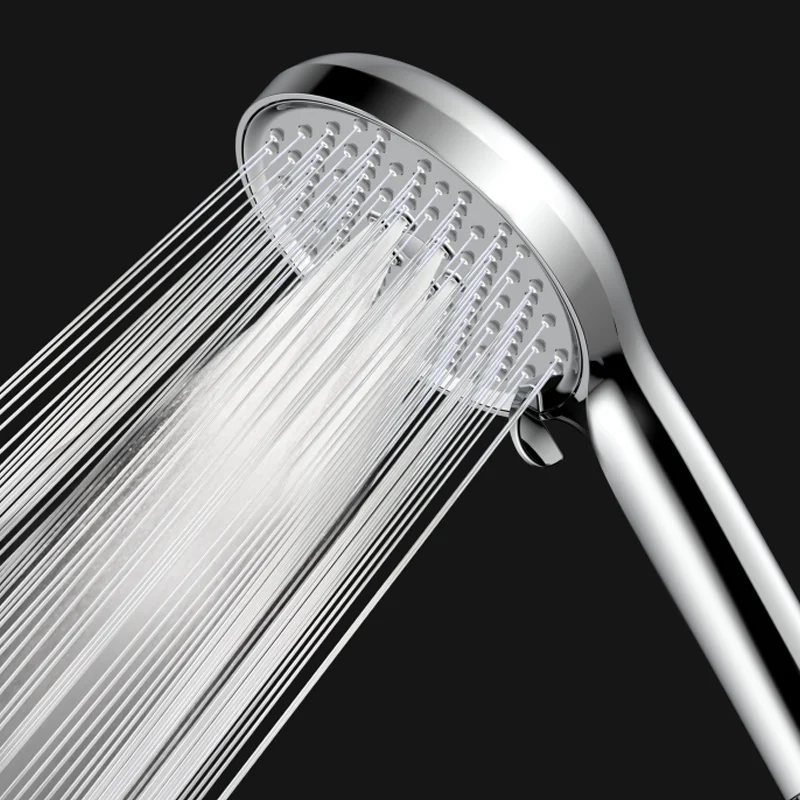
One of ABS’s biggest advantages is its excellent surface finishing capability, which is why it is widely used where premium appearance is required.
ABS is the mainstream plastic material for chrome-plated sanitary parts, detailed process introduction in our Chrome Plating Guide.
ABS is one of the most common plastics for chrome-plated bathroom components, offering:
Typical applications: Shower heads,Shower handles,Faucet covers
ABS supports:
It is well suited to designer bathroom products, private label products, and custom brand colors.
ABS can achieve:
Bathroom products operate in environments exposed to water, humidity, and cleaning chemicals
ABS provides:
ABS has moderate heat resistance, suitable for:
For heated smart toilet core components with long-term high temperature exposure, we recommend PBT engineering plastic instead of ABS.
ABS resists many common bathroom conditions:
Engineering validation is recommended for strong chemical exposure.
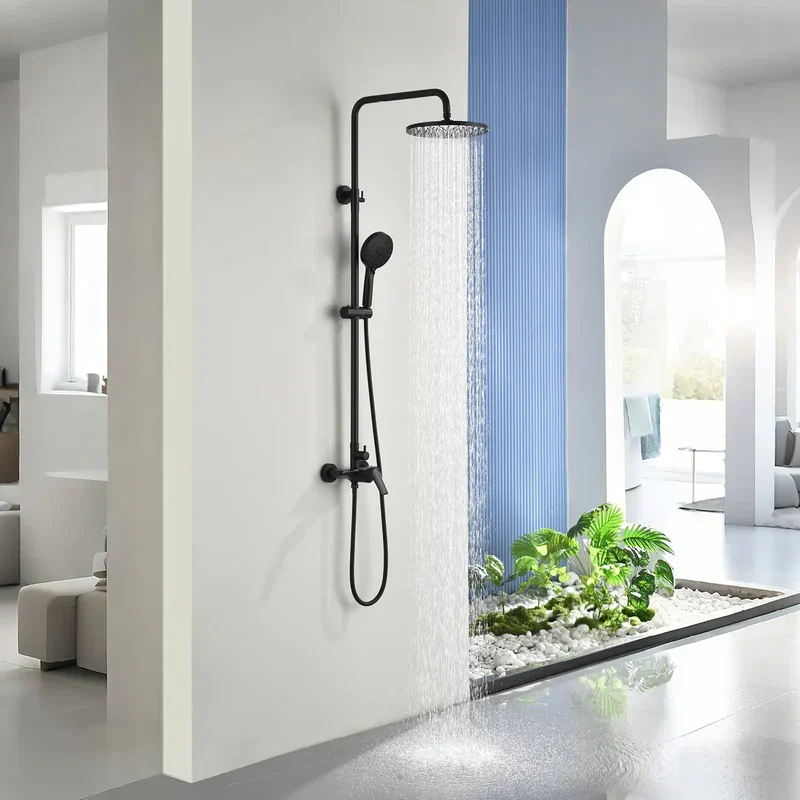
ABS is widely preferred for OEM manufacturing because of its excellent molding characteristics,very friendly for mass OEM production via precision injection molding:
| Factor | Why It Matters |
| Wall thickness | Avoid uneven thickness, sink marks, and internal stress |
| Draft angle | Proper draft helps mold release, protects surface finish, and reduces defects |
| Gate location | Correct gate design improves appearance, filling balance, and mechanical performance |
| Product | ABS Application |
| Shower Head | Housing, cover, decorative components |
| Shower System | Functional covers and accessories |
| Faucet | Covers, handles, decorative parts |
| Toilet Seat | Smart seat covers, external components |
| Bathroom Accessories | Storage products, holders, trims |
| Factor | ABS | PP | PC |
| Appearance | Excellent | Medium | Excellent |
| Impact resistance | Good | Good | Excellent |
| Chemical resistance | Good | Excellent | Good |
| Heat resistance | Medium | Good | Excellent |
| Surface finishing | Excellent | Limited | Good |
| Cost | Medium | Low | Medium-High |
| Typical use | Premium components | Cost-effective products | High-performance parts |
For the full cross-material comparison and engineering plastic details, see JEKARE’s Plastic Material Guide (ABS vs PP vs PC) and Engineering Plastic Guide.
ABS bathroom components should be validated through:
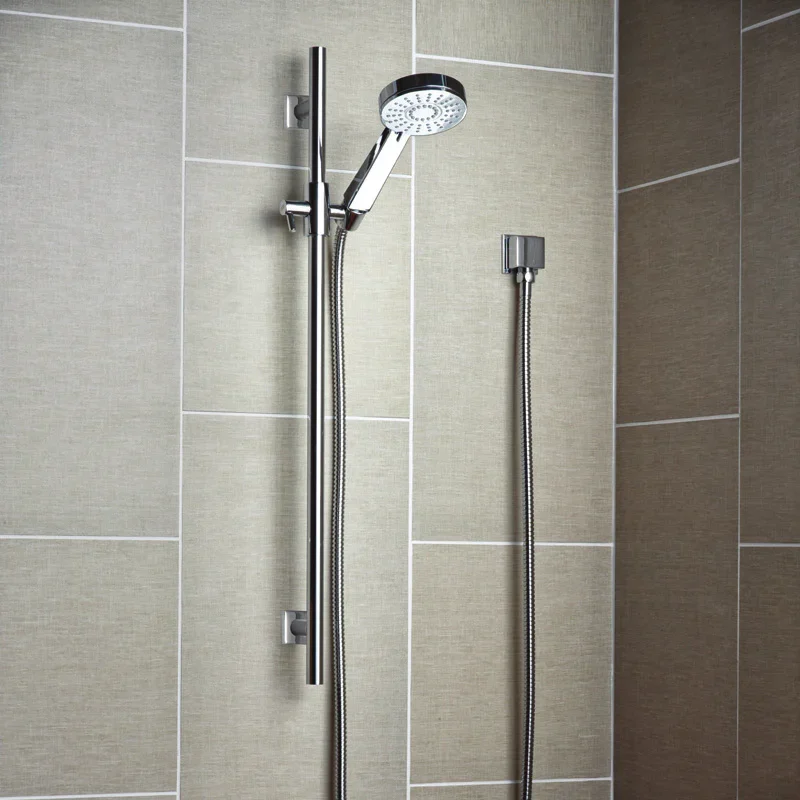
A:ABS provides a good balance of lightweight structure, impact resistance, surface quality, and chrome plating capability, making it well suited to shower head OEM manufacturing.
A:It depends on the application.
ABS is preferred when premium appearance, surface finishing, and complex design are important.
PP is preferred when low cost, chemical resistance, and high-volume production are priorities.
A:Yes. ABS is one of the most commonly chrome-plated plastics because of its excellent plating adhesion and surface quality.
A:ABS can be used for external components, but applications near continuous heat sources should be evaluated based on temperature requirements.
PBT or PC engineering plastics are typically better suited to direct heat exposure.
JEKARE supports ABS material selection and OEM development for bathroom products, including:
Our engineering team helps global bathroom brands develop reliable ABS components with stable mass production capability — backed by ISO 9001:2015 certified manufacturing.
Share your product design, application requirements, and target finish with our engineering team.