Call us: +86-18965139230 | Mail to us: info@jekare.com

The handheld shower segment is no longer a side category. Grand View Research reports that the global shower heads market was valued at $13.3 billion in 2024 and is projected to grow to $20.4 billion by 2030, and within that market, the hand-held segment is expected to register the fastest revenue growth rate of any product type. Asia Pacific alone accounted for a 40.3% revenue share in 2024, underscoring how global — and how fragmented by regional plumbing standard — this category has become.
That growth has pulled more bathroom brands into selling handheld shower kits as bundled e-commerce listings: showerhead, hose, wall bracket, and sometimes an angle valve, packaged and sold as one SKU. It is a logical merchandising move — brands are increasingly pairing rain shower heads with handheld attachments to raise perceived value in a single listing. It is also where a disproportionate share of post-purchase complaints originates, because a kit only “works” if every component in the box is dimensionally and mechanically compatible with every other component — and with whatever fitting is already on the customer’s wall.
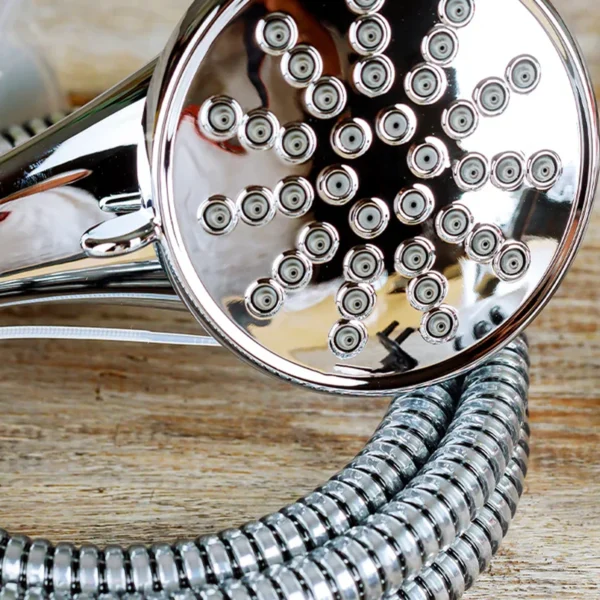
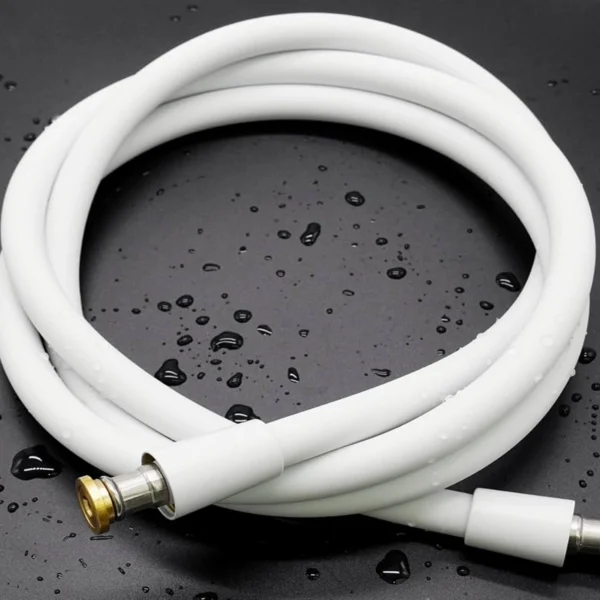
For a brand selling on Amazon, Walmart Marketplace, or a DTC storefront, a hose/bracket compatibility failure rarely shows up as a single complaint. It shows up as a pattern: a cluster of one-star reviews citing “doesn’t fit my wall connector,” a spike in return requests coded as “wrong parts” or “missing parts,” and — on marketplaces that track seller-side return metrics — downward pressure on account health and buy-box eligibility. This is a distinct failure mode from retrofitting a handheld onto an existing shower system, where a customer at least has the original fixture to reference — a bundled kit gives them nothing to compare against.
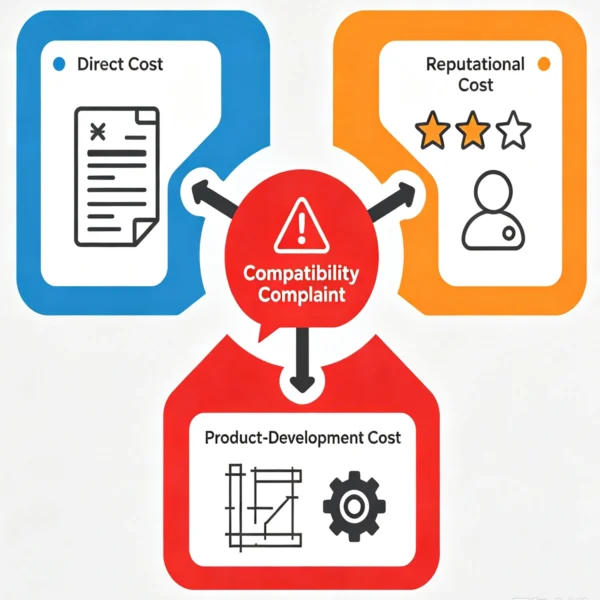
The cost compounds in three directions. First, direct cost: return shipping, restocking, and refunds on a low-margin accessory kit can erase the unit economics of the sale entirely. Second, reputational cost: review-based platforms weight recent star ratings heavily, so a run of compatibility complaints can suppress conversion on an otherwise well-performing listing for months. Third, product-development cost: without a systematic way to trace which component combination is failing, brands often respond by discounting or delisting a SKU instead of fixing the underlying kitting specification — leaving the same design fault to resurface in the next product line.
Two structural factors explain why compatibility failures concentrate specifically in hose-and-bracket kitting, rather than in the showerhead itself.
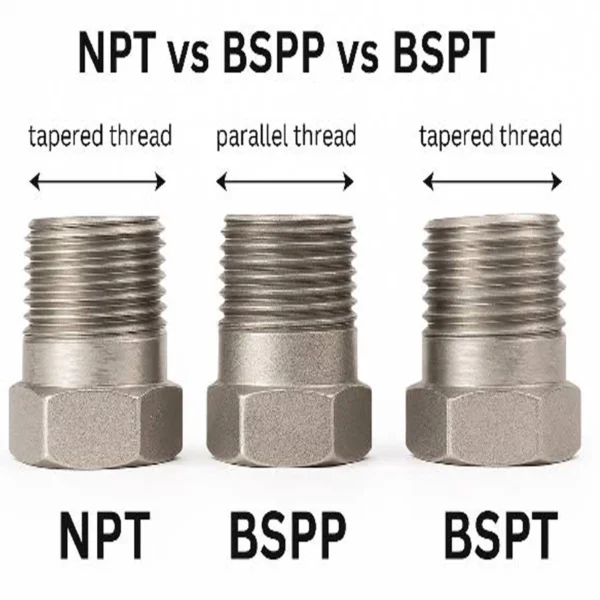
Thread standards are not global. The fitting a handheld shower hose screws into is governed by one of two competing thread systems. ISO 228-1 defines parallel fastening pipe threads — commonly labeled G1/2″ or BSPP — intended for the mechanical assembly of fittings, cocks, valves, and accessories, and explicitly notes that these threads are not, on their own, designed to form a pressure-tight seal without an additional sealing surface. In North America, the dominant standard is different: ANSI/ASME B1.20.1 covers the dimensions and gaging of NPT and related tapered pipe threads, used throughout U.S. plumbing and hardware. A hose fitted with a BSPP/G1/2″ nut will thread partway onto an NPT valve outlet and feel secure by hand — then leak or back out under water pressure, because the two systems seal on different physical principles (surface compression versus thread taper). A private-label brand sourcing shower hoses and valve accessories without specifying which standard its target market actually uses is building the mismatch into the product before it ever reaches a customer.
Returns research consistently names incompatibility as a top-tier cause, distinct from “changed my mind” or price-driven returns. Statista’s ongoing tracking of global e-commerce return reasons treats product/fit incompatibility as one of the recurring, named categories retailers report against — not a one-off anomaly specific to any single seller. The case below shows what that looks like at the level of a single SKU’s expansion plan.
In 2017, a mid-sized European bathroom accessories brand — generating roughly USD 8 million in annual online sales through Amazon Germany, Amazon France, regional bathroom retailers, and home-improvement distributors — prepared to expand its best-selling handheld shower kit into North America.
The original product was built for a single, well-understood installation environment:
| Component | Original Specification |
|---|---|
| Shower head | ABS handheld, 3 spray modes |
| Hose | 1500mm PVC hose |
| Bracket | Adjustable ABS wall bracket |
| Connection | G1/2″ BSPP thread |
| Target market | Germany, France, Netherlands |
| Retail price | USD 39.99 |
| Production cost | USD 11.80/unit |
The plan was to launch the same SKU on Amazon US with a language-label change only — same shower head, same hose, same bracket, same packaging. Compatibility testing surfaced three risks that the original single-SKU plan hadn’t accounted for.
Problem 1 — thread mismatch. The G1/2″ BSPP connection (ISO 228-1) tested fine against a European outlet and against a US shower arm fitted with an adapter, but showed a leakage risk when connected directly to an NPT fitting (ANSI/ASME B1.20.1) — the standard common in US and Canadian residential plumbing. The hose could be hand-tightened and feel secure while the seal itself remained unreliable, which translates directly into the review pattern “the shower hose fits but leaks after installation.” Modeled against 3,000 units/month at a USD 15 margin, a 5-percentage-point increase in return rate alone represented an estimated USD 6,000/month in returned sales value.
Problem 2 — perceived quality gap. The original 1500mm PVC hose (USD 1.20/unit, 220g) was cost-efficient but read as “value segment” next to competing US listings that increasingly featured stainless steel braided hoses with metal connectors. A stainless steel double-lock hose (USD 3.30/unit, 380g) would add roughly USD 2.10/unit to the bill of materials — raising the question of whether that cost increase could unlock enough repositioning value to justify itself.
Problem 3 — bracket durability and mounting habits. Under a simulated test of 5,000 adjustment cycles at a 1.5kg shower head load, the original ABS bracket’s angle drifted 8–10 degrees; an improved bracket held angle movement under 3 degrees. Separately, European installations were typically handled by professional installers during renovation, while North American consumers more often self-installed replacement products — meaning the bracket also needed wider mounting tolerance and a stronger locking mechanism, not just better materials.
Rather than building three separate regional products, the brand restructured the kit around a modular architecture: a shared core (shower head body, hose structure, bracket mechanism) with region-specific components (thread adapter, installation accessories, packaging instructions) layered on top — supporting G1/2″ BSPP for Europe and NPT-compatible installation for North America without duplicating manufacturing lines.
The hose was split into two tiers: a Standard Version (PVC anti-kink hose, ABS bracket, USD 39.99 retail) for price-sensitive retail distributors, and a Premium Version (stainless steel double-lock hose, improved bracket, premium packaging, USD 59.99 retail) for Amazon US and DTC. The premium tier added roughly USD 3.50/unit in BOM cost against a USD 20/unit price increase.
Critically, validation shifted from testing each component in isolation — hose supplier tests the hose, bracket supplier tests the bracket — to testing the complete assembled kit as one system: a 30-minute leakage test at 1.5× working pressure, a 360-degree rotation test for anti-twist performance, a bracket load test under repeated adjustment, and a multi-direction packaging drop test to catch shipping damage before it reached the customer.
| Metric | Before | After |
|---|---|---|
| SKU count | 3 regional SKUs (EU, FR, NA) | 1 core platform + regional configuration |
| Leading complaint type | Hose leaking, wrong connection size, bracket movement, installation confusion | Normal installation questions, not product failure |
| Average selling price | USD 39.99 | USD 59.99 (premium tier) |
| Additional manufacturing cost (premium tier) | — | ~USD 3.50/unit |
The redesign didn’t just reduce returns — it moved the product’s market position from “affordable shower kit” to “premium bathroom upgrade solution,” at a manufacturing cost increase small enough that the margin gain from the price move more than absorbed it.
From JEKARE’s perspective as a bathroom hardware manufacturer, handheld shower kit compatibility is not a single-component problem — it is a system engineering challenge. In many cases, hose leakage, bracket instability, or installation complaints do not come from a defective part, but from the lack of coordination between components developed by different suppliers.
During product development, we focus on the relationship between every connection point inside the kit: the hose thread specification, connector tolerance, swivel structure, bracket locking mechanism, and installation accessories. A shower kit that performs well in factory inspection but fails during customer installation usually indicates that component-level testing was completed without sufficient full-system validation.
For global bathroom brands, the challenge becomes more complex because the same product may need to serve markets with different plumbing standards, installation habits, and consumer expectations. European customers may be familiar with G1/2″ BSPP connections and professional installation environments, while North American consumers often expect easy DIY replacement and compatibility with NPT-based plumbing systems. These differences need to be considered at the engineering stage rather than solved through customer service after launch.
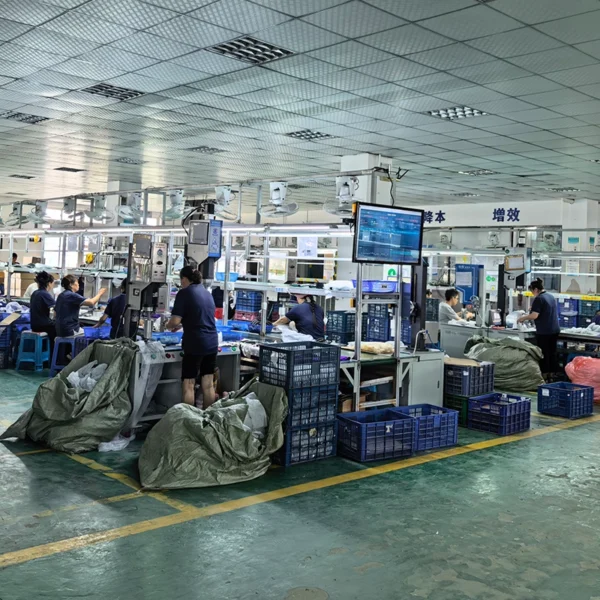
At JEKARE, we approach shower accessory development through a complete-kit perspective. Our manufacturing capabilities cover shower heads, flexible hoses, angle valves, valve sleeves, and related bathroom components, allowing key connection details to be evaluated together instead of being treated as isolated parts.
For private-label brands, this means fewer compatibility risks before mass production, more stable product performance across different markets, and a stronger foundation for building reliable bathroom product lines. The goal is not only to manufacture individual components, but to ensure that every part inside the package works together as the customer expects from the first installation.
Before finalizing a handheld shower kit for e-commerce, brands can work through the same three variables the case study above turned on.
| Anti-kink PVC hose | Double-lock stainless steel hose | |
|---|---|---|
| Unit cost | Lower | Higher |
| Kink/tangle resistance | Moderate — depends on reinforcement layer | High — coil resists collapsing |
| Perceived quality (unboxing) | Lower — reads as “entry kit” | Higher — reads as “premium kit” |
| Typical failure mode | Cracking at the fitting after repeated flexing | Outer braid fraying if consistently over-torqued |
| Best fit | Value-tier, high-SKU-turnover listings | Mid-to-premium listings, hospitality projects |
A swivel nut at the hose-to-bracket connection point lets the hose rotate independently of the fitting, which is the single most effective design feature for preventing the “hose twists and kinks over time” complaint — because the hose itself never has to twist; the nut does. Kits without a swivel connection transfer all rotational stress into the hose wall, which is where cracking and slow leaks eventually start. This is one of the design details JEKARE validates at the assembly stage rather than leaving to downstream kitting.
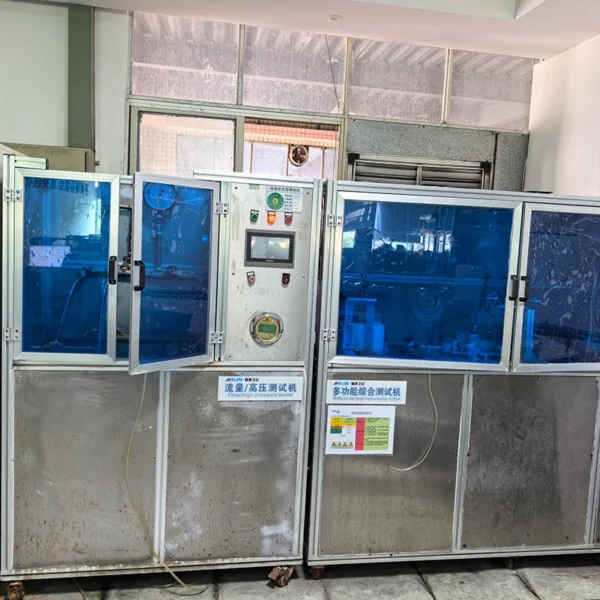
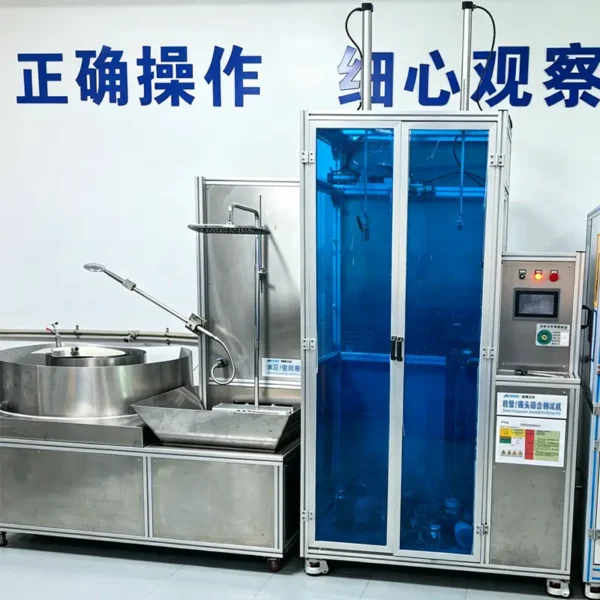
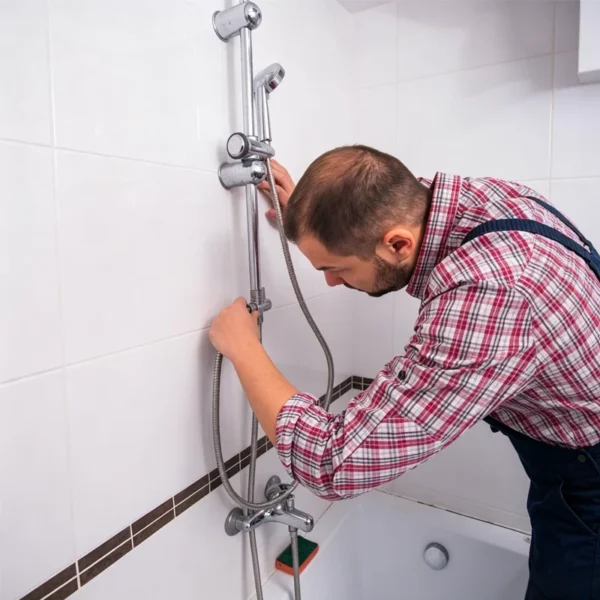
Getting hose-and-bracket compatibility right at the kitting stage is also a bridge to the next decision most growing bathroom brands face: whether their current supplier can support private-label packaging and multi-component assembly at all, or whether hose, bracket, and showerhead are being sourced from three disconnected vendors and reconciled manually before every shipment. That reconciliation gap — not the individual component quality — is where most kitting-level compatibility failures actually originate, and it’s exactly what the case study’s shift from component-level testing to full-kit validation was designed to close.
Commercially, this shifts the conversation for e-commerce and hospitality-focused brands from “which showerhead looks best in photography” to “which manufacturing partner can guarantee that everything in the box was engineered together.” A kit assembled from components validated as a set — same thread standard, matched connector tolerances, tested swivel and lock mechanisms — reduces return-driven margin loss and protects listing-level review scores in a way that no amount of post-sale customer service can fully recover once a pattern of complaints has been established.
Handheld shower kits are one of the fastest-growing segments in the bathroom accessories market, but their bundled nature means a single overlooked variable — a thread standard mismatch, a hose without a swivel connector, a bracket sourced independently of the rest of the kit — can generate a disproportionate share of returns and negative reviews relative to the kit’s price point. As the case study shows, the fix is rarely a completely new product; it’s usually a modular platform and full-kit validation. Brands that treat hose, bracket, and valve compatibility as an engineering specification, confirmed before tooling and validated as a complete assembly like JEKARE’s shower accessory line, are the ones that keep kitting-related complaints from becoming a recurring line item on their P&L.
Does a “universal fit” shower hose actually fit every market? No single hose fitting is universal across both major thread standards. A hose threaded for G1/2″/BSPP (ISO 228-1) will not properly seal against an NPT (ANSI/ASME B1.20.1) valve outlet without an adapter, even if it appears to screw on by hand.
Why does my PVC hose keep cracking near the fitting? This is typically a stress-concentration issue at the connection point, often made worse by the absence of a swivel nut — without one, all rotational torque from adjusting the shower is absorbed by the hose material itself rather than a free-rotating fitting.
Is stainless steel always the better choice for an e-commerce shower kit? Not necessarily. Double-lock stainless steel hoses reduce kink-related returns and support a premium positioning, but for high-turnover, price-sensitive listings, a well-reinforced anti-kink PVC hose can be the more appropriate cost-to-complaint-rate trade-off — the case study above kept both tiers for exactly this reason.
What’s the difference between BSPP and BSPT threads? BSPP (parallel) threads rely on a separate sealing surface or washer to seal, since the threads themselves are not tapered. BSPT (tapered) threads seal partially through the taper itself. The two are not directly interchangeable despite sharing the “BSP” designation.
Should brackets and hoses always be sourced from the same supplier? It significantly reduces compatibility risk. When brackets and hoses are sourced independently and assembled at the brand’s own warehouse or by a third-party kitting service, thread and tolerance mismatches are far more likely to go undetected until customers report them.
How can a brand tell if returns are being driven by compatibility issues specifically? Segment return reason codes at the SKU-variant level rather than the parent-listing level. A pattern concentrated in one region or one bracket batch, rather than spread evenly, usually points to a component or thread-standard issue rather than general product dissatisfaction.
This article was prepared by the JEKARE Engineering Content team, drawing on JEKARE’s OEM/ODM manufacturing experience across showers, faucets, and bathroom accessories for global sanitary-ware brands.
1.Grand View Research — Shower Heads Market Size & Share Report
https://www.grandviewresearch.com/industry-analysis/shower-heads-market-report
2.Grand View Research — Bathroom Accessories Market Size Report
https://www.grandviewresearch.com/industry-analysis/bathroom-accessories-market
3.ISO 228-1:2000 — Pipe threads where pressure-tight joints are not made on the threads
https://www.iso.org/standard/33777.html
4.ASME B1.20.1 — Pipe Threads, General Purpose, Inch
https://www.asme.org/codes-standards/find-codes-standards/b1201-pipe-threads-general-purpose-inch
5.Statista — E-Commerce Returns Topic Overview
https://www.statista.com/topics/11361/e-commerce-returns-in-europe
Sourcing a Handheld Shower Kit for E-Commerce? If hose, bracket, and thread compatibility is a recurring pain point in your current supply chain, JEKARE’s engineering team can review your kit specification before tooling.