Call us: +86-18965139230 | Mail to us: info@jekare.com

For many bathroom brands, thermostatic shower systems represent a significant step forward from conventional manual mixers. They are designed to maintain a stable outlet temperature by continuously adjusting the balance between hot and cold water supply, improving user comfort and reducing the risk of sudden temperature changes.
However, as thermostatic systems become more common in residential developments, hotels, and commercial projects, a different challenge has emerged: achieving consistent performance after installation.
A thermostatic shower that performs correctly during initial testing may experience temperature instability months or years later. Users may report sudden temperature changes, delayed response, or gradual temperature drift. From a consumer perspective, this appears to be a product failure. From an engineering perspective, it represents a more complex interaction between hydraulic conditions, materials, mechanical movement, manufacturing tolerance, and environmental factors.
This distinction is important for bathroom brands.
The question is no longer simply:
“Does the thermostatic valve work?”
The more important question is:
“Can the entire thermostatic system maintain predictable performance under real operating conditions?”
For OEM buyers and product developers, understanding this difference is essential because temperature control performance directly influences warranty risk, installation reputation, and long-term brand perception.
Temperature stability is often viewed as a comfort feature. However, for bathroom brands, it represents a broader product reliability challenge.
When a thermostatic shower system fails to maintain temperature, the problem can affect multiple areas of the product lifecycle.
During installation, unstable performance may create additional troubleshooting work for contractors. After market launch, inconsistent temperature control may increase customer complaints and service requirements. In hospitality applications, where fixtures operate repeatedly every day, small performance issues can become operational concerns.
This is why leading bathroom brands increasingly evaluate shower systems beyond appearance, pricing, and initial functionality.
A thermostatic system is a long-term mechanical product. Its performance depends on how accurately multiple components continue working together over time.
The cartridge, sensing element, seals, springs, valve body, and internal channels all contribute to the final user experience.
A failure in any one area may not immediately stop the product from functioning. Instead, it may gradually reduce the accuracy and responsiveness of temperature control.
Unlike a traditional mixer that relies mainly on manual adjustment, a thermostatic shower system operates as a continuous feedback mechanism.
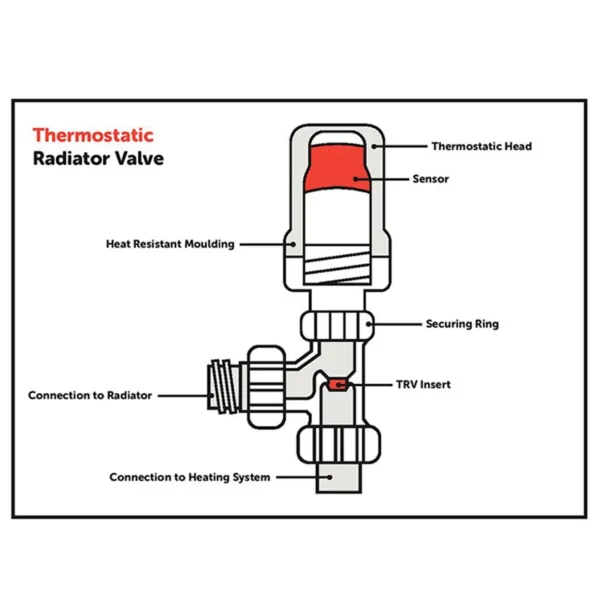
At the center of the system is the thermostatic mixing valve, which uses a temperature-sensitive element—commonly a wax element—to detect changes in water temperature.
When the incoming water temperature changes, the sensing element expands or contracts. This movement adjusts the internal valve position, changing the ratio of hot and cold water entering the outlet.
The process can be summarized as:
Temperature change → sensing element response → mechanical movement → hot/cold water adjustment → temperature correction
Although the principle appears simple, the actual process requires precise coordination.
The sensing element must respond quickly enough. The mechanical components must move smoothly. The seals must maintain consistent performance. The internal tolerances must remain within the designed range.
A small delay or variation in any step can create a noticeable difference at the shower outlet.
This is why thermostatic performance is not determined by a single component alone. It is the result of the complete system working together.
One of the most common mistakes during product evaluation is treating temperature instability as a cartridge problem only.
In reality, thermostatic failure usually develops from several interacting factors.
The most common complaint from users is the classic “hot-cold-hot” experience.
This phenomenon often occurs when the balance between hot and cold water supply changes faster than the thermostatic mechanism can compensate.
For example, in a residential building, another outlet may open suddenly, changing system pressure. In a hotel environment, multiple bathrooms may operate simultaneously, creating additional fluctuations.
The thermostatic valve does not generate stable temperature independently. Instead, it continuously reacts to changing input conditions.
If the incoming water conditions change faster than the valve response time, temporary temperature variation occurs.
This explains why a system may perform well under controlled factory testing but behave differently in a real installation.
For bathroom brands, this highlights an important evaluation point:
A thermostatic system should be assessed according to application conditions, not only laboratory results.
Another major factor is material degradation.
Thermostatic systems contain multiple materials working together, including metals, polymers, seals, springs, and temperature-sensitive elements.
Over time, these materials experience:
The impact is usually gradual rather than immediate.
For example, seals may lose elasticity, increasing friction. Springs may experience fatigue, slightly changing the force required for movement. Mineral deposits may accumulate around internal components, reducing response sensitivity.
These changes explain why some products perform correctly when new but experience reduced temperature accuracy after extended use.
For brands developing products for international markets, material selection should therefore consider lifecycle behavior rather than only initial performance.
Learn more about bathroom material engineering considerations for long-term product performance.
Thermostatic systems depend on controlled mechanical movement.
Small variations in component dimensions can influence:
Valve response speed Internal sealing performance Temperature calibration Long-term stability
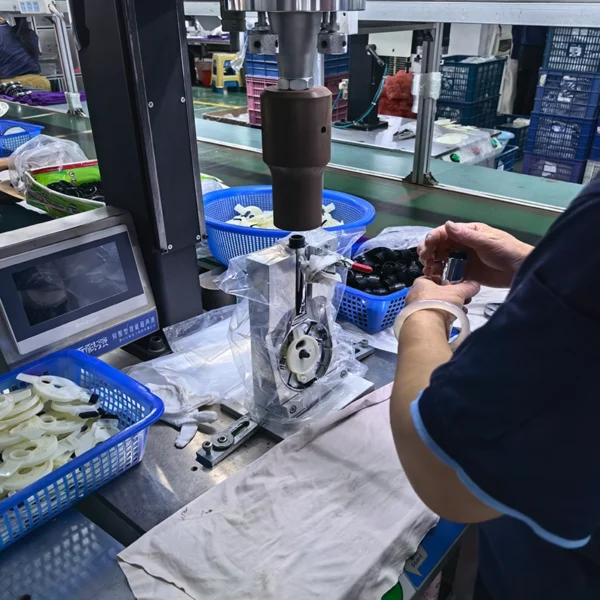
This creates an important distinction between prototype performance and mass production performance.
A prototype may demonstrate excellent temperature control, but if production variation is not controlled, the final products may perform differently.
For OEM buyers, manufacturing capability is therefore closely connected with product reliability.
The question is not only:
“Can the supplier make this design?”
It is:
“Can the supplier reproduce this performance consistently across thousands of units?”
Water conditions vary significantly between markets.
A thermostatic shower installed in an area with soft water may experience completely different long-term conditions compared with one installed in a hard water region.
Minerals can gradually accumulate inside flow paths and moving components. Over time, this may affect:
Flow stability Valve movement Temperature response Internal sealing
This is particularly important for brands selling internationally because product performance must match the environmental conditions of the target market.
A design suitable for one region may require additional consideration before entering another.
The bathroom industry has gradually moved from evaluating products based only on specifications toward evaluating complete performance systems.
Standards and organizations such as U.S. Environmental Protection Agency WaterSense have increased industry attention on measurable water performance and efficiency, a shift also reflected in how water-saving requirements are reshaping shower product manufacturing.
For bathroom brands, this creates a broader product development challenge.
A thermostatic shower is no longer simply a combination of visible parts. It represents a complete interaction between hydraulic design, materials, manufacturing accuracy, testing methods, and installation environment.
The brands that understand these relationships can make better sourcing decisions and reduce long-term product risk.
A recent thermostatic shower development project with a European bathroom brand demonstrated why temperature stability should be evaluated as a complete system rather than as an individual component issue.
The customer was developing a new thermostatic shower collection for both residential and hospitality applications. During pre-launch field evaluation, several installation partners reported unstable temperature performance after installation. The initial assumption was that the thermostatic cartridge itself required an upgrade. However, instead of replacing a single component, the engineering team conducted a broader system analysis covering hydraulic conditions, component behavior, material performance, and production consistency.
The evaluation identified that the temperature instability was caused by multiple interacting factors. Field conditions showed significantly higher pressure variation than the original laboratory validation environment, with some installation sites experiencing fluctuations between 1.8 and 4.5 bar during simultaneous water usage. In addition, production sampling revealed differences in internal cartridge movement resistance, affecting response consistency. Long-term simulation also indicated that mineral accumulation under higher water hardness conditions could gradually increase mechanical resistance and influence temperature response.
Based on these findings, the product specification was adjusted to include dynamic pressure fluctuation validation, improved component tolerance control, revised sealing material selection, and additional lifecycle testing. The updated platform completed extended validation, including temperature adjustment cycling, pressure variation testing, flow condition evaluation, and production consistency checks before mass production approval.
The key lesson from this project was that thermostatic performance is not determined by the cartridge alone. Reliable temperature control depends on the interaction between hydraulic design, material selection, mechanical precision, and manufacturing consistency. For bathroom brands developing thermostatic shower systems, evaluating the complete operating environment before mass production is essential to reducing long-term product risk.
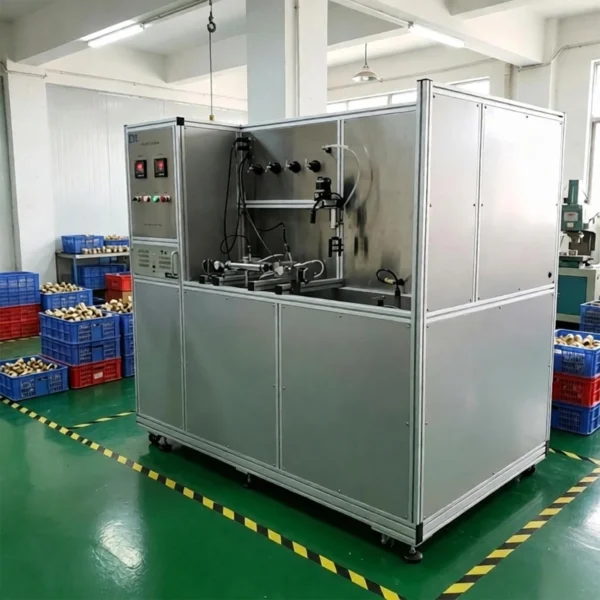
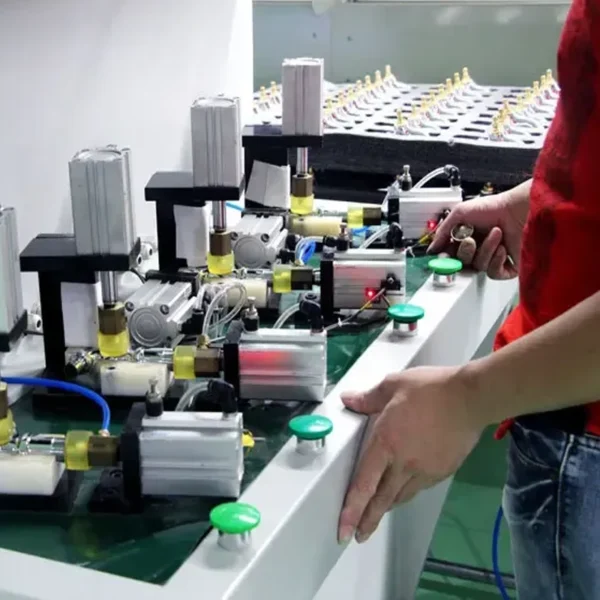
Before approving a thermostatic shower platform, bathroom brands should evaluate several engineering questions.
First, does the system match the hydraulic conditions of the target market?
A product designed for stable residential water pressure may require different considerations when applied to hotels or multi-unit buildings.
Second, are the materials suitable for long-term exposure to the expected water environment?
Material compatibility directly influences lifecycle performance.
Third, has production consistency been verified?
Thermostatic performance depends heavily on controlled tolerances and repeatable assembly.
Finally, are testing procedures aligned with real application requirements?
Testing should represent the conditions the product will experience after installation, not only ideal factory conditions.
Temperature control performance is becoming a reflection of overall product engineering capability.
For bathroom brands, the competitive advantage is no longer created only through design appearance or feature lists. It comes from developing products that remain reliable after installation, across different markets and operating environments.
Understanding the relationship between hydraulic conditions, materials, manufacturing precision, and lifecycle performance allows brands to reduce uncertainty during product development and create stronger long-term product strategies.
Temperature control failure in thermostatic shower systems is often misunderstood because the visible symptom appears simple: unstable water temperature. However, the underlying causes are rarely limited to one failed component.
A thermostatic shower system is a coordinated engineering system where hydraulic conditions, sensing technology, material performance, mechanical precision, manufacturing consistency, and installation environment all influence final performance.
For bathroom brands, this means product evaluation should move beyond appearance, specifications, or initial sample approval. A reliable thermostatic system requires a deeper understanding of how the product behaves throughout its lifecycle—from prototype validation and mass production to long-term operation in real market conditions.
The future of bathroom product development is moving toward more complete system thinking. Brands that understand the relationship between engineering design, manufacturing control, and field performance will be better positioned to reduce product risk and create more reliable bathroom solutions for global markets.
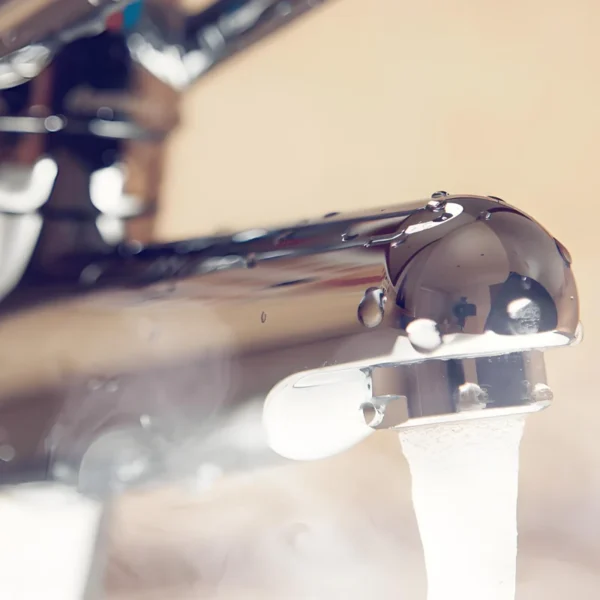
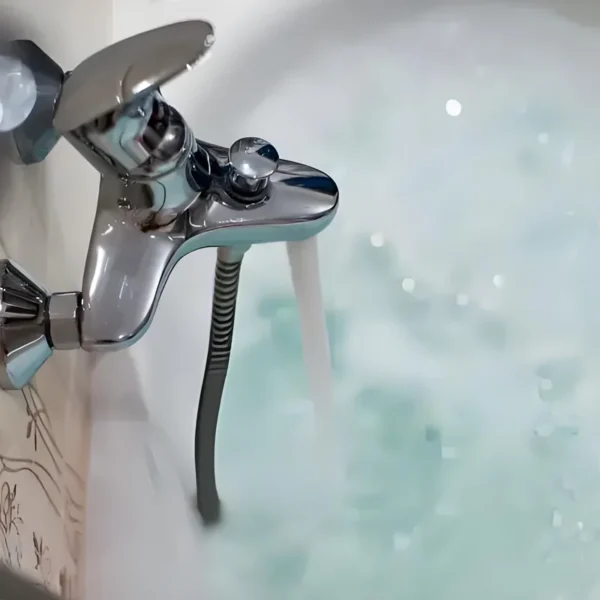
A sudden temperature change usually occurs when the balance between hot and cold water supply changes faster than the thermostatic valve can compensate. This may happen when another water outlet is opened, when supply pressure changes, or when the valve response becomes slower due to aging or internal buildup.
For product developers, this is why hydraulic conditions should be considered together with valve design rather than evaluating the cartridge alone.
A thermostatic valve may perform correctly when new but gradually lose accuracy because internal components experience continuous thermal and mechanical cycles.
Over time, factors such as seal aging, spring fatigue, mineral deposits, and increased internal friction can affect response speed and calibration stability.
This is also why lifecycle testing is an important part of evaluating thermostatic shower systems for long-term applications.
Sometimes replacing the cartridge can restore performance, but it does not always solve the root cause.
If the problem comes from unstable water pressure, incorrect installation conditions, poor material compatibility, or internal system design limitations, changing one component may only provide a temporary solution.
A complete system evaluation is usually required to identify the actual failure mechanism.
Water quality can significantly influence long-term performance, especially in areas with high mineral content.
Minerals may accumulate inside internal flow channels and moving components, reducing sensitivity and increasing mechanical resistance. For brands targeting different international markets, water conditions should be considered during product development rather than after product launch.
Testing requirements depend on the target market and application environment, but important evaluations may include temperature response testing, pressure variation testing, durability cycling, flow performance verification, and safety-related testing.
The objective is not only to confirm that the product works, but to understand whether it can maintain stable performance over time.
Emily Chen is a Product Specialist at JEKARE, focusing on bathroom product development, faucet engineering, water control technologies, and application performance. With experience supporting global bathroom product projects, she shares insights into product design considerations, manufacturing processes, and real-world performance challenges faced by international brands.
Her articles focus on helping bathroom companies better understand engineering decisions behind reliable products, from material selection and component design to quality validation and production consistency.
Developing a reliable thermostatic shower system requires more than selecting individual components. It requires understanding how materials, hydraulic conditions, manufacturing processes, and market requirements work together.
JEKARE supports global bathroom brands with engineering collaboration throughout product development, from early design evaluation and material recommendations to manufacturing coordination and quality verification.
Whether you are developing a new thermostatic shower collection, improving an existing product line, or evaluating OEM manufacturing options, our engineering team can help identify key technical considerations before mass production begins.
Discuss your next bathroom product development project with JEKARE.