Call us: +86-18965139230 | Mail to us: info@jekare.com

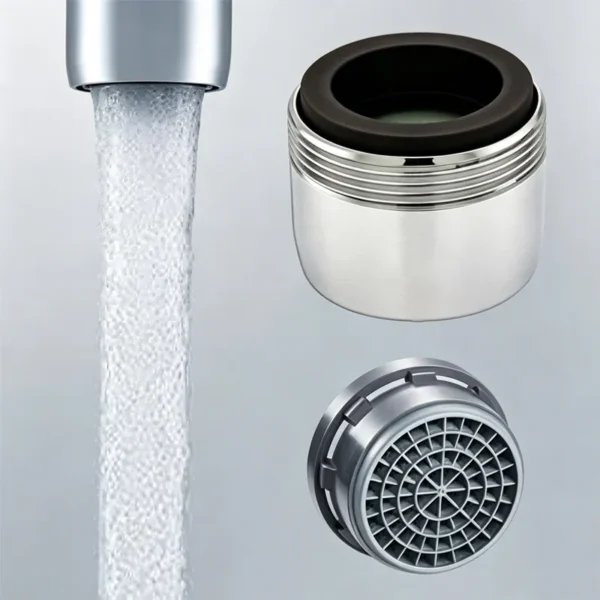
Aerators are a defined, regulated component category in U.S. plumbing efficiency programs — but specifically for bathroom sink (lavatory) faucets, not bathtub fillers. Under the EPA’s WaterSense specification for bathroom sink faucets, a faucet accessory — including aerators, flow restrictors, and laminar flow devices — is defined as a component added to a lavatory faucet spout specifically to control its flow rate. The specification’s scope is explicit: it covers lavatory (bathroom sink) faucets, not bathtub spouts.
A sink faucet exists for point-of-use tasks — hand washing, shaving, brushing teeth — where a WaterSense-labeled aerator limits flow to a maximum of 1.5 gpm at 60 psi while still meeting a minimum performance threshold. A bathtub filler exists to fill a tub in a reasonable amount of time, a functional requirement that runs directly counter to the low-flow, air-entrained delivery an aerator is designed to produce — which is precisely why aerators aren’t a standard feature on bathtub spouts in the first place.
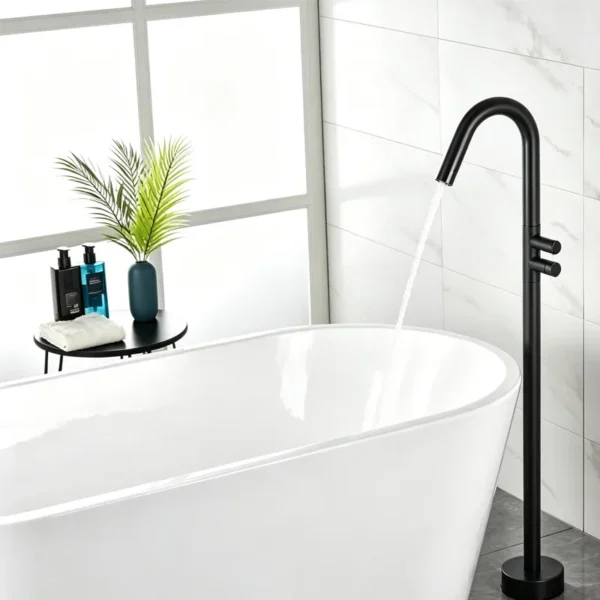
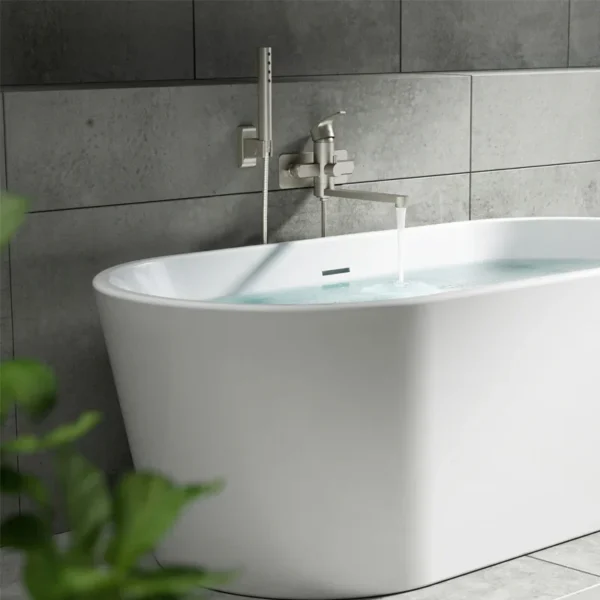
Adding an aerator-style flow restrictor to a bathtub filler would meaningfully extend fill time, working against the product’s core functional purpose — a design decision that makes sense for a sink faucet but actively undermines a tub filler’s job.
Treating a bathtub faucet as if it fell under WaterSense’s lavatory faucet flow-rate requirements — or marketing it as “WaterSense compliant” based on that misunderstanding — creates a compliance and marketing-accuracy risk, since the specification simply doesn’t apply to this product category.
For combination tub-and-shower fixtures, the component that actually governs water-saving performance and functional reliability is the diverter — the mechanism that redirects flow between the tub spout and the shower head — not an aerator, which isn’t part of this product’s design in the first place.
The WaterSense High-Efficiency Bathroom Sink Faucet Specification applies to lavatory faucets and lavatory faucet accessories specifically, requiring a flow rate that does not exceed 1.5 gpm at 60 psi, with a minimum flow rate requirement to maintain usability at lower pressure. The specification makes no reference to bathtub fillers or tub spouts — the product category simply falls outside its scope.
Federal standards mandate that lavatory and kitchen faucets manufactured for sale in the U.S. after January 1, 1994 use no more than 2.2 gpm, and showerheads no more than 2.5 gpm, according to the U.S. Department of Energy. Notably, this federal flow-rate mandate is likewise scoped to lavatory and kitchen faucets and showerheads — it does not separately regulate bathtub filler flow rate, which typically runs considerably higher than either category to support reasonable fill times.
For combination tub-and-shower fixtures specifically, ASME A112.18.1/CSA B125.1 sets an allowable leak rate for the diverter — the mechanism directing water to either the tub spout or the shower head — of 0.1 gpm when new and 0.2 gpm after life-cycle testing. This is the actual performance benchmark relevant to tub-and-shower combo units, and it addresses diverter sealing performance, not aerator-style flow restriction.
In bathroom product development, we often see that performance requirements are sometimes applied across different product categories without considering their actual functions.
For bathtub faucets and tub-and-shower systems, the key engineering considerations are usually not the same as those for lavatory faucets. A bathtub filler is designed around sufficient flow capacity and reliable filling performance, while a combination shower system requires attention to diverter sealing, switching reliability, and long-term durability.
For brands developing multiple bathroom categories, defining the correct performance criteria at the product development stage helps avoid incorrect specifications, unnecessary components, and inaccurate marketing claims.
From an OEM manufacturing perspective, category-specific engineering decisions are essential for creating products that meet both market expectations and applicable performance requirements.
Before applying WaterSense or federal lavatory faucet flow standards to a spec sheet, confirm the product is actually classified as a lavatory faucet — a bathtub filler falls under different (or no directly applicable) flow-rate regulation, and treating the two interchangeably in marketing materials creates an accuracy problem.
For tub-and-shower combination fixtures, request diverter leak-rate test data referencing ASME A112.18.1’s specific allowances (0.1 gpm new, 0.2 gpm end-of-life), rather than a general “no water saving feature” assumption based on the absence of an aerator.
For bathtub fillers specifically, evaluate actual fill time performance as the relevant functional benchmark — a metric governed by spout design and flow capacity, not by any aerator-based flow restriction that would work against the product’s purpose.
If a supplier markets a bathtub faucet’s water efficiency based on aerator presence, treat this as a red flag worth clarifying — aerators aren’t a standard or expected component of this product category, and the claim may reflect confusion between faucet types rather than an actual efficiency feature.
Understanding which flow-rate standards actually apply to which product category connects directly to how accurately a brand can market its own product line — a brand that conflates sink faucet and bathtub filler regulatory requirements risks making claims it can’t substantiate, or missing the actual performance benchmark (diverter leak rate) that does apply to combination units.
More broadly, category-accurate engineering and marketing across a full bathroom product line — sink faucets, bathtub fillers, and shower systems each governed by their own relevant standards — supports a brand’s credibility with retail and hospitality buyers who increasingly expect precise, standard-referenced claims rather than generalized water-saving language applied uniformly across an entire catalog.
JEKARE’s faucet product line is engineered with category-specific performance targets — lavatory faucets designed around applicable flow-rate requirements, and bathtub fillers designed around fill-time and delivery performance rather than an aerator-based flow restriction that wouldn’t serve the product’s function. Buyers evaluating valve and diverter technology options can review JEKARE’s breakdown of ceramic, ball, cartridge, and thermostatic valve types for a deeper look at the mechanisms behind these product categories.
For combination tub-and-shower products specifically, JEKARE’s quality inspection process evaluates diverter seal performance as part of standard product qualification — the actual benchmark relevant to this category under ASME A112.18.1. Brands developing a coordinated sink, tub, and shower product line can work through JEKARE’s OEM/ODM project process to confirm category-appropriate specifications across the full collection.
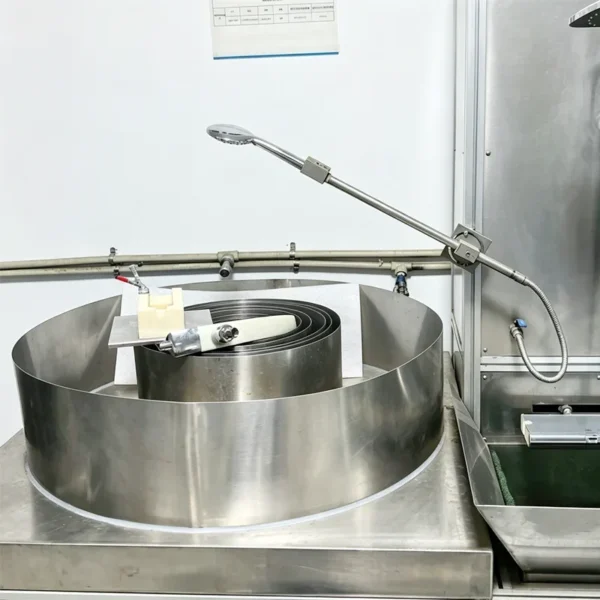
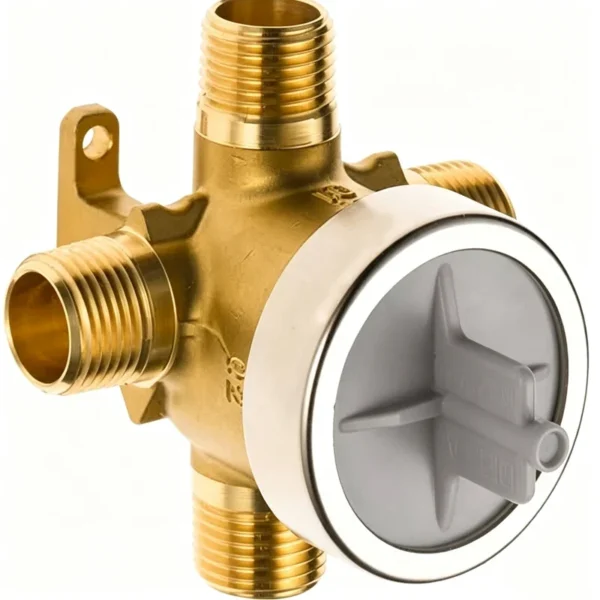
Bathtub faucets generally don’t have aerators, and for good functional reason — aerators are a lavatory faucet accessory specifically designed to restrict flow for point-of-use tasks, which works directly against a tub filler’s job of filling a bathtub in a reasonable amount of time. For B2B buyers, the practical takeaway is to apply the correct regulatory and performance benchmark to each product category — WaterSense and federal flow-rate standards for lavatory faucets, ASME A112.18.1’s diverter leak-rate requirements for tub-and-shower combination units — rather than treating water-efficiency standards as interchangeable across a full bathroom fixture line.
Technically yes, but doing so would meaningfully extend fill time, which works against the fixture’s core function — this is why it isn’t a standard design feature, not because it’s mechanically impossible.
No — WaterSense’s bathroom sink faucet specification is specifically scoped to lavatory faucets; kitchen sink faucets and bar sinks are covered separately (or, in some cases, proposed for future coverage), and bathtub fillers fall outside the specification’s scope entirely.
Based on current EPA WaterSense and federal DOE flow-rate program scope, there isn’t a dedicated efficiency certification specifically for bathtub filler flow rate in the way there is for lavatory faucets and showerheads — efficiency-related product claims for tub fillers should be evaluated against actual applicable standards rather than assumed to mirror lavatory faucet criteria.
A diverter leak specifically refers to water escaping from the tub spout while the diverter is engaged to direct flow to the shower head — ASME A112.18.1 sets a specific allowable rate for this condition (0.1 gpm new, 0.2 gpm at end-of-life), distinct from a general fitting leak elsewhere in the unit.
Not necessarily, but any water-saving claim for a bathtub filler should be tied to an actual measurable and relevant benchmark — such as documented diverter leak-rate performance — rather than implying compliance with a standard, like WaterSense’s lavatory faucet specification, that doesn’t actually apply to the product.
Mary is a Faucet Engineering Lead at JEKARE with over 20 years of experience in bathroom fixture development and OEM manufacturing. She specializes in category-specific flow performance engineering, diverter mechanism design, and standard-referenced product documentation across faucet, tub filler, and shower system product lines. With extensive experience supporting global bathroom brands and distributors through supplier qualification, Mary focuses on helping buyers apply the correct regulatory and performance benchmark to each specific product category rather than assuming uniform standards across an entire catalog.

✔ 20+ Years of OEM & ODM Manufacturing Experience
✔ Category-Specific Engineering for Faucets, Tub Fillers, and Diverters
✔ Diverter Leak-Rate Testing Referencing ASME A112.18.1
✔ Complete Sink, Bathtub, and Shower Product Solutions
✔ Standard-Referenced Documentation Buyers Can Verify
✔ Reliable Manufacturing Partner for Global Distributors and Brands
Whether you’re clarifying category-specific claims across an existing catalog or developing a new bathtub filler program, JEKARE provides engineering-driven OEM manufacturing support from concept development through mass production.Contact our team to discuss your next bathroom product project.