Call us: +86-18965139230 | Mail to us: info@jekare.com

Faucet valves aren’t certified as one generic category — European sanitary tapware standards split them by function. EN 817 governs the dimensional, leak-tightness, pressure resistance, hydraulic performance, mechanical endurance, and acoustic characteristics of mechanical mixing valves — the category covering ceramic disc, cartridge, and compression types. EN 1111, by contrast, is a separate standard specifically for thermostatic mixing valves, built around anti-scald performance and point-of-use temperature stability below 45°C.
That split matters for OEM sourcing: a valve family being “premium” or “advanced” doesn’t mean it’s tested against the same criteria as another family. A shower faucet built around a ceramic disc valve and one built around a thermostatic valve are validated against genuinely different technical specifications, not just different price points.
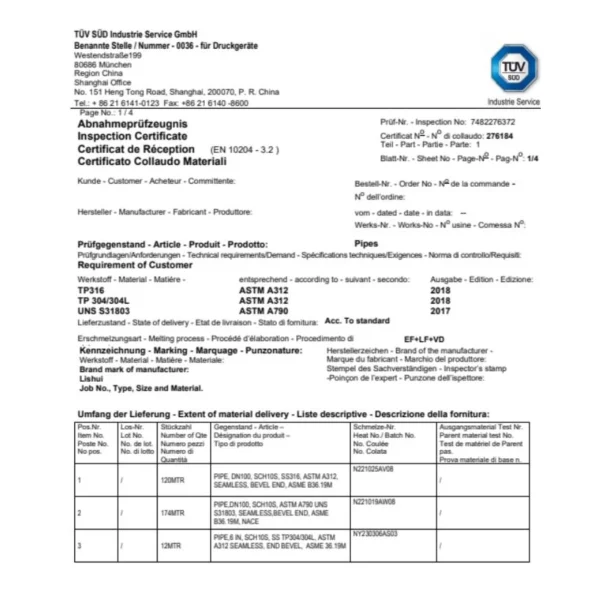
Choosing a valve type is often treated as a spec-sheet decision — pick whichever sounds most advanced for the price tier. In practice, valve family determines pressure tolerance, precision, service life, and safety behavior in ways that don’t substitute for each other. A ball valve rated for high-pressure, high-flow industrial use doesn’t deliver the fine temperature control a bathroom mixer needs, and a thermostatic valve’s anti-scald function isn’t something a cartridge valve can be upgraded into after the fact. Getting the valve family wrong for the application shows up later as safety risk, premature failure, or a product that technically works but doesn’t meet the expectations of its market segment.
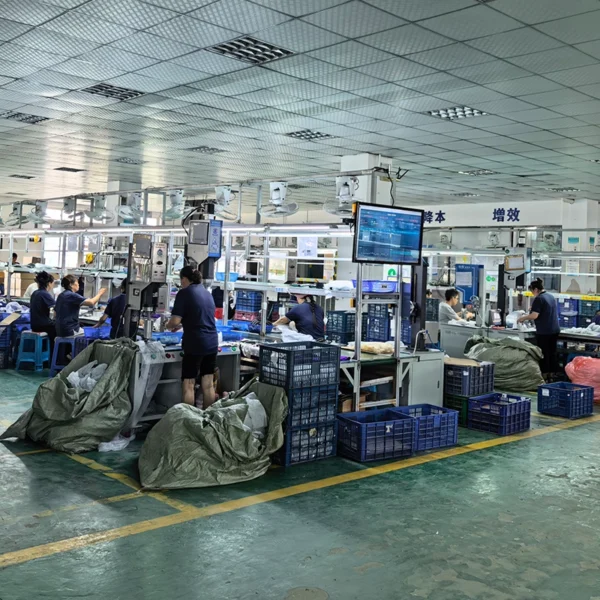
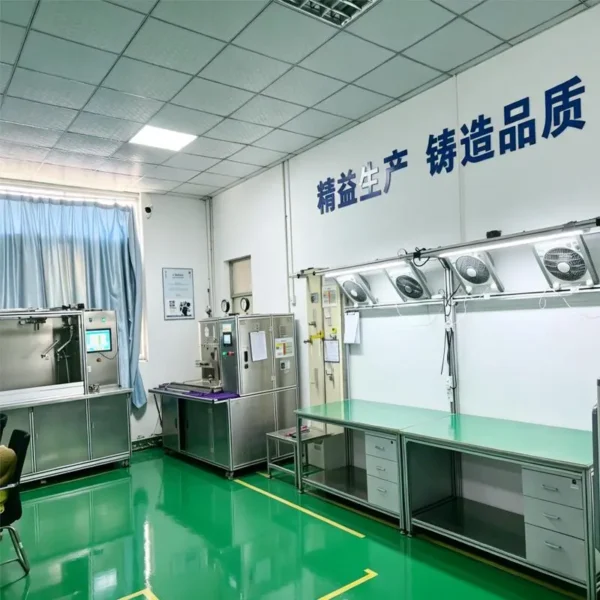
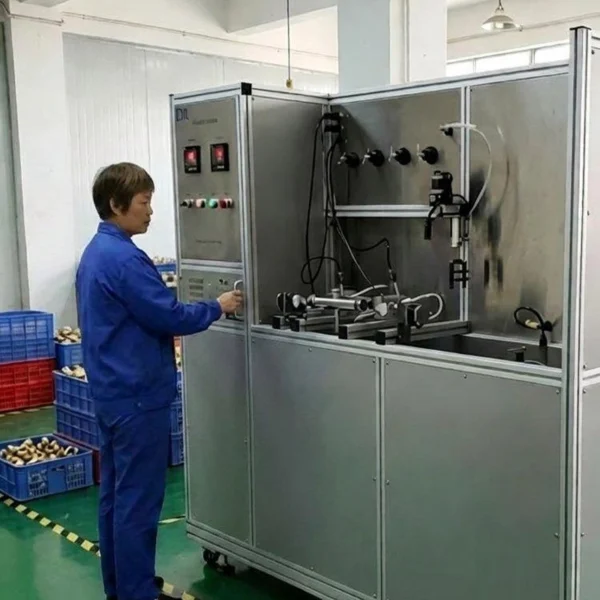
EN 817 sets the technical bar for mechanical mixing valves, but it’s a type-test standard run in laboratory conditions — it confirms a valve design meets stated mechanical, hydraulic, and acoustic performance under controlled test parameters, not that every production unit is individually verified to the same standard. That distinction is why batch-level inspection still matters even for a valve family with strong type-test credentials.
EN 1111 wasn’t created as an upgraded version of EN 817 — it exists because thermostatic mixing valves solve a fundamentally different problem: automatic anti-scald protection rather than manual flow and temperature control. That’s precisely why EN 1111 compliance is treated as close to mandatory in applications like hospitals, childcare facilities, and hotels, where the safety requirement itself — not user preference — drives valve family selection.
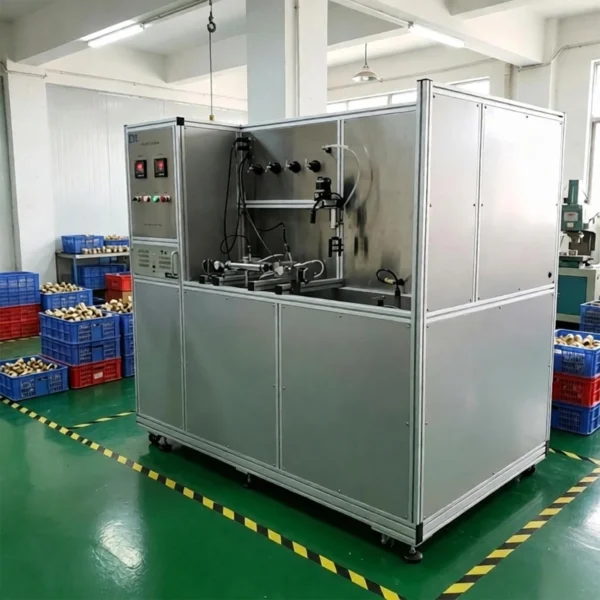
Different valve types are built for different operating conditions. Ceramic disc valves typically use alumina or zirconia discs, operate under medium-pressure systems, and offer a long service life — often exceeding 500,000 cycles — with a quarter-turn operation that makes them the standard choice for most modern residential faucets. Ball valves use a stainless steel or brass ball structure and handle much higher pressure ranges, often up to 6.4 MPa, prioritizing flow capacity over precise regulation. Compression valves rely on rubber or neoprene washers, suit low-pressure environments, and carry significantly shorter service lives. Cartridge valves integrate sealing and flow control into a modular structure, widely used in mid-to-high-end shower faucet systems for stable performance and straightforward replacement. Thermostatic valves use wax or electronic sensors for automatic temperature regulation, while pressure balance valves use diaphragm or piston systems to stabilize hot/cold pressure fluctuations.
Each valve type controls flow through a different mechanical principle. Ceramic disc valves rely on two precision-ground surfaces rotating against each other, sealing without direct wear in the closed position. Ball valves control flow through the alignment of a hollow rotating sphere against PTFE seats. Compression valves use a screw-driven stem to press a washer against a seat. Cartridge valves combine multiple sealing elements inside a compact cylinder for rotational or linear flow control. Thermostatic valves respond to temperature by expanding or contracting internal sensing elements. Pressure balance valves react to real-time pressure differences, adjusting internal flow distribution to hold a stable hot/cold output ratio.
Every valve type carries a trade-off that has to be weighed against the application, not just its advantages. Ceramic disc valves, while durable, can be brittle under extreme pressure or sudden thermal shock. Ball valves aren’t suited to precise flow adjustment and may suffer seat wear in partially open positions. Compression valves have relatively short service lives and aren’t suitable for high-temperature or high-pressure environments. Cartridge valves require high manufacturing precision and can be more expensive to replace. Thermostatic valves can be sensitive to water quality and may respond more slowly in systems with heavy scaling. Pressure balance valves stabilize pressure effectively but can’t independently control temperature and offer limited dynamic flow adjustment.
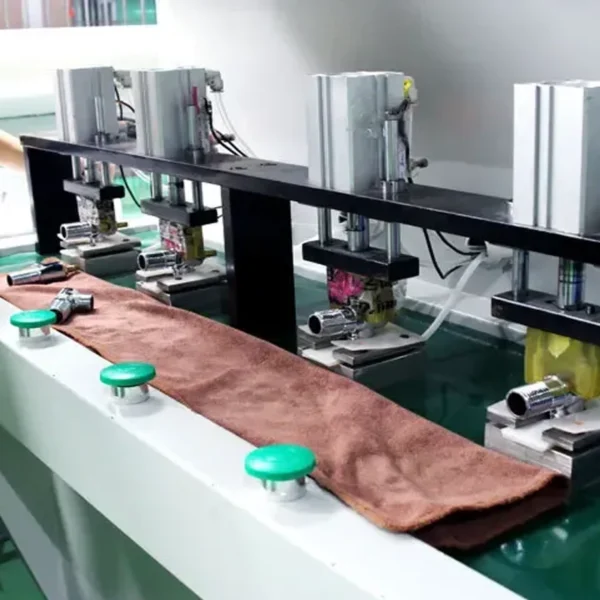
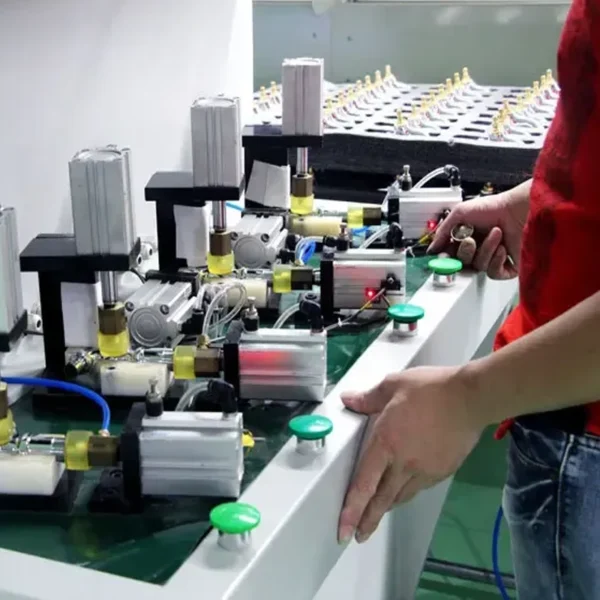
Valve compatibility depends heavily on pipeline material, interface standard, and installation orientation. Ceramic disc and cartridge valves generally suit copper and PPR piping with standard G1/2 or G3/4 interfaces; ball valves work across both metal and plastic pipelines in full-port or reduced-port configurations; compression valves fit older iron or copper systems with simple vertical installation; thermostatic valves require correct hot/cold orientation and are best suited to copper or PPR systems; pressure balance valves need filtration to protect diaphragm performance, particularly in mixed water-supply systems. Confirming this compatibility is part of standard design and development work rather than a detail left to installation.
Maintenance needs vary just as much: ceramic disc valves mainly need occasional descaling; ball valves need periodic seat lubrication; compression valves need frequent washer replacement; cartridge valves are typically serviced by full-cartridge replacement; thermostatic valves need regular filter cleaning to preserve temperature accuracy; pressure balance valves need diaphragm inspection and filter cleaning.
In 2023, JEKARE supported a North American bathroom brand — supplying roughly 75,000 faucet sets annually through residential distributors and commercial renovation projects — through exactly this diagnostic process. The customer had standardized on one brass specification across its entire portfolio (bathroom faucets, shower mixers, thermostatic shower systems): standard brass alloy, nickel/chromium plating, NSF/ANSI 61 compliant material selection. It passed factory inspection and initial certification without issue. The problem only surfaced after the customer expanded into several U.S. regions running chloraminated municipal water.
A 12-month warranty review showed corrosion wasn’t the largest failure category — but it had a distinct signature the others didn’t:
| Failure Category | Share of Warranty Cases |
|---|---|
| Cartridge leakage | 38% |
| Installation issues | 21% |
| Surface finish complaints | 18% |
| Brass body/thread corrosion | 17% |
| Other | 6% |
At only 17% of total cases, corrosion looked minor in isolation — until JEKARE noticed the pattern underneath it: average failure time of 14–22 months after installation, 80% of cases concentrated in just three U.S. water districts, failures concentrated specifically in brass valve bodies and threaded connections, and initial factory inspection showing no abnormality at all. A delayed, geographically concentrated failure pattern like that points to environmental exposure, not a production defect.
Engineering investigation confirmed three common field conditions across the affected installations:
Microscopic inspection of returned samples showed the textbook dezincification signature: zinc depletion near brass surfaces, a porous copper-rich structure, and reduced mechanical strength specifically around threaded areas — consistent with exactly the failure mechanism this article describes.
JEKARE’s material comparison made the case for a regional rather than global fix:
| Performance Item | Standard Brass | DZR Brass |
|---|---|---|
| Zinc loss resistance | Standard | Improved |
| Chloramine exposure tolerance | Limited | Higher |
| Hot-water application suitability | Moderate | Better |
| Long-term corrosion resistance | Application-dependent | Improved |
Rather than switching the entire portfolio, the customer moved to application-based material selection: general residential markets kept standard brass; chloraminated U.S. regions moved to DZR brass; commercial buildings received DZR brass with enhanced validation; hot-water circulation projects prioritized DZR brass.
Field monitoring after the change:
The generalizable point: brass faucet durability can’t be evaluated through initial compliance testing alone. The same specification performs differently depending on local disinfectant chemistry, water temperature, installation frequency, and stagnation conditions — which is why brass selection deserves treatment as a market-specific engineering decision, not a fixed global default.
A separate program with a North American residential faucet brand (roughly 85,000 sets purchased annually) showed the same pattern from a different angle. The customer had standardized on one brass specification — standard brass body, nickel/chromium plating — across bathroom faucets, shower mixers, and kitchen faucets to simplify inventory, with a 5-year warranty across U.S. and Canadian markets. About 18 months into field sales, corrosion-related warranty cases began rising in specific U.S. regions running chloraminated municipal water.
Corrosion accounted for only 18% of total warranty claims (versus 32% for cartridge leakage, 24% for finish complaints, and 19% for installation issues) — but 76% of those corrosion complaints concentrated in just three metropolitan water districts, with average failure times of 16–24 months at valve body threads and internal water passages. Returned samples showed the same zinc-depletion and porous copper-rich corrosion pattern, traced to chloramine concentrations of roughly 0.5–1.0 mg/L, hot water operation at 45–55°C, and low-use guest bathroom installations.
The customer split its specification the same way — standard brass for general residential markets, DZR brass for chloraminated regions, DZR brass with additional validation for commercial projects. After 12 months of monitoring, corrosion-related warranty cases dropped from 15 to 6 per year, and material-related returns fell from 18% to 7% of total claims. Two different customers, two different product portfolios, and the same underlying fix: match brass grade to regional water chemistry rather than defaulting to one global specification.
Rather than a generic question list, these are the specific conditions that AWWA and NSF-referenced research associate with elevated dezincification risk — worth checking against any target market before finalizing a material spec:
A program showing two or more of these conditions in its target market is a stronger candidate for DZR brass or protective plating than standard brass validated only to NSF/ANSI 61 leaching limits.
Valve family selection is one of the few faucet-level decisions that touches safety compliance, warranty exposure, and product positioning simultaneously. Treating it as a checklist of “nice to have” features risks either over-specifying (a thermostatic valve where a cartridge valve would fully satisfy the application) or under-specifying (a compression valve in an application that actually needs EN 1111-level safety performance).
For OEM brands managing a portfolio across residential, hospitality, and institutional channels, that argues for mapping valve family to application risk level as a formal step in design and development, before finish, price point, or brand positioning enter the conversation — since the safety and compliance requirement, where one exists, isn’t really a negotiable design variable.
No — cost doesn’t map directly to application fit; a high-cost ball valve is the wrong choice for a bathroom mixer needing fine temperature control, just as an inexpensive compression valve is the wrong choice for a scald-safety application, regardless of relative price.
Not where scald-safety is a real requirement — a cartridge valve doesn’t provide the automatic anti-scald response EN 1111 specifically tests for, so the substitution isn’t just a quality downgrade, it removes a safety function the application may require.
No — EN 817 covers mechanical mixing valves specifically; thermostatic valves are certified separately under EN 1111, so a supplier’s EN 817 compliance for one valve family says nothing about a different family’s certification status.
Because their design optimizes for flow capacity and pressure tolerance rather than fine regulation, which suits irrigation and industrial piping better than the precise mixing control a bathroom or kitchen faucet application typically needs.
Not exactly — pressure balance valves stabilize hot/cold ratio under pressure changes but don’t independently regulate absolute temperature the way a thermostatic valve does, so the two solve related but distinct problems and are sometimes combined rather than chosen between.
David Chen is a Quality Control Engineer at JEKARE, specializing in shower system development, manufacturing process control, and product quality improvement. With experience in material selection, precision machining, injection molding, and production management, he oversees product development from engineering design through mass production, with a focus on valve family selection, certification alignment, and long-term product reliability.
1.DIN EN 817 — Sanitary Tapware: Mechanical Mixing Valves (PN 10), General Technical Specifications
https://www.en-standard.eu/din-en-817-sanitary-tapware-mechanical-mixing-valves-pn-10-general-technical-specifications/
2.Water Hygiene Centre — Your Guide to TMVs (EN 1111 Thermostatic Mixing Valves)
https://www.waterhygienecentre.com/blog/tmvs-what-are-they
✔ 20+ Years of OEM & ODM Manufacturing Experience ✔ Complete Faucet, Shower and Bathroom Product Solutions ✔ Engineering Support from Design to Production ✔ Valve Type Testing and Certification Support Built Into Standard QC ✔ Flexible Customization for Different Application Risk Levels ✔ Manufacturing Partner for Global Distributors and Brands
Whether your program needs EN 1111-certified thermostatic safety, EN 817-tested mechanical mixing, or a mix across a multi-tier product line, JEKARE’s OEM/ODM project process matches valve family to application risk from the design stage.