Call us: +86-18965139230 | Mail to us: info@jekare.com

According to Grand View Research’s global shower heads market report, fixed shower heads held a 57.3% revenue share of the overall global market in 2024, in a category projected to reach USD 20.41 billion by 2030 — yet the same research identifies dual-purpose and multi-function designs as the fastest-growing segment. That split matters for a sourcing decision: multi-function is where the growth is, but single-function still moves the most volume, which means “which one is better” isn’t actually the right question — the right question is which one fits a specific brand’s margin structure and operational tolerance for complexity.
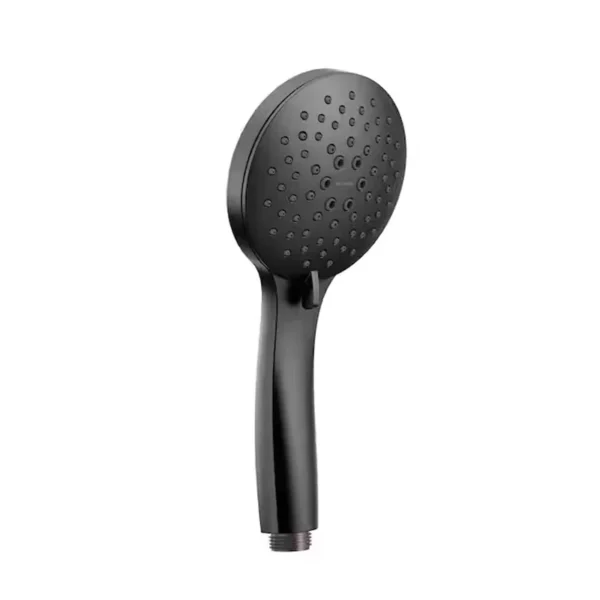

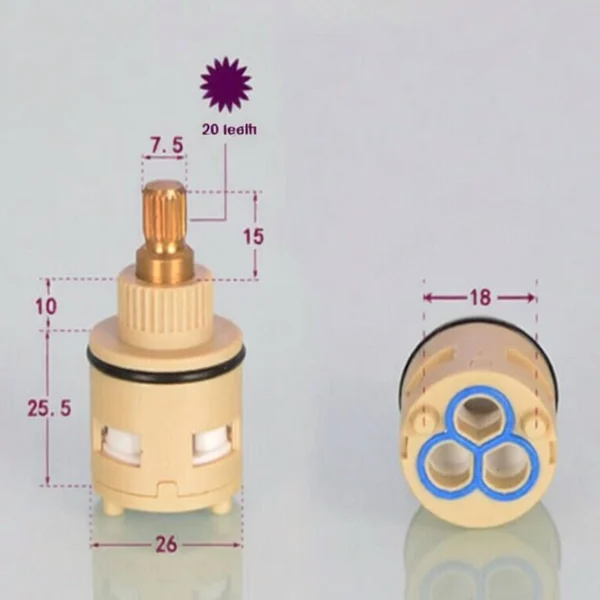
A single-function shower head has one water path and no moving parts beyond the spray plate. A multi-function head — pulse, rain, mist, jet — routes water through a diverter cartridge that mechanically switches between spray patterns, which means the failure point buyers worry about isn’t the housing or the finish, it’s almost always that internal switching mechanism.
The margin comparison between single- and multi-function isn’t just unit cost against retail price. Landed cost shifts with packaging volume once ocean freight enters the picture, and a defect-driven return costs more to process than a straightforward one — both of which hit multi-function SKUs disproportionately because of their larger internal assembly and higher part count. A brand that prices a multi-function head purely on BOM cost plus a target margin, without accounting for these two factors, is likely to find the real margin thinner than the spreadsheet suggested.

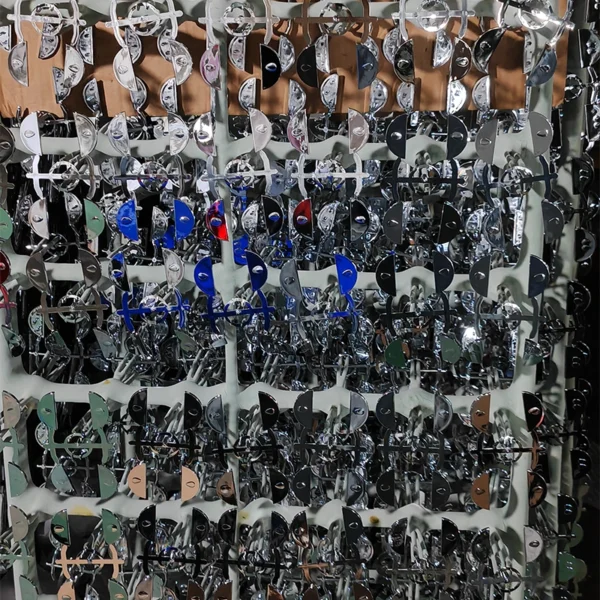
The diverter mechanism inside multi-function shower heads is specifically regulated: the EPA’s WaterSense program notes that ASME A112.18.1/CSA B125.1 defines a bath and shower diverter’s product life cycle as 15,000 switching cycles, with a maximum post-life-cycle leak rate of 0.2 gpm. The same EPA document cites field studies finding that 34% of bath and shower diverters assessed already leaked above the pre-life-cycle 0.1 gpm threshold, with an average leak rate of 0.8 gpm and some units as high as 3.0 gpm — meaning diverter failure isn’t a hypothetical risk, it’s a documented, quantified pattern in the exact component that separates a multi-function head from a single-function one.
Ocean freight for a 40-foot container is priced as a unit, tracked industry-wide through benchmarks like the Freightos Baltic Index — which means the cost of a shipment doesn’t scale with what’s inside the box, it scales with how many boxes fit. A multi-function shower head’s larger housing and additional internal components typically mean a bigger carton and fewer units per container than an equivalent single-function model, so two products with an identical FOB unit cost can carry meaningfully different landed costs once freight is allocated per unit.
The National Retail Federation’s 2025 Retail Returns Landscape puts the US ecommerce return rate at roughly 19.3% of online sales. A return driven by a genuine functional defect — a diverter that sticks or leaks — typically costs more to process than a straightforward preference-based return, since it usually involves a warranty claim, a replacement unit, and sometimes a negative review, on top of the standard reverse-logistics cost.
In 2018, JEKARE partnered with a North American bathroom brand developing its first premium multifunction shower head series. The brand had been selling single-function ABS shower heads through online retail at USD 39.99–49.99 and wanted to move into a higher-value segment with a three-mode (rainfall/massage/mixed spray) multifunction head at an USD 89.99 retail price. The original concept — push-button spray selection, fully separate water channels per mode, a brass diverter valve assembly, independent sealing structures, and new housing and spray plate tooling — priced out at an estimated FOB cost of USD 24.80 per unit against USD 11.50 for the existing single-function platform, with the diverter system alone adding USD 4.60 and tooling investment jumping from USD 12,000 to USD 38,000.
Against the customer’s planned USD 45 wholesale price, that cost structure would have cut expected gross margin from roughly 49% to about 33% once manufacturing cost, packaging, and logistics were factored in — a meaningful problem for an ecommerce-focused brand still absorbing marketing spend, marketplace fees, and returns on top of that. Rather than cutting features or downgrading materials, JEKARE’s engineering team reviewed which parts of the design actually drove the consumer-perceived premium versus which parts were mainly adding manufacturing complexity.
Three changes followed: the original multi-sealing-point brass diverter was redesigned into a simplified ceramic-based diverter, cutting component count from 12 parts to 7, sealing interfaces from 6 to 3, and assembly time by about 35 seconds per unit; the internal water path was redesigned to remove unnecessary channel duplication across the three spray modes, cutting internal components by 18% while holding spray performance under flow testing; and the platform reused existing connection and mounting components with a modified rather than all-new spray plate, bringing tooling investment down from USD 38,000 to USD 26,000 and the development timeline from 14 to 9 weeks.
The optimized design brought FOB cost down from USD 24.80 to USD 17.60, recovering gross margin from 33% back to roughly 47% at the same USD 89.99 retail price. The customer launched in 2019 with an initial order of 20,000 units; in the first 12 months, sales exceeded 55,000 units, the return rate stayed below 2.5%, and the platform expanded into two additional finish and spray-pattern variants.
The procurement-cost-to-retail-price spread is the starting point but not the whole picture. A multi-function shower head with a diverter cartridge, additional spray plate tooling, and more assembly steps costs more to produce than a single-function head, and that cost difference should be reviewed during design and DFM evaluation against the actual retail price premium the target market will bear — multi-function isn’t automatically better margin just because it commands a higher price tag.
Packaging design deserves its own review, not an afterthought after the product is finalized. Since freight is priced per container rather than per unit, working with assembly and packaging to minimize carton dimensions for a multi-function head — without compromising protection — has a direct, calculable effect on landed cost per unit, and that calculation is worth running before committing to a packaging design, not after the first container ships.
Diverter cartridge durability is the single highest-leverage question to ask a supplier. Given that ASME A112.18.1/CSA B125.1 sets the code-minimum diverter life at 15,000 cycles, ask what cycle count a specific diverter cartridge has actually been tested to beyond that minimum, and ask to see the test data rather than a general durability claim — a cartridge validated well past 15,000 cycles, produced with mold-development tolerances tight enough to hold up at volume, and confirmed through inspection at the batch level is a meaningfully different sourcing decision than one tested only to the code floor.
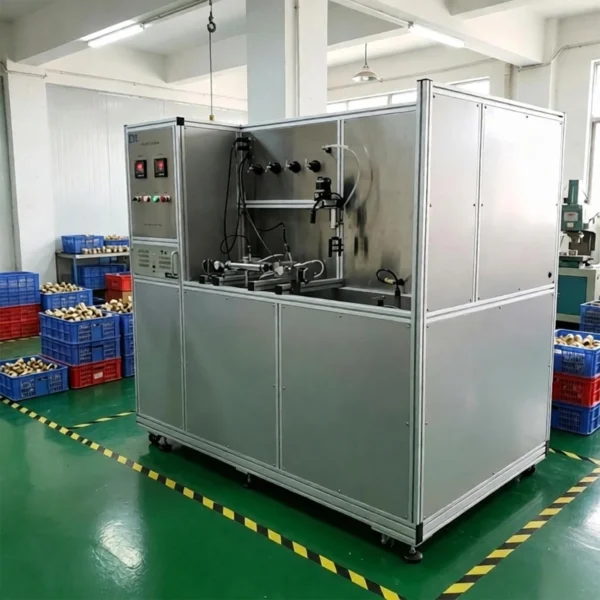

Documentation ties the whole comparison together. Keeping diverter cycle-test data alongside a product’s other certification records, reviewed as part of the standard OEM project process, is what lets a brand actually defend a multi-function SKU’s margin assumptions with evidence if a return-rate spike or a retailer compliance question comes up later.
The single- versus multi-function question rarely gets answered once — it comes back every time a brand considers a line extension or evaluates whether to add function points to an existing model, similar to the retrofit question covered in JEKARE’s piece on adding a handheld to an existing shower head. Brands that document the true landed-cost and failure-rate picture for their first multi-function SKU carry that framework into every SKU decision after it.
A multi-function shower head can absolutely deliver better margin than a single-function one — but only when the retail price premium is large enough to cover the real cost stack: higher unit cost, a larger packaging footprint, and a defect-driven return rate tied to the diverter cartridge specifically. Brands that price multi-function SKUs against BOM cost alone, without those three factors, are the ones most likely to see a “premium” product underperform on actual contribution margin, and that gap is best caught before scaling production volume, not after.
Neither single- nor multi-function shower heads are the categorically “better” choice — the honest answer depends on whether a brand’s target retail price actually clears the real cost stack a multi-function SKU carries: higher BOM cost, a larger packaging footprint that raises per-unit freight, and a documented failure risk concentrated in the diverter cartridge. Single-function keeps that math simple and is why it still owns the majority of category revenue. Multi-function can out-earn it, but only for brands that price in freight and failure risk upfront and can point to real cycle-test data behind the diverter, rather than assuming a higher sticker price automatically means a healthier margin.
Q: Is a higher retail price for multi-function shower heads always enough to offset their higher cost stack? A: Not automatically — it depends on the actual price premium a brand’s target market will pay versus the combined increase in unit cost, packaging volume, and expected defect-related returns, which is a calculation worth running per SKU rather than assuming.
Q: What’s the practical difference between a button-switch and a rotary-switch diverter? A: Both route water between spray modes, but they differ in mechanical actuation and the specific wear points a manufacturer needs to validate — the switching mechanism, not the housing material, is usually where cycle-life differences between diverter designs actually show up.
Q: Does the 15,000-cycle diverter standard mean a product is guaranteed to last 15,000 uses? A: No — it’s a minimum performance threshold at pre- and post-life-cycle leak-rate limits, not a durability guarantee, and it doesn’t account for the real-world field failure rates found in the EPA-cited studies, which is why testing beyond that floor is a meaningful differentiator, not a formality.
Q: Can packaging redesign meaningfully lower landed cost without a new product design? A: Yes — since ocean freight is priced per container rather than per unit, reducing carton dimensions on an existing product can increase units per container and lower the freight-allocated cost per unit without touching the product itself.
Q: Should a DTC brand launch with a multi-function flagship SKU or start single-function and expand later? A: There’s no universal answer — starting single-function reduces initial cost and failure-rate exposure while a brand builds sales data and operational experience, while a multi-function launch can command a premium position from day one if the brand has the margin cushion and quality-testing partner to support it.
Q: How should a brand weigh a supplier’s diverter cycle-test claim if it can’t independently verify the testing? A: Ask for the actual test report and methodology rather than accepting a cycle-count claim on its own, and treat a supplier’s willingness to share raw test data — not just a summary number — as part of the evaluation.
Vincent Tan is a Business Development & Product Strategy Manager at JEKARE, working with DTC and cross-border ecommerce bathroom brands on SKU planning, landed-cost modeling, and margin analysis across single- and multi-function product lines. He coordinates with JEKARE’s design, mold development, and inspection teams to translate diverter cartridge testing data and packaging specifications into sourcing decisions that hold up at scale, rather than looking at unit cost in isolation. His work focuses on helping brands evaluate the full cost stack — production, freight, and failure risk — behind a product line decision before committing to tooling or initial order volume.
1.Grand View Research — Shower Heads Market Size, Share & Trends Analysis Report
https://www.grandviewresearch.com/industry-analysis/shower-heads-market-report
2.U.S. EPA — WaterSense Notice of Intent: Bath and Shower Diverters
https://www.epa.gov/sites/default/files/2017-05/documents/ws-products-bath-and-shower-diverter-noi-updated-508.pdf
3.ASME — Plumbing Supply Fittings (ASME A112.18.1/CSA B125.1)
https://www.asme.org/codes-standards/find-codes-standards/plumbing-supply-fittings-(with-10-18-errata)
4.Freightos — Freightos Baltic Index (FBX), International Ocean Freight Rate Index
https://www.freightos.com/international-freight-index/
5.National Retail Federation (NRF) — Consumers Expected to Return Nearly $850 Billion in Merchandise in 2025
https://nrf.com/media-center/press-releases/consumers-expected-to-return-nearly-850-billion-in-merchandise-in-2025
Single- versus multi-function SKU decisions are usually easier to work through against real cost and failure-rate data for a specific product line. Share your requirements for an initial engineering and cost review, and see the full shower head OEM/ODM program options available.