Call us: +86-18965139230 | Mail to us: info@jekare.com

“Made in China” tells an OEM buyer almost nothing useful about a bathroom product’s likely quality tier, because China’s sanitary ware manufacturing isn’t one industry — it’s several distinct regional clusters that grew up around different raw materials, different histories, and different customer segments. Guangdong’s Kaiping city, and specifically Shuikou Town within it, has been formally recognized by Kaiping’s municipal government as a national plumbing and sanitary ware production base — a designation rooted in decades of brass hardware casting and machining that predates most of China’s export manufacturing boom. Zhejiang’s Taizhou, and its Huangyan district specifically, built its reputation the opposite way: through plastic injection mold tooling at massive scale, which is what let the region industrialize low-cost, high-volume production for small appliances and hardware alike.
Xiamen’s position is different from both. As a deep-water port city in Fujian with a smaller, more specialized manufacturing base, Xiamen never competed on Kaiping’s brass-casting volume or Taizhou’s mold-tooling scale — its manufacturers built around precision injection molding, higher-spec plastics, and shower system engineering specifically, a narrower but more technically demanding lane.
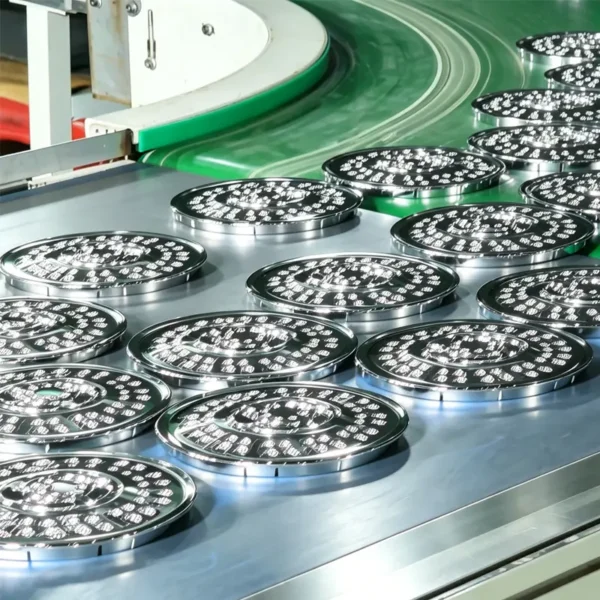
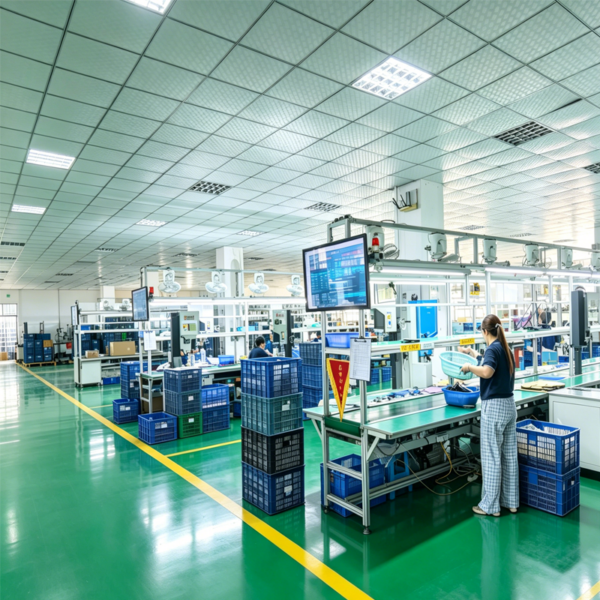
For a buyer sourcing shower systems, faucets, or bathroom accessories, treating “Chinese manufacturer” as a single category obscures a decision that actually has three fairly distinct answers depending on what the program needs. A program built around landed cost and simple hardware — a basic angle valve, a low-complexity accessory — is well served by regions built for volume and cost efficiency. A program built around a differentiated, higher-engineered shower system — multi-function spray patterns, integrated filtration, precision-molded internal flow paths — depends on a region where mold-making precision and shower-specific engineering experience are the default, not the exception.
Choosing based on price alone, without accounting for which regional specialization actually matches the product’s technical demands, is a common way OEM programs end up with a supplier that’s competent at manufacturing in general but not specifically practiced at the failure modes particular to shower and faucet products.
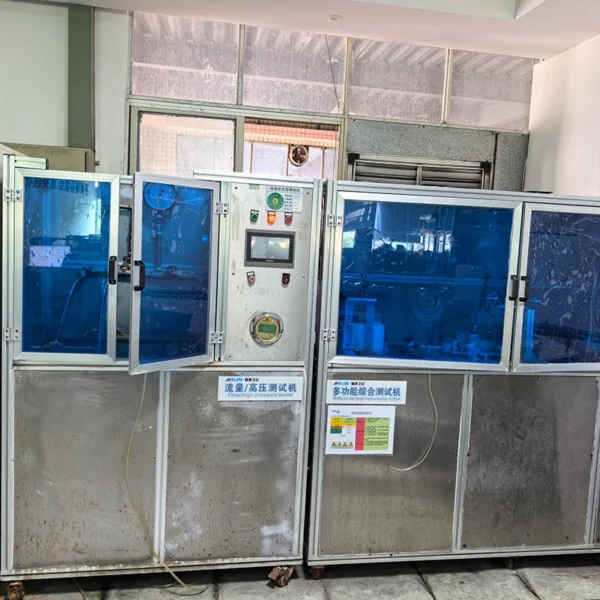
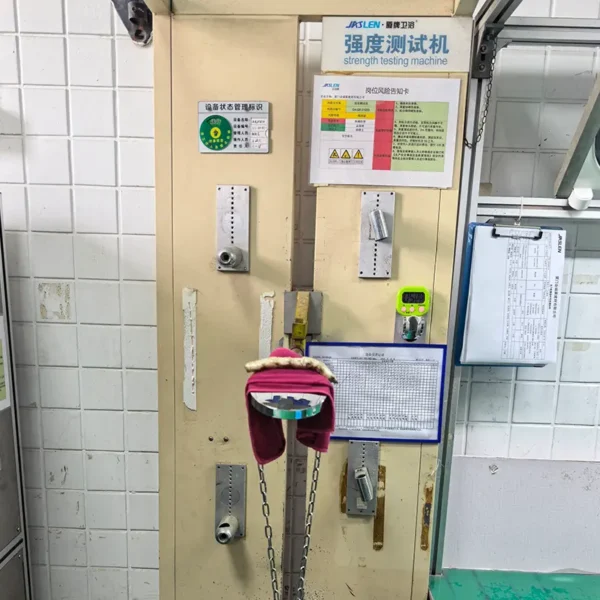
Kaiping’s plumbing and sanitary ware base status reflects a region built around brass and copper hardware casting and machining — traditional faucet bodies, valve fittings, and hardware components where the manufacturing know-how is deep but the product category has historically skewed toward conventional, less differentiated designs. That heritage is a genuine strength for standard hardware sourcing; it’s a less natural fit for a product line built around newer engineering categories — filtered shower heads, multi-mode digital displays, integrated pressure-compensation systems — that weren’t part of the traditional brass hardware product set the region industrialized around.
Regions built around plastic injection mold tooling at the scale Taizhou operates at are optimized for exactly what that optimization implies: fast tooling turnaround and low per-unit cost at high volume. That’s a legitimate and valuable capability for commodity-tier products where landed cost is the primary competitive lever — but it’s a different value proposition from a program that needs close engineering collaboration on a differentiated design, where tooling speed matters less than getting complex internal geometry right the first time.
A smaller, more specialized manufacturing base — built specifically around shower systems, precision plastics, and mold development rather than general hardware casting or general mold tooling — tends to produce suppliers whose engineering conversations start from shower-specific failure modes (spray pattern consistency, internal flow-channel precision, cartridge and filtration integration) rather than generic hardware or generic mold-making expertise applied to a shower product as one SKU among many categories.
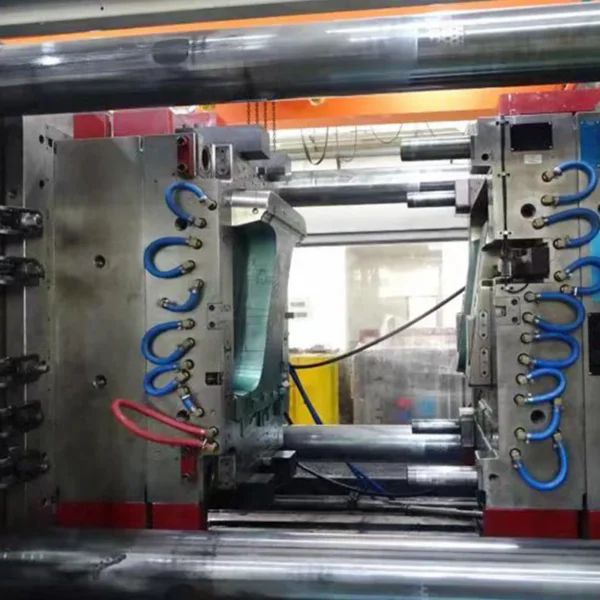
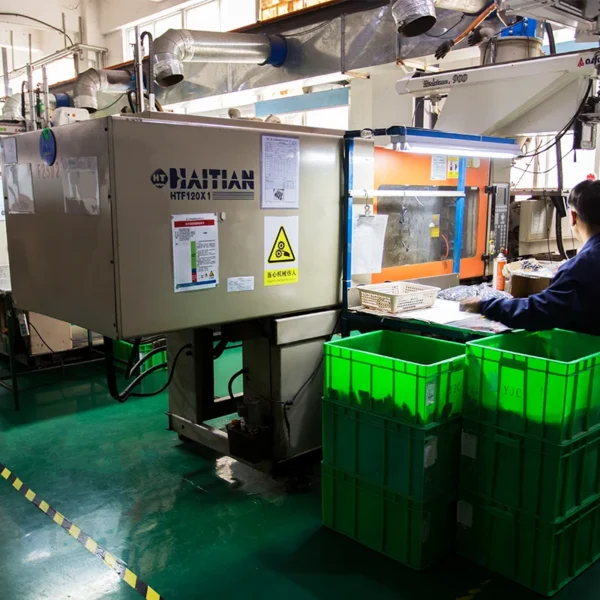
In 2024, JEKARE worked with a European bathroom brand developing a premium filtered rain shower system for the North American market — not a standard shower head, but a product combining a large-area rain spray plate, multi-function water modes, an integrated filtration cartridge, and precision-molded internal water channels designed to maintain consistent spray performance.
During supplier evaluation, the buyer compared several manufacturing options across China. Some candidates had strong experience with traditional brass faucet components; others were optimized for high-volume plastic production. The project, though, needed a combination the buyer found harder to source: precision molding, shower-specific water flow engineering, and continuous design collaboration throughout development — not any single one of those capabilities in isolation.
During engineering review, JEKARE identified that the original product concept needed optimization in several areas — internal water distribution structure, plastic component strength, and mold design for long-term production stability — all addressed before tooling completion through DFM review, mold optimization, and prototype validation.
The buyer ultimately selected JEKARE’s Xiamen manufacturing team specifically because the project required shower system engineering, precision injection molding, mold development, and production quality control to function as one closely connected process, not as separate vendor relationships. Compared with suppliers focused mainly on traditional hardware manufacturing or high-volume commodity production, JEKARE’s engineering approach was built around solving shower-specific challenges — spray consistency, internal flow control, component integration — directly.
The reinforcing point for this article: supplier location isn’t only a cost decision. For a differentiated bathroom product like this one, the right manufacturing partner is the one whose regional expertise and engineering capability actually match the complexity of what’s being developed — exactly the fit question the comparison above is meant to help a buyer answer for their own program.
| Kaiping (Guangdong) | Taizhou (Zhejiang) | Xiamen (Fujian) | |
|---|---|---|---|
| Historical specialization | Brass and copper hardware casting, traditional faucets and fittings | Plastic injection mold tooling at scale | Precision molding, higher-spec plastics, shower system engineering |
| Best fit for | Standard hardware, conventional faucet bodies, cost-driven commodity SKUs | High-volume, cost-sensitive plastic components and small appliances | Differentiated, higher-engineered shower systems and precision-molded components |
| Engineering conversation starts from | Traditional hardware form factors and casting processes | Tooling speed and unit-cost optimization | Shower-specific failure modes: spray consistency, flow-channel precision, cartridge and filtration integration |
| Where it’s a weaker fit | Newer product categories outside traditional brass hardware (filtration, digital controls) | Programs needing close engineering collaboration on complex internal geometry | Very high-volume, pure-commodity hardware where cost per unit is the only variable |
No hub is universally “better” — the fit depends entirely on where a specific program sits on the cost-versus-engineering-complexity spectrum, and a buyer optimizing purely for the lowest quoted price on a hand held shower head or similar differentiated product without considering regional specialization risks sourcing it from a region built for something else.
For a brand building a shower system product line — as opposed to sourcing standard hardware components — the practical implication is that supplier evaluation should weight regional manufacturing specialization alongside price and lead time, not treat “China” as a single sourcing decision. A design and development process rooted in shower-specific engineering experience catches failure modes — uneven spray distribution, filter cartridge integration issues, internal flow-channel restriction — that a generalist hardware or mold-tooling supplier may not be specifically practiced at anticipating, simply because those failure modes aren’t the ones their regional cluster industrialized around solving.
That doesn’t make Kaiping or Taizhou-based sourcing wrong for every application — it makes matching the region’s historical specialization to the product’s actual technical demands part of the sourcing decision itself, alongside inspection capability and quoted cost.
No — regional specialization describes where a cluster’s manufacturing know-how concentrated historically, not a guarantee about any individual factory’s current quality systems; a buyer still needs to verify a specific supplier’s capabilities directly rather than assuming quality from location alone.
Not inherently — Kaiping’s brass and hardware casting expertise is genuinely deep for traditional fittings and faucet bodies; the distinction is more about product category fit than a blanket quality difference, since a region optimized for conventional hardware isn’t automatically weaker at that hardware, just less practiced at newer, more differentiated shower system categories.
Because tooling speed and low unit cost, Taizhou’s core strength, solve a different problem than getting complex shower-specific engineering right — for a differentiated product where spray performance, internal flow design, or cartridge integration is the actual product differentiator, engineering fit can matter more than tooling turnaround time.
Some larger, more diversified manufacturers do bridge categories successfully, but a buyer should verify this with specific engineering examples relevant to their product — shower-specific experience in particular is not automatically transferable from general hardware or general plastics manufacturing background.
By asking for the supplier’s specific track record on the product category in question — sample programs, engineering problems previously solved, and inspection protocols specific to that category — rather than relying on a region’s general reputation as a substitute for supplier-specific due diligence.
✔ 20+ Years of OEM & ODM Manufacturing Experience, Based in Xiamen ✔ Precision Molding and Shower-Specific Engineering as a Core Specialization ✔ Complete Shower, Faucet and Bathroom Product Solutions ✔ Engineering Support from Design to Production ✔ Strict Quality Control and Product Testing ✔ Manufacturing Partner for Global Distributors and Brands
If your product line depends on differentiated shower engineering rather than standard hardware sourcing, JEKARE’s OEM/ODM project process, based in Xiamen, starts with design and development conversations rooted specifically in shower system failure modes.