Call us: +86-18965139230 | Mail to us: info@jekare.com

The global shower heads market was valued at USD 13.3 billion in 2024 and is projected to reach USD 20.4 billion by 2030, growing at a CAGR of roughly 7.4%, according to Grand View Research. Much of that growth is happening inside a regulatory landscape that has become noticeably less stable than it was even two years ago.
In the United States, the federal flow-rate standard has existed since 1992, but the definition of what actually counts as “a showerhead” for compliance purposes has now changed twice in five years — and most recently, in April 2025, under an executive order that directed a federal agency to rewrite the rule without the usual public comment period. For a bathroom brand sourcing shower heads through an OEM or ODM partner, this isn’t background noise. It changes what “compliant” means depending on which market the product ships to, and it changes how much a manufacturer needs to know about regulatory tracking — not just tooling and finishing — to be a dependable long-term partner.
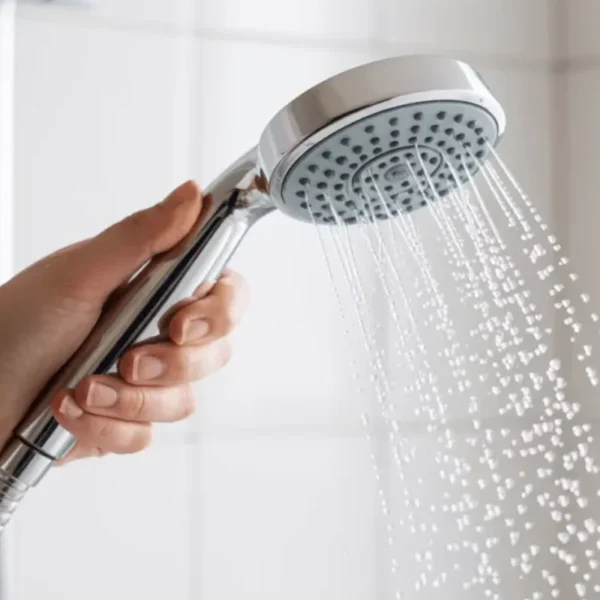
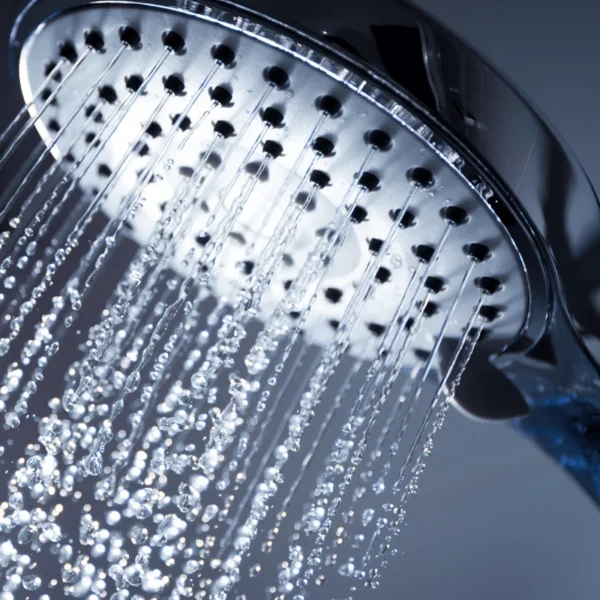
Water-saving standards affect sourcing decisions in three concrete ways: product specification (what flow rate a shower head must be engineered to hit), documentation (what certification or labeling a product needs to clear customs, retail compliance review, or a hospitality project’s sustainability requirements), and supplier risk (whether a manufacturer can actually adapt tooling and internal flow testing when a standard changes mid-program).
Brands that treat water-efficiency compliance as a one-time spec sheet item — set once at product development and never revisited — are exposed when a target market’s standard shifts. That exposure shows up as failed customs inspections, retailer delisting, or a hospitality buyer rejecting a shipment against a green-building requirement the brand didn’t realize had changed.
In the U.S., the EPA’s WaterSense program sets a maximum flow rate of 2.0 gallons per minute (gpm) for showerheads that carry the WaterSense label — a voluntary standard that sits below the mandatory federal maximum of 2.5 gpm established under the Energy Policy Act of 1992, per the EPA WaterSense Specification for Showerheads. WaterSense-labeled products must also meet spray force, spray coverage, and pressure-compensation performance criteria, not just the flow-rate ceiling — meaning a compliant product still has to perform like a full-pressure shower, not just a restricted one.
Beneath the federal baseline, individual states have layered on stricter requirements. California’s two-tier standard, established by the California Energy Commission in 2015, set an initial cap of 2.0 gpm with a second tier tightening to 1.8 gpm; Colorado adopted a 2.0 gpm standard in 2014. This state-level patchwork is significant for OEM sourcing because it means a single product SKU shipped nationally in the U.S. may need to meet the strictest applicable state standard, not just the federal one, depending on where a brand’s retail or distribution footprint reaches.

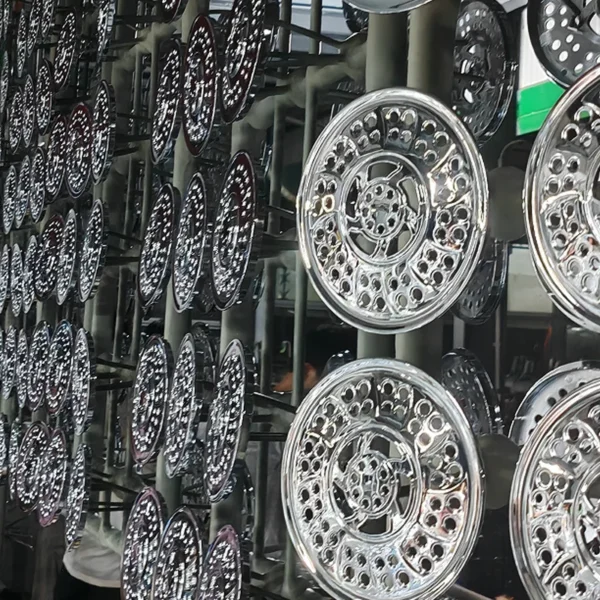
The regulatory picture became more volatile in 2025. On April 9, 2025, an executive order titled “Maintaining Acceptable Water Pressure in Showerheads” directed the U.S. Department of Energy to rescind the federal regulatory definition of “showerhead,” and on April 15, 2025, DOE published a final rule doing so, reverting to the narrower statutory definition in effect before 2021 — a change the agency described as restoring the “straightforward” 2.5 gpm standard set in the original 1992 energy law, according to the U.S. Department of Energy. The practical effect is that multi-nozzle shower systems, which had been counted as a single showerhead under the rescinded 2021 definition (and therefore held to a combined 2.5 gpm limit across all nozzles), are no longer bound by that aggregation rule at the federal level — even though WaterSense’s voluntary 2.0 gpm labeling standard and stricter state rules remain unchanged and unaffected by the federal definitional shift.
For a brand evaluating a shower head program against water-saving requirements, these are the questions worth raising directly with a manufacturing partner before finalizing a spec.
Water-efficiency compliance connects directly to how a shower head is engineered at the nozzle and internal restrictor level — which is a materials and tooling decision, not just a paperwork one. A brand that treats flow-rate compliance as a design input from the start, rather than a retrofit after tooling is finalized, has more room to serve multiple markets with fewer SKU variants.
The broader commercial implication is supplier selection itself. As water-saving standards continue to diverge by jurisdiction and shift with political cycles — the 2025 U.S. rule change being a clear example — the manufacturing partners best positioned to support a multi-market bathroom brand are the ones who track these changes as part of their engineering process, not the ones who simply build to whatever gpm number appears on a purchase order.
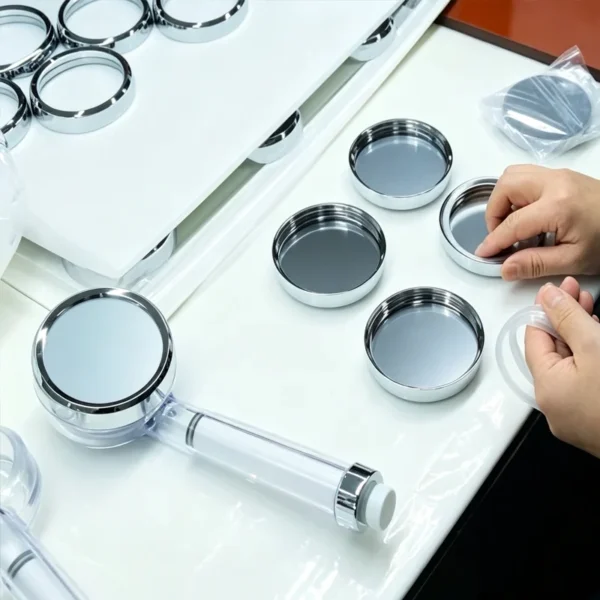
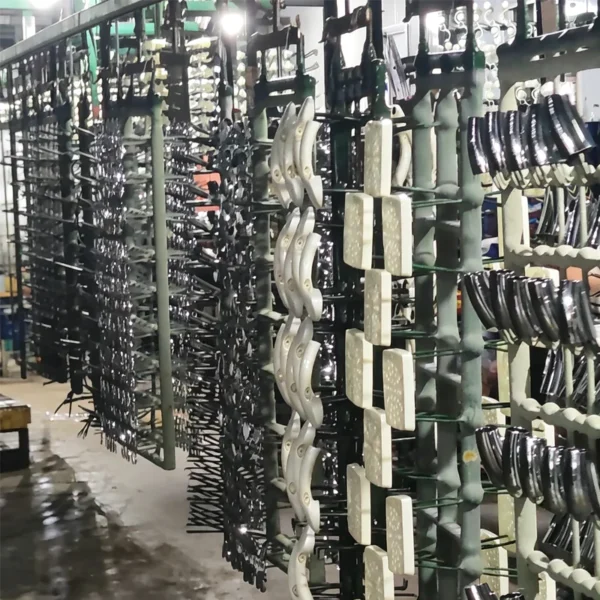
JEKARE’s rain shower head line is engineered using validated flow-profiling and precision mold tooling, with nozzle geometry designed to optimize spray distribution and pressure balance so the product delivers consistent coverage while meeting target flow-rates and regulatory limits — rather than simply restricting output and accepting a weaker spray. Soft LSR or silicone nozzle arrays on select models also reduce scale buildup, which helps flow performance stay consistent over the product’s service life rather than degrading as mineral deposits accumulate — a factor that matters for a fixture that has to keep meeting its rated flow spec well after installation.
Body materials (SS304 or solid brass) and PVD, chrome, or brushed finishes are selected for corrosion resistance in the wet, high-mineral-content water environments where flow-rate drift is most likely to become a compliance problem over time. Full specifications and finish options are available on the custom rain shower head product page.
Water-saving standards for shower heads are not a fixed target — they are a moving one, shaped by federal baselines, state-level overlays, and, as 2025 demonstrated, shifts in political administration that can rewrite the regulatory definition of the product itself. For bathroom brands sourcing through an OEM partner, the practical question isn’t just “does this product meet today’s standard,” but whether the manufacturing partner has the engineering discipline and regulatory awareness to keep it compliant as that standard moves.

Not inherently from a materials standpoint, but they typically require additional engineering work — spray-force and coverage testing beyond a simple flow-rate check — since WaterSense certification is performance-based, not just a flow-rate ceiling.
If a multi-nozzle shower system is exempt from flow aggregation under the 2025 federal rule change, does that mean it’s exempt from state standards too? No. The 2025 DOE rule change only affects the federal regulatory definition; state-level standards like California’s tiered requirements and WaterSense’s voluntary label operate independently and were not altered by that federal rule.
There’s no universal mandatory interval, but given how frequently standards have shifted at both the state and federal level in recent years, reviewing compliance status whenever entering a new distribution market — or at each major reorder — is a reasonable practice rather than assuming a one-time certification stays valid indefinitely.
It depends on the design. Some products can hit different flow rates through an interchangeable internal restrictor or flow insert without a full retool, while others require a different nozzle plate or body redesign — this is a specific question worth raising with a manufacturing partner during the DFM stage, before tooling is finalized.
Not necessarily. WaterSense’s own consumer testing found that spray force and spray coverage — not flow rate alone — drive user satisfaction, which is why low-flow products with well-engineered nozzle geometry can perform comparably to higher-flow models in practice.
Susan is a Senior Shower Systems Engineer at JEKARE with over 20 years of experience in bathroom fixture development and OEM manufacturing. She specializes in flow-rate engineering, nozzle and spray-plate design, and compliance-driven product development across residential, commercial, and hospitality shower systems. With extensive experience supporting global bathroom brands and distributors through multi-market product qualification, Susan focuses on translating shifting regulatory requirements into practical tooling and material decisions during the product development stage, rather than after a program is already in production.
1. Grand View Research — Shower Heads Market Report
https://www.grandviewresearch.com/industry-analysis/shower-heads-market-report
2. U.S. Environmental Protection Agency — WaterSense Specification for Showerheads
https://www.epa.gov/watersense/showerheads
3. U.S. Department of Energy — Energy Department Simplifies Water Conservation Standards by Repealing Cumbersome Legal Definition of “Showerhead”
https://www.energy.gov/cmei/articles/energy-department-simplifies-water-conservation-standards-repealing-cumbersome-legal
Large Rain Shower Column
OEM Shower System
Custom Rain Shower System
Brass Waterway Shower Column
Bathroom Hardware Manufacturer
Shower Column Supplier
Hotel Shower System
Private Label Shower System