Call us: +86-18965139230 | Mail to us: info@jekare.com

For most of the shower head’s regulatory history, “compliance” meant one number: gallons per minute. That changed when the EPA’s WaterSense program moved beyond a flow-rate ceiling into formal performance testing.
Per the EPA, federal and state water-efficiency legislation historically only set flow-rate limits — it never defined what actually makes a shower satisfactory or unsatisfactory to the person standing in it. To close that gap, WaterSense worked with the ASME/CSA Joint Harmonization Task Force, a group that includes manufacturers, water utilities, testing laboratories, and conservation specialists, to build consumer-tested performance criteria into the WaterSense Specification for Showerheads.
According to the EPA, that specification evaluates showerhead performance on three attributes identified through direct consumer testing: spray force, spray coverage, and flow rate across a range of pressures. A product can meet the 2.0 gpm flow-rate threshold and still fail WaterSense certification if it doesn’t clear these performance thresholds.
The flow-rate-across-pressure criterion is often called pressure compensation, and it exists specifically to address low-pressure households and buildings — the exact scenario that used to be treated as a plumbing problem rather than a product-design problem.
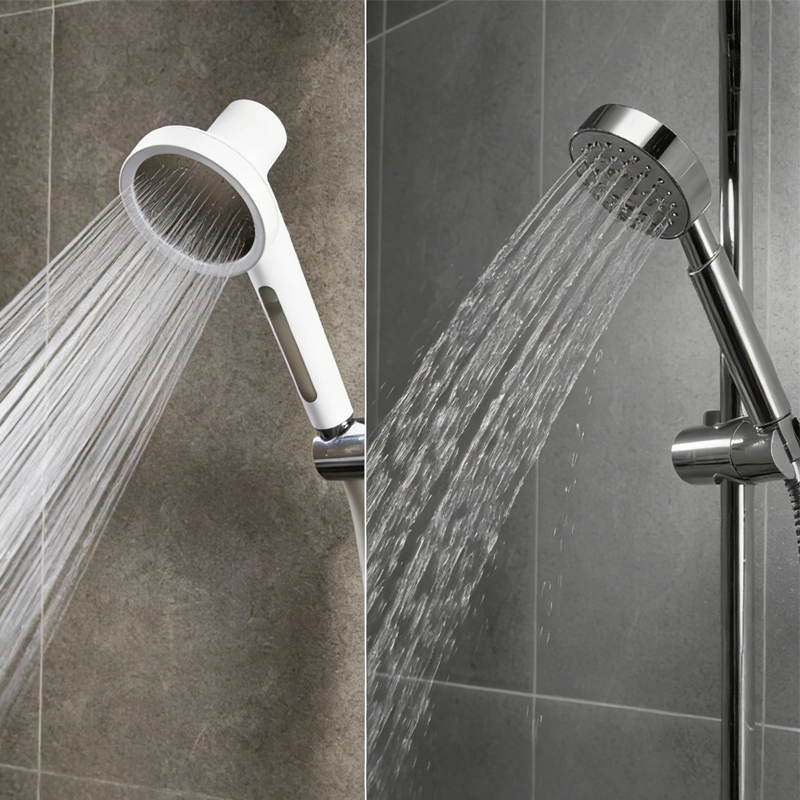
A shower head that meets its labeled flow rate at ideal test pressure but drops off sharply at lower incoming pressure will still generate complaints and returns in real installations, even though the flow-rate spec on the box is accurate.
For brands sourcing WaterSense-labeled products, compliance is no longer a single-number check. Per the EPA, WaterSense-labeled showerheads must be independently certified against the spray force, spray coverage, and pressure-compensation criteria — not just the 2.0 gpm ceiling.
Two products can share the same flow-rate rating and perform very differently once spray force and pressure compensation are accounted for. Brands that can document performance against these criteria have a specification advantage over brands that only quote a flow-rate number.
Per EPA documentation of the WaterSense showerhead specification, certified products must meet defined spray force minimums — for example, a spray force threshold expressed in ounces-force depending on spray angle — as part of the ASME A112.18.1/CSA B125.1 testing standard referenced by the specification.
The EPA’s 2022 WaterSense Performance Overview for showerheads notes that the pressure-compensation requirement — minimum flow rate of at least 60% of maximum flow at 20 psi, and at least 75% of maximum flow at 45 and 80 psi — was incorporated specifically for high-efficiency showerheads rated below 2.0 gpm, meaning it does not automatically apply to every shower head on the market. For a brand sourcing across both standard and high-efficiency SKUs, that distinction directly affects which products need pressure-compensation testing and which don’t.
In recent sourcing conversations, we’ve noticed buyers asking a more specific question than “what’s the flow rate.” They’re asking whether spray strength holds up when incoming water pressure is lower than the test-bench condition — which is really a pressure-compensation question, whether or not the buyer uses that term.
That question shaped how we approached our High Pressure Handheld Shower Head, Thickened ABS 8 Mode. Rather than tuning spray force at a single reference pressure, each of its eight spray modes was engineered to hold spray force consistent across a range of incoming pressures — the same underlying logic WaterSense formalizes through pressure-compensation testing, applied across multiple modes instead of one.
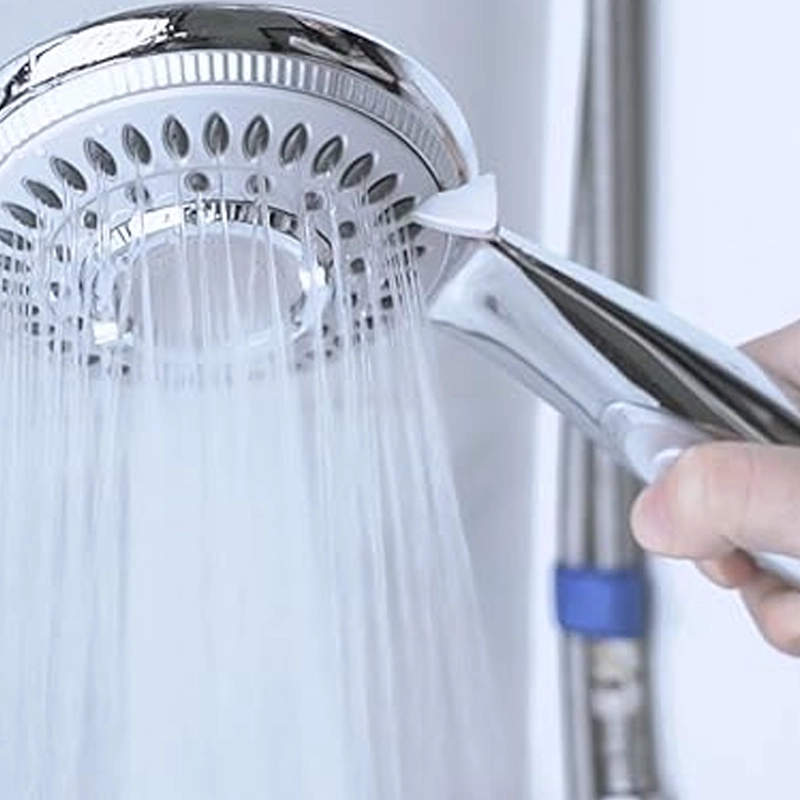
Before finalizing a shower head specification, a purchasing team should be able to answer:
As performance testing becomes more standardized, a flow-rate number alone is a thinner claim than it used to be. Brands that can point to spray force and pressure-compensation data are answering a more specific question than brands still marketing on gallons per minute alone.
This matters most for brands selling into markets with inconsistent municipal pressure or older building stock, where a product’s real-world performance depends more on pressure compensation than on its rated flow. Positioning a product around tested, documented performance — rather than a single flow-rate figure — becomes a differentiator when bidding on distributor or hospitality accounts that have been burned by underperforming “water-saving” fixtures before.
✔ 20+ Years of OEM & ODM Bathroom Fixture Manufacturing Experience
✔ Exported to Multiple Countries Worldwide
✔ Flexible MOQ for Project and Retail Orders
✔ Spray Force & Pressure-Compensation Testing on Request
✔ Fast Sample Development
✔ Strict Quality Inspection at Every Production Stage
✔ Multi-Mode Product Engineering for Variable Water Pressure Markets
✔ Dedicated Support from Specification to Delivery
Need Engineering Feedback on Your Spray Performance Specification? Whether you’re sourcing single-mode, multi-mode, or high-pressure handheld shower systems, JEKARE offers OEM & ODM engineering support built around documented spray force and pressure performance, not just a flow-rate number. Get in touch with our team to review your project’s water-pressure conditions or request a sample for evaluation.
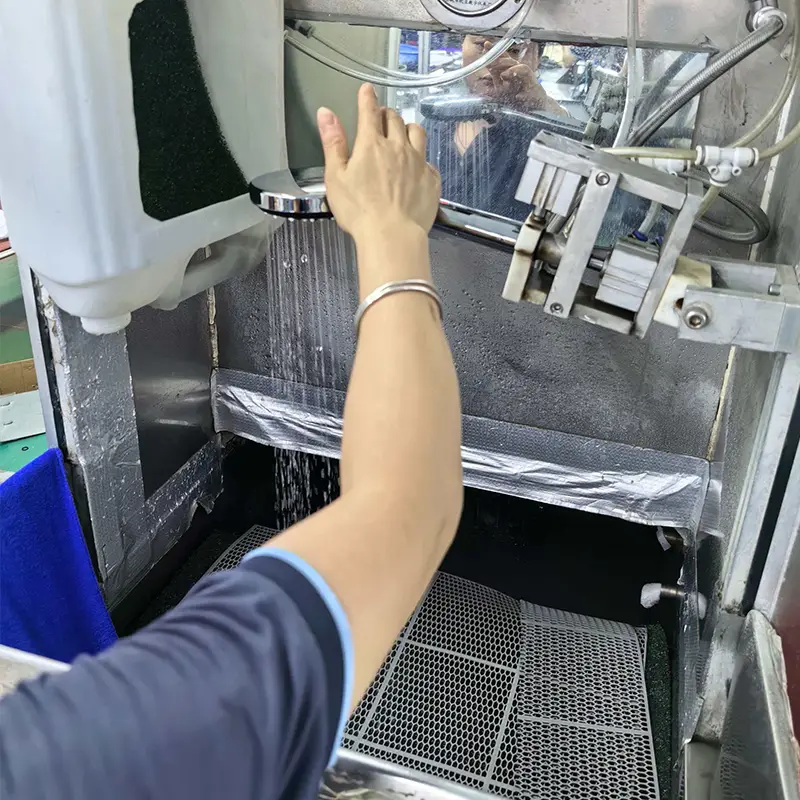
No — a shower head cannot increase the pressure supplied by a building’s plumbing system. What differs between products is how well they maintain spray force and coverage at the pressure that is actually available, which is what WaterSense’s performance testing measures.
Pressure compensation is a WaterSense testing requirement that a showerhead maintain a minimum percentage of its maximum flow rate across a range of pressures; per EPA guidance, it applies specifically to high-efficiency showerheads rated below 2.0 gpm, not to every product on the market.
Flow rate measures volume of water per minute; spray force measures the physical force of the water hitting the body, tested in ounces-force. A product can meet a flow-rate target while still varying significantly in spray force depending on nozzle and internal design.
Effectively, yes — performance can vary between modes on the same fixture, so a buyer specifying a multi-mode product should ask whether spray force and coverage were verified across each mode rather than only the default setting.
Because flow rate alone doesn’t capture spray force, spray coverage, or how flow holds up at lower incoming pressure — the same rated GPM can be delivered through very different nozzle and internal water-path designs, producing a different felt experience.
ASME A112.18.1/CSA B125.1 is the plumbing supply fittings standard referenced by the WaterSense Specification for Showerheads for spray force, spray coverage, and pressure-compensation testing.
Mia, Product Development Specialist, JEKARE
Mia has over 20 years of experience in the bathroom and sanitaryware industry, with a focus on shower head performance engineering — including spray force, spray coverage, and multi-mode product development for global brands and distributors. At JEKARE, she works directly with international bathroom brands, hospitality buyers, and private-label clients to translate performance requirements into testable, manufacturable product specifications.
JEKARE has 20+ years of OEM/ODM manufacturing experience and has exported to multiple countries, supported by an in-house quality control team that inspects components at each production stage — from raw material intake through final assembly — to maintain consistent performance across large-volume orders.
1.U.S. EPA – WaterSense Showerheads
https://www.epa.gov/watersense/showerheads
2. U.S. EPA – WaterSense Performance Overview: Showerheads
https://www.epa.gov/system/files/documents/2022-05/ws-products-perfomance-showerheads.pdf
3. Building America Solution Center (DOE-affiliated) – Showerheads
https://basc.pnnl.gov/resource-guides/showerheads