Call us: +86-18965139230 | Mail to us: info@jekare.com

Engineering design research describes this pattern as the “Rule of Ten”: the cost of a design change increases by roughly a factor of ten with each subsequent product development phase, which is exactly why a change that’s a five-minute sketch revision in week one becomes a full re-tooling cost after T1 mold trial. For a brand product manager weighing whether to raise a concern early or “wait and see,” the data says early is always cheaper — the discomfort of asking a factory a detailed question in week one is nothing next to the cost of a missed launch window in month six.
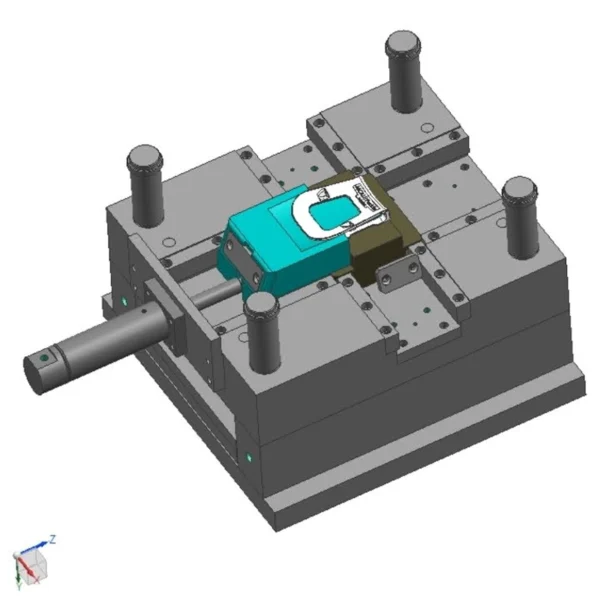
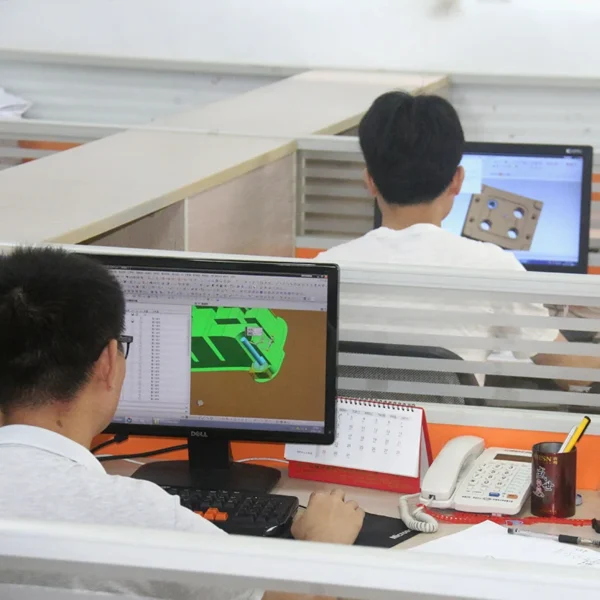
A brand’s hesitation to over-communicate with an overseas factory — worried about seeming difficult, or unsure what technical detail actually matters — tends to produce the exact outcome it’s trying to avoid: fewer early questions mean more discoveries during mold trial, and mold trial is precisely the phase where the Rule of Ten makes every discovery expensive.
A repeated mold revision doesn’t just cost tooling fees — it costs calendar time in a category where launch season timing often matters as much as the product itself. Missing a retail buying window because a design detail wasn’t caught until T2 trial is a business-cycle problem, not just a manufacturing one, and it’s largely preventable by knowing what to communicate and verify at each development stage rather than discovering the requirements reactively.
ISO 10303 (STEP) is the international standard for exchanging 3D product data between different CAD systems — when a factory asks for a “STEP file” rather than a native format or a flat image, it’s asking for a format specifically built to transfer geometry without loss between whatever software the brand and the factory each use, which is why format mismatches are a common and avoidable source of early miscommunication.
ASME Y14.5 is the standard governing geometric dimensioning and tolerancing (GD&T) — the symbols and rules that define how tight a tolerance actually needs to be on a given feature. A drawing that states a dimension without a tolerance standard behind it leaves the factory to guess at acceptable variation, which is a common root cause of a sample that’s “technically” made to spec but still doesn’t assemble or seal correctly.
ISO 9001:2015 specifies the requirements for a quality management system, built around a process-based, plan-do-check-act approach to consistency and continual improvement. A factory holding ISO 9001 certification has a documented quality system in place — worth confirming as a baseline, though it’s the specific project tracking and checkpoint discipline applied within that system that actually determines whether a program stays on schedule.
In 2025, JEKARE partnered with a European bathroom brand developing a premium ultra-thin shower head collection — minimalist, a thin body profile, large spray coverage, and a premium metal-like appearance at a competitive retail price — built around one new platform, a custom spray plate, and a new injection mold, with an initial order of 30,000 units and an annual forecast above 100,000. The customer supplied 3D concept files from its internal design team and requested direct tooling development, but before mold production started, JEKARE’s engineering team ran a DFM review.
The review found three manufacturing risks the concept hadn’t accounted for: a 4 mm housing wall thickness below the recommended range for injection molding, risking uneven filling, sink marks, and deformation; an internal water channel design that had been modeled for external appearance only, which simulation showed would likely produce uneven spray pressure between outlet areas; and an assembly tolerance between decorative components tight enough to work in a prototype but difficult to hold consistently at mass-production scale.
Rather than rejecting the design, JEKARE worked through an ODM optimization process that adjusted internal ribs, water channel layout, and critical wall-thickness areas; revised the mold parting structure, injection filling conditions, and assembly tolerance; and validated the result with a 3D prototype tested for both appearance and spray performance before any tooling was cut — preserving the brand’s original visual concept.
Because the issues were caught before tooling, the fix cost engineering hours and 1–2 weeks rather than an estimated USD 10,000–15,000 in tooling revision and 5–8 weeks of delay. T1 mold trial completed on the original schedule with no major redesign, the first 30,000-unit batch passed inspection, and the product launched before the customer’s planned retail season — after which the customer continued with JEKARE on additional bathroom product developments.
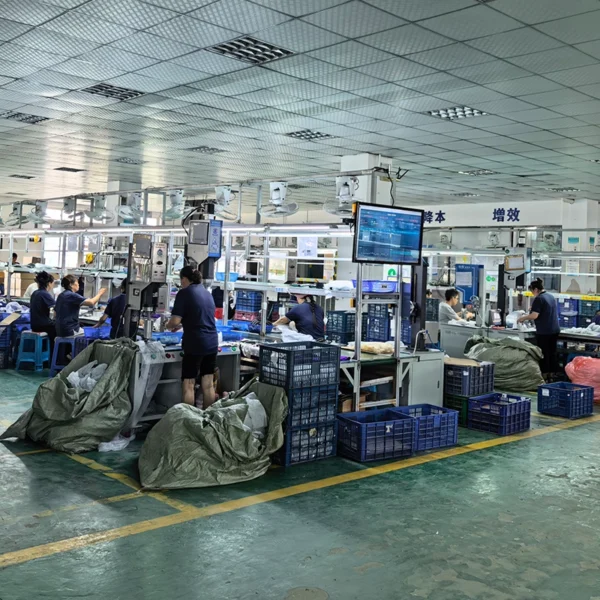
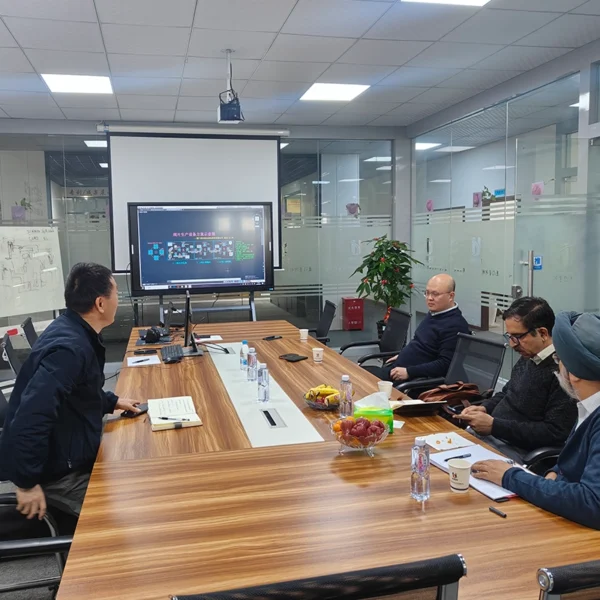
A structured shower head program moves through six stages, and each one has a specific input the brand needs to bring and a specific output worth reviewing before moving forward.
The concept stage starts with a sketch, reference images, or a rough dimension set — it doesn’t need to be CAD-ready, but the more specific the functional requirements (spray modes, flow rate target, mounting type) the fewer assumptions the factory has to fill in. From there, 3D modeling and DFM (design for manufacturability) evaluation turns the concept into a real model, and this is the stage to insist on a STEP file exchange and a drawing that specifies tolerances under ASME Y14.5 rather than approving a rendering alone — a DFM report at this stage should flag wall-thickness, waterway, and moldability concerns before anyone commits to steel.
A 3D-printed hand sample comes next, and its job is narrow but important: verify ergonomics, spout reach, and overall proportions physically, not to validate final material properties or finish, since a printed sample won’t behave like the eventual cast or machined part. Approving a hand sample as “final” before understanding that distinction is a common source of surprise later.
Mold development and trial (T1 through T3) is where the Rule of Ten stops being theoretical — CNC-machined tooling and the mold itself represent real committed cost, and each trial round should come with a specific list of what changed and why, not just a new sample to approve or reject. A brand should expect inspection data — dimensional measurement against the approved drawing, not just a visual check — at each trial round, since that’s what actually confirms whether a T2 sample fixed what T1 flagged.
[Image suggestion — Jekare-Shower-Head-T1-Trial-Mold-Sample.jpg | Alt text: “T1 trial mold sample for a custom Jekare shower head program” | Links to: Mold Development capability page.]
Sample sign-off is the last checkpoint before mass production commitment, and it should include the same dimensional and functional testing the mass-production batch will be held to — spray pattern, flow rate, leak testing — not a repeat of the earlier visual approval. Once sign-off happens, mass production and final assembly should be tracked against the same specification and inspection standard used at sign-off, so the first production batch is a continuation of what was already validated rather than a new, unverified starting point.
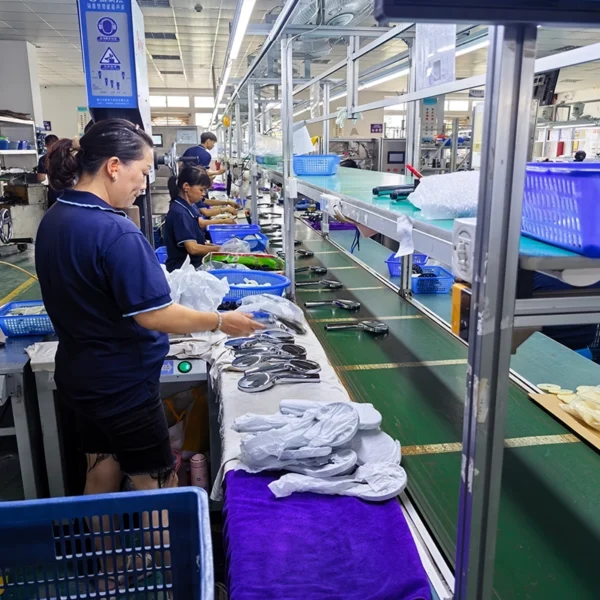
The stage-by-stage discipline that prevents late mold changes on one shower head program is the same discipline that makes scaling into additional SKUs or product lines faster the second time — a brand that’s built the habit of requesting STEP files, toleranced drawings, and dimensional inspection data at each stage carries that habit into the next OEM product development project rather than relearning it from scratch.
Brands that treat early-stage communication as time well spent — rather than overhead to minimize — are the ones consistently hitting launch windows, because the Rule of Ten works in their favor: catching an issue at the DFM or hand-sample stage costs a conversation, while catching the same issue at T2 costs a mold revision and, often, the season the brand was targeting.
A custom shower head program isn’t decided at mold trial — it’s decided in the weeks before it, in how much detail gets exchanged during concept review and DFM evaluation. The brands that consistently hit their launch windows aren’t the ones with simpler designs; they’re the ones that treat the sketch-to-CAD and DFM stages as the place to surface every manufacturability question, because by the time a mold is cut, the Rule of Ten has already set the price of getting something wrong. Structured, stage-by-stage communication isn’t overhead on a development timeline — it’s what keeps the timeline intact.
Q: What’s the actual difference between OEM and ODM for a shower head program? A: OEM manufacturing produces a product to the brand’s own design and specification; ODM involves the manufacturer contributing to the design and engineering itself — many “OEM” shower head programs in practice involve ODM-level design input, so it’s worth clarifying upfront how much design work the factory is expected to do versus receive.
Q: How long does the T1-to-T3 mold trial process typically take? A: It varies by design complexity and how many issues each round surfaces, but each trial round generally involves machining or adjusting tooling, producing new samples, and a review cycle — which is exactly why catching problems earlier, before mold cutting, has such a large effect on total timeline.
Q: Who owns the mold at the end of a development program? A: This varies by agreement and should be settled explicitly in the OEM contract before tooling begins, not assumed — mold ownership affects a brand’s ability to move production to a different factory later.
Q: Does a 3D-printed hand sample need to be made from the same material as the final product? A: No — hand samples are typically produced in a different material (commonly a resin) specifically because the goal is verifying shape and ergonomics quickly, not final material performance, which is validated later in the process.
Q: What should a brand actually check in a DFM report, if they’re not an engineer themselves? A: At minimum, ask the factory to flag anything that changed from the original design intent and why — wall thickness, moldability, or waterway adjustments — so the brand can confirm those changes don’t compromise a functional requirement that matters to them, even without being able to evaluate the engineering details independently.
Q: Is it normal for tooling cost to increase after the design has already been approved? A: It shouldn’t be, if the approved design was final — tooling cost increases after approval usually trace back to a change requested after mold cutting began, which is the scenario the Rule of Ten describes and the reason for locking down tolerances and DFM review before that point.
Daniel Wu is an OEM Program Manager at JEKARE, coordinating new product development from initial concept through mass production handoff for custom shower head and faucet programs. He works across JEKARE’s design, mold development, and inspection teams to keep DFM review, tooling trials, and sample sign-off aligned to a documented specification at each stage, with a focus on catching design and manufacturability issues before they reach mold cutting. His work centers on translating early-stage brand concepts into production-ready specifications that reduce late-stage changes and keep OEM programs on schedule for target launch windows.
1.Proceedings of the Design Society (Cambridge Core) — Why Cost Estimation Matters for Design Decisions in the Early Phases of Product Development (Rule of Ten)
https://www.cambridge.org/core/journals/proceedings-of-the-design-society/article/why-cost-estimation-matters-for-design-decisions-in-the-early-phases-of-product-development-and-what-practitioners-expect-from-artificial-intelligence/292F9EF79BCFE7F4BBF5E9CBEE65F74C
2.ISO — ISO 10303-21:2016, Industrial Automation Systems and Integration — Product Data Representation and Exchange (STEP)
https://www.iso.org/standard/63141.html
3.ASME — Y14.5 Dimensioning and Tolerancing (GD&T)
https://www.asme.org/codes-standards/find-codes-standards/y14-5-dimensioning-tolerancing
4.ISO — ISO 9001:2015, Quality Management Systems — Requirements
https://www.iso.org/standard/62085.html
Custom shower head programs are usually easier to scope against a specific concept and timeline. Share your sketch, reference images, or requirements for an initial engineering review through our OEM/ODM project process, and see the full shower head OEM/ODM program options available.