Call us: +86-18965139230 | Mail to us: info@jekare.com

EN 1113, the European standard governing shower hoses, includes a specific mechanical flexibility test in which the hose is wound under tension around a small-diameter mandrel — a test designed around exactly the kind of repeated rotational and bending stress that eventually produces twisting in the field. That the standard treats flexibility as a mechanical property to be measured, not a material trait to be assumed, is a useful starting point for understanding why twisting complaints persist even in hoses built from adequate materials.
The stakes for getting this right keep growing alongside the category: the global shower heads market is projected to reach USD 20.4 billion by 2030, according to Grand View Research, which means more hose-and-connector assemblies in daily use, and more cumulative field exposure for any rotational weak point in the design.
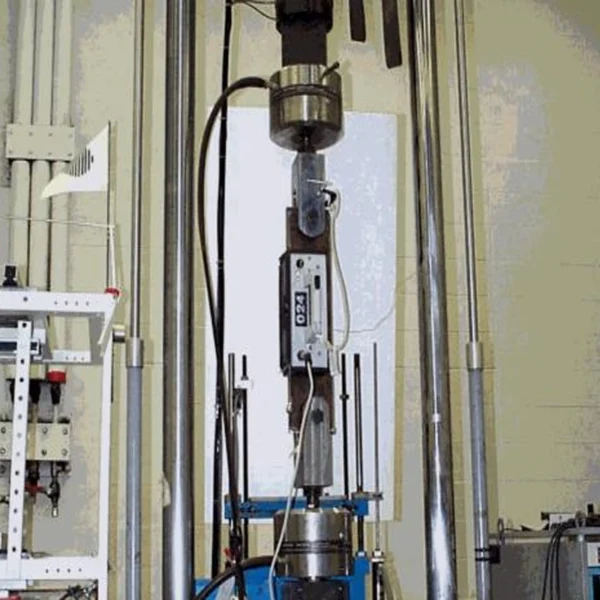
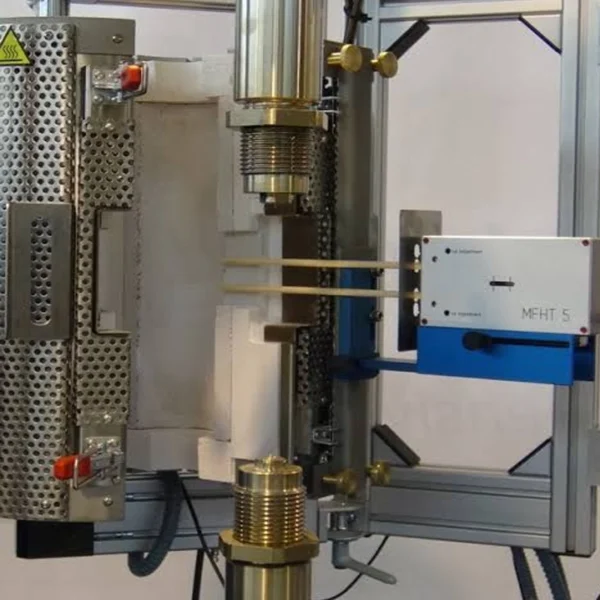
A hose is a small line item in a shower system’s bill of materials, but because twisting shows up every time the product is used — not occasionally — it generates a level of customer-facing friction that’s out of proportion to the component’s cost, making it a poor place to under-invest in engineering validation.
Smooth, low-friction connector rotation depends on tight dimensional tolerances, which in turn depends on CNC machining precision — meaning a connector sourced or manufactured to loose tolerances doesn’t just risk failing in isolation, it shifts the rotational load the connector should have absorbed directly into the hose body.
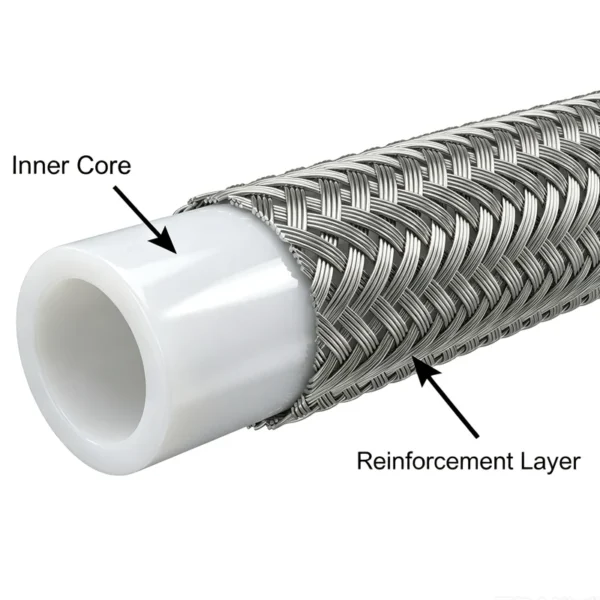
Choosing a higher-grade inner tube material addresses only one variable in a multi-layer system; if the reinforcement layer’s braiding geometry has directional bias or the layers don’t deform in sync, twisting can still develop even with premium base materials.
EN 1113 specifies test procedures for the mechanical and hydraulic characteristics of shower hoses of any material, including flexibility under tension — which means compliance is a structural and connector-level testing outcome, not simply a function of which polymer or metal was selected for the inner tube.
Grand View Research’s growth projection for the shower head market reflects rising demand for water-efficient, technologically differentiated fixtures — a trend that puts pressure on every component in the system, including hoses paired with hand held shower heads and connectors, to perform consistently rather than only meet a baseline material spec.
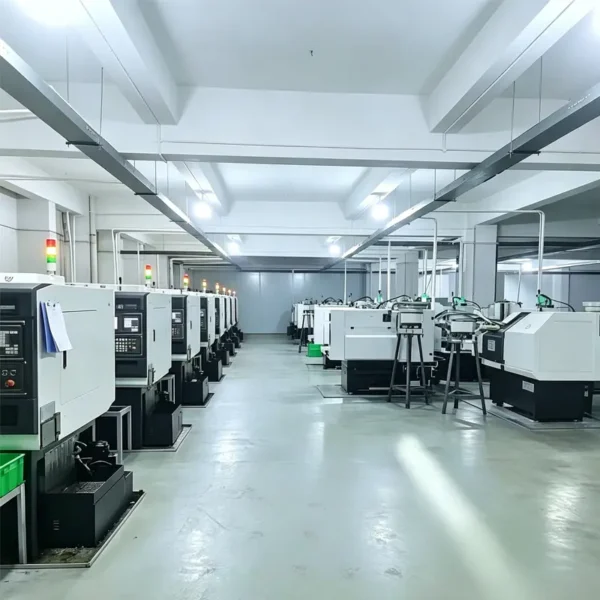
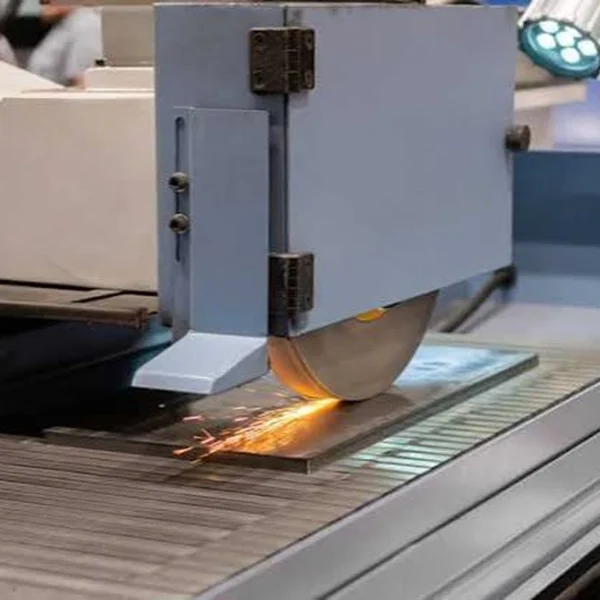
In an OEM inquiry from a European bathroom products company (roughly 80 employees, ~€12M annual sales), the initial complaint looked like a simple defect: consumers reported that the shower hose rotated during use and developed a twisted appearance after installation. The customer’s team first treated it as a packaging or handling issue — it was only after reviewing 12 months of internal warranty data that the pattern was confirmed: hose twisting accounted for 120–150 cases per month, roughly 7.2% of all warranty-related complaints, alongside 35–45 monthly cases of connector loosening.
JEKARE’s engineering investigation traced this to three compounding factors in the existing fixed G1/2 brass connector design: rotation torque measured at 3.5–4.2 Nm (high enough that users twisted the hose body itself rather than the connector), no independent swivel mechanism to isolate rotational force from the hose, and a specification limited to pressure, leakage, and pulling tests with no rotation-cycle or torque requirement at all. Production data showed the design problem upstream too — 5–6% of units required manual connector adjustment during assembly, averaging 45–60 seconds each.
A first redesign — a 360° swivel connector with a reinforced stainless-steel ring, bringing torque down to 1.8–2.3 Nm — cut consumer complaints in trial, but extended daily-use testing surfaced a second-order issue: connectors developed slight looseness over time, since the initial single-layer swivel ring hadn’t been validated under repeated-cycle conditions. A second revision — a dual-support swivel structure, connector clearance tightened from 0.25–0.30 mm to 0.12–0.18 mm, and a new 30,000-cycle torsion test added to the specification — brought final results to 1.7–2.2 Nm rotation torque, hose twisting complaints down from 7.2% to 1.5%, and connector leakage after durability testing down from 3.0% to under 0.5%.
The pattern this confirms: shower hose twisting is rarely a single-component defect, and solving the complaint that triggered the investigation can surface a second, subtler failure mode that only appears under cumulative-cycle testing. It’s also why the customer went on to add anti-twist structure, torque range, and torsion-cycle testing to its own supplier specification going forward — the fix became a procurement requirement, not just a one-time correction.
Before finalizing a shower hose and connector specification with an OEM partner, ask:
Twisting complaints on a shower hose rarely get diagnosed as a system-level design issue by the end user — they read as a defective or “cheap” product, regardless of which specific layer or connector actually caused the problem. That makes hose and connector engineering a brand-reputation variable that’s disconnected from its position in the bill of materials.
For product development, that argues for qualifying connector tolerance, layer synchronization, and material recovery together during design and development, rather than treating the hose as a commodity accessory sourced independently from the rest of a shower column or handheld system.
Yes — because a connector with loose tolerances behaves as a semi-fixed boundary rather than a free-rotating one, which pushes the rotational load it should absorb into the hose body instead, regardless of how well the hose material itself performs.
A basic flexibility check typically evaluates a single bend or wind-around-mandrel test at one point in time, while torsional fatigue testing applies repeated rotational cycles as part of a broader inspection process — closer to real daily use — to reveal whether deformation accumulates or fully recovers between uses.
Directional bias can be significantly reduced through controlled, even braiding tension and dimensional accuracy during mold development, but it’s a manufacturing-process variable to control and verify, not something eliminated by material choice alone.
It should be part of the same evaluation — internal water flow creates micro-vibration and pressure fluctuation that accelerate fatigue in already-stressed material layers, so pressure conditions during testing should reflect real operating pressure, not just static bench conditions.
Kevin Liu is a Product Engineer at JEKARE, focusing on bathroom fixtures and accessory development, product optimization, and manufacturing process improvement. With experience in material selection, structural design, and production coordination, he works on the practical engineering problems behind everyday bathroom accessories, including how connector precision and material layer behavior affect long-term product performance.
1.EN 1113 — Sanitary Tapware: Shower Hoses, Key Test Points (via LF Technologies)
2.Grand View Research — Shower Heads Market Size & Share Report, 2030
https://www.grandviewresearch.com/industry-analysis/shower-heads-market-report
✔ 20+ Years of OEM & ODM Manufacturing Experience ✔ Complete Shower, Faucet and Bathroom Accessory Solutions ✔ Engineering Support from Design to Production ✔ Connector and Torsional Performance Testing Built Into Standard QC ✔ Flexible Customization for Different Markets ✔ Manufacturing Partner for Global Distributors and Brands
Whether the concern is connector precision, layer synchronization, or long-term material recovery, JEKARE’s OEM/ODM project process qualifies hose and connector as one rotational system from the design stage.