Call us: +86-18965139230 | Mail to us: info@jekare.com

The shower head is no longer a single, interchangeable part of a bathroom fixture line. Two forces — category growth and tightening water-efficiency regulation — are pushing height, flow rate, and spray design into the same conversation.
According to Grand View Research, the global shower heads market was valued at USD 13,308.3 million in 2024 and is projected to reach USD 20,412.6 million by 2030, growing at a CAGR of 7.4% — driven largely by demand for water-efficient, customizable, and aesthetically distinct shower solutions, with the residential segment alone accounting for 73.2% of revenue in 2024.
At the same time, U.S. federal water-efficiency rules have been tightening the margin manufacturers have to work with. The EPA’s WaterSense program caps labeled showerheads at a maximum flow rate of 2.0 gallons per minute, compared with the 2.5 gpm federal baseline — a 20% reduction that manufacturers have had to absorb without sacrificing the customer’s perceived shower experience.
Put those two forces together — rising product variety and shrinking flow allowance — and shower head placement stops being a cosmetic detail. It becomes one of the levers brands and OEM partners use to protect performance under regulation.
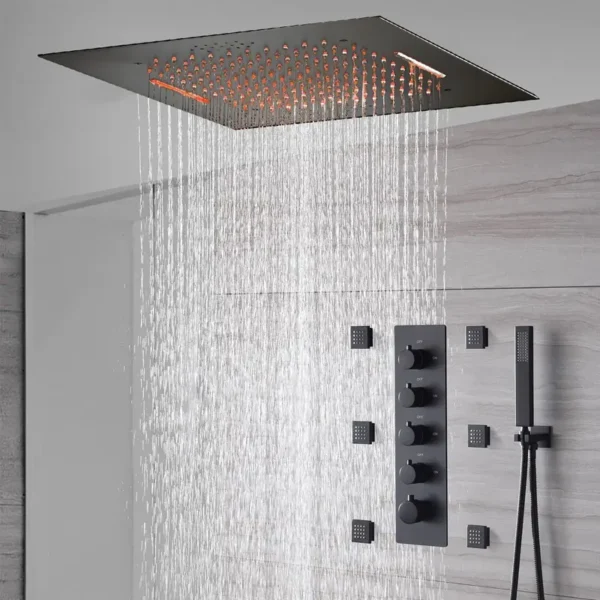
For a brand owner or purchasing manager, this shift shows up as three concrete risks.
A shower head engineered without accounting for reduced flow rate and mounting height can feel underpowered, which drives complaints and returns even when the product technically meets spec.
Per the International Code Council, plumbing codes such as the IPC (Section 604.4) cap individual showerhead flow at 2.5 gpm, while the IgCC (Section 601.3.2.1) requires WaterSense compliance at 2.0 gpm — meaning a product line sold across multiple U.S. jurisdictions has to satisfy overlapping, not identical, requirements.
In a market where fixed shower heads still hold the largest single product share at 57.3%, but rainfall, overhead, and dual-head configurations are gaining share, brands that don’t engineer height and flow together risk a spa-marketed product that performs like a budget one. This is not a design afterthought — it is a specification decision that touches tooling, valve sourcing, and after-sales cost.
The data points in the same direction: shower systems are diversifying, and the engineering behind them is becoming more formalized.
Grand View Research’s data shows fixed shower heads retaining the largest revenue share in the category, but the same report highlights active new product launches outside that core segment — including multi-mode and filtration-integrated handheld systems entering the market through 2024. That signals brands are not replacing standard fixed heads; they are adding overhead, rainfall, and dual configurations alongside them, each with its own mounting logic — a trend we cover in more detail in our guide to rainfall shower heads.
On the regulatory side, the WaterSense specification does not only set a flow-rate ceiling. Per EPA and industry documentation, it also defines spray coverage testing criteria — measuring how water distributes across concentric zones from the spray face — meaning how the water lands on the body is now a formally tested performance criterion, not just a subjective installer preference. When flow rate is regulated and spray coverage is measured, mounting height and shower arm geometry become inputs to a testable outcome, not a rule of thumb.
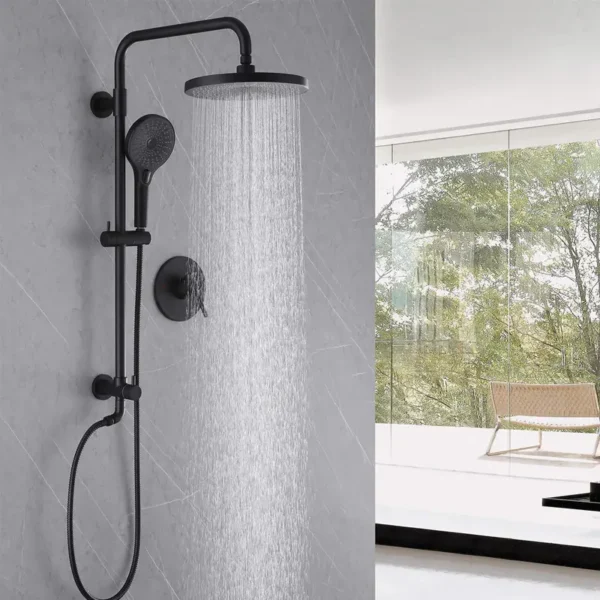
In recent OEM development projects, customers have increasingly built shower arm length and mounting height into the initial specification stage rather than adjusting them after tooling. For hospitality and premium residential projects specifically, buyers have requested longer shower arms to widen spray coverage across larger bathroom layouts, while standard residential orders have kept arm length closer to compact, space-efficient dimensions suited to smaller footprints.
On the flow-rate side, more RFQs now reference WaterSense or regional water-saving standards directly in the specification sheet, rather than leaving flow rate to be resolved during sampling. That shift has pushed internal water channel design, nozzle distribution, and spray performance testing earlier into the engineering review stage — before tooling is finalized, not after.
The pattern is less about any single spec value and more about sequencing. Buyers who treat shower height, arm length, and flow rate as day-one engineering inputs — alongside connection standard, material, and finish — tend to move through DFM analysis and prototype validation with fewer revisions than projects where these details are finalized late in development.


Before finalizing a shower head product line or specifying a project SKU, a brand or purchasing team should be able to answer the following.
Shower head height sits at the intersection of two things a brand has to get right in sequence: the shower valve and mixer material decisions made earlier in product development, and the manufacturing tolerances that determine whether a design performs consistently across a production run. A brand that treats height and flow rate as a late-stage installation detail is solving the problem one step too late.
The broader commercial implication is positioning. As the shower systems category keeps splitting into fixed, rainfall, overhead, handheld shower systems, and dual configurations, a brand’s ability to offer coordinated, code-compliant systems — rather than a single generic shower head SKU — becomes a differentiator in how retailers, hospitality buyers, and distributors evaluate a supplier’s product range. That same coordination extends into production, where tooling capabilities such as CNC machining for arm and connection components determine how tightly a brand’s height and flow specifications can actually be held.
Shower head height used to be a single number on an installation sheet. As flow-rate regulation tightens and the product category splits into more configurations, it has become a variable that has to be engineered alongside flow rate, spray coverage, and finish — decided early, not adjusted late. Brands that build height and flow into the initial specification, rather than treating them as an installation afterthought, are better positioned to meet code requirements, protect warranty performance, and offer the kind of coordinated product range that distributors and hospitality buyers are increasingly asking for.
No — WaterSense sets a maximum flow rate and tests spray coverage, but it does not dictate shower head style, finish, or configuration, which is why fixed, rainfall, and handheld products all appear in the WaterSense product directory.
Because brands are adding configurations rather than replacing them — fixed heads remain the largest single product segment, while rainfall, overhead, and dual systems are expanding as a complementary, higher-margin category within the same product lines.
No. The IPC allows up to 2.5 gpm at 80 psi as a general code baseline, while the IgCC requires WaterSense-level compliance at 2.0 gpm — brands selling across jurisdictions need to confirm which standard applies to a given project.
Lower allowable flow rates push spray-face and internal water-path engineering earlier into the development cycle, since the same perceived pressure now has to be achieved with less water — a shift from valve sourcing being a late-stage decision to an early one.
Ask for documented spray-zone testing between the two heads, not just individual flow-rate certification — interference between heads is a system-level issue that single-head testing won’t catch.
Justin, Senior Shower Systems Engineer, JEKARE
has 20 years of experience in sanitary ware product development and OEM manufacturing, with a focus on shower system engineering — mounting height, spray coverage, and flow-rate performance across fixed, rainfall, overhead, and handheld product lines developed for global brands and distributors.
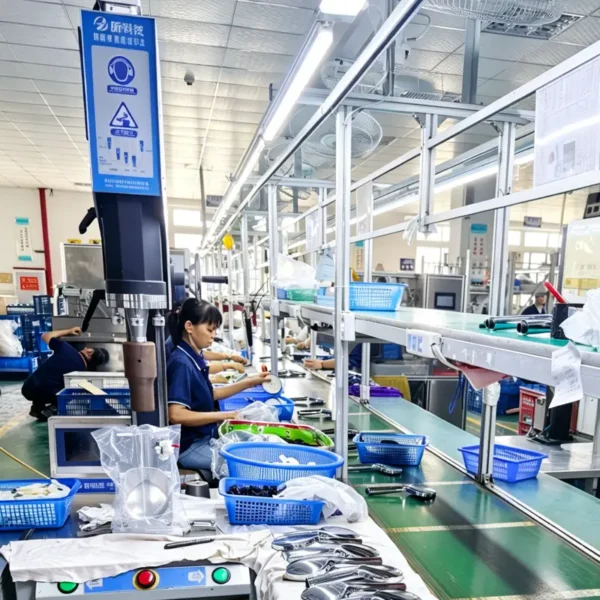
With experience working across these product lines, Justin focuses on translating buyer specifications into manufacturable, code-aware product designs, supported by JEKARE’s 20+ years of OEM/ODM manufacturing experience, export history across multiple countries, and in-house quality control that inspects components at each production stage — from raw material intake through final assembly.

1.Grand View Research — Shower Heads Market Size & Share Report, 2030
https://www.grandviewresearch.com/industry-analysis/shower-heads-market-report
2.U.S. EPA — WaterSense Showerheads Program
https://www.epa.gov/watersense/showerheads
3.International Code Council — “Not Just Going with the Flow: Multi-Showerhead Water Efficiency”
https://www.iccsafe.org/building-safety-journal/bsj-technical/not-just-going-with-the-flow-multi-showerhead-water-efficiency/
✔ 20+ Years of OEM & ODM Manufacturing Experience
✔ Complete Shower, Faucet and Bathroom Product Solutions
✔ Professional Engineering Support from Design to Production
✔ Strict Quality Control and Product Testing
✔ Flexible Customization for Different Markets
✔ Reliable Manufacturing Partner for Global Distributors and Brands
Whether you need custom shower systems, faucets, toilet seats, or complete bathroom solutions, JEKARE provides engineering-driven OEM manufacturing support from concept development to mass production.Contact our team to discuss your next bathroom product project.