Call us: +86-18965139230 | Mail to us: info@jekare.com

The federal maximum flow rate for shower heads in the United States is 2.5 gallons per minute (gpm), while products earning the EPA’s WaterSense label must demonstrate no more than 2.0 gpm at 80 psi — a voluntary, stricter threshold layered on top of the mandatory federal standard. A product can be fully legal for sale without meeting the WaterSense number, which means “compliant” and “WaterSense-labeled” are two separate specification claims.
California’s Title 20 (20 CCR § 1605.3) sets a maximum shower head flow rate of 1.8 gpm at 80 psi for units manufactured on or after July 1, 2018, according to a recent regulatory summary — a full 0.7 gpm below the federal maximum. A shower head compliant everywhere else in the country can still be non-compliant for sale into California specifically.
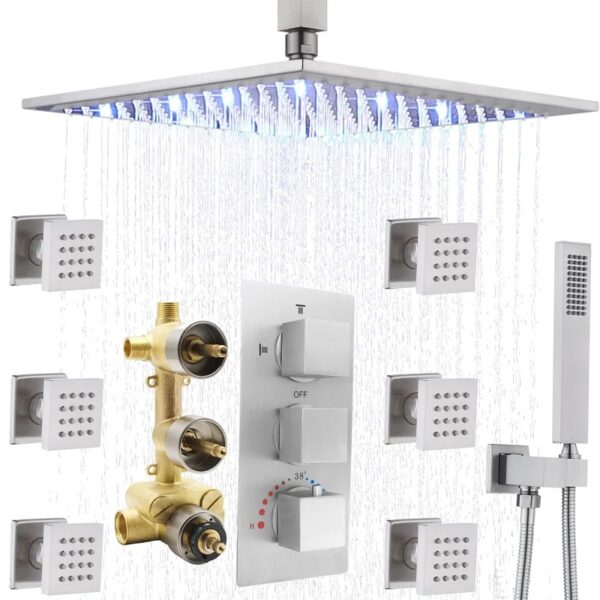
On April 15, 2025, the Department of Energy published a final rule rescinding its prior definition of “showerhead” — which had treated all nozzles, sprays, or openings on a single fixture as one combined unit for flow rate purposes — and reverted to the original statutory definition, according to the Appliance Standards Awareness Project. This directly changes how a multi-function or rain shower system with several spray outlets is measured against GPM limits, which is a live compliance question for exactly the kind of multi-nozzle products increasingly specified in premium and hospitality projects.
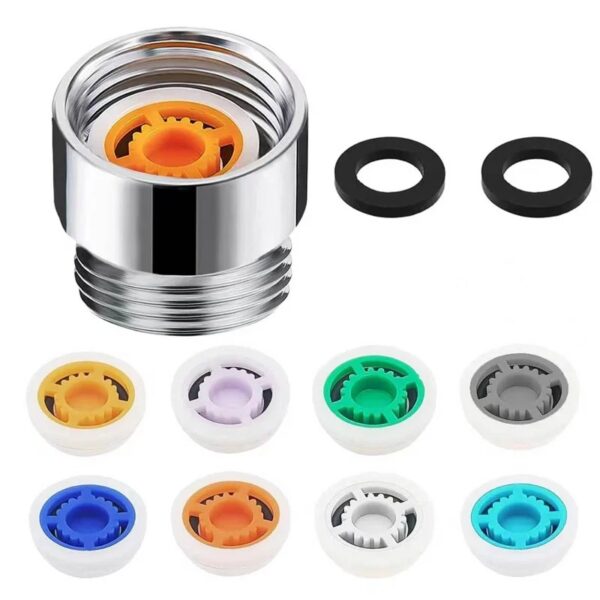

A shower head designed to the federal 2.5 gpm ceiling doesn’t automatically meet California’s 1.8 gpm requirement, and a brand distributing nationally needs either separate SKUs or a single design engineered to the strictest applicable limit — a decision with direct cost and inventory implications.
Because the definition governing whether multiple spray outlets on one fixture are measured individually or combined has changed at the federal level as of 2025, a multi-function shower system’s compliance status depends on which measurement standard applies to its specific market and installation type — a detail easy to overlook when specifying a design.
Flow rate is measured at a specified pressure — WaterSense specifies 80 psi — so a GPM figure quoted without its test pressure isn’t directly comparable to a regulatory threshold, since the same fixture can show different flow rates at different pressures.
The WaterSense Specification for Showerheads references the ASME A112.18.1/CSA B125.1 Plumbing Supply Fittings standard for spray force testing protocol, meaning a product’s compliance documentation increasingly needs to speak to both a mechanical performance standard and a water-efficiency specification, rather than treating the two as separate questions.
California’s Title 20 has required 1.8 gpm since July 2018, a limit tighter than both the federal 2.5 gpm baseline and the WaterSense 2.0 gpm threshold, according to the same regulatory summary cited above — illustrating that state-level requirements aren’t a future consideration but an already-established compliance floor for multi-state distribution.
Because the April 2025 federal rule change reverses a measurement approach that had been in place since 2010, according to the Appliance Standards Awareness Project, a supplier’s existing multi-nozzle product documentation prepared under the earlier combined-flow interpretation may need to be re-evaluated against the current statutory definition.
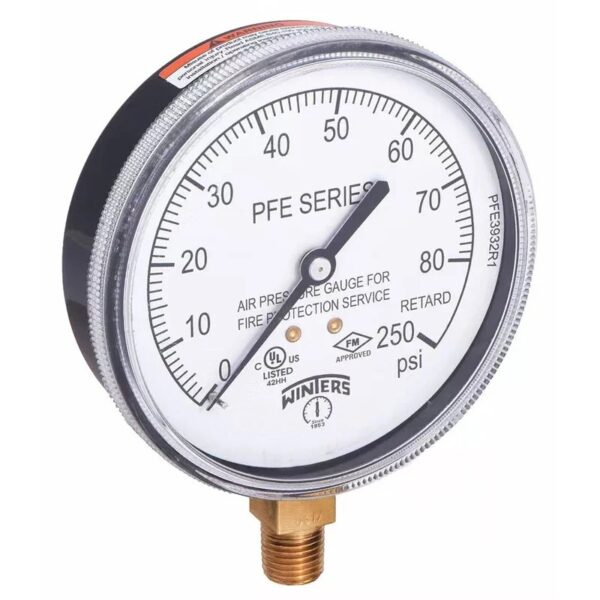
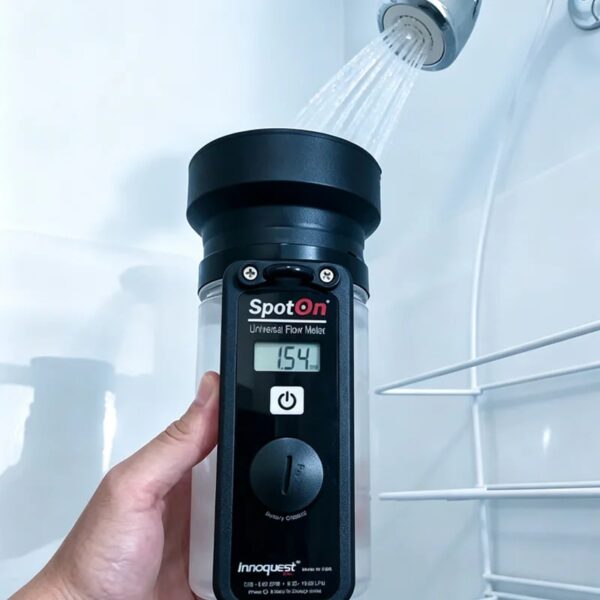
Over the past several years, our engineering team has supported global bathroom brands, distributors, and private-label customers developing shower products for different regional markets. One consistent change we have observed is that buyers are no longer treating flow rate as a simple product specification — it has become a key engineering decision connected to compliance, SKU planning, and market expansion.
In earlier sourcing discussions, flow rate was often reviewed as a single performance number. However, as brands expand across multiple regions, procurement teams are increasingly recognizing that the same shower product may require different flow strategies depending on the target market, regulatory requirements, and product positioning.
From an engineering perspective, the challenge is not only achieving a specific GPM value. The more important question is how to balance regulatory compliance with user experience. A lower flow rate requirement can affect spray coverage, pressure perception, and overall shower performance if the internal water path, restrictor design, and nozzle structure are not properly engineered.
Our engineering team has observed that many compliance risks occur when flow requirements are considered too late in the development process. Adjusting flow restrictors or internal components after tooling completion can create unnecessary redesign costs, especially for multi-function shower systems with multiple outlets and complex spray configurations.
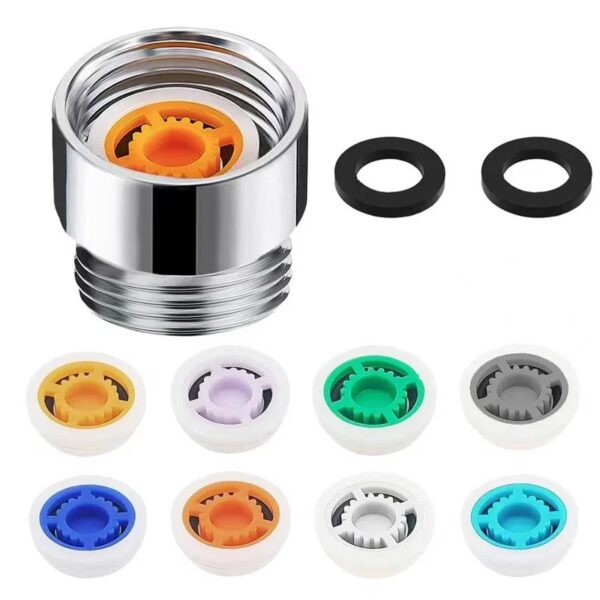
At JEKARE, we approach flow rate development as part of the OEM/ODM engineering process from the beginning. Before tooling is finalized, our team works with buyers to define target-market requirements, evaluate flow restrictor and aerator configurations, and verify performance conditions based on the intended distribution markets.
By integrating regulatory review, hydraulic design, and production validation, JEKARE helps bathroom brands develop shower products that achieve the required flow targets while maintaining spray quality and commercial competitiveness across different markets.
Request flow rate compliance documentation against each applicable jurisdiction separately — federal, WaterSense, and any stricter state standard such as California’s Title 20 — rather than a single general compliance statement.
A GPM number is only meaningful alongside its test pressure; request the specific psi at which a flow rate was measured to confirm it’s directly comparable to the regulatory threshold you’re evaluating against.
Given the 2025 change to the federal “showerhead” definition, ask explicitly whether a multi-nozzle product’s flow rate is measured per outlet or combined, and whether that measurement approach matches the current requirement for your target market.
Since spray force testing protocol is now referenced through this mechanical standard, ask for performance documentation that addresses both flow rate and spray force, rather than water efficiency data alone.
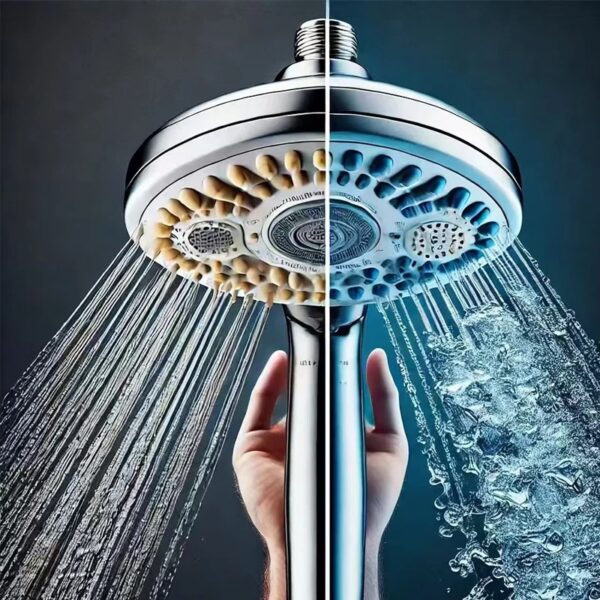
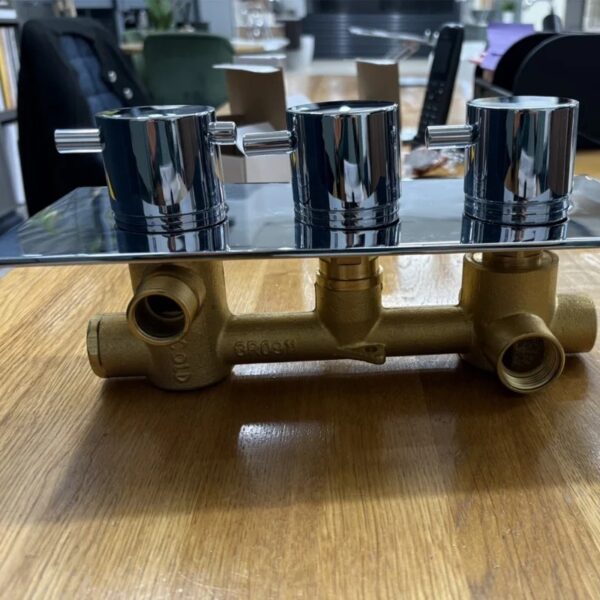
Because flow rate limits vary by jurisdiction and the measurement approach for multi-nozzle products has recently changed at the federal level, GPM specification is no longer a single engineering constant a brand sets once — it’s a variable that has to be reconciled against each market a product line will actually reach. A brand distributing into California alongside other US states, for example, faces a materially different compliance requirement than one selling only outside California, which has direct implications for whether a single SKU can serve the full distribution footprint or whether market-specific variants are needed.
For brands managing exactly this kind of multi-market flow rate question, JEKARE’s shower head product line is engineered with flow restrictor and aerator components sized to specific target thresholds, rather than a single fixed design applied uniformly across markets. Flow performance is verified as part of in-house inspection at JEKARE’s ISO 9001–certified facility, alongside the sealing and finish testing applied across the product line, giving buyers documented, market-specific flow data rather than a single general specification.
This is particularly relevant for brands building private-label programs that need to distribute the same collection into markets with different flow rate ceilings — a scenario that can be addressed directly through JEKARE’s OEM/ODM project process, where flow rate targets are confirmed per market before tooling is finalized.
“What is GPM in shower heads?” has a more consequential answer for a B2B buyer than a single definition: it’s a specification that varies by federal baseline, WaterSense threshold, and state-level requirement, and one whose measurement methodology for multi-nozzle products changed at the federal level as recently as April 2025. For B2B buyers, the practical response is to confirm flow rate compliance against each specific target market, request the test pressure behind any quoted GPM figure, and verify how multi-nozzle products are measured under the current definition — rather than treating GPM as a single number that travels automatically across every market.


No — WaterSense is a voluntary EPA labeling program set at a stricter threshold (2.0 gpm) than the mandatory federal standard (2.5 gpm); a product can be legally sold without the label as long as it meets the applicable mandatory standard for its market.
Yes — California’s Title 20 standard defines “shower devices” to include showerheads, handheld showers, and body sprays/jets, and when multiple outlets share a single valve, their combined flow is generally subject to the same 1.8 gpm limit.
It reverts to the statutory definition of “showerhead” rather than the prior interpretation that combined multiple nozzles into a single measured unit, which changes how such a product’s flow rate compliance should be documented at the federal level — though state-specific rules, such as California’s, may define this differently.
Yes, in principle — designing to the strictest applicable limit (currently California’s 1.8 gpm) satisfies less restrictive markets as well, though this tradeoff should be weighed against spray performance and market positioning goals.
Not necessarily — WaterSense-labeled products are required to meet specific spray force and coverage performance criteria in addition to the flow rate limit, so a compliant low-flow design isn’t automatically a weaker-performing one, though performance still depends on the specific flow restrictor and nozzle engineering.
Wei is a Manufacturing Process Engineer at JEKARE with over 15 years of experience in bathroom fixture production and OEM process control. He specializes in flow restrictor design, multi-market regulatory compliance documentation, and performance testing across shower head product lines. With extensive experience supporting global bathroom brands and distributors through multi-market product development, Wei focuses on helping buyers confirm flow rate compliance market by market rather than treating GPM as a single fixed specification.
Whether you’re mapping flow rate requirements for a new market or reviewing an existing shower head line, JEKARE provides engineering-driven OEM manufacturing support from concept development through mass production.