Call us: +86-18965139230 | Mail to us: info@jekare.com

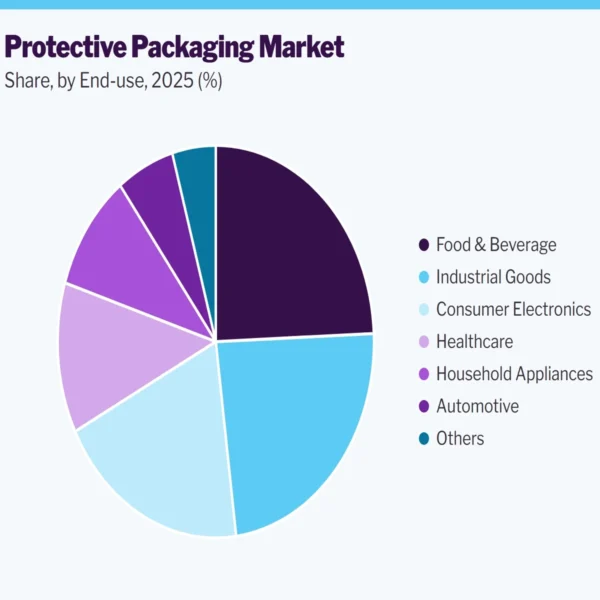
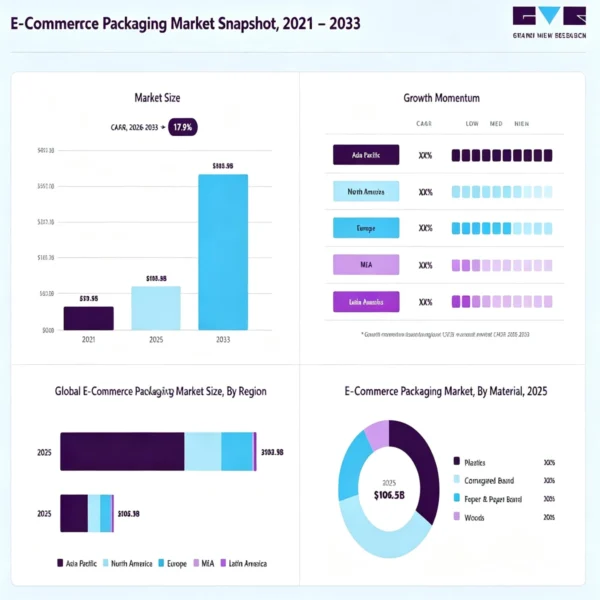
Packaging is no longer a line item brands can treat as an afterthought once the product itself is finalized. Grand View Research estimates the global e-commerce packaging market at USD 106.46 billion in 2025, projected to reach USD 392.85 billion by 2033 — a 17.9% CAGR driven directly by the volume of goods now shipped parcel-by-parcel rather than pallet-by-pallet. The adjacent protective packaging market, covering the foam, paper pulp, and corrugated materials that keep products intact in transit, is separately projected by Grand View Research to grow from USD 37.86 billion in 2024 to USD 56.97 billion by 2033.
At the same time, the economics of shipping that packaging have shifted underneath sellers. Amazon’s own Seller Central announcement on the Ships in Product Packaging (SIPP) program confirms that fulfillment fees are calculated on the greater of a product’s actual weight or its dimensional weight — meaning a lightweight but bulky handheld shower kit can be billed as if it weighed several times more than it does, purely because of how much box it occupies.
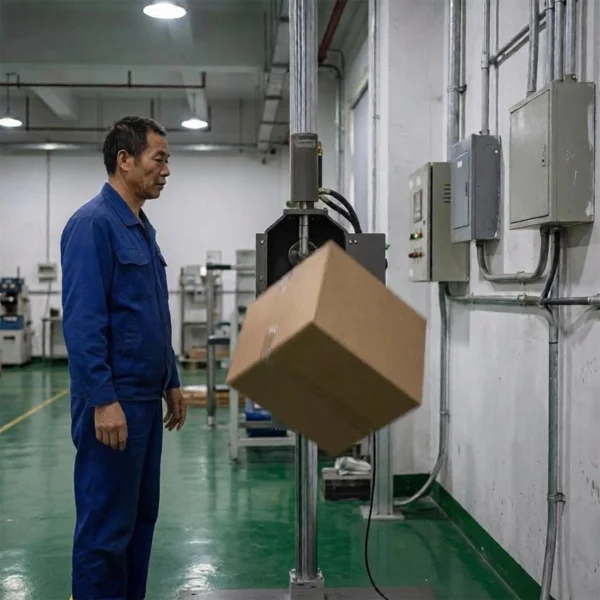
A North American bathroom brand approached JEKARE while developing a new private-label handheld shower kit for Amazon FBA. The planned product included a stainless steel handheld shower head, a 1.5-meter stainless steel hose, an adjustable wall bracket, and installation accessories.
The original packaging concept prioritized premium presentation. The brand selected a large rigid color box with a full-size foam insert because the product needed to appear high-end when customers opened the package. However, during the pre-production review, the packaging specification created two commercial concerns.
The first issue was dimensional efficiency. Although the complete shower kit weighed only approximately 1.8 kg, the proposed retail box measured 42 cm × 28 cm × 12 cm because each component was arranged separately inside the foam tray. Based on Amazon’s dimensional weight calculation (L × W × H ÷ 139), the package was being treated as approximately 3.2 kg for fulfillment purposes — significantly higher than its actual product weight.
The second issue was internal protection. The foam insert looked premium but did not fully control component movement during transportation. Because the hose was positioned in a separate open channel, repeated vibration during shipping allowed the hose connector and metal bracket to contact the inner packaging surface. The product itself was not damaged during factory inspection, but the packaging structure created unnecessary risk for cosmetic scratches and customer complaints after long-distance fulfillment.
Instead of simply reducing box size, JEKARE’s engineering team reviewed the complete packaging system:
After redesign, the packaging dimensions were reduced from approximately 42 × 28 × 12 cm to 34 × 24 × 10 cm, reducing the overall package volume by around 45% while maintaining a premium retail appearance.
The revised design also changed the commercial calculation. Instead of paying fulfillment costs based primarily on package size, the product moved closer to its actual weight profile. For a high-volume Amazon SKU shipping thousands of units annually, even a small dimensional reduction could represent a significant improvement in long-term margin performance.
More importantly, the brand avoided a common mistake in private-label product development: treating packaging as a separate artwork project after the product was already finalized. By considering product geometry, component arrangement, protective structure, and fulfillment requirements together before mass production, the brand created a package that supported both customer experience and operational profitability.
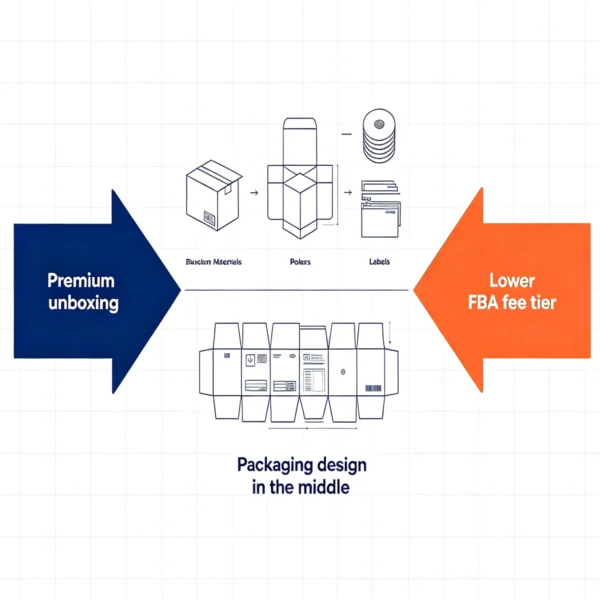
Two forces explain why this tension has intensified specifically over the past year, rather than being a constant background cost.
Amazon’s fee structure now penalizes volume more broadly than it used to. Coverage of the 2026 fee overhaul indicates the dimensional-weight calculation — length × width × height divided by a standard divisor of 139, rounded up to the next pound — now applies across large standard, small bulky, large bulky, and extra-large size tiers, where previously some of these categories were billed closer to actual weight. Only items under 12 oz or over 150 lb remain on an actual-weight-only basis. For a bundled shower kit that is light in absolute terms but boxed generously to protect a hose, bracket, and showerhead together, this is precisely the profile that tends to move into a higher, more expensive tier.
Packaging is now expected to prove itself before it ships, not after. Two testing standards define what “proven” means in practice. ASTM D4169 is the general industry standard for performance-testing shipping containers and systems — covering drop, vibration, compression, and handling hazards representative of real distribution. Amazon layers its own requirement on top for FBA-bound goods: ISTA 6-Amazon.com-SIOC defines a sequence of drop, vibration, and — for packages shipped in their own container without an outer box — compression and edge-impact tests specific to Amazon’s fulfillment network. A color box that looks premium on a shelf but hasn’t been engineered against either standard is a package that hasn’t actually been tested against the environment it’s about to travel through.
After Amazon expanded the use of dimensional-weight-based fulfillment pricing, a private-label bathroom brand discovered that its premium packaging design was creating unnecessary logistics costs before the product even reached customers. The brand was preparing to launch a handheld shower kit containing a stainless steel shower head, 1.5 m stainless steel hose, adjustable wall bracket, and installation accessories. To create a stronger unboxing experience, the original package used a large printed color box with a full EVA foam insert, resulting in a final carton size of 42 × 28 × 9 cm and a total shipping weight of approximately 1.7 kg.
However, packaging analysis showed that the issue was not the product weight but the unused space inside the carton. The shower head, hose, and bracket were arranged separately, leaving nearly 30% of the internal volume unused. Under Amazon’s dimensional weight calculation, the larger package size pushed the lightweight shower kit into a higher fulfillment cost tier, meaning the brand was paying additional logistics fees for empty packaging space rather than for the actual product.
To solve the problem, the packaging structure was redesigned during the product development stage instead of after launch. The engineering team changed the internal layout by nesting the coiled stainless steel hose around the main shower components, reducing unnecessary width and improving component fixation. The original oversized EVA foam structure was also replaced with a more compact molded pulp tray combined with targeted protective inserts for high-impact areas such as the shower head surface and bracket connection points. The redesigned package was then evaluated through transportation simulation, including drop, vibration, and compression testing, to confirm that reducing package size would not increase damage risk during Amazon fulfillment.
After optimization, the package dimensions were reduced from 42 × 28 × 9 cm to approximately 34 × 22 × 8 cm, decreasing total package volume by about 43% while maintaining product protection performance. The overall shipping weight was reduced by around 15%, helping the brand lower dimensional-weight-related fulfillment costs while preserving a premium unboxing experience. More importantly, the redesign prevented a common e-commerce mistake: treating packaging as a final-stage marketing decision instead of an engineered part of the product itself.
For bathroom brands selling handheld shower kits online, this case demonstrates why packaging decisions should be considered together with product structure, logistics requirements, and customer experience. A box that looks premium in product photography but creates unnecessary dimensional costs or transit failures can directly reduce SKU profitability. By validating packaging structure before mass production, brands can protect margins, reduce return risks, and build a more scalable e-commerce product model.
Before committing to a packaging format for a private-label shower product, three variables determine whether the result balances unboxing experience against FBA freight economics — or quietly fails at one of the two.
| Color Box | Blister Pack | Compact Eco-Box | |
|---|---|---|---|
| Unboxing experience | Strong — full-wrap graphics, lid-lift reveal | Weak — reads as hardware-store retail | Moderate — minimalist, sustainability-forward |
| Dimensional weight impact | Highest — most air/void space | Lowest — form-fitted to product | Low-moderate — engineered void reduction |
| Protection level | Depends on internal insert | Good for rigid components, poor for hoses | Good if paper-pulp trays are used |
| Typical use case | DTC, premium Amazon listings | Value-tier hardware retail, big-box | Sustainability-positioned brands, EU markets |
| FBA fee tier risk | Highest | Lowest | Moderate |
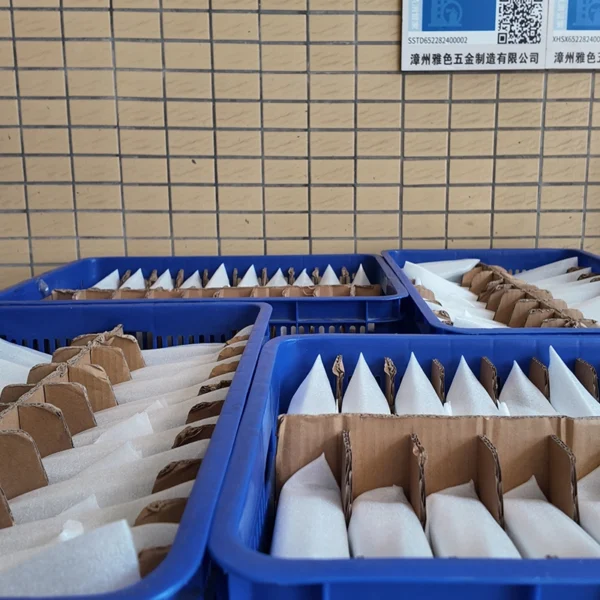
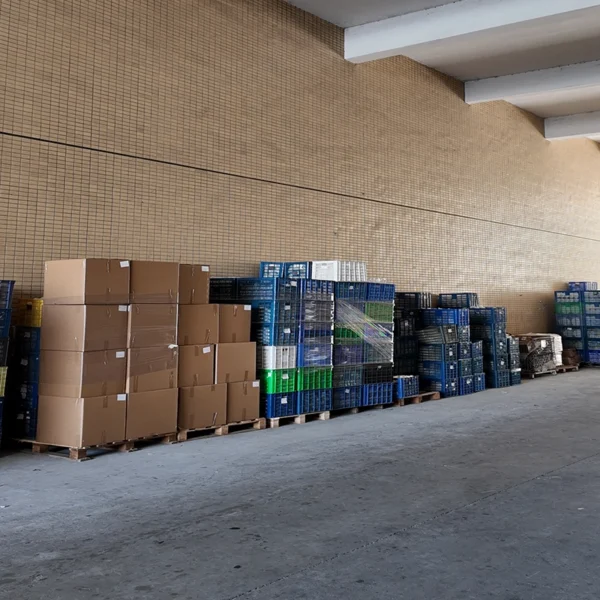
Packaging decisions made at the product-development stage are also where the next question in the buyer journey usually surfaces: whether a brand’s current supplier can execute custom color box design, barcode/FNSKU labeling, and Amazon-inbound-standard prep as part of one coordinated production run, or whether packaging is being sourced from a separate vendor and reconciled with the product after the fact — the same disconnect that drives many of the compatibility and kitting issues covered elsewhere on this site.
Commercially, this reframes packaging from a marketing decision into a margin decision. A box engineered against both ASTM D4169 and ISTA 6-Amazon.com from the start — sized to minimize dimensional weight while still protecting the kit — protects unit economics on every single FBA shipment for the life of the SKU, in a way that no amount of post-launch packaging redesign can fully recover once a product’s size tier and review pattern are already established.
Packaging for a private-label shower product now has to do three jobs at once: signal quality on unboxing, survive Amazon’s transit-testing requirements, and stay small enough to avoid a costly dimensional-weight fee tier. Treating those as three separate problems — solved by three separate vendors — is how brands end up with packaging that looks premium in photography but quietly erodes margin on every unit shipped. Brands that design color box, insert, and labeling as one engineered system, tested against ASTM D4169 and ISTA 6-Amazon.com before the first production run, are the ones who avoid finding out about a packaging problem from an FBA fee statement or a damaged-in-transit return.
Does a bigger, more premium-looking box always cost more in FBA fees? Not automatically, but it’s the most common cause. Because FBA fees are based on the greater of actual weight or dimensional weight (L × W × H ÷ 139), a large color box with unused internal void space can push a lightweight product into a higher, more expensive size tier even though the product itself hasn’t changed.
What’s the difference between ASTM D4169 and ISTA 6-Amazon.com testing? ASTM D4169 is the general industry standard for shipping-container performance testing, covering drop, vibration, and compression hazards representative of typical distribution. ISTA 6-Amazon.com is Amazon’s own protocol layered on top for goods entering its fulfillment network, with test sequences specific to Amazon’s handling and delivery environment.
Is a blister pack always the cheapest packaging option for FBA? It’s usually the lowest-dimensional-weight option, but it isn’t always the right fit for a full kit — hoses and flexible components don’t blister-pack cleanly, and the format reads as lower-tier to a customer opening a premium-positioned product.
How does EVA foam compare to molded paper pulp for a drop-test insert? EVA foam offers slightly better cushioning per unit thickness and is easier to custom-die-cut for irregular components; molded paper pulp is more easily recyclable and increasingly preferred by brands positioning around sustainability, at a modest cost and lead-time premium.
Can one packaging design serve both Amazon FBA and DTC/retail channels? Sometimes, but it often means overpaying on FBA dimensional weight to preserve DTC presentation, or under-delivering on unboxing experience to hit an FBA size tier. A two-tier packaging strategy — a compact FBA-optimized box and a separate presentation box for other channels — is common once volume justifies the tooling cost.
Who determines whether a package needs ISTA 6-Amazon.com testing versus just ASTM D4169? It depends on the fulfillment method. Products shipped in their own container without an Amazon overbox (SIOC) generally need to pass ISTA 6-Amazon.com-SIOC specifically; products that will be placed inside an Amazon-provided overbox fall under the related Over-Boxing protocol. ASTM D4169 remains a useful general baseline regardless of which Amazon-specific path applies.
This article was prepared by David Lin, Packaging & Supply Chain Engineer at JEKARE. [PLACEHOLDER BIO — not verified against jekare.com; replace name/title/bio with the real staff member you’d like credited]: “I work on packaging structural design and Amazon-inbound compliance for JEKARE’s shower and bathroom accessory OEM clients, with a focus on balancing unboxing experience against fulfillment freight cost.” Learn more about JEKARE’s OEM/ODM manufacturing capabilities.
1.Grand View Research — E-Commerce Packaging Market Size Report
https://www.grandviewresearch.com/industry-analysis/e-commerce-packaging-market-report
2.Grand View Research — Protective Packaging Market Size Report
https://www.grandviewresearch.com/industry-analysis/protective-packaging-market
3.Amazon Seller Central — Update to US Referral and Fulfillment by Amazon Fees (SIPP program, dimensional weight)
https://sellercentral.amazon.com/seller-forums/discussions/t/ce3a1455-3fdb-4317-991d-ca501f0a75a3
4.ASTM D4169-22 — Standard Practice for Performance Testing of Shipping Containers and Systems
https://store.astm.org/d4169-22.html
5.ISTA 6-Amazon.com — Over-Boxing Test Overview
https://ista.org/docs/6AmazoncomOBOverview.pdf
Rethinking Packaging Before Your Next Amazon FBA Shipment? If unboxing experience and FBA freight cost feel like they’re pulling your packaging spec in opposite directions, JEKARE’s packaging and supply chain team can review your kit’s dimensional weight and drop-test readiness before the next production run.