Call us: +86-18965139230 | Mail to us: info@jekare.com

Two forces are pushing thermostatic valves further into mainstream shower faucet specification. The first is regulatory: the ASSE 1016 standard covers pressure-balancing (Type P), thermostatic (Type T), and combination (Type T/P) valves under a single certification framework, and most U.S. jurisdictions now require one of these three types on every individual shower installation — a code requirement, not a premium option.
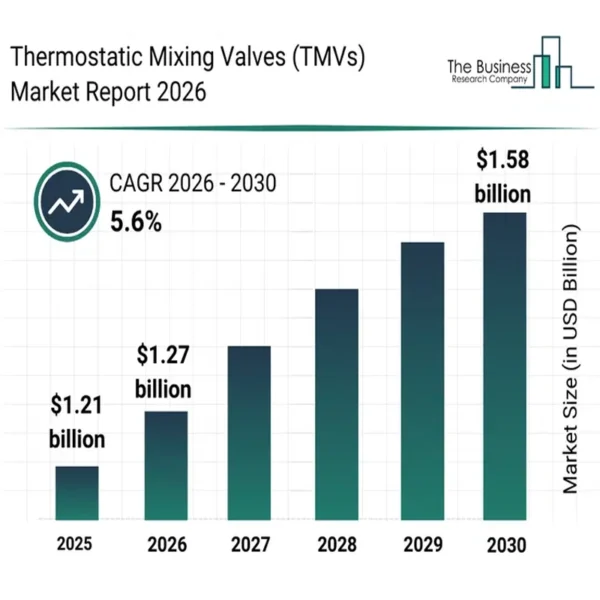
The second is market growth tied directly to that regulatory pressure. According to The Business Research Company, the global thermostatic mixing valve market is projected to grow from USD 1.27 billion in 2026 to USD 1.58 billion by 2030, with growth attributed specifically to the implementation of building safety codes and rising awareness of scald prevention — not general product upgrading.
Together, these signals mean the choice between a standard (manual mixing) valve and a thermostatic valve is no longer just a cost-tier decision. It’s increasingly a code-compliance and liability decision as well.
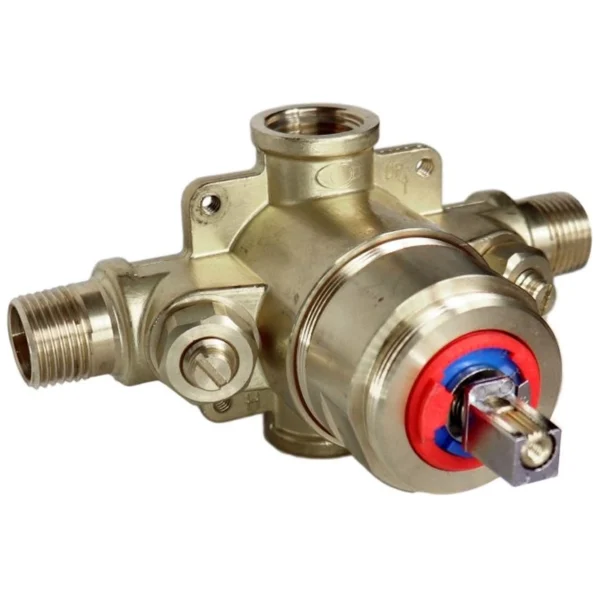
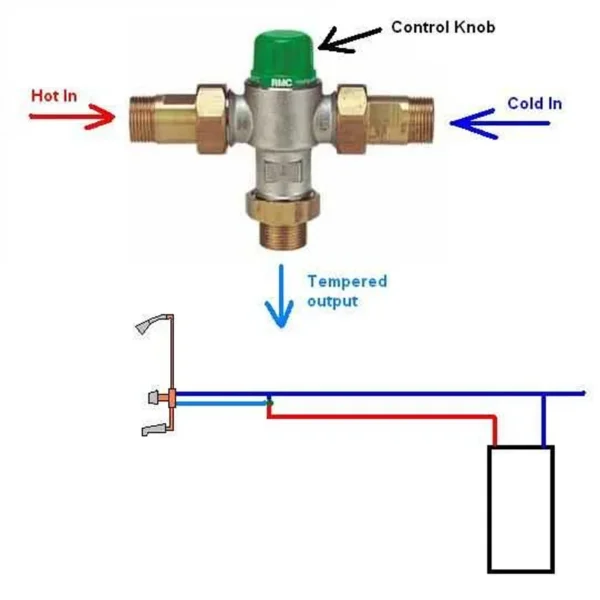
A standard valve holds a fixed mechanical position and does not respond when pressure shifts elsewhere in the building — so in hotels, healthcare facilities, and multi-family housing, where several outlets routinely draw from the same line, that passive design translates directly into scald and cold-shock risk, not just discomfort.
Standard valves remain the lower-cost option for simple, single-outlet residential systems, while thermostatic valves carry a materially different cost and certification burden (some commercial and healthcare specifications call for TMV2 or TMV3-certified products). Treating this as a single “valve” line item rather than a tiered product decision tends to under-price the commercial and hospitality segment.
Because a standard valve’s performance is entirely dependent on external pressure stability, temperature complaints in the field are often mistaken for a defective part rather than a design limitation of the valve type itself — which shapes how a warranty claim gets diagnosed and who ultimately absorbs the cost.
The Business Research Company attributes recent and forecast growth in the thermostatic mixing valve market specifically to building safety code implementation and scald-prevention awareness — not to general consumer upgrade demand, which points to compliance rather than preference as the primary purchasing driver in commercial and multi-unit segments.
Because ASSE 1016 certifies pressure-balancing, thermostatic, and combination valves under one standard, a valve type decision for an OEM program is a certification-and-testing decision, not just a component swap — switching valve type mid-program can mean re-certifying the fixture.
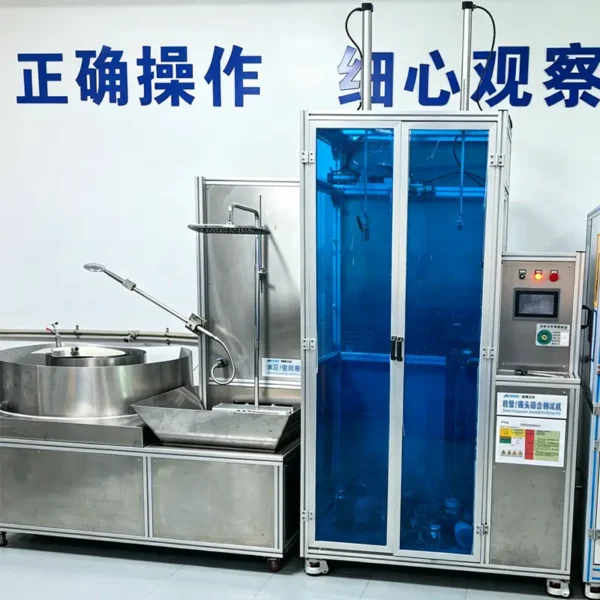
In a recent OEM development project on a 1.8 GPM low-flow shower system, initial prototypes passed static-pressure testing at 45 PSI but failed a simulated dynamic pressure drop (45 to 25 PSI over 3 seconds): the pressure-balancing valve’s response time measured 2.8 seconds against a sub-1-second target, and outlet temperature swung 6.2°F against a 3.6°F requirement. After optimizing the valve’s internal spool and spring response and widening internal flow passages, response time dropped to 0.7 seconds and temperature variation to 2.1°F — within spec, before tooling release.
The engineering lesson carries directly into the standard-vs-thermostatic decision: valve response speed under sudden pressure change, not just steady-state flow accuracy, is what determines real-world temperature stability — and that response performance has to be validated for the specific valve type and application, not assumed from the valve’s certification category alone.
Before specifying a valve type for a shower faucet or shower system program, ask:


The standard-vs-thermostatic decision increasingly maps onto how a brand segments its shower faucet and shower system lines — an economy tier built on ASSE 1016 Type P valves for simple residential applications, and a premium or commercial tier built on thermostatic (Type T/P) valves where code or guest-experience requirements demand it.
For sourcing teams working across shower faucet and shower column platforms, that means confirming a manufacturing partner’s design and development process can support both valve types under the same testing protocol — so moving a product from a residential to a hospitality-grade spec doesn’t require starting engineering validation over from scratch.
Often yes — because ASSE 1016 certifies specific valve types (P, T, or T/P), a valve-type change on an existing program typically requires re-testing and re-certifying under the applicable type, not just a component substitution.
TMV2 and TMV3 are UK/commercial-grade thermostatic mixing valve certifications sometimes required for healthcare and institutional installations in addition to, or instead of, ASSE 1016, depending on the target market’s building codes.
For shared, multi-outlet environments like hotels, thermostatic (Type T/P) valves are generally the safer specification because they actively compensate for pressure changes, whereas a standard valve’s performance depends entirely on external pressure staying stable.
Yes — a valve can meet its rated flow accuracy under steady pressure and still fail under a sudden pressure change if its response time is too slow, which is why dynamic pressure testing, not just static flow testing, is necessary before tooling release.
It’s possible when both valve types are validated under the same testing protocol from the start of development, rather than treating the thermostatic version as a separate late-stage engineering effort.
David Lin is a Shower Product Application Specialist at JEKARE, specializing in the design and application of shower heads, shower columns, and bathroom water-delivery systems. He works closely with product development and engineering teams to evaluate flow performance, pressure stability, and installation efficiency across residential and commercial projects for global brands and distributors. His focus is translating engineering principles into practical product solutions that improve everyday shower performance and long-term reliability.
1.The Business Research Company — Thermostatic Mixing Valves (TMVs) Global Market Report
2.ASSE 1016 Standard for Shower Valves (via Engineer Fix)
https://engineerfix.com/what-is-the-asse-1016-standard-for-shower-valves/
✔ 20+ Years of OEM & ODM Manufacturing Experience ✔ Complete Shower, Faucet and Bathroom Product Solutions ✔ Engineering Support from Design to Production ✔ Pressure and Flow Testing Built Into Standard QC ✔ Flexible Customization for Different Markets ✔ Manufacturing Partner for Global Distributors and Brands
Whether your program needs a standard ASSE 1016 Type P valve or a thermostatic Type T/P platform, JEKARE’s OEM/ODM project process begins engineering review at the design stage rather than after tooling is committed.