Industry Background:
The specification of base materials for bathroom sink faucets is undergoing a structural shift driven by tightening global drinking water regulations and evolving commercial durability standards.
Regulatory Pressures on Heavy Metals
In recent years, regulatory bodies have significantly reduced allowable heavy metal leaching in plumbing fixtures. The updates to the NSF/ANSI/CAN 61 standard in North America and the Drinking Water Directive (DWD) in the European Union have forced OEM buyers to phase out traditional high-lead brass formulations. Brands can no longer rely on legacy material specs without risking non-compliance at the customs border or during building inspections.
The Rise of Commercial Durability Standards
Simultaneously, the global plumbing fixtures market—which Grand View Research projects will grow steadily through 2030—is seeing a higher demand for commercial-grade durability even in residential products. Hospitality projects and multi-family developments now routinely specify materials that resist aggressive cleaning chemicals and hard-water scaling, fundamentally altering how brands approach OEM sourcing.
Why Material Selection Matters: Warranty Risk and Compliance Costs
For a B2B bathroom brand, the base material of a sink faucet dictates far more than the unit cost; it defines the product’s entire lifecycle and market viability.
Warranty Risk and Brand Reputation
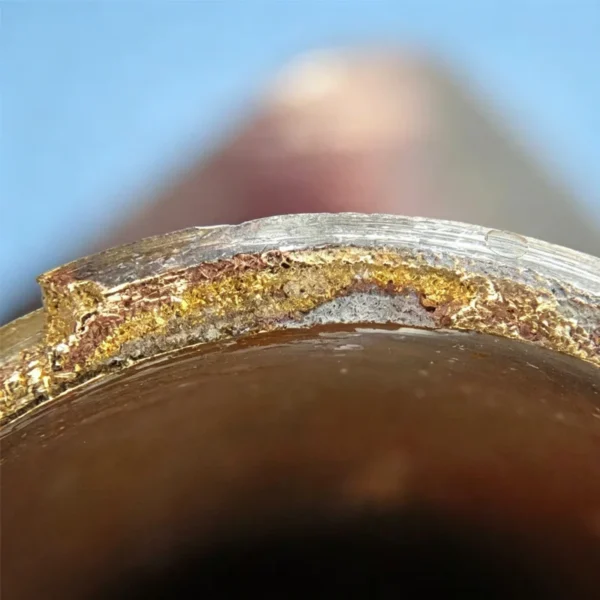
A faucet’s base material directly impacts dimensional stability. If a material expands or degrades under thermal stress, the internal ceramic cartridge will fail, leading to leaks. High warranty claim rates caused by material failure—such as dezincification in hard water—erode brand profitability and damage relationships with large-scale distributors.
Machining Complexity and Lead Times
Material hardness determines CNC machining time and tooling wear. While a material might appear cost-effective on a raw-commodity basis, if it requires slower machining speeds and frequent tool replacements, the final OEM unit cost will increase, and production lead times will stretch.
Market Observation: Evaluating Core Faucet Substrates
Based on current engineering standards and global compliance requirements, OEM brands primarily evaluate three core materials for faucet bodies and waterways.
DZR and Low-Lead Brass (The Engineering Standard)
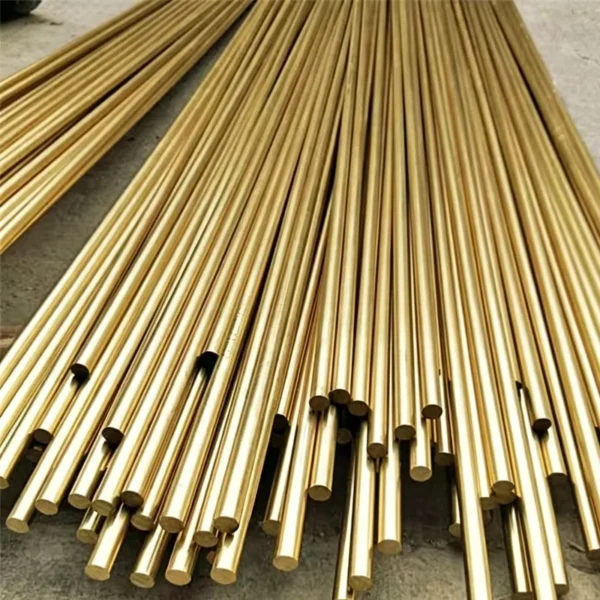
Brass remains the dominant substrate for premium sink faucets due to its exceptional castability, machinability, and acoustic dampening properties.
-
Low-Lead Formulations: To meet the U.S. EPA’s “Lead Free” mandate (defined as ≤0.25% weighted average lead content), manufacturers now utilize specialized low-lead or bismuth-brass alloys.
-
DZR (Dezincification Resistant) Brass: In regions with aggressive, hard water (like the UK or parts of Australia), DZR brass is specified to prevent the zinc from leaching out of the alloy, which would otherwise leave a porous, weakened copper structure behind.
304/316 Stainless Steel (The Zero-Lead Alternative)
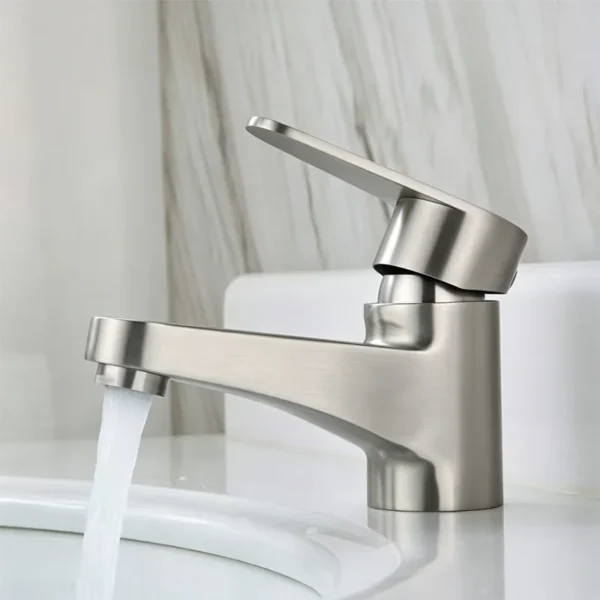
Stainless steel is gaining market share, particularly in modern, minimalist collections and commercial healthcare specifications.
-
Inherent Compliance: Stainless steel naturally contains zero lead, bypassing many of the complex heavy-metal testing hurdles associated with brass.
-
Manufacturing Realities: 304 and 316 stainless steel possess excellent corrosion resistance but are significantly harder than brass. This increases tooling wear during CNC machining, often resulting in higher manufacturing costs for complex internal waterways compared to brass equivalents.
Zinc Alloy (Zamac) (The Cost-Optimization Component)
Zinc alloy is heavily utilized in the value-engineering phase of product development.
-
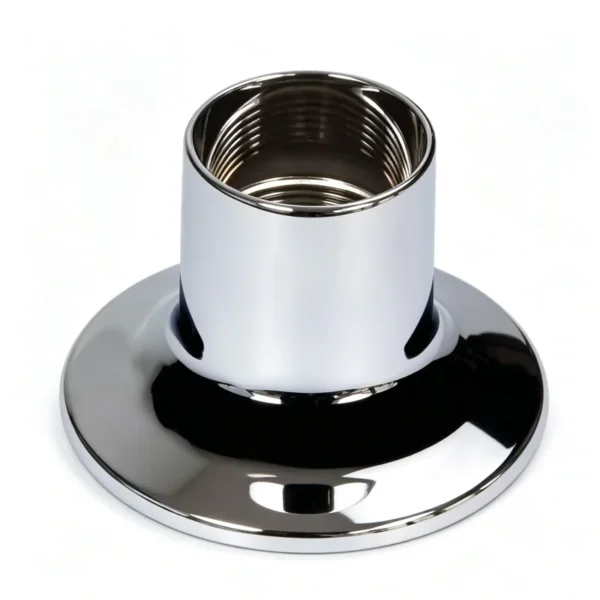
Strategic Application: While highly susceptible to corrosion if exposed directly to water flow, zinc alloy is exceptionally easy to die-cast into complex geometric shapes. It is strictly recommended for non-waterway components, such as faucet handles, base plates, and escutcheons.
JEKARE Perspective: The Shift Toward Hybrid Construction
A verified pattern among our commercial hospitality clients is the transition toward hybrid material engineering to balance stringent compliance with raw material costs. Brands are increasingly asking to split the BOM (Bill of Materials): specifying low-lead brass or stainless steel exclusively for the internal water-contact pathways, while utilizing die-cast zinc alloy for the exterior shell and handles.
When specifying commercial bathroom programs, brands frequently utilize
JEKARE’s OEM basin faucet solutions, where we engineer DZR brass waterways that maintain exact dimensional tolerances for ceramic cartridges. By isolating the critical waterways with premium
brass manufacturing techniques, we help OEM buyers achieve WaterMark and NSF compliance without over-engineering the non-functional exterior components, optimizing the overall project budget.
Practical Decision Framework for OEM Buyers
Before approving a tooling drawing or finalizing a material spec with an OEM partner, purchasing managers should evaluate these three criteria:
Step 1: Analyze Local Market Certifications
Do not select a material without cross-referencing the destination market. If the product is entering the UK, verify that the brass is DZR-certified and WRAS-approved. If entering California, ensure the material data sheet explicitly meets NSF/ANSI 372 zero-lead requirements.
Step 2: Correlate Base Material with Surface Finish
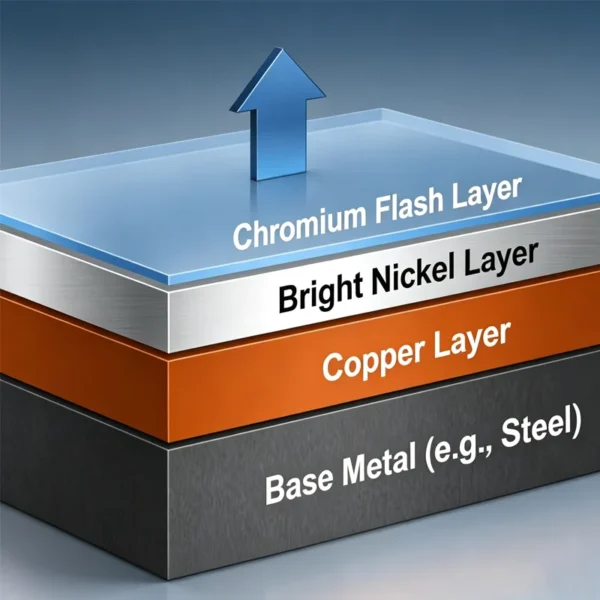
The base material dictates plating adhesion. Brass provides an ideal substrate for multi-layer chrome plating and PVD (Physical Vapor Deposition) coatings. If you are specifying brushed nickel or matte black on a zinc alloy handle, ensure your manufacturing partner uses a robust copper-nickel undercoating to prevent surface blistering over time.
Step 3: Evaluate Internal Waterway Complexity
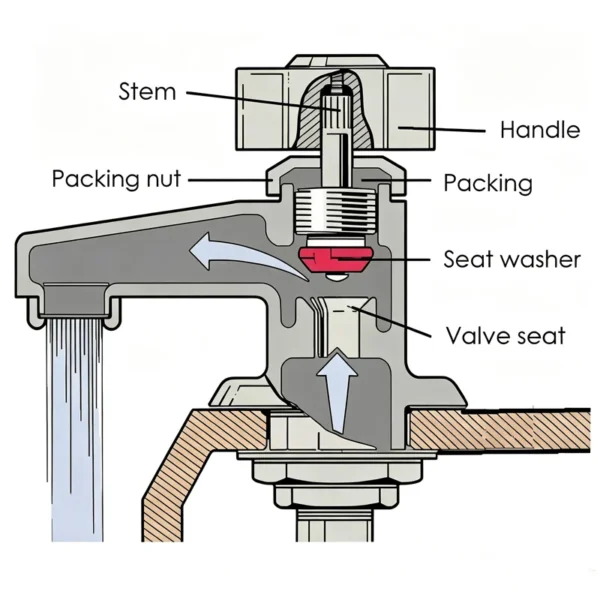
Review the CAD files. If the faucet features a highly intricate internal waterway for precise flow control, brass offers the superior machinability required to achieve micro-tolerances. If the design is a simple, straight tubular structure, stainless steel becomes a more viable, lead-free alternative.
What This Means for Your Brand
The material spec of a sink faucet dictates your supply chain’s resilience against shifting global water regulations. Moving from a single-material approach to a strategic, component-level material selection allows brands to maintain premium exterior aesthetics while controlling internal manufacturing costs.
More broadly, this underscores the necessity of engaging with manufacturing partners during the early CAD and DFM (Design for Manufacturing) stages. Relying on an OEM partner with in-house
material testing and CNC machining capabilities ensures that the material you specify on paper performs reliably on the production line and passes regulatory audits.
FAQ
1. Does stainless steel completely eliminate the risk of faucet corrosion?
While highly resistant, stainless steel is not immune to corrosion. Exposure to high-chloride environments (like coastal areas) or harsh industrial cleaning chemicals can cause pitting. 316 stainless steel offers higher chloride resistance than 304, though at a higher raw material cost.
2. Can PVD finishes be applied to zinc alloy faucet handles?
Yes, but it requires precise surface preparation. Because zinc alloy is porous, it must first receive a flawless layer of electroplated copper and nickel to seal the substrate before the final PVD coating is applied in the vacuum chamber.
3. What does “DZR” mean, and when is it necessary?
DZR stands for Dezincification Resistant. In areas with hard, mineral-heavy water, normal brass can undergo a chemical reaction where the zinc leaches out, weakening the fitting. DZR brass contains specific additives (like arsenic) and undergoes heat treatment to prevent this, making it mandatory in regions like the UK and Australia.
4. Why is lead added to brass in the first place?
Historically, trace amounts of lead (typically 2-3%) were added to brass alloys to act as a lubricant during CNC machining, allowing for faster cutting speeds and reduced tool wear. Modern low-lead laws have forced the industry to adopt harder bismuth-brass alternatives or optimize machining parameters.
5. How do I verify that an OEM manufacturer’s brass actually meets low-lead standards?
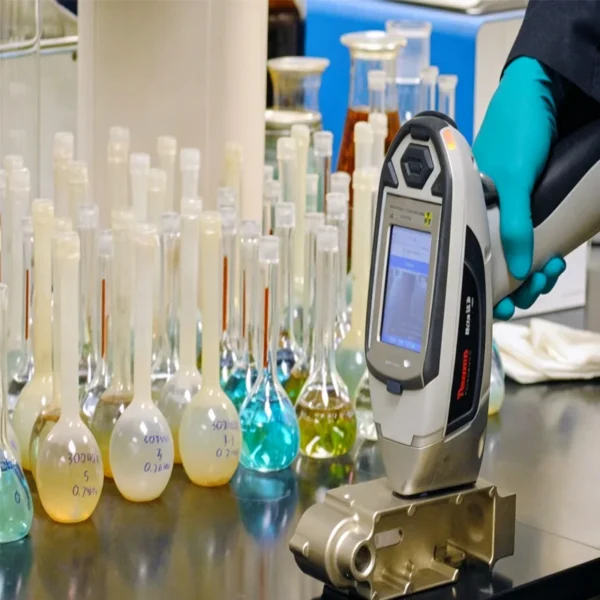
Buyers should request material composition certificates (like an SGS or TUV report) for the raw brass ingots before machining begins. Additionally, finished components should be periodically tested using spectrometers in a qualified
quality control laboratory to ensure no contamination occurred during processing.
About the Author
Sunny is a Senior Faucet Systems Engineer at JEKARE with over 20 years of experience in sanitary ware product development and OEM manufacturing. He specializes in brass machining optimization, low-lead compliance engineering, structural CAD design, and multi-substrate manufacturing. With extensive experience working with global bathroom brands and distributors, Sunny focuses on translating complex regulatory requirements into reliable, cost-optimized manufacturing solutions.
References
-
U.S. Environmental Protection Agency (EPA) – Use of Lead Free Pipes, Fittings, Fixtures, Solder, and Flux for Drinking Water
https://www.epa.gov/sdwa/use-lead-free-pipes-fittings-fixtures-solder-and-flux-drinking-water
-
NSF International – NSF/ANSI/CAN 61: Drinking Water System Components – Health Effects
https://www.nsf.org/knowledge-library/nsf-ansi-can-61-drinking-water-system-components-health-effects
-
Grand View Research – Plumbing Fixtures Market Size, Share & Trends Analysis Report
https://www.grandviewresearch.com/industry-analysis/plumbing-fixtures-market
Why Global Bathroom Brands Choose JEKARE
✔ 20+ Years of OEM & ODM Manufacturing Experience
✔ Complete Shower, Faucet and Bathroom Product Solutions
✔ Professional Engineering Support from Design to Production
✔ Strict Quality Control and Material Compliance Testing
✔ Flexible Customization for Different Global Markets
✔ Reliable Manufacturing Partner for Global Distributors and Brands
Whether you need low-lead brass basin faucets, commercial stainless steel solutions, or complete bathroom suites, JEKARE provides engineering-driven OEM manufacturing support from concept development to mass production.Request a DFM Analysis for Your Next Faucet Project