Call us: +86-18965139230 | Mail to us: info@jekare.com

The premium shower filter category is growing fast enough to matter, but not so fast that differentiation is optional. Fortune Business Insights values the global premium shower filters market at USD 195.00 million in 2025, projecting growth to USD 398.36 million by 2034 at a CAGR of 8.36% — with North America holding the largest regional share and named players including Aquasana, Hello Klean, Sprite Industries, Culligan International, and Jolie Skin Co. already competing for shelf space.
The demand driver behind that growth is geographic and physiological, not just aesthetic. USGS classifies water hardness above 180 mg/L as calcium carbonate as “very hard,” and its national mapping shows hard water concentrated across the western and east-central United States — the same regions where DTC filtered shower head brands report their strongest sell-through. Grand View Research notes that as recently as March 2025, a new entrant (Serein) launched a filtered showerhead built around a four-part filtration stack — calcium sulfite, Vitamin C, KDF 55, and activated carbon — specifically marketed against skin and hair damage from tap water contaminants, a concrete signal that single-media commodity filters are already being out-positioned by more engineered alternatives.
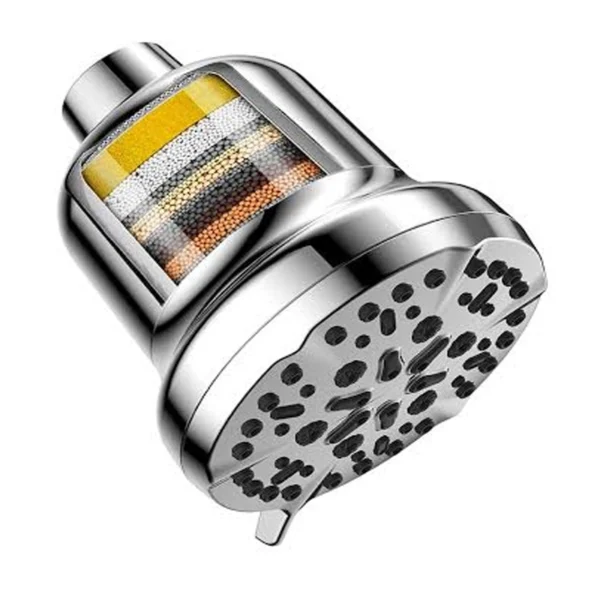
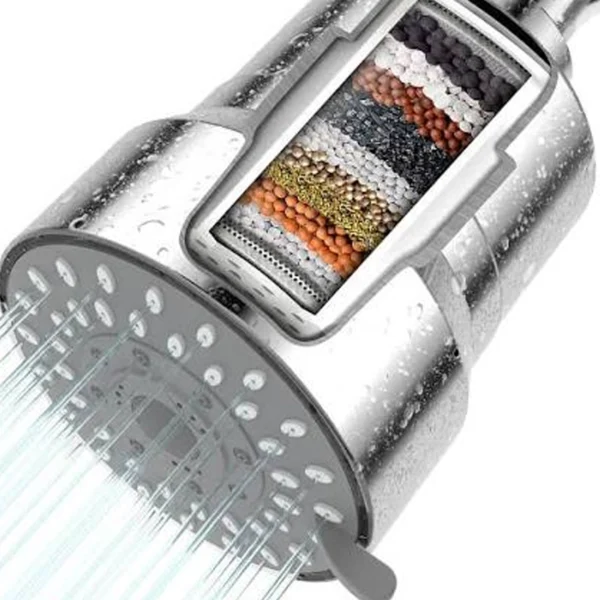
For an e-commerce brand entering this category, the hard part isn’t proving the trend exists — it’s that most products competing in it look and perform almost identically: a clear plastic housing over a visible bed of white or pink calcium sulfite balls, marketed with near-identical “removes chlorine, softens water, better skin and hair” copy. That sameness creates two commercial risks at once. First, it compresses margin toward whichever competitor can source the cheapest commodity cartridge, since there’s little visual or functional reason to pay more. Second, the filtration media itself restricts internal flow, so a badly engineered filter housing on a rain shower head or handheld unit can measurably drop shower pressure — a defect that inspection protocols should catch before shipment — turning the product’s core selling point into its most common one-star complaint.
USGS’s hardness classification (0–60 mg/L soft, 61–120 moderately hard, 121–180 hard, above 180 very hard) isn’t just a reference chart — it’s a targeting map. Brands positioning filtered shower heads as a premium regional product, rather than a generic national SKU, can align marketing spend and even filtration-media formulation with documented hardness levels by region rather than a one-size-fits-all claim.
This is where most category marketing overstates the science. Systematic review research from King’s College London and the University of Sheffield found a genuine positive association between living in a hard-water area and eczema risk in children, and mechanistic studies showing higher surfactant deposition on skin exposed to harder water — a real, defensible claim. But the same body of research found that once eczema is already established, water softening does not significantly improve its objective severity in randomized controlled trials. That distinction matters commercially: “may help protect skin barrier function over time” is a claim the research supports; “will cure your eczema” is not, and brands making the second claim are exposed to it being disproven by the same research their marketing gestures toward.
With named competitors already established across a fairly small ~$195M category, a new entrant competing purely on “we also filter chlorine” has limited room to differentiate on claims alone for either a fixed rain shower head or a hand held shower head format — the Grand View Research-documented shift toward multi-stage filtration media (the Serein example above) suggests the market is already moving past single-media commodity products faster than most private-label listings have caught up.
In 2021, JEKARE partnered with a North American e-commerce bathroom brand developing a premium filtered shower head collection.
The brand entered a highly competitive category where many existing products relied on similar transparent plastic housings and single-media filtration systems. Instead of competing only on filtration claims, the brand wanted to create a more differentiated product with a stainless-steel appearance, multi-stage filtration, and a premium retail positioning around USD 89.
During the engineering review stage, JEKARE identified a key product development challenge: improving filtration performance without reducing shower pressure.
The initial prototype used a multi-stage cartridge containing approximately 85 grams of filtration media, including calcium sulfite, KDF 55, and activated carbon. While the filtration structure supported stronger marketing positioning, testing showed that the dense media arrangement created excessive flow resistance.
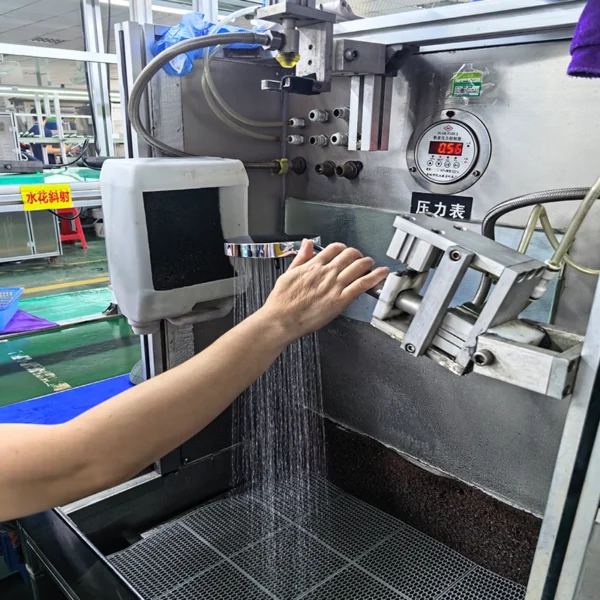
At 40 psi inlet pressure, the prototype flow rate decreased to approximately 1.45 GPM, around 22% lower than the brand’s original non-filtered shower head platform. At 30 psi, the reduction increased to approximately 35%.
For an e-commerce product, this created a significant commercial risk. Customers expect a premium shower experience immediately after installation, and noticeable pressure loss could quickly turn a filtration benefit into a negative review.
Instead of simply reducing filtration media, JEKARE analyzed the complete water path, including cartridge structure and internal flow channels. The engineering team redesigned the filtration layout and improved internal water distribution to reduce unnecessary turbulence and pressure loss.
After optimization, internal flow resistance was reduced by approximately 18%. The redesigned product improved flow performance at 40 psi from approximately 1.45 GPM to 1.78 GPM while maintaining the multi-stage filtration concept.
During the same development process, JEKARE also optimized the product structure. The original stainless-steel prototype weighed approximately 620 grams, creating concerns around handheld comfort and international shipping efficiency. By adjusting material thickness distribution and reinforcing only critical areas, the final design reduced weight to approximately 465 grams while maintaining a premium metal appearance.
The final product moved into mass production with an initial order quantity of approximately 20,000 units and an annual forecast exceeding 80,000 units.
This project demonstrates an important lesson for filtered shower head brands: differentiation does not come from adding more filtration media alone. A successful premium product requires balancing filtration performance, hydraulic design, material selection, user experience, and manufacturing feasibility.
For brands entering this category, the competitive advantage comes from developing a complete shower system that delivers both measurable filtration value and the performance customers expect from a premium bathroom product.
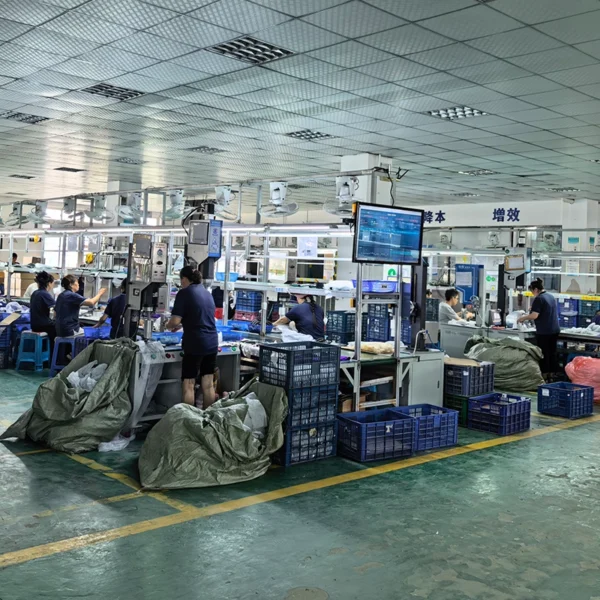

Unlike a standard shower head, a filtered model can’t be optimized on a single axis — every design decision trades against another:
Filter media volume vs. grip ergonomics. More filtration media generally means better contaminant reduction and a longer replacement cycle, but it also means a larger, heavier housing to hold — which fights directly against the sleek, minimal-looking silhouette most premium DTC brands want on a product photo. Resolving this is a structural design and development problem, not a cosmetic one: where the media sits relative to the handle’s center of gravity determines whether a “premium-looking” filtered head actually feels premium to hold.
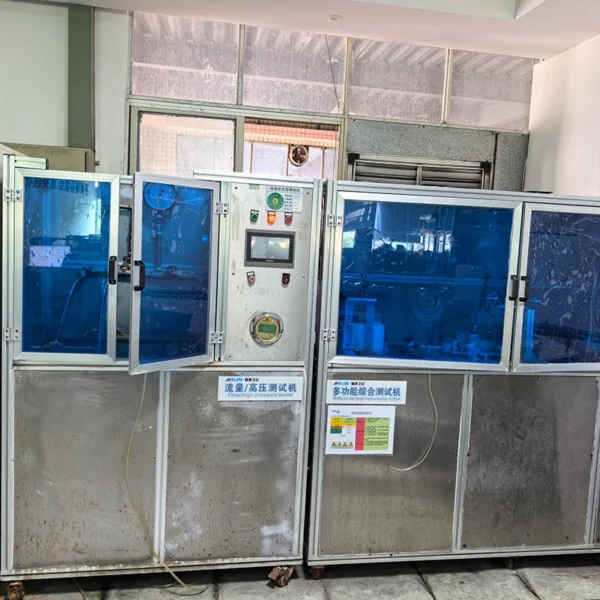
Filtration performance vs. flow and pressure. Denser or multi-stage filter media (the KDF-plus-carbon-plus-mineral stacks now appearing in the category) filters more effectively but restricts flow more than a single loose bed of calcium sulfite balls. A housing and internal flow-channel design that hasn’t been validated through inspection around the specific media stack risks the exact pressure-drop complaint that undermines the product’s premium positioning.
Cartridge replacement cycle vs. repurchase revenue. A cartridge engineered to last too long undercuts the subscription or repeat-purchase revenue model many filtered shower head brands depend on; one that needs replacing too often reads as a hidden ongoing cost that erodes the initial purchase’s perceived value. Getting this cycle right is as much a filtration-media engineering decision as a commercial one — it has to be validated through inspection against real usage data, not set arbitrarily.

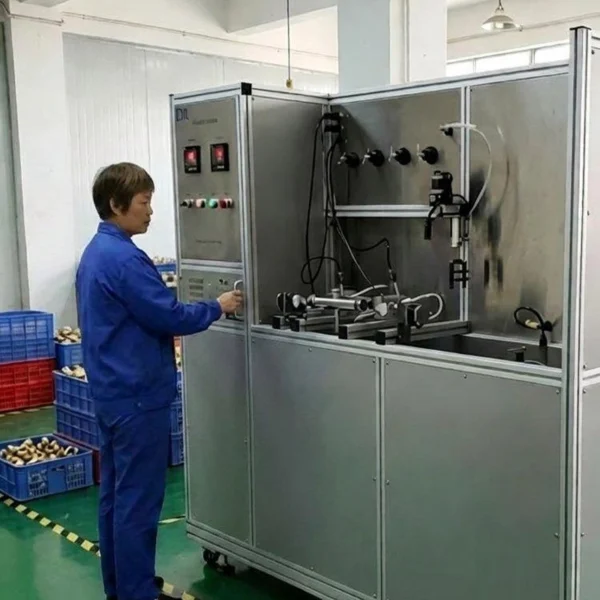
In a category this new and this visually homogeneous, the durable differentiator isn’t the filtration claim — most competitors can make a similar one — it’s whether the housing material and cartridge integration are engineered well enough to avoid the two failure modes that generate returns and refunds: a pressure drop customers notice immediately, and a housing that looks and feels cheap once it’s actually in someone’s hand rather than in a product photo.
That argues for treating material selection (stainless steel or higher-grade ABS housings, as opposed to the thin clear plastic common across the category) and compact multi-stage cartridge integration as the primary product-development investment — worth confirming with a manufacturing partner before committing to tooling — with the filtration claim itself as a supporting feature rather than the whole pitch.
It can, if the filter media and internal flow channel weren’t engineered together during design and development — denser or multi-stage media in particular restricts flow more than a simple single-media bed, which is why pressure performance should be tested with the specific filter media installed, not assumed from the base shower head design alone.
Partially — peer-reviewed research supports a link between hard water exposure and skin barrier stress or increased eczema risk over time, but the same research found water softening doesn’t significantly reduce severity in eczema that’s already established, so brands should be precise about which claim they’re actually making.
It depends on the specific media and local water hardness rather than a fixed universal number — a replacement cycle should be validated against real usage and hardness data for the target market rather than set to match a competitor’s marketing claim or an arbitrary subscription cadence.
A single-media filter (typically calcium sulfite balls alone) mainly targets scale and softening perception, while multi-stage designs (adding KDF media and activated carbon, for example) target a broader range of contaminants including chlorine and certain heavy metals — which is part of why multi-stage products can support a more specific, defensible marketing claim.
Not necessarily — since hard water severity varies significantly by region according to USGS data, a brand selling across multiple markets has a reasonable basis for adjusting both filtration-media formulation and marketing emphasis by region rather than using one national claim.
1.Fortune Business Insights — Premium Shower Filters Market Size, Share [2034]
https://www.fortunebusinessinsights.com/premium-shower-filters-market-115975
2.U.S. Geological Survey — Hardness of Water
https://www.usgs.gov/water-science-school/science/hardness-water
3.King’s College London — The Effect of Water Hardness on Atopic Eczema, Skin Barrier Function: A Systematic Review, Meta-Analysis
https://kclpure.kcl.ac.uk/portal/en/publications/the-effect-of-water-hardness-on-atopic-eczema-skin-barrier-functi/
4.Grand View Research — Shower Heads Market Size Report, 2025-2030
https://www.grandviewresearch.com/industry-analysis/shower-heads-market-report
5.Water Quality Association — Scale Deposits
https://wqa.org/learn-about-water/perceptible-issues/scale-deposits/
✔ 20+ Years of OEM & ODM Manufacturing Experience ✔ Stainless Steel and Premium ABS Housing Options for Filtered Products ✔ Compact Multi-Stage Filter Cartridge Integration Engineering ✔ Flow and Pressure Testing Validated With Filter Media Installed ✔ Flexible Customization for Different Regional Water Conditions ✔ Manufacturing Partner for Global E-Commerce and Distributor Brands
If your team is developing a filtered shower head that needs to look premium and hold pressure with the filter media installed — not just in isolation — JEKARE’s OEM/ODM project process works through housing material, cartridge integration, and flow-channel design together from the design stage.