Call us: +86-18965139230 | Mail to us: info@jekare.com

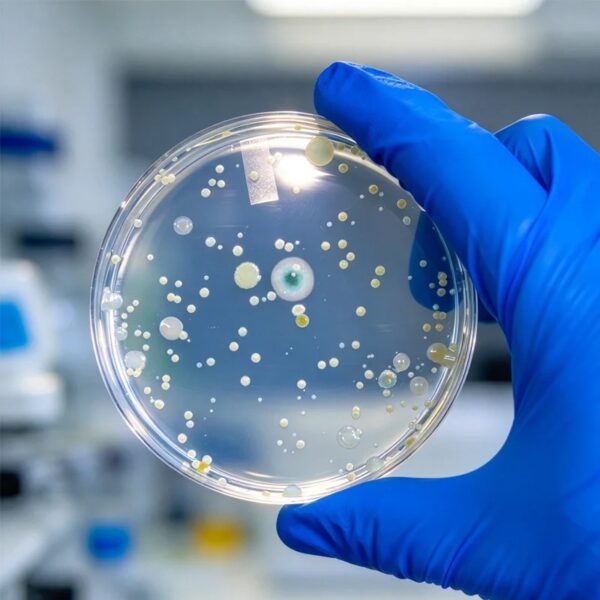
Faucet aerators have been documented as the source of specific hospital outbreaks, including a carbapenem-resistant Acinetobacter baumannii outbreak in a neurosurgical intensive care unit and a cluster of Stenotrophomonas maltophilia colonizations traced by genetic fingerprinting directly to aerators installed in patient rooms, according to a 2025 review published in Antimicrobial Resistance & Infection Control research summarized on ScienceDirect. This isn’t a hypothetical risk category — it’s a recurring, published finding in hospital infection control literature.
The internal screens and flow-splitting components inside an aerator create the kind of low-flow, high-surface-area environment that promotes biofilm formation more readily than a simple, unrestricted faucet outlet — a structural design factor independent of the incoming water’s own quality.
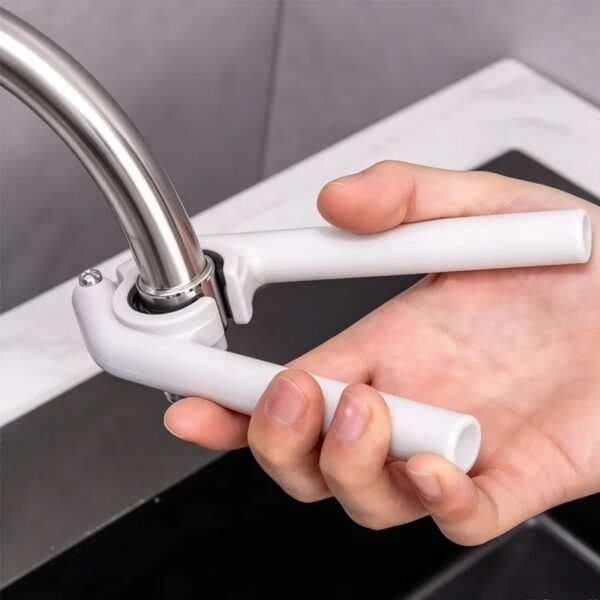
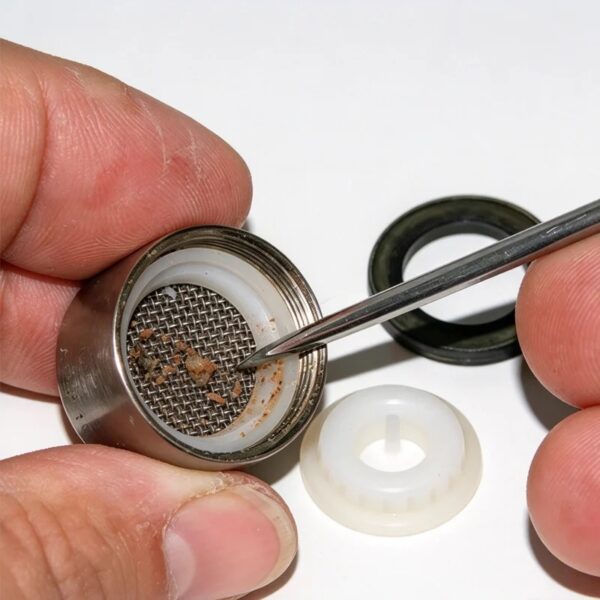
A residential faucet with aerator biofilm is a maintenance annoyance; the same contamination risk in a hospital, senior care facility, or medical office building carries genuine infection-control consequences for immunocompromised users — meaning the same underlying engineering issue represents a materially different liability depending on the end-use setting a brand is sourcing for.
A brand or facilities buyer that treats visible limescale or discoloration as the signal to worry about is working from an incomplete model of the actual risk, since contamination and visible buildup don’t necessarily track together, which changes what a maintenance or replacement policy should actually be based on.
Whether an aerator can be easily disassembled, inspected, and cleaned — versus requiring specialized tools or full replacement — is decided during product development, not something a facilities team can retrofit after installation.
Aerator design affects not just water contamination but aerosol particle size distribution during use, according to research evaluating multiple aerator types under controlled conditions — meaning a contaminated aerator can pose an inhalation-adjacent exposure route in addition to direct water contact, particularly relevant in healthcare settings where this pathway has drawn increasing research attention.
A 2025 study in the European Journal of Microbiology and Immunology found that the degree of limescale calcification on faucet aerators showed no clear association with microbial load, microbial spectrum, or the presence of pathogenic organisms compared across lightly, moderately, and heavily calcified units, according to the published findings. This directly challenges the common assumption that a clean-looking aerator is a low-risk one — a genuinely counterintuitive finding for anyone specifying maintenance or replacement schedules based on visible appearance.
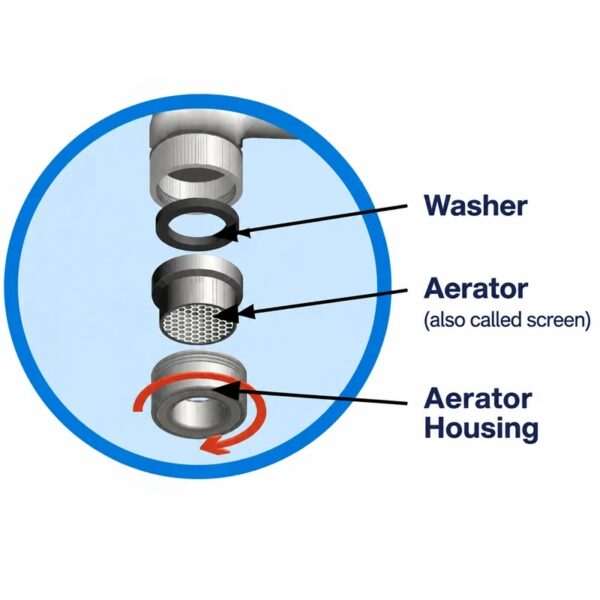
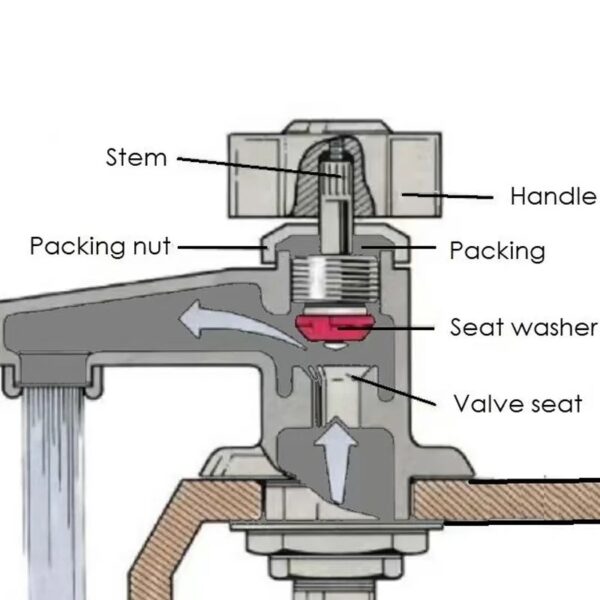
NSF/ANSI 61 evaluates whether materials in contact with drinking water leach harmful substances — a real and necessary compliance requirement, but one that doesn’t address whether an aerator’s physical geometry promotes biofilm accumulation, according to NSF International’s standard scope. A fully NSF/ANSI 61-compliant aerator can still be a poor design choice from a biofilm-accumulation standpoint if these two separate questions aren’t both evaluated.
Over the past several years, our engineering team has supported global bathroom brands, distributors, and commercial faucet buyers developing products for residential, hospitality, and institutional applications. One consistent observation we have made is that faucet aerators are increasingly being evaluated beyond basic water flow performance and material compliance.
In many sourcing discussions, buyers traditionally focus on questions such as brass material, lead-free compliance, cartridge reliability, and finish durability. However, for higher-scrutiny applications such as healthcare, senior care, and commercial facilities, the aerator itself has become an important engineering consideration because its internal structure directly affects maintenance accessibility and long-term hygiene management.
From an engineering perspective, contamination risk is not always visible from the outside. A clean-looking aerator does not necessarily indicate low microbial risk, and visible limescale should not be treated as the only trigger for maintenance decisions. Recent research has shown that the severity of visible calcification does not consistently correlate with microbial load, meaning appearance alone is not a reliable indicator of aerator condition.
Our engineering team has observed that many aerator-related concerns originate from design decisions made early in product development, including internal screen complexity, flow-path configuration, and whether the component can be easily removed for inspection and cleaning. These factors determine whether routine maintenance is practical after installation.
At JEKARE, we approach faucet aerator development by evaluating both water-contact material requirements and product usability considerations. During OEM/ODM development, our engineering team reviews aerator structure, cleaning accessibility, dimensional consistency, and material documentation to help brands develop faucet products suitable for different market requirements.
For brands supplying commercial or healthcare-adjacent projects, this engineering approach helps create faucet solutions where hygiene considerations are addressed during product development rather than after installation. By combining material compliance verification with practical maintenance-oriented design, JEKARE supports brands in building more reliable and defensible commercial faucet programs.

Request confirmation that the aerator can be removed without specialized tools, since ease of removal directly determines whether routine cleaning is a realistic maintenance practice or something that gets skipped in day-to-day operation.
Given that visible calcification doesn’t reliably indicate microbial load, according to the 2025 research cited above, treat scheduled aerator cleaning or replacement as a time- or usage-based policy rather than a visual-inspection-triggered one for healthcare-adjacent projects specifically.
Ask for information on internal screen complexity and flow-splitting design as a distinct question from NSF/ANSI 61 material compliance, since the two address genuinely different contamination pathways.
Given the specific pathogen types linked to aerator contamination in hospital settings, ask whether a supplier’s aerator design has been evaluated with this literature in mind, particularly for projects supplying medical office buildings, senior care facilities, or hospital renovation programs.
Aerator design connects directly to a brand’s liability exposure and credibility with buyers in healthcare-adjacent channels — a product line that treats aerator geometry as an afterthought is harder to defend to a hospital facilities buyer than one where removability and cleaning access were explicit design criteria from the start. This is a more specific version of the broader water-contact material question a brand faces across its faucet line, and it connects naturally to how that same brand documents material compliance and product development decisions for other high-scrutiny channels, such as private-label programs serving institutional buyers.
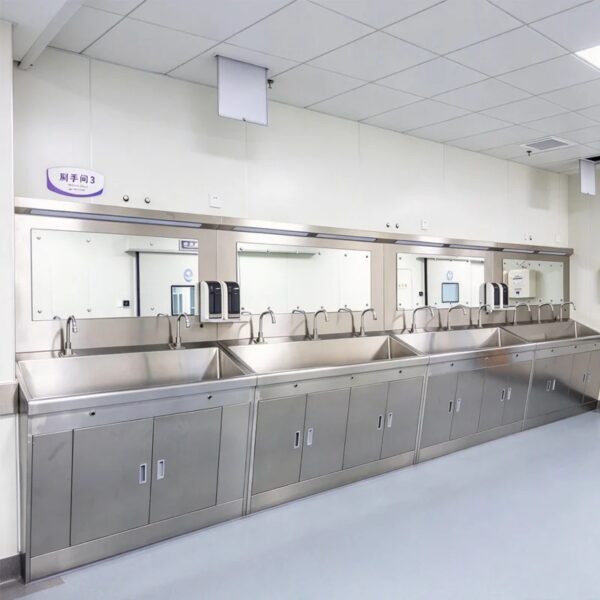
For brands supplying faucets into commercial or healthcare-adjacent channels, JEKARE’s faucet product line, including the custom brass bathroom sink faucet platform, is engineered with low-lead brass waterways and aerator components documented for water-contact material safety, with in-house inspection covering both material and dimensional verification rather than material compliance alone. Brands specifying tool-free removable aerator designs for healthcare or hospitality programs can address this directly through JEKARE’s OEM/ODM project process, including for private-label collections that need this documentation to satisfy an institutional buyer’s own due diligence.
“Is black slime on faucet aerators dangerous?” understates the actual finding in the clinical literature — aerators have been directly traced to documented hospital pathogen outbreaks, and recent 2025 research shows visible buildup severity doesn’t reliably predict the underlying microbial risk. For B2B buyers, particularly those sourcing for healthcare, senior care, or other high-scrutiny commercial channels, the practical takeaway is to evaluate aerator removability and cleaning access as an explicit design specification, separate from water-contact material compliance, rather than relying on visual inspection as a proxy for contamination risk.
Removing an aerator eliminates that specific component’s contribution to contamination and aerosolization, but the broader plumbing system, including sink drains, can independently harbor biofilm, so aerator removal addresses one pathway rather than the entire risk.
Not necessarily — research indicates aerators can amplify low-level contamination present in otherwise acceptable water through biofilm growth on the aerator’s internal surfaces, meaning the aerator itself can be the point where a low-level issue becomes a more significant one.
Given that visible calcification doesn’t reliably correlate with microbial load, according to the 2025 study referenced above, a fixed cleaning or replacement schedule based on usage or time is a more defensible policy than one triggered by visual inspection alone.
No — aerator complexity and internal geometry vary significantly between designs, and research evaluating multiple aerator types found meaningful differences in aerosol and contamination characteristics across designs, which is why aerator geometry should be evaluated as a specific design variable rather than assumed to be equivalent across products.
No — NSF/ANSI 61 addresses whether materials leach harmful substances into water, not whether an aerator’s physical design promotes biofilm accumulation, so these should be treated and documented as two separate compliance and design questions.
Mike is a Senior Faucet Engineer at JEKARE with over 20 years of experience in bathroom and kitchen faucet development and OEM manufacturing. He specializes in aerator design, water-contact material compliance, and product development for commercial and institutional faucet programs. With extensive experience supporting global bathroom brands through supplier quality evaluation, Mike focuses on helping buyers evaluate aerator design and material safety as distinct, separately verifiable specification points.
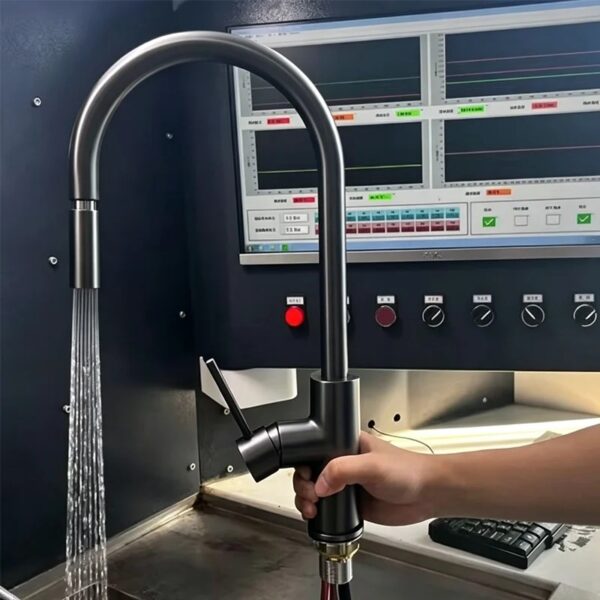
✔ 20+ Years of OEM & ODM Manufacturing Experience
✔ Low-Lead Brass Waterways With Documented Water-Contact Material Safety
✔ Tool-Free Removable Aerator Design Options
✔ In-House Inspection Covering Material and Dimensional Verification
✔ Flexible Support for Private-Label and Institutional Programs
✔ Reliable Manufacturing Partner for Global Distributors and Brands
Whether you’re sourcing for a healthcare-adjacent project or a broader commercial faucet program, JEKARE provides engineering-driven OEM manufacturing support with documented aerator design and material compliance from concept development through mass production.
Contact our team to discuss your next commercial faucet sourcing project.