1. Industry Background: The Shift Toward Modular Maintenance
The commercial bathroom fixture market is experiencing a profound shift in how accessories are engineered and maintained. Historically, shower slide bar brackets (often referred to as shower head holders) were designed as permanent fixtures requiring complete rail disassembly for replacement. Today, stringent operational efficiency demands are forcing a redesign.
1.1 The Cost of Component Failure in Hospitality
In commercial environments such as hotels and healthcare facilities, a malfunctioning slider bracket is not a minor inconvenience; it is a room out of order. When internal friction mechanisms fail, the shower head slips, leading to guest complaints.
1.2 Changing Expectations for Universal Bathroom Design
Universal design standards require bathroom components to be easily adjustable for users of all heights and abilities. This necessitates high-frequency adjustments of the shower head holder. According to commercial real estate management data, high-traffic hospitality showers experience over 3,000 vertical adjustments per year, placing immense stress on the internal clamping mechanisms.
1.3 Regulatory Pressure on Material Sustainability
With increasing pressure to adopt sustainable maintenance practices, hospitality brands are moving away from replacing entire slide bar assemblies when only the bracket fails. Environmental initiatives demand modular designs where a single ABS plastic or brass component can be swapped without discarding the stainless steel rail.
2. Why It Matters: The Financial Impact of Slider Bracket Replacements
For B2B buyers, purchasing managers, and bathroom brands, the engineering behind a seemingly simple slide bracket dictates the long-term profitability of commercial contracts.
2.1 Escalating Labor Costs for Simple Replacements
In traditional non-modular designs, removing a broken shower head holder requires unscrewing the entire rail from the wall, breaking the waterproof silicone seal, sliding on the new bracket, and resealing the unit. The labor cost for a facilities engineer to perform this 45-minute task often exceeds the cost of the hardware itself by five times.
2.2 Brand Reputation in Premium Hotel Chains
The global commercial bathroom accessory market is highly competitive. According to
Grand View Research, durability and ease of maintenance are the top factors influencing procurement decisions in the hospitality sector. A slider bracket that fails to hold the shower head at the desired angle instantly degrades the perception of the entire bathroom.
2.3 The Lifecycle Cost of Non-Modular Designs
Brands that supply non-modular slide bars to commercial projects often face massive warranty claims. When a single plastic internal gear strips, the inability to quickly swap the bracket forces the brand to ship a completely new rail system, destroying profit margins on large-scale B2B orders.
3. Market Observation: Analyzing Primary Friction Points in Slide Bars
Recent analysis of commercial bathroom supply chains reveals that the majority of slider bracket failures stem from specific, preventable engineering oversights rather than user abuse.
3.1 Material Fatigue in ABS Plastic Clamps
Many traditional shower head holders utilize lower-grade recycled ABS plastics for the internal friction pad. When exposed to constant hot water vapor and repetitive clamping forces, the plastic becomes brittle. Within 12 to 18 months, the tension mechanism loses its elasticity, causing the bracket to slide down the rail under the weight of the shower head.
3.2 Corrosion in Internal Spring Mechanisms
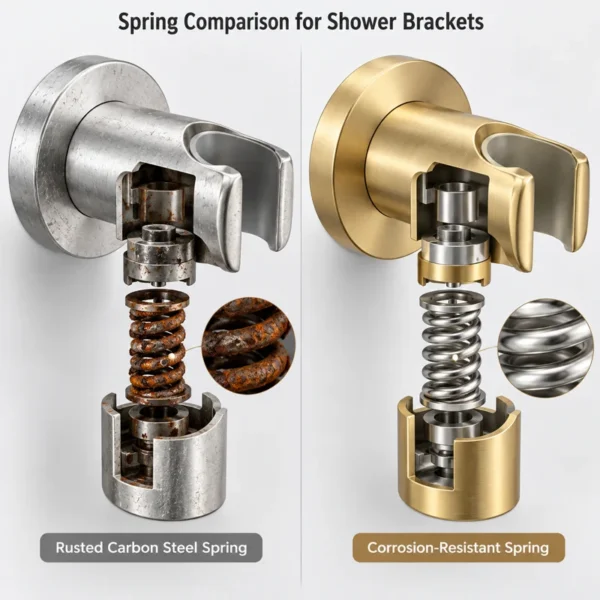
While the exterior of the bracket is usually heavily plated, the internal push-button springs are frequently made of standard carbon steel rather than 304 stainless steel. In high-humidity environments, these springs oxidize rapidly, causing the adjustment button to stick and making removal or adjustment impossible.
3.3 The Mismatch Between Tube Diameters and Brackets
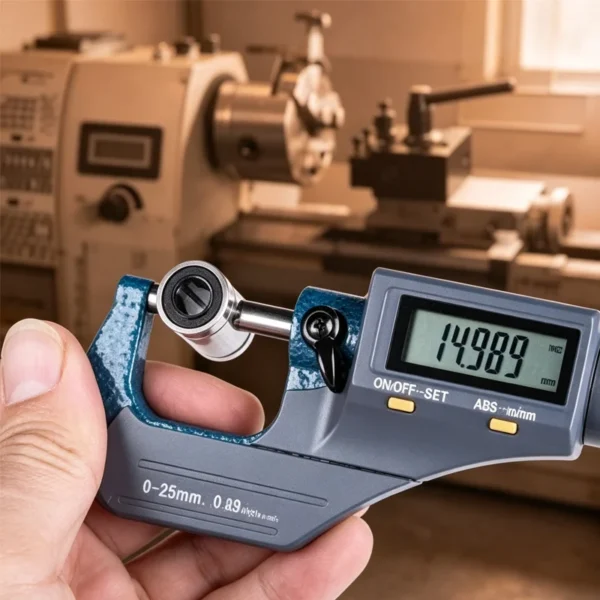
A common field issue occurs when a 22mm bracket is forced onto a 22.5mm rail due to poor manufacturing tolerances. This excessive friction strips the internal protective pad. The
ASTM International standards for plastic friction testing emphasize that component tolerances must be strictly controlled to prevent premature material wear.
4. JEKARE Perspective: Where Slide Bracket Variation Originates
Based on extensive engineering oversight in sanitaryware production, our production engineers continuously observe that field failures of slide bar brackets are directly linked to unmonitored variables during the injection molding and assembly processes.
4.1 Injection Molding Shrinkage Ratios
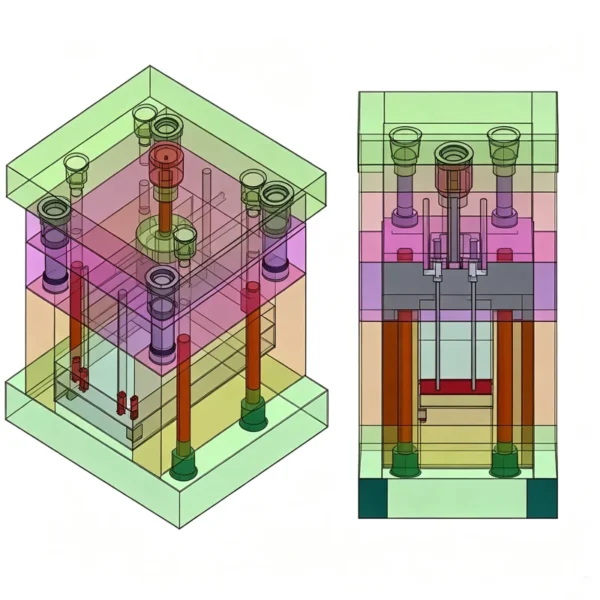
A deviation in mold temperature directly alters the shrinkage rate of the ABS bracket housing. If the internal diameter shrinks by even 0.2mm beyond the acceptable tolerance, the bracket will drag against the rail, scratching the surface finish and ultimately jamming.
4.2 Surface Treatment Wear from Friction
Standard slider brackets often suffer from plating degradation on the inside collar. When the bracket is moved up and down the rail, poor-quality electroplating flakes off, creating debris that ruins the sliding mechanism.
4.3 Tolerance Stacking in Multi-Part Assemblies
A shower head holder consists of the main body, a friction pad, a spring, a button, and a holding fork. If each part is machined to the outer edge of its tolerance limit, “tolerance stacking” occurs. The assembled product feels loose, failing to support heavy, multi-function shower heads.
4.4 Engineering Modular Replacement Solutions
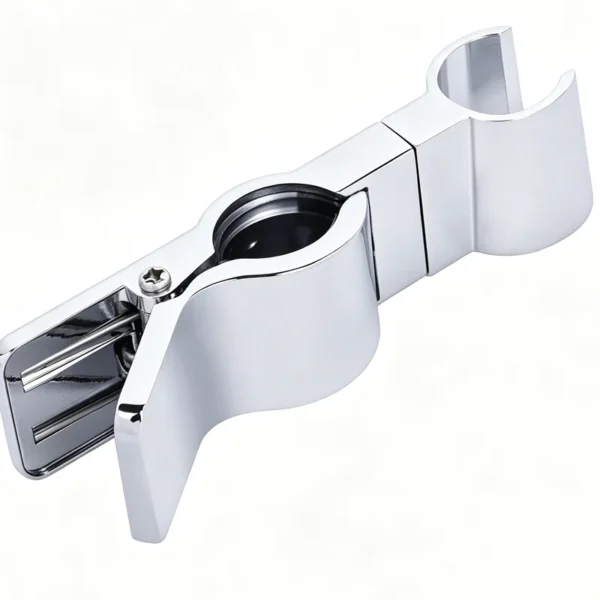
To resolve the high labor cost of replacing failed brackets, JEKARE developed the
Clip-On Modular Shower Slide Bracket. Engineered specifically for B2B hospitality clients, this bracket utilizes a reinforced C-clamp design and premium POM (Polyoxymethylene) internal friction pads.
The Advantage for B2B Procurement: Instead of unscrewing the rail from the wall, maintenance staff can simply unclip the old bracket and snap the JEKARE bracket directly onto the existing rail. This tool-free removal and installation process reduces hotel maintenance time by 80% and ensures that the slide mechanism maintains perfect tension for over 50,000 adjustment cycles.
5. Practical Decision Framework: Auditing OEM Supplier Slider Bracket Designs
Before committing to bulk purchases for hotel projects or brand distribution, procurement managers must evaluate an OEM partner’s slider bracket engineering. Use these criteria during your next supplier audit:
5.1 Validating Friction Cycle Testing
Request documented data on lifecycle testing. A reliable OEM supplier should provide test reports showing the bracket holding a 500-gram weight while being adjusted up and down the rail for a minimum of 30,000 to 50,000 cycles without slipping.
5.2 Reviewing Universal Modularity
Ask the engineering team to demonstrate the replacement process. If the bracket requires the removal of the wall escutcheons and rail mounting screws to be swapped out, it is not suitable for modern commercial applications.
5.3 Assessing Anti-Corrosion Plating Protocols
Verify that internal metal components, especially springs and screws, are subjected to strict Acid Salt Spray (ASS) testing. Ensure compliance with baseline standards outlined by
ISO 9001 Quality Management for material traceability, guaranteeing the use of 304 stainless steel internals.
6. What This Means for Your Brand: Building a Resilient Shower Component Supply Chain
The transition from purchasing basic, non-modular bathroom accessories to engineering-focused, modular components is critical for brands targeting the commercial and hospitality sectors.
6.1 Transitioning to Interchangeable Components
By integrating clip-on, modular slide bar brackets into your product portfolio, your brand immediately solves a major pain point for facilities managers. This operational advantage acts as a powerful differentiator during the B2B bidding process.
6.2 Aligning with Engineering-First Procurement
Partnering with manufacturing facilities that prioritize precise injection molding and strict tolerance controls allows your brand to minimize warranty reserves. When the bracket fits perfectly and resists material fatigue, your supply chain becomes significantly more resilient against market fluctuations.
6.3 Securing Hospitality Contracts through Reliability
In the commercial sector, reliability translates to repeat business. Providing a slide rail system where the bracket can be swapped in 30 seconds rather than 45 minutes builds trust with developers, ensuring your brand is specified in future architectural plans.
Conclusion
The question of how to remove a shower head holder from a rail has evolved from a consumer DIY issue into a critical commercial engineering challenge. Slide bracket failures cause significant operational downtime and drive up maintenance costs in the hospitality sector. By understanding the causes of material fatigue, tolerance stacking, and corrosion, B2B buyers can source engineered, modular slider brackets that allow for instant, tool-free replacement. Partnering with a manufacturer that applies rigorous lifecycle testing ensures your brand delivers reliable, maintenance-friendly solutions to the global commercial market.
FAQ
1. Why do traditional shower head holders slide down the rail over time?
This is primarily caused by material fatigue in the ABS plastic internal clamp or wear on the friction pad, usually resulting from inadequate material formulation during the injection molding process.
2. How does a modular, clip-on slider bracket reduce maintenance costs?
A modular bracket can be snapped directly onto the existing rail without tools. This eliminates the need to unscrew the entire slide bar from the wall and reseal it, reducing a 45-minute labor task to less than a minute.
3. What materials prevent the adjustment button from sticking?
Using high-grade 304 stainless steel for the internal springs, rather than standard carbon steel, prevents oxidation and sticking in high-humidity shower environments.
4. How do manufacturers ensure the bracket won’t scratch the rail finish?
Engineering-driven OEM manufacturers utilize POM (Polyoxymethylene) friction pads and strict
CNC tolerance controls to ensure smooth movement without metal-to-metal or hard-plastic-to-metal scraping.
5. What testing validates the longevity of a shower slide bracket?
Automated lifecycle cycle testing, which moves the weighted bracket up and down the rail for 30,000 to 50,000 cycles, combined with Acid Salt Spray (ASS) testing, validates long-term mechanical and aesthetic reliability.
About the Author
Sunny is a Senior Shower Systems Engineer at JEKARE with over 20 years of experience in sanitaryware product development and
OEM manufacturing. He specializes in shower system engineering, structural improvement, modular accessory design, and compliance-driven product development. With extensive experience working with global bathroom brands and distributors, Sunny focuses on creating reliable, cost-effective bathroom solutions through engineering innovation and strict quality control.
References
-
Grand View Research – Commercial Bathroom Accessories Market
https://www.grandviewresearch.com/industry-analysis/commercial-bathroom-accessories-market
-
ASTM International – Standard Test Methods for Plastic Friction
https://www.astm.org/
-
International Organization for Standardization (ISO) – Quality Management Systems
https://www.iso.org/iso-9001-quality-management.html
Request Engineering Review
- Upload Your CAD Files
- Request DFM Analysis
- Start Your OEM Project
- Request Material Recommendation
Whether you need custom shower systems, highly durable slide bars, faucets, or complete bathroom solutions, JEKARE provides engineering-driven OEM manufacturing support from concept development to mass production.
Contact our team to discuss your next bathroom product project.