When developing a new bathroom hardware collection, product managers and procurement teams often focus engineering resources on faucets, shower valves, and ceramic sanitaryware. However, the
toilet seat—the component with the highest frequency of physical user interaction—often dictates the long-term perceived value of the entire toilet suite.
For global bathroom brands, hospitality procurement groups, and retail distributors, specifying the correct material—primarily Polypropylene (PP) or Urea-Formaldehyde (UF, also known as Duroplast)—is not merely a design preference. It is a critical commercial decision that dictates manufacturing scalability, warranty liability, and target market alignment.
Industry Background:
The Shift Toward High-Traffic Durability
Historically, sanitaryware brands selected toilet seat materials based almost entirely on unit cost. However, the expansion of the global hospitality sector and the rise of high-traffic commercial environments have shifted specification criteria. Property developers and commercial architects now prioritize materials that can withstand rigorous daily cleaning protocols without degrading aesthetically.
Regulatory Pressure on Material Hygiene
Post-2020 hygiene awareness has accelerated the implementation of stricter material standards. Specifications for commercial bathroom environments increasingly mandate intrinsic antibacterial properties rather than applied surface coatings, fundamentally altering how polymer matrices are formulated at the raw material stage.
The Alignment of Aesthetics and Polymer Science
Modern bathroom aesthetics demand seamless visual integration between the ceramic bowl and the seat. This requirement has forced engineering teams to evaluate how different polymers interact with ambient light, resist chemical discoloration, and maintain structural rigidity over a 5-to-10-year product lifecycle.
Why It Matters: The Financial Impact of Material Selection
Warranty Claims and Replacement Costs
Material failure in toilet seats—whether through hinge fracture, surface discoloration, or structural cracking—generates disproportionate warranty overhead. In multi-family housing or hotel projects, the labor cost to replace a failed seat often exceeds the component’s unit cost by a factor of five. Selecting a material with the correct load-bearing capacity and impact resistance is a direct risk-mitigation strategy.
Brand Perception in High-End Hospitality
In premium retail and hospitality sectors, tactile feedback defines brand quality. A lightweight seat that flexes under pressure or scratches easily from standard cleaning abrasives immediately degrades the user’s perception of a luxury suite. The acoustic profile of the material—how it sounds when tapped or closed—also plays a subconscious role in quality evaluation.
Supply Chain and Tooling Investment
From a manufacturing standpoint, the choice between PP and UF dictates the entire supply chain infrastructure. These materials require entirely different tooling grades, molding temperatures, and production cycle times, directly impacting a brand’s initial capital expenditure and subsequent inventory replenishment lead times.
Market Observation: Trends in Polymer Application
Growth in Thermosetting Plastics for Premium Segments
According to market data from
Grand View Research, the global sanitary ware market is experiencing a premiumization trend, driving demand for materials that mimic traditional ceramics. This has led to a sustained increase in the specification of Urea-Formaldehyde (UF/Duroplast) in European and North American luxury markets due to its structural rigidity and surface hardness.
Evolving Hygiene Standards and ISO Compliance
To meet the demands of healthcare and commercial facilities, manufacturers are increasingly required to demonstrate compliance with international microbial resistance standards. Guidelines such as
ISO 22196 (Measurement of antibacterial activity on plastics) have become baseline requirements for institutional tenders, influencing the chemical compounding of both PP and UF raw materials.
Chemical Compliance and REACH Regulations
Global supply chains must also navigate stringent environmental and chemical safety frameworks. The European Union’s
REACH (Registration, Evaluation, Authorisation and Restriction of Chemicals) framework strictly monitors volatile organic compounds, compelling OEM manufacturers to ensure that UF curing processes and PP additives leave no restricted chemical residues in the final product.
Material Deep Dive: Polypropylene (PP) Engineering Profile
Molecular Structure and Flexibility
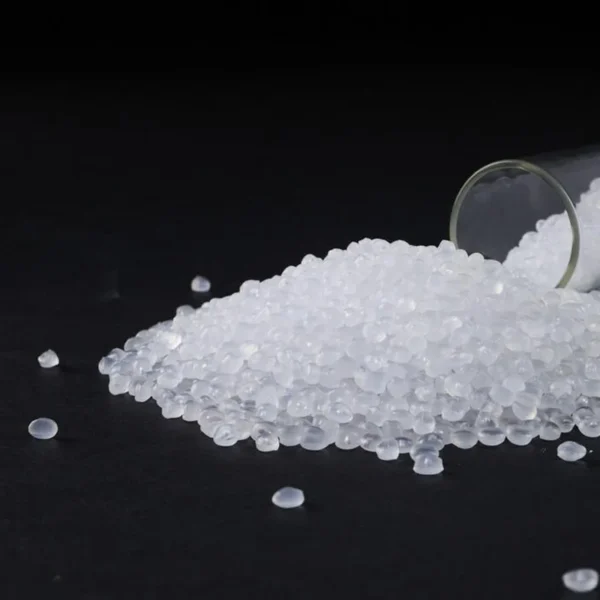
Polypropylene is a thermoplastic polymer characterized by its semi-crystalline structure. This molecular arrangement grants PP exceptional flexibility and resistance to fatigue. When subjected to bending forces, a PP toilet seat will deform slightly rather than fracture, making it highly resilient in unpredictable consumer environments.
Impact Resistance and Load-Bearing Capacity
The intrinsic toughness of PP provides superior impact resistance. If a heavy object is dropped on the seat, or if it is subjected to sudden dynamic loads, PP absorbs the kinetic energy. However, this flexibility means its static load-bearing capacity requires careful structural ribbing during the design phase to prevent excessive deflection.
Manufacturing Cycle Time Advantages
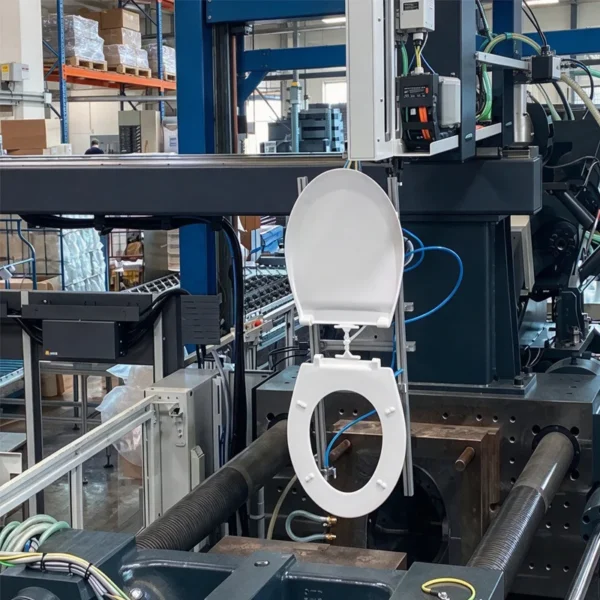
Because PP is a thermoplastic, it is processed via standard injection molding. The material melts rapidly and cools quickly within the mold cavity. This short injection molding cycle time significantly increases daily production yield and lowers the per-unit energy cost, making PP highly advantageous for high-volume retail distribution programs.
Thermosetting Polymer Characteristics
Unlike PP, Urea-Formaldehyde is a thermosetting polymer. During the compression molding process, the material undergoes an irreversible chemical cross-linking reaction. Once cured, it cannot be remelted or reshaped. This creates a remarkably dense, rigid structure that is impervious to heat and most commercial solvents.
Scratch Resistance and Surface Hardness
The primary commercial advantage of UF is its extreme surface hardness. It offers superior scratch resistance against abrasive cleaning pads and harsh detergents. This characteristic ensures the seat maintains its high-gloss, pristine appearance even after years of daily maintenance in hospitality settings.
Ceramic-Like Aesthetic and UV Stability
UF naturally possesses a dense, cool-to-the-touch feel that closely mimics vitreous china. Furthermore, it exhibits excellent yellowing resistance. While some lower-grade plastics suffer from UV degradation when exposed to direct sunlight through bathroom windows, UF maintains its original color fidelity indefinitely.
JEKARE Perspective: Real Engineering Observations from the Production Line
The following observations represent confirmed manufacturing data and field feedback gathered across JEKARE’s OEM molding and assembly facilities.
Integrating the Soft-Close Hinge Mechanism
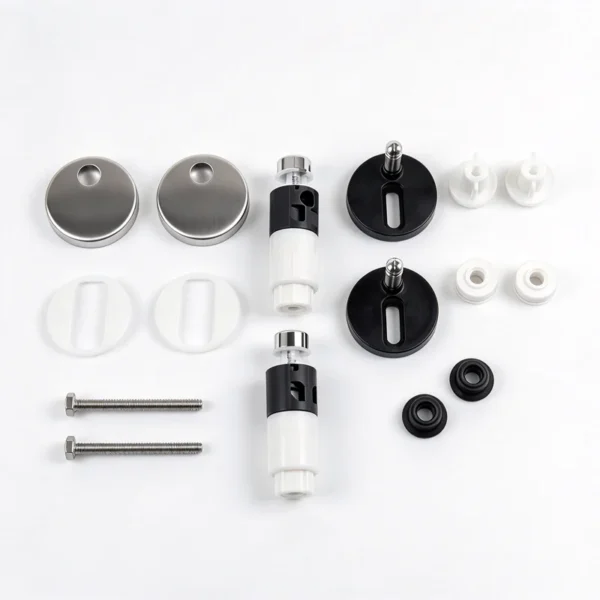
Through our ongoing production analysis, JEKARE engineers have observed that material rigidity directly affects hinge longevity. The torque generated by a high-grade soft-close hinge mechanism exerts concentrated stress on the mounting points. UF’s rigidity requires precision-machined mounting holes to prevent micro-fractures, whereas PP’s flexibility can sometimes lead to hinge loosening over time if the mounting bosses are not reinforced with metal inserts during injection molding.
Meeting Commercial Bathroom Compliance
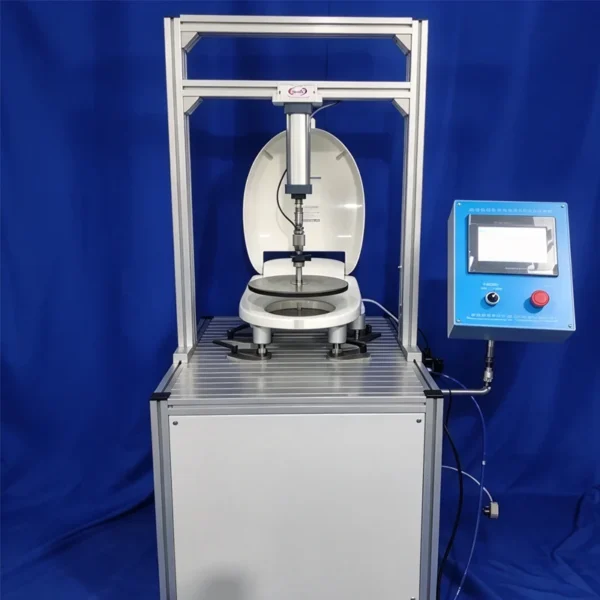
Over the past 18 months, our OEM project managers have noted a 40% increase in requests from North American distributors for seats that combine high load-bearing capacity (tested to 300+ lbs) with inherent antibacterial properties. Achieving this requires specific additive compounding prior to the molding phase.
Sourcing Reliable OEM Toilet Seat Solutions
For brands looking to optimize their sanitaryware portfolio, engineering integration between the seat material, hinge mechanics, and bowl geometry is paramount.
JEKARE OEM Toilet Seat Solutions are developed specifically for B2B procurement needs.
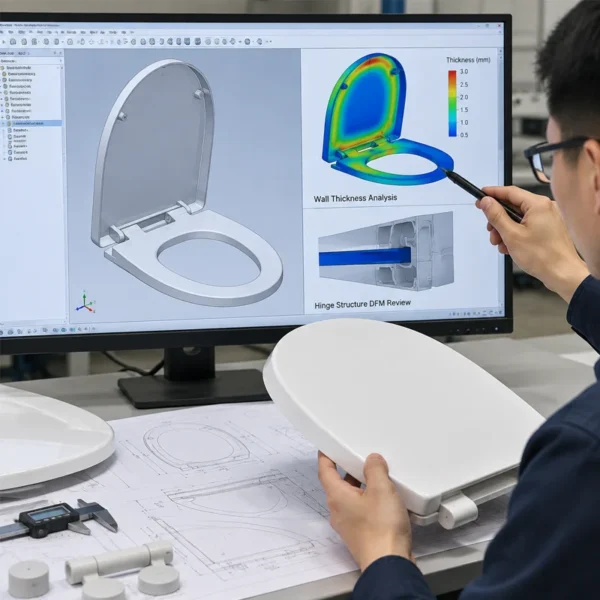
Our engineering team provides comprehensive DFM (Design for Manufacturability) support, whether you require high-yield
PP injection molding for retail channels or precision UF compression molding for luxury hospitality projects. By utilizing raw materials with verified UV resistance and integrating damper hinges tested to exceed 100,000 cycles, our seats deliver the mechanical reliability and aesthetic consistency that commercial buyers demand, minimizing post-installation warranty risks.
Practical Decision Framework: Evaluating PP vs. UF for Your Market
Before committing to tooling investments, B2B procurement teams should evaluate their specific market requirements using the following criteria:
Assessing Hospitality vs. Retail Requirements
-
High-End Hospitality & Commercial: Specify UF. The ceramic-like feel, exceptional scratch resistance, and acoustic solidity align with luxury expectations.
-
Volume Retail & Residential: Specify PP. The lower unit cost, high impact resistance, and shatter-proof nature reduce returns and shipping damages.
Evaluating Tooling Costs vs. Unit Margins
-
UF Tooling: Requires heavy-duty compression molds. Tooling costs are generally higher, and production cycles are longer (curing time), making it suitable for high-margin, stable product lines.
-
PP Tooling: Utilizes standard injection molds. Tooling is often more cost-effective, and the rapid injection molding cycle time supports aggressive volume pricing strategies.
Factoring in Regional Shipping and Breakage Risks
-
Logistics Consideration: UF is rigid and, under extreme blunt force, can crack during un-palletized e-commerce shipping. PP is highly resilient and rarely suffers transit damage, making it the preferred choice for direct-to-consumer online retail channels.
What This Means for Your Brand’s Product Strategy
Portfolio Diversification
Understanding the structural and economic differences between PP and UF allows bathroom brands to intelligently segment their product catalogs. Brands can capture multiple market tiers by offering a standard ceramic bowl paired with a PP seat for the entry-level retail market, and the exact same bowl paired with a premium UF seat for commercial or luxury architectural specifications.
Selecting an OEM manufacturing partner capable of processing both thermosetting (UF) and thermoplastic (PP) materials under one roof streamlines supply chain management. It ensures color-matching consistency across different material tiers and centralizes quality control protocols, reducing the engineering overhead required to manage disparate material suppliers.
Conclusion
The decision between Polypropylene and Urea-Formaldehyde dictates the structural performance, aesthetic longevity, and commercial viability of a toilet seat program. By aligning material properties—such as PP’s impact resistance or UF’s scratch resistance—with specific distribution channels, bathroom brands can optimize tooling investments, reduce warranty liabilities, and deliver engineered reliability to their end-users.
FAQs
1. What is the primary difference in feel between PP and UF toilet seats?
UF (Duroplast) feels hard, cool, and dense, closely resembling traditional vitreous china. PP is a thermoplastic that feels slightly softer, warmer to the touch, and exhibits slight flexibility under weight.
2. Which material is more resistant to commercial cleaning chemicals?
UF is a thermosetting polymer with a highly cross-linked molecular structure, making it exceptionally resistant to harsh commercial cleaning agents, solvents, and abrasives without losing its surface gloss.
3. Why do some toilet seats turn yellow over time, and how is it prevented?
Yellowing is primarily caused by UV degradation and chemical reactions to certain cleaning fumes. UF possesses intrinsic yellowing resistance. PP can yellow if exposed to direct sunlight over long periods, though premium PP formulations include specific UV stabilizers to mitigate this effect.
4. Can both materials accommodate soft-close hinge mechanisms?
Yes. Both materials can integrate soft-close (damper) hinges. However, the engineering approach differs; UF requires precise hole tolerances to prevent cracking under torque, while PP often requires reinforced mounting structures to prevent the material from flexing away from the hinge base.
5. How does tooling cost compare between PP and UF manufacturing?
Tooling for PP injection molding is generally more cost-effective and supports faster cycle times. UF requires high-pressure compression molds that withstand significant heat for the curing process, resulting in higher initial tooling capital and longer per-unit production times.
About the Author
Sunny is a Senior Sanitaryware Engineer at JEKARE with over 20 years of experience in product development and OEM manufacturing.She specializes in polymer material applications, structural mold design, hinge mechanism engineering, and compliance-driven product development for global markets.
With extensive experience working with global bathroom brands and distributors, Sunny focuses on creating reliable, cost-effective bathroom solutions through engineering innovation and strict quality control.
References
-
Grand View Research
Sanitary Ware Market Size, Share & Trends Analysis Report
https://www.grandviewresearch.com/industry-analysis/sanitary-ware-market
-
International Organization for Standardization (ISO)
ISO 22196: Measurement of antibacterial activity on plastics and other non-porous surfaces
https://www.iso.org/standard/54404.html
-
European Chemicals Agency (ECHA)
Understanding REACH Regulations for Polymers and Chemicals
https://echa.europa.eu/regulations/reach/understanding-reach
Why Global Bathroom Brands Choose JEKARE
✔ 20+ Years of OEM & ODM Manufacturing Experience
✔ Complete Shower, Faucet and Bathroom Product Solutions
✔ Professional Engineering Support from Design to Production
✔ Strict Quality Control and Product Testing
✔ Flexible Customization for Different Markets
✔ Reliable Manufacturing Partner for Global Distributors and Brands
Whether you need custom shower systems, faucets, toilet seats, or complete bathroom solutions, JEKARE provides engineering-driven
OEM manufacturing support from concept development to mass production.