Call us: +86-18965139230 | Mail to us: info@jekare.com

The global toilet seat market was valued at USD 6.41 billion in 2025 and is projected to reach USD 11.69 billion by 2034, growing at a CAGR of 6.90%, according to Fortune Business Insights. The same report identifies growing adoption of ergonomic designs, antimicrobial materials, and durable plastic construction as key drivers of that growth — a signal that material selection has moved from a background spec decision to a factor buyers actively evaluate.
Polypropylene specifically sits inside a much larger material trend: the global polypropylene market was valued at USD 135.15 billion in 2025 and is projected to reach USD 227.33 billion by 2033, growing at a CAGR of 7.1% from 2026 to 2033, according to Grand View Research. For toilet seat manufacturing specifically, this matters because PP’s continued growth as a mainstream engineering plastic reflects ongoing investment in the resin formulations and processing techniques that directly affect how a molded toilet seat performs over its service life.
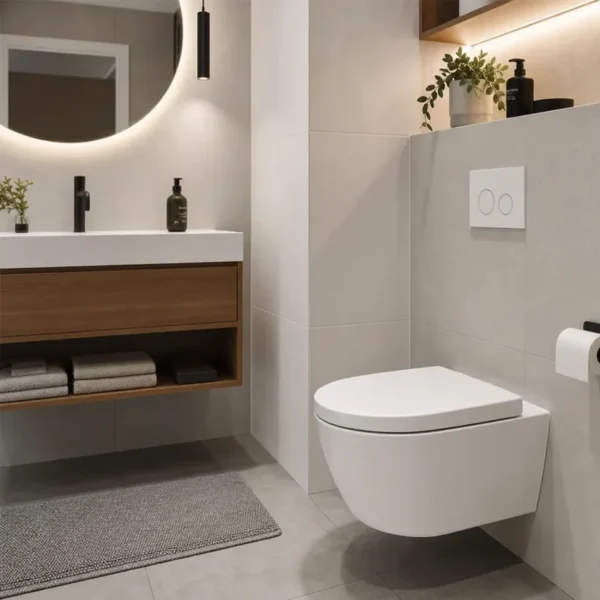
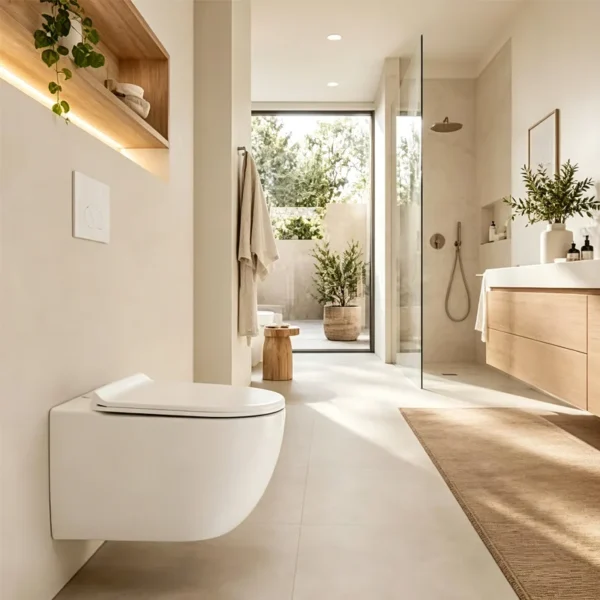
A toilet seat is one of the higher-touch, higher-wear components in a bathroom fixture line, subject to repeated mechanical stress at the hinge and constant exposure to cleaning chemicals. Material choice directly affects how often a commercial or hospitality installation needs replacement — a cost that falls on the buyer’s client relationship, not just the manufacturer’s warranty book.
Fortune Business Insights’ analysis notes that manufacturers are increasingly incorporating antimicrobial materials and coatings to address hygiene expectations across both residential and commercial settings. For brands sourcing toilet seats, this means material selection conversations increasingly need to address surface treatment and antimicrobial performance alongside base material properties, not as a separate afterthought.
Toilet seats sold in the U.S. and several other markets are expected to meet recognized material and construction standards. A brand that can’t confirm its supplier’s products meet the applicable standard faces a harder compliance conversation with retail and hospitality buyers who increasingly ask for this documentation directly.
Polypropylene (PP) and urea-formaldehyde (UF), sometimes referred to as duroplast, remain the two most common materials used in molded toilet seat manufacturing. PP is a thermoplastic that can be injection molded and is generally valued for impact resistance and cost efficiency at scale, while UF is a thermoset resin known for a harder, more rigid surface feel — the two materials process differently and are typically selected based on the specific durability, feel, and cost balance a product line requires.
Beyond base material selection, the Fortune Business Insights report specifically identifies antimicrobial materials and coatings as a distinguishing feature pulling commercial and institutional buyers toward higher-specification product tiers — a trend that applies to both PP and UF substrates, since antimicrobial treatment is generally applied as an additive or surface treatment rather than being intrinsic to either base resin.
Plastic toilet seats sold in North America are commonly evaluated against IAPMO/ANSI Z124.5, the recognized standard covering plastic toilet seats and toilet seat covers, which specifies requirements for materials and construction. This is a directly checkable reference point for buyers: a supplier’s product should be able to demonstrate conformity with this specific standard, rather than a general assurance that the product “meets industry requirements.”
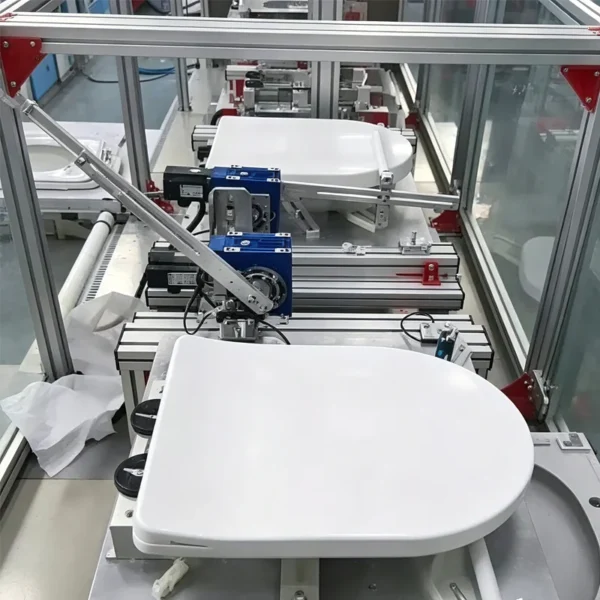
Residential, hospitality, and high-traffic commercial installations place different demands on a toilet seat. A product spec appropriate for a low-turnover residential bathroom may underperform in a hotel or commercial restroom environment with far higher daily use cycles — confirm the target application before finalizing material selection.
Request confirmation of compliance with IAPMO/ANSI Z124.5 specifically, rather than accepting “PP” or “durable plastic” as a sufficient answer on its own. Material name alone doesn’t confirm construction quality or standard conformity.
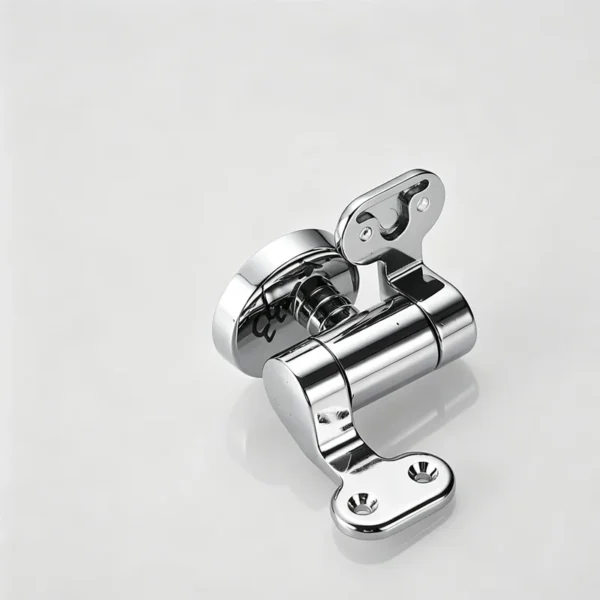
The seat material itself is only part of the durability picture — hinge mechanism quality, mounting hardware, and soft-close mechanisms (where specified) are common failure points independent of the base seat material, and should be evaluated as a separate line item during supplier qualification.
If hygiene performance is part of the buyer requirement, confirm whether antimicrobial treatment is a standard feature of a supplier’s product or an optional add-on that must be explicitly specified in the purchase order — the two are commonly conflated in early sourcing conversations.
Toilet seat material selection connects directly to how a brand positions a product line across different market segments — a hospitality-grade specification built around durability and hygiene compliance is a different product than a value-tier residential offering, even when both start from the same base resin family. Getting this distinction wrong at the sourcing stage tends to surface later as either overpaying for unnecessary spec in a low-turnover application, or underspecifying a product that fails prematurely in high-use commercial settings.
More broadly, as toilet seat market growth continues to be driven partly by hygiene and antimicrobial expectations, brands that can clearly communicate material and standard compliance to their own retail and hospitality customers are better positioned to compete on more than price alone.
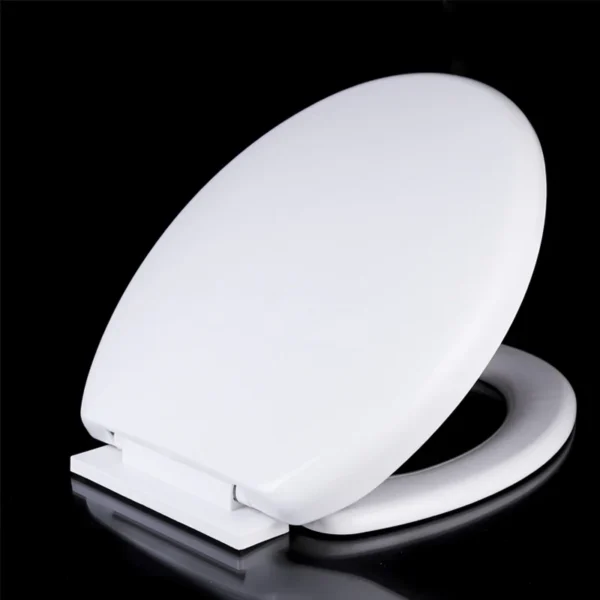
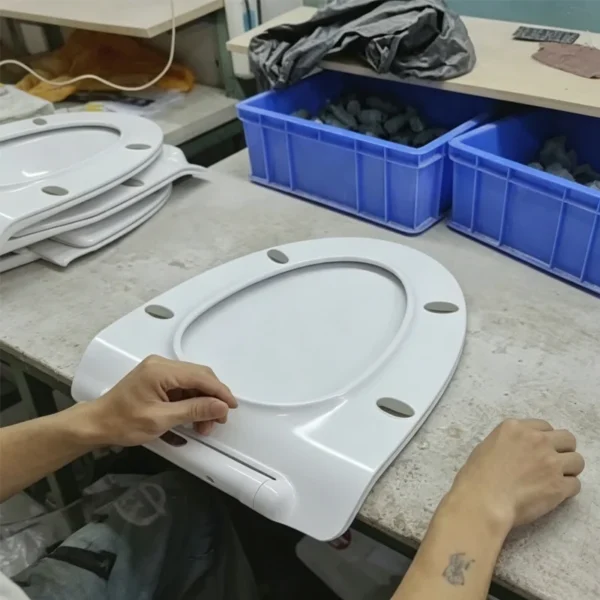
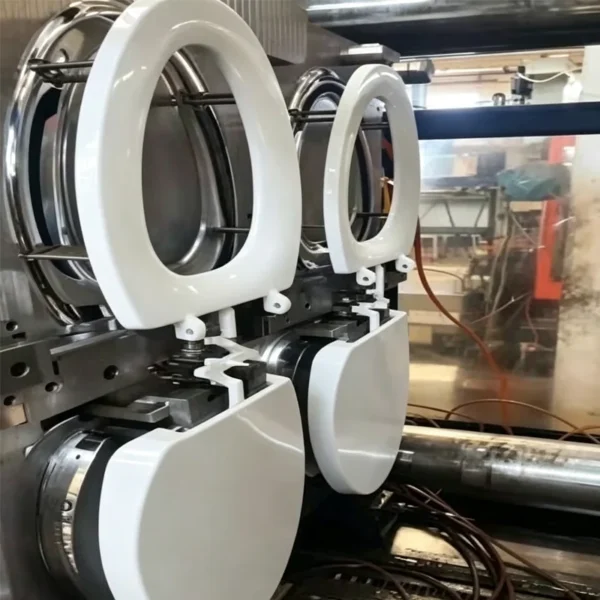
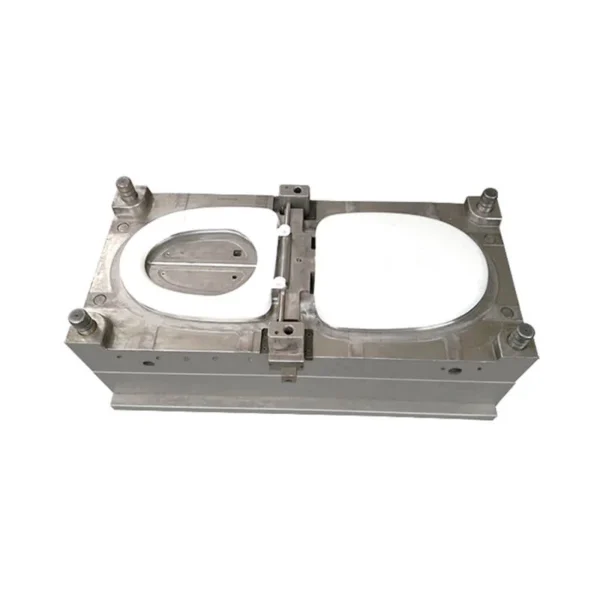
JEKARE’s toilet seat product line is produced through in-house plastic injection molding, which supports consistent material processing and dimensional control across production runs — a factor that matters directly for buyers evaluating whether a supplier can maintain fit and hinge alignment consistency at volume, not just in a small sample batch. Buyers interested in how the underlying molding process actually works can review the toilet seat cover lid manufacturing process directly.
Given how much toilet seat durability depends on hinge and hardware performance independent of base material, JEKARE’s quality inspection process evaluates hinge mechanism function and mounting hardware as part of standard product qualification, not as a separate afterthought. Buyers can also review current certification documentation directly when evaluating a new toilet seat program.
Toilet seat material selection has moved beyond a simple choice between PP and UF resin — it now involves evaluating antimicrobial treatment, standard compliance under IAPMO/ANSI Z124.5, and hardware durability as interconnected specification decisions, not independent line items. For B2B buyers, the practical takeaway is to treat material selection as one part of a broader product specification conversation with a manufacturing partner, backed by verifiable standard compliance rather than general material claims.
Not universally — UF generally offers a harder, more rigid surface feel, while PP offers strong impact resistance and is well suited to injection molding at scale; the better choice depends on the specific application and desired product feel rather than one material being categorically superior.
No, the standard addresses material and construction requirements for plastic toilet seats generally — antimicrobial performance is a separate, often additive-based feature that should be confirmed and specified independently rather than assumed to be covered by standard compliance.
It doesn’t directly dictate seat material choice, but a soft-close mechanism’s hardware and mounting points need to be engineered to work reliably with whichever material is selected — worth confirming that hinge and seat material have been validated together, not sourced as independently qualified components.
It depends on how the product is specified — some product lines are engineered to meet the higher-cycle durability expectations of commercial use while also serving residential buyers, but this should be confirmed against actual duty-cycle testing rather than assumed based on material name alone.
Antimicrobial treatment typically adds a processing step, which can extend lead time depending on whether the treatment is compounded into the resin or applied as a post-molding surface treatment — this is worth clarifying early in the RFQ process rather than assuming it adds no schedule impact.
Jenny is a Manufacturing Engineer at JEKARE with over 20 years of experience in bathroom fixture development and OEM manufacturing. She specializes in plastic injection molding process control, material selection, and hardware integration across toilet seat, shower, and faucet product lines. With extensive experience supporting global bathroom brands and distributors through product specification and supplier qualification, Jenny focuses on helping buyers separate genuine material and standard compliance from general marketing claims when sourcing plastic bathroom components.
1. Fortune Business Insights — Toilet Seat Market Size, Share & Industry Analysis
https://www.fortunebusinessinsights.com/toilet-seat-market-106272
2. Grand View Research — Polypropylene Market Size, Share & Trends Analysis Report
https://www.grandviewresearch.com/industry-analysis/polypropylene-market
3. IAPMO/ANSI Z124.5-2013e1 (R2018) — Plastic Toilet Seats
https://webstore.ansi.org/standards/iapmo/iapmoansiz1242013e1r2018
Request a Material and Standard Compliance Review Share Your Target Application (Residential, Hospitality, Commercial) Request Antimicrobial Treatment Options Start Your OEM Toilet Seat Project Request Hinge and Hardware Durability Data