Call us: +86-18965139230 | Mail to us: info@jekare.com

“Filtered” has become one of the fastest-growing claims in the shower head category, and it now sits inside a standard specifically written to test whether that claim is true.
Per NSF, NSF/ANSI 177 — Shower Filtration Systems, Aesthetic Effects — sets requirements across material safety, structural durability, minimum flow rate, and verified reduction of free available chlorine, and requires that all performance claims be substantiated by test data generated under the standard’s protocol, not by a manufacturer’s own informal testing.
NSF/ANSI 177 certifies chlorine reduction and material/structural safety specifically — it does not certify removal of heavy metals, bacteria, or other contaminants some “filtered” products imply they address. A product can be fully certified under this standard and still be making claims elsewhere on its packaging that the certification doesn’t cover.
Per Fortune Business Insights, the global premium shower filters market was valued at USD 195.00 million in 2025 and is projected to reach USD 398.36 million by 2034, growing at a CAGR of 8.36%, with fixed shower filters as the leading product segment. Fast category growth combined with a fragmented field of filter chemistries — carbon, KDF, vitamin C — is exactly the environment where claim substantiation tends to lag behind marketing.
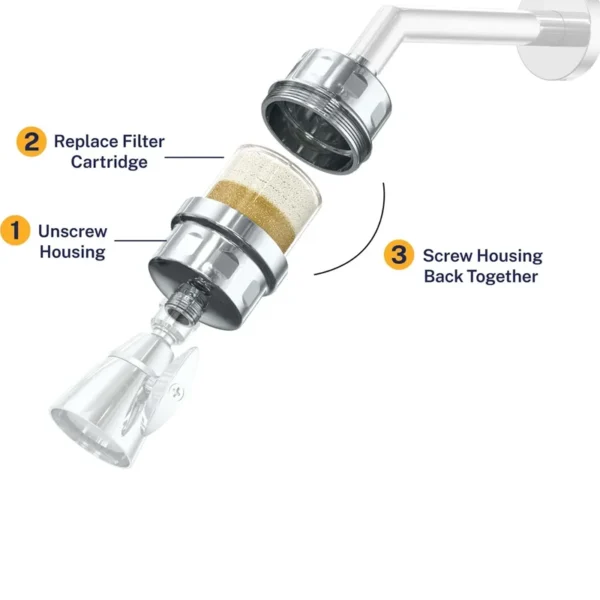
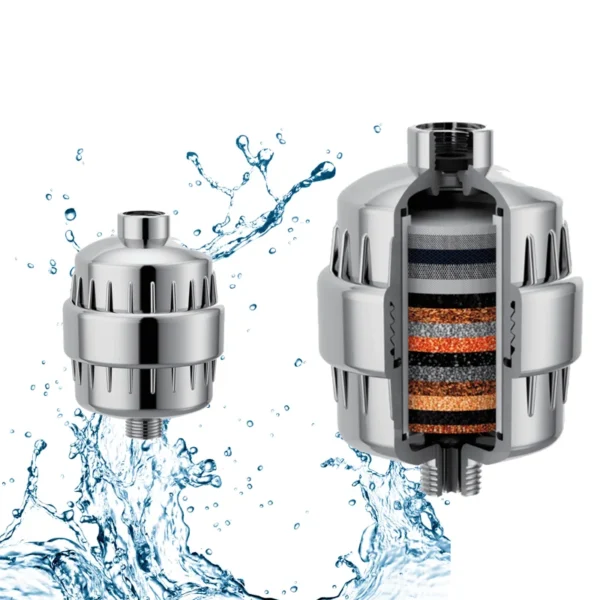
For a brand owner or purchasing manager, this shift shows up as three concrete risks.
Beyond the NSF standard itself, health and environmental marketing claims in the U.S. fall under the Federal Trade Commission’s Green Guides, which require that a claim be backed by competent and reliable evidence before it’s made — a requirement that applies whether or not a product also carries a specific filtration certification.
A filter that underperforms its stated chlorine-reduction claim, or clogs faster than its stated cartridge life, generates returns and complaints that trace back to a claim the product was never actually tested to support.
As more shower head SKUs add a “filtered” line extension, buyers who can document a substantiated claim differentiate from competitors making similar claims without test data behind them — increasingly a real basis for comparison, not just a nice-to-have.
Per NSF’s public documentation of the standard, NSF/ANSI 177 certification confirms that a filter’s chlorine-reduction performance has been independently verified — it does not specify or endorse any particular filtration mechanism, meaning carbon, KDF, and vitamin C media can each plausibly meet the same certified performance bar through different chemistry. For a buyer, that means “NSF/ANSI 177 certified” and “which media is inside” are two separate sourcing questions, not one.
With the segment growing faster than most other shower-related product categories, per Fortune Business Insights, more OEMs and brands are entering the space than there is established testing infrastructure to serve — which is part of why buyers are increasingly asking to see test protocol and data directly, rather than accepting a certification claim at face value.

In OEM development conversations, we increasingly see buyers ask two separate questions where they used to ask one: not just “does the shower head include a filter,” but “what test data exists behind the specific chlorine-reduction number on the packaging.” That distinction matters more once a brand is the one responsible for a marketing claim under FTC guidance, not just for the physical product.
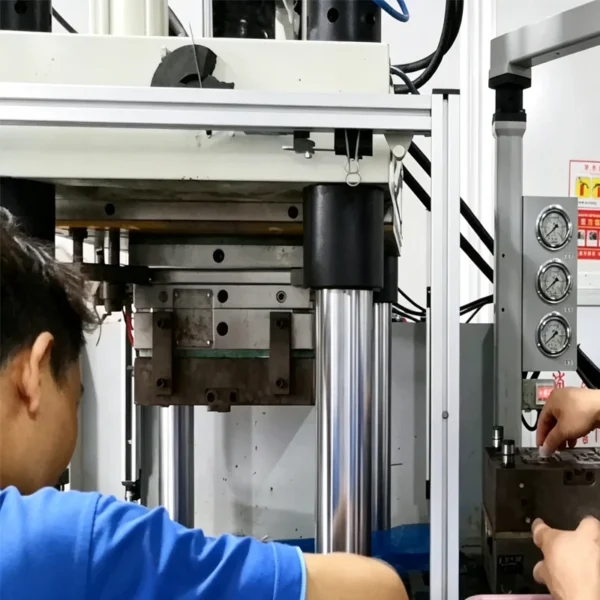
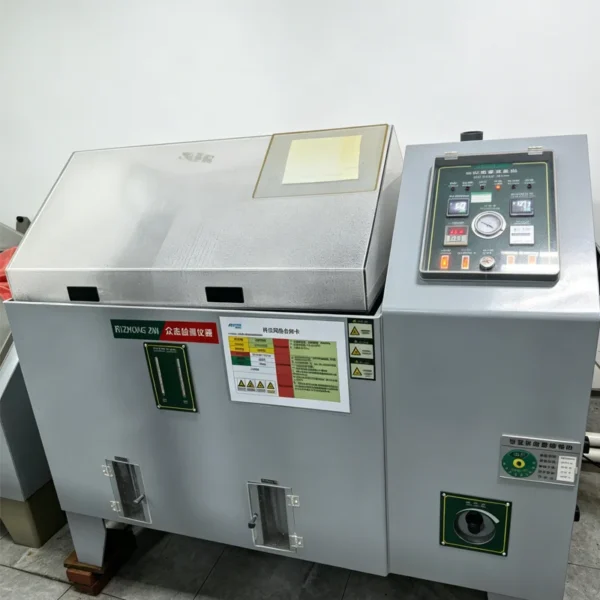
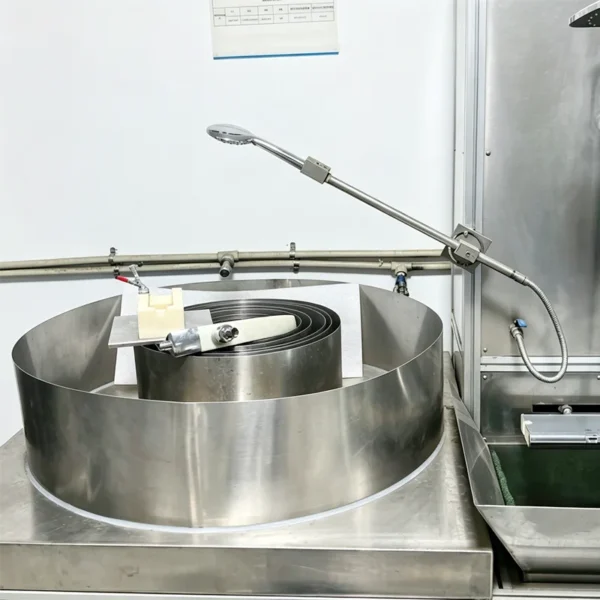
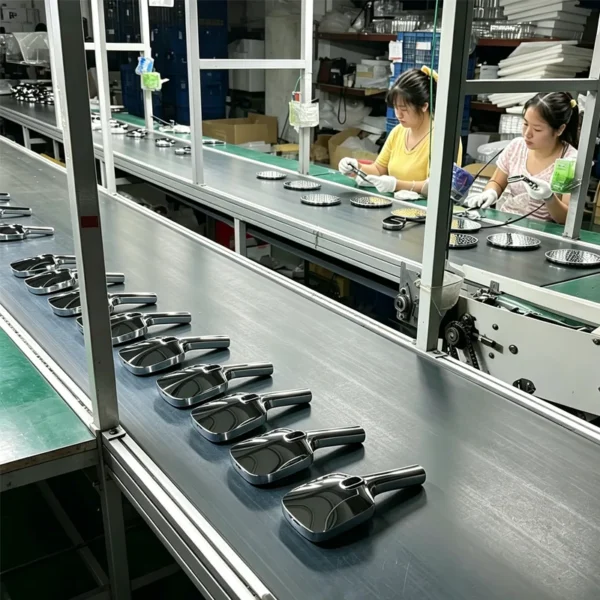
Our shower head product line already supports filter cartridge components as a customizable part of the assembly, alongside the CNC, EDM, and LSR injection overmolding capability used across our broader shower head manufacturing. Finish and material testing — including salt spray, cross-cut adhesion, and sealing verification — is run in-process under our ISO 9001–certified facility. We support the manufacturing and construction side of a filtered product build; the NSF/ANSI 177 certification itself applies to the finished, branded product and sits with the brand bringing that specific claim to market — which is exactly the distinction buyers should be clear on before assuming a component supplier’s manufacturing quality substitutes for a claim’s own certification.
Before finalizing a filtered shower head order, a purchasing team should be able to answer the following.

A “filtered” claim that starts as a marketing decision needs to end up as an engineering spec with test data behind it — treating certification as a late-stage checkbox, rather than a design input, is what creates the gap between what’s printed on the box and what the product can actually prove.
As the filtered shower head segment keeps growing faster than testing infrastructure can standardize around it, brands that can document a substantiated claim — rather than a plausible-sounding one — have a real basis for differentiation with distributors and retailers who are increasingly asking the same verification questions buyers are.
“Filtered” is no longer just a feature line on a shower head spec sheet — it’s a claim that sits inside a specific testing standard and a broader marketing-substantiation requirement, both of which a buyer can be held to whether or not they wrote the original marketing copy. Sourcing teams that verify the test data behind a chlorine-reduction number, rather than assuming a filter cartridge alone justifies the claim, are protecting the brand from a risk that shows up well after the product ships.
No — a filter cartridge changes what the product does, but the specific performance claim (a chlorine-reduction percentage, for example) needs its own substantiating test data under a standard like NSF/ANSI 177, not just the presence of a filter component.
NSF/ANSI 177 is specific to shower filtration systems reducing free available chlorine in bathing water; NSF/ANSI 42 and 53 apply to drinking water filtration for aesthetic and health-related contaminants respectively — a shower filter certified under 177 is not automatically certified for drinking water performance claims.
The brand making the marketing claim is generally the party responsible under FTC guidance for having substantiating evidence, which is why buyers sourcing private-label filtered products need to confirm test data exists, rather than assuming the OEM’s manufacturing quality alone covers that responsibility.
Yes — the standard certifies performance outcome (verified chlorine reduction and material/structural safety), not a specific filtration mechanism, so different media types can each achieve certification through their own chemistry.
Ask whether the stated replacement interval (by time or by gallons) is based on tested filter capacity data, and whether that interval is documented per the same SKU and water condition being sold into, since replacement claims can vary significantly with local water chemistry.
Ava, Senior Product Development Engineer — Shower Systems, JEKARE
Ava has over 20 years of experience in bathroom fixture product development, specializing in shower system engineering, component integration, surface finishing evaluation, corrosion resistance testing, and compliance-driven manufacturing for global bathroom brands and distributors.
At JEKARE, Ava leverages the company’s 20+ years of OEM/ODM manufacturing expertise and ISO 9001–certified quality control systems to help brands transform product concepts into manufacturable, testable, and market-ready shower solutions. With extensive experience across shower head development, material selection, supplier coordination, and production validation, Ava focuses on bridging the gap between design expectations and real-world manufacturing performance.
1. NSF — NSF/ANSI 177 Shower Filter Certification
https://www.nsf.org/water-systems/water-filtration/nsf-ansi-177-shower-filter-certification
2. Federal Trade Commission — Green Guides (Guides for the Use of Environmental Marketing Claims)
https://www.ftc.gov/legal-library/browse/rules/green-guides
3. Fortune Business Insights — Premium Shower Filters Market Size, Share & Industry Analysis
https://www.fortunebusinessinsights.com/premium-shower-filters-market-115975
If a filtered SKU is on your development roadmap—whether as a net-new product launch or an extension of an existing shower head line—the manufacturing execution will dictate its market viability. The structural requirements of this build, specifically filter cartridge integration, housing seal engineering, and cross-material finish validation, are managed directly within our dedicated shower head production facilities. This manufacturing infrastructure provides a reliable baseline that supports the independent certification protocols your finished product will eventually require.
Aligning your design intent with production realities is a critical step that must occur before finalizing tooling investments, not after. To evaluate how these engineering parameters impact your specific SKU, initiate a structural review with our team early in the development cycle.
Request Engineering Review
Upload Your CAD Files
Request DFM Analysis
Start Your OEM Project
Request Material Recommendation