Call us: +86-18965139230 | Mail to us: info@jekare.com

Water-efficiency regulation has quietly reshaped what a “shower system” has to be engineered to do. Under the U.S. EPA WaterSense specification, a shower head can only carry the WaterSense label if it holds flow at 2.0 gallons per minute or less — a 20% reduction from the previous federal standard. At the same time, plumbing codes in most U.S. jurisdictions require an ASSE 1016-certified pressure-balancing or thermostatic valve on every individual shower and tub/shower installation, precisely because lower flow rates leave less margin to absorb pressure swings elsewhere in a building’s plumbing.
Regulation is only one signal. Demand is the other: the global shower head market is projected to grow from roughly USD 13.3 billion in 2024 to USD 20.4 billion by 2030, a 7.4% CAGR, according to Grand View Research — driven in part by buyers seeking better-engineered, more consistent-performing fixtures rather than simple commodity hardware.
Put together, these two signals point to the same conclusion: flow restriction and pressure control are no longer separate engineering problems. A shower system now has to solve both at once.
For a bathroom brand or OEM buyer, this isn’t a technical footnote — it changes the cost and risk profile of a product line.
A shower valve that can’t compensate for pressure swings shows up in the field as temperature complaints and callback requests, not as a lab failure. Those costs land on the brand, not the component supplier, unless the valve was specified and tested correctly from the start.
Hotels, serviced apartments, and multi-family developments run many outlets on one shared supply line simultaneously. A shower system that performs well in a single-family test rig can still fail in a real building with dozens of fixtures competing for pressure — and in hospitality, a temperature complaint becomes a guest review.
Retrofitting pressure-balancing capability after a product has already launched is far more expensive than specifying it during tooling and valve selection. Buyers who treat this as a late-stage fix rather than an early design input tend to absorb the cost twice.
The EPA’s WaterSense program caps qualifying shower heads at 2.0 gpm, and the specification also requires showerheads to maintain a minimum flow across a defined pressure range (80, 45, and 20 psi) rather than only meeting a single maximum-flow number — meaning compliant products are tested for pressure-compensation behavior, not just water savings.
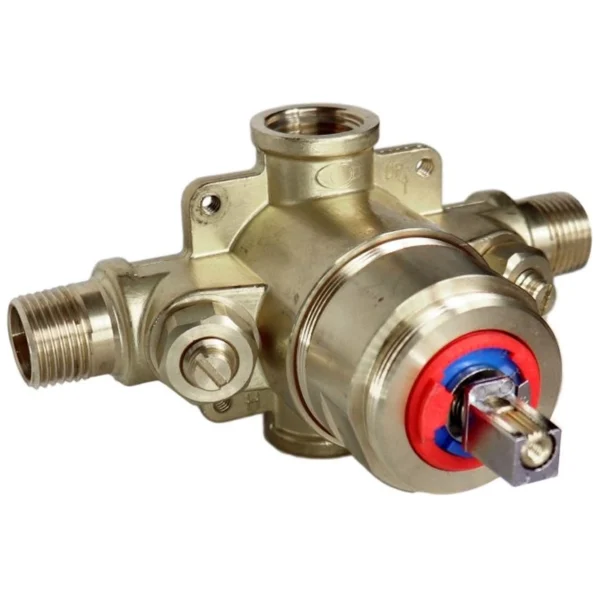
ASSE 1016 governs pressure-balancing (Type P), thermostatic (Type T), and combination (Type T/P) valves for individual showers, and requires these valves to limit outlet temperature swings to within roughly 3.6°F even during sudden pressure changes. Local plumbing codes in most U.S. jurisdictions mandate a compensating valve meeting this standard on new shower installations, which has made ASSE 1016 compliance a baseline procurement requirement rather than a premium feature.
Grand View Research’s shower head market report attributes projected growth through 2030 in part to buyers favoring water-efficient, technologically differentiated fixtures over commodity products — a trend that raises the bar for what “engineering-ready” means in an OEM proposal.
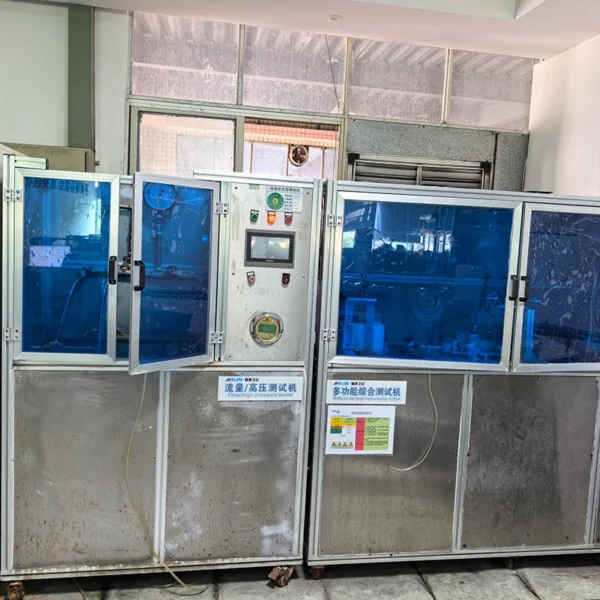
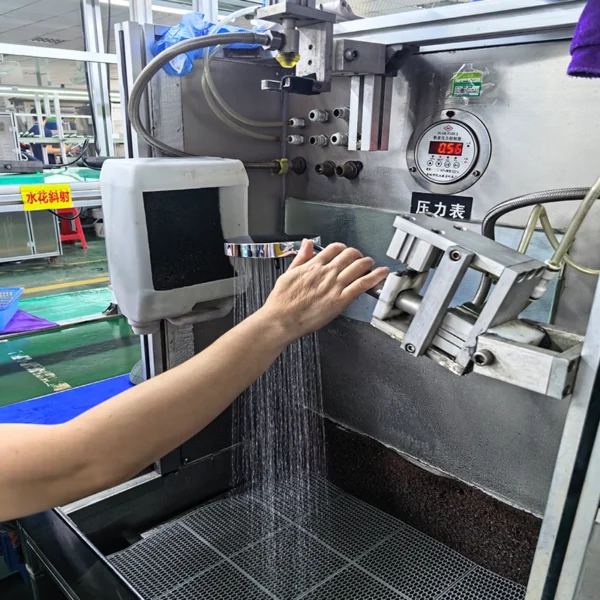
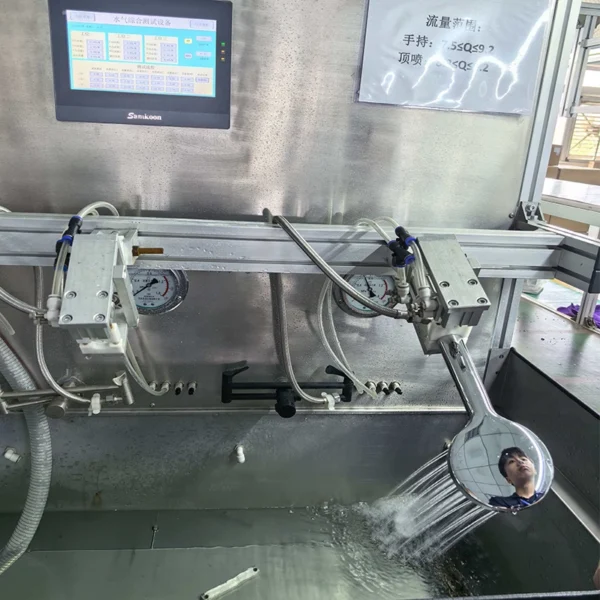
In a recent OEM development project, a North American bathroom brand’s 1.8 GPM low-flow shower system passed standard static-pressure lab testing at 45 PSI — but failed dynamic pressure-change testing simulating a 45-to-25 PSI drop over 3 seconds. Flow variation reached 18% against a 10% target, temperature swung 6.2°F against a 3.6°F requirement, and the pressure-balancing valve’s response time measured 2.8 seconds against a sub-1-second target.
Root-cause analysis traced the gap to three factors: a balancing valve that needed more time to compensate for sudden pressure differences, 13 PSI of internal hydraulic loss between inlet and outlet, and a flow restrictor calibrated tightly enough to leave little pressure-compensation margin. After optimizing the valve spool and spring response, widening internal flow passages, and recalibrating the restrictor from 1.82 to 1.78 GPM, the same product achieved 6% flow variation, 2.1°F temperature change, and 0.7-second valve response — all within spec, before tooling release.
The pattern this confirms: a shower system can pass standard static compliance testing and still fail under the dynamic, multi-outlet pressure conditions of real buildings. Catching that gap during prototype validation, rather than after tooling or launch, is what determines whether pressure stability becomes a design input or a warranty problem.
Before finalizing a shower system spec with an OEM partner, ask:

This engineering question sits upstream of a larger one: how a brand differentiates a shower system beyond finish and form factor. As water-efficiency standards tighten further, the fixtures that hold up under real building conditions — not just single-outlet lab tests — will increasingly be the ones that avoid costly field complaints in hospitality and multi-unit channels.
For product development teams, pressure-balancing and thermostatic capability belongs in the earliest design and development conversations with a manufacturing partner, alongside material and finish decisions — not as an afterthought once a shower faucet or shower column platform is already locked.
Brands sourcing across multiple regions should also confirm that a supplier’s compensating-valve capability is consistent across rain shower heads and hand held shower heads product lines, not isolated to a single flagship SKU.
In most U.S. jurisdictions, local plumbing code requires an ASSE 1016-compliant valve on individual shower and tub/shower installations — it’s a code baseline, not a premium add-on.
A Type P (pressure-balancing) valve is simpler and lower-cost but only equalizes hot/cold pressure; a Type T/P (combination thermostatic/pressure-balancing) valve senses outlet temperature directly and compensates for both pressure and incoming temperature changes, which matters more in installations with variable water heater performance.
No — WaterSense certifies maximum flow rate and minimum flow across a pressure range, but it doesn’t certify hot/cold temperature stability; that’s a separate function handled by the valve, not the shower head itself.
These projects run more simultaneous outlets on shared supply lines than a single-family home, so valve performance under multi-outlet demand should be validated for the target building type, not assumed from single-outlet test data.
Before tooling commitments, since retrofitting pressure-balancing capability into an already-tooled platform is significantly more expensive than specifying it during initial design and development.
David Lin is a Shower Product Application Specialist at JEKARE, specializing in the design and application of shower heads, shower columns, and bathroom water-delivery systems. He works closely with product development and engineering teams to evaluate flow performance, pressure stability, and installation efficiency across residential and commercial projects for global brands and distributors. His focus is translating engineering principles into practical product solutions that improve everyday shower performance and long-term reliability.
1.U.S. EPA WaterSense — Showerheads
https://www.epa.gov/watersense/showerheads
2.ASSE 1016 Standard for Shower Valves (via Engineer Fix)
https://engineerfix.com/what-is-the-asse-1016-standard-for-shower-valves/
3.Grand View Research — Shower Heads Market Size & Share Report, 2030
https://www.grandviewresearch.com/industry-analysis/shower-heads-market-report
✔ 20+ Years of OEM & ODM Manufacturing Experience ✔ Complete Shower, Faucet and Bathroom Product Solutions ✔ Engineering Support from Design to Production ✔ Pressure and Flow Testing Built Into Standard QC ✔ Flexible Customization for Different Markets ✔ Manufacturing Partner for Global Distributors and Brands
Whether you’re specifying pressure-balancing valves, thermostatic components, or a complete shower system platform, JEKARE’s OEM/ODM project process begins engineering review at the design stage rather than after tooling is committed.