Call us: +86-18965139230 | Mail to us: info@jekare.com

Low water pressure at guest bathroom fixtures is one of the more common technical complaints in hospitality construction and renovation projects — and it’s a problem with well-documented engineering causes, not a mystery specific to any single property. The International Plumbing Code sets specific minimum pressure requirements at fixtures precisely because pressure delivery in a building is a calculated, code-governed engineering outcome, not something that happens automatically.
Hotels are disproportionately exposed to this issue because they’re typically multi-story buildings, and water pressure predictably drops as it rises through a structure — a physical reality that exists independent of which fixtures are specified. This means a pressure complaint traced only to “the shower head” without examining the building’s pressure zone design is starting from an incomplete diagnosis.
When a hotel guest reports weak water pressure, the fixture is what they can see and touch — but the actual cause frequently sits upstream in the building’s pressure zone design, pipe sizing, or elevation loss, none of which a fixture swap alone resolves.
A brand or distributor that replaces a “defective” shower head in response to a hospitality pressure complaint, without first confirming actual delivered pressure at that specific location, risks repeating the same warranty cycle across every unit on the same pressure zone — the fixture was never the root cause.
A pressure complaint in a single-family home affects one household. The same underlying design issue in a hotel affects every guest room on an affected floor or pressure zone simultaneously — multiplying both the reputational and remediation cost of a design gap that wasn’t caught early.
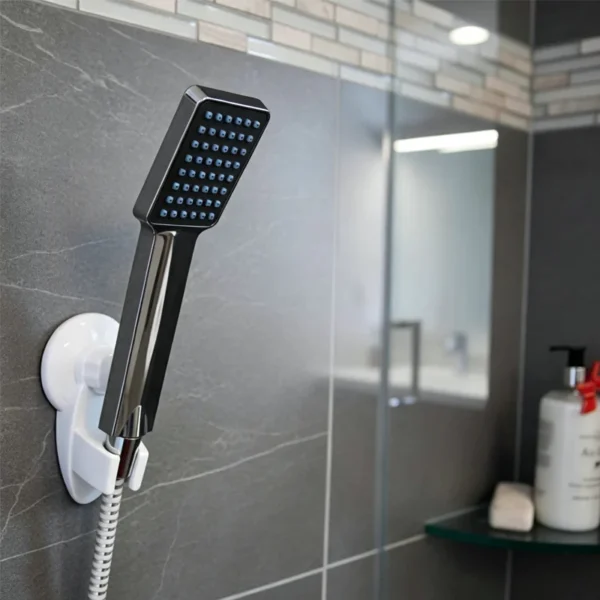
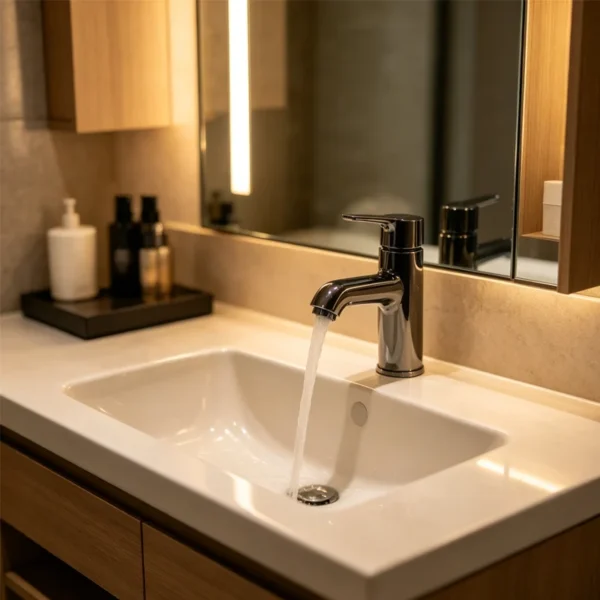
Under the International Plumbing Code, a bathtub, shower, or bidet requires a minimum flowing pressure of 20 psi at the fixture, while the code sets a maximum static pressure of 80 psi anywhere in the building’s distribution system, above which a pressure-reducing valve is required. These are hard code minimums and maximums — a fixture delivered below 20 psi flowing pressure at the point of use isn’t meeting a basic code-referenced performance floor, regardless of the fixture’s own design.
Water pressure drops by approximately 0.433 psi for every foot of vertical rise in a building, according to PHCP Pros’ analysis of high-rise plumbing design — meaning a mid-rise hotel with guest floors spanning 60 to 80 vertical feet can lose 25 to 35 psi to elevation alone before accounting for friction loss through the piping or demand from simultaneous fixture use. This is exactly why hotel plumbing systems are commonly divided into separate pressure zones with dedicated pressure-reducing valves or booster pumps, rather than served by a single uniform pressure source top to bottom.
Hand-held and fixed shower fittings evaluated under ASME A112.18.1/CSA B125.1 are tested for flow performance at specific pressure points — commonly 20, 45, and 80 psi — because a fixture’s actual water delivery genuinely changes with the pressure supplied to it. A fixture rated for strong performance at 45 psi will not perform the same way if the actual delivered pressure at a top-floor guest room is closer to 20 psi after elevation and friction losses — which means a fixture spec sheet needs to be read against the pressure conditions of the specific installation, not treated as a universal performance guarantee.
A hospitality bathroom project involved repeated guest complaints about insufficient shower water pressure in multi-story guest room installations. The initial feedback pointed toward the shower fixtures as the suspected cause, but the engineering review identified that the issue required a broader system-level diagnosis rather than a simple fixture replacement.
JEKARE’s engineering team reviewed the installation conditions and evaluated the relationship between building pressure zones, elevation loss, and fixture flow performance. The assessment found that delivered water pressure at the point of use could differ significantly from the building inlet pressure, especially in higher-floor guest rooms where vertical elevation and piping losses reduce available pressure.
The project focus shifted from replacing hardware to verifying the actual operating conditions: confirming pressure requirements at the affected locations, matching shower fixture performance data with the available pressure range, and ensuring the selected products were suitable for the property’s plumbing environment.
Based on the findings, JEKARE supported the project with pressure-aware fixture evaluation, including flow performance verification across multiple pressure points and engineering coordination before final fixture specification. This approach helped the project team distinguish between fixture-level performance limitations and building-level pressure delivery issues before committing to corrective actions.
Request the project’s pressure zone design documentation and confirm expected delivered pressure at the specific floor or zone a fixture will serve — incoming municipal or booster pump pressure at the building inlet doesn’t represent what actually reaches a top-floor guest bathroom.
When evaluating a shower head or faucet’s flow performance data, confirm the pressure point it was tested at matches the actual delivered pressure expected at the installation location — a strong rating at 45 psi doesn’t predict performance at 20 psi.
For any hospitality project spanning more than a few floors, involve mechanical or plumbing engineering input on pressure zone design before fixture specification is finalized, rather than selecting fixtures first and discovering a pressure mismatch after installation.
If a pressure complaint surfaces after installation, measure actual delivered pressure at the affected fixture before assuming the fixture itself is defective — a system-level pressure shortfall will persist through any fixture replacement that doesn’t also address the underlying pressure delivery.
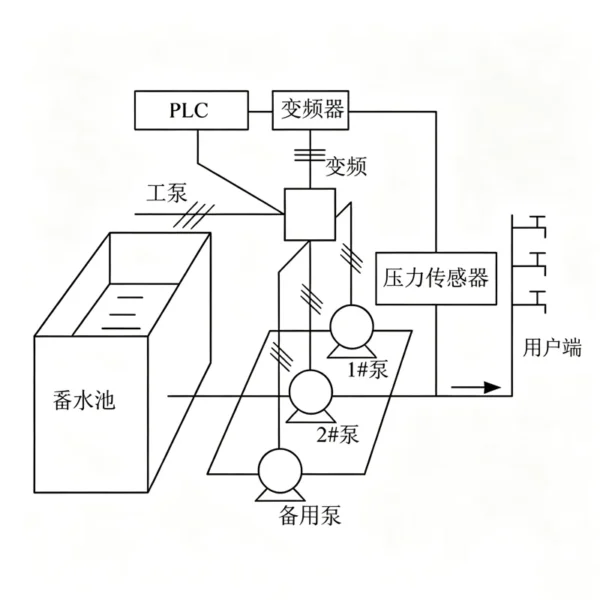
Pressure-related complaints connect directly to how a brand’s fixtures get evaluated on a hospitality project, even when the fixture itself performed exactly to its tested specification. A brand that can speak knowledgeably about pressure zone context — not just its own product’s flow rating — is better positioned to help a hospitality buyer diagnose the actual problem, rather than absorbing blame for a building-level design issue.
More broadly, this points toward earlier engineering coordination on hospitality projects specifically: fixture selection that accounts for a building’s actual pressure zone design from the start avoids the far more expensive cycle of reactive fixture swaps and guest complaints after a property has already opened.
JEKARE’s shower product line is flow-tested at multiple pressure points, giving buyers documented performance data across a pressure range rather than a single best-case figure — directly relevant to hospitality projects where actual delivered pressure varies meaningfully by floor and pressure zone.
For hospitality programs spanning multiple floors or pressure zones, JEKARE’s custom rain shower head development and quality inspection process support pressure-specific performance verification during the specification stage. Brands can coordinate this kind of pressure-aware fixture selection directly through JEKARE’s OEM/ODM project process, before a project reaches installation and guest feedback.
Low water pressure complaints on hotel bathroom projects are frequently a building-level engineering issue — elevation loss, pressure zone design, or pipe sizing — misdiagnosed as a fixture defect, because the fixture is the most visible point of contact for a guest complaint. For B2B buyers and specifiers, the practical takeaway is to confirm actual delivered pressure at the specific installation location and evaluate fixture flow data against that real pressure condition, rather than assuming a fixture swap resolves a problem that may originate well upstream of the fixture itself.
Often yes, but booster pump sizing needs to account for peak simultaneous demand across the served zone, not just static pressure targets — an undersized booster pump can still leave upper floors under-pressured during high-occupancy periods even with a pump installed.
Not necessarily — a fixture’s flow rating is typically measured at a specific test pressure, so a “high-flow” rated fixture supplied at well below its tested pressure point may still underperform relative to its rated figure.
This requires either direct pressure gauge testing at representative fixture locations or review of the mechanical engineer’s pressure zone calculations for the specific floor — assumptions based on ground-floor or meter-level pressure readings are not reliable substitutes.
This sequencing varies by project, but coordinating pressure zone design and fixture selection together, rather than treating them as sequential and unrelated decisions, generally reduces the risk of a post-installation pressure mismatch.
Yes — reduced flow from scale buildup inside a fixture’s spray plate can present similarly to a pressure shortfall to a guest or even initial inspection, which is why confirming actual pressure with a gauge, rather than relying on perceived flow alone, is an important diagnostic step before attributing a complaint to either cause.
Jimmy is a Product Development Engineer at JEKARE with over 20 years of experience in bathroom fixture development and OEM manufacturing. He specializes in pressure-dependent flow engineering, hospitality product specification support, and coordinating fixture selection with building-level plumbing design considerations. With extensive experience supporting global bathroom brands and hospitality project buyers, Jimmy focuses on helping specifiers distinguish between fixture-level and system-level causes of guest-facing performance complaints before committing to a resolution.
✔ 20+ Years of OEM & ODM Manufacturing Experience
✔ Flow Performance Tested and Documented Across Multiple Pressure Points
✔ Hospitality Project Engineering Coordination Before Installation
✔ Complete Shower, Faucet, and Bathroom Product Solutions
✔ Flexible Customization for Multi-Zone Hospitality Programs
✔ Reliable Manufacturing Partner for Global Distributors and Brands
Whether you’re troubleshooting a pressure complaint on an existing property or specifying fixtures for a new hospitality build, JEKARE provides engineering-driven OEM manufacturing support from concept development through mass production.Contact our team to discuss your next bathroom product project.