Industry Background:
The debate between 1.8 Gallons Per Minute (GPM) and 2.5 GPM
shower heads is no longer a matter of simple consumer preference. For B2B sanitary ware procurement, flow rate specifications have permanently shifted into a complex web of regulatory compliance and environmental engineering. Historically, 2.5 GPM at 80 PSI served as the unquestioned federal standard. Today, as global water scarcity accelerates, regulatory bodies are fundamentally restructuring flow rate maximums, forcing OEM buyers and bathroom brands to re-engineer their product lines.
EPA WaterSense and Federal Baselines
While the baseline federal standard in the United States technically remains 2.5 GPM,
the U.S. Environmental Protection Agency’s (EPA) WaterSense program has created a powerful secondary baseline. The program mandates that certified shower heads consume no more than 2.0 GPM while simultaneously passing strict spray force and coverage tests.
State-Level Aggression: California’s CEC Standards
Regional legislation has aggressively superseded federal baselines.
The California Energy Commission (CEC) strictly mandates a maximum flow rate of 1.8 GPM for all shower heads sold, distributed, or installed within the state. States like Colorado, Washington, and New York have adopted similar aggressive conservation standards, rendering the traditional 2.5 GPM models obsolete in major economic hubs.
Hospitality ESG Targets Driving Ultra-Low Flow
Beyond government regulations, the commercial hospitality sector is a major catalyst for lower GPM adoption. Global hotel chains are executing rigorous Environmental, Social, and Governance (ESG) targets. Procurement managers are now auditing plumbing endpoints to drastically reduce water heating costs and overall consumption, demanding high-efficiency fixtures that do not compromise the guest bathing experience.
Why It Matters: The Business Impact of GPM Specifications
For brand owners and importers, treating GPM as a minor technical specification is a critical business risk that directly impacts market access, brand reputation, and product lifecycle costs.
Inventory Complexity Across Diverse Geographies
If an importer specifies a 2.5 GPM shower head from an OEM partner without segmenting their inventory, they legally cannot distribute that product in California or Colorado. Managing varying flow rate SKUs across different logistical hubs increases warehousing costs and inventory complexity, requiring a unified product strategy.
The Hidden Costs of Poor Fluid Dynamics
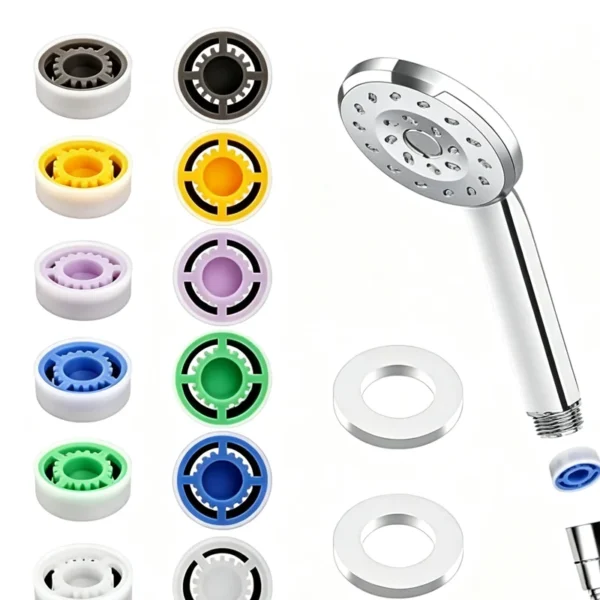
Simply inserting a smaller flow restrictor into a legacy 2.5 GPM shower head cavity often results in catastrophic user experience failures. When water volume is artificially choked without re-engineering the internal fluid dynamics, the spray force becomes weak, and the fixture may produce an audible whistling noise. Consumers perceive this as a product defect, leading to negative reviews and increased warranty claims.
Liability in Non-Compliant Component Sourcing
Sourcing basic flow restrictors that degrade under hard water conditions can lead to fluctuating GPM rates over time. If a product tested at 1.8 GPM eventually degrades and flows at 2.2 GPM, the brand risks failing subsequent regulatory audits and facing severe penalties in compliance-heavy markets.
Market Observation: The Death of the Static Restrictor
The tightening of flow rate regulations has forced a technological evolution in shower head engineering. According to a recent report by Grand View Research, the global water-saving plumbing fixtures market is experiencing rapid expansion, heavily driven by the integration of aeration and pressure-compensating technologies.
Shift Toward Pressure-Compensating Technologies
We are observing a distinct shift in OEM procurement criteria. Buyers are no longer simply asking for “a shower head with a restrictor.” They are demanding verified flow rate testing curves and requesting pressure-compensating regulators that maintain a steady flow regardless of whether the building’s water pressure fluctuates between 45 PSI and 80 PSI.
The Rise of Air-Injection Systems
To combat the weak spray associated with 1.8 GPM limits, leading brands are moving away from basic O-ring restrictors toward air-injection technology. By drawing ambient air into the internal waterway and mixing it with the water stream, the droplets become larger and more pressurized, simulating the tactile feel of a 2.5 GPM shower while using 30% less water.
Data from Recent Plumbing Fixture Market Reports
Industry data corroborates this shift. Market analysts note that products carrying WaterSense certification are capturing a larger share of the commercial project market, as developers prioritize long-term utility savings over initial fixture costs.
JEKARE Perspective:
Over the past several years, our engineering team has supported global bathroom brands, distributors, and private-label customers developing shower head programs for markets with different flow rate requirements. One consistent change we have observed is that buyers are no longer evaluating GPM as a simple compliance specification — they are increasingly treating flow stability as a key product performance factor.
As regional water efficiency requirements become more complex, procurement teams are asking more detailed questions about how a shower head maintains performance under different pressure conditions. A product that achieves a target flow rate in laboratory conditions may still create user complaints if the spray performance changes significantly in low-pressure residential or commercial environments.
From an engineering perspective, the challenge is not simply reducing water volume. Traditional static restrictors can achieve a lower GPM value, but without optimized internal water pathways they may reduce spray force, create uneven flow, or negatively affect the user experience.
Our engineering team has observed that successful low-flow shower head development requires coordination between multiple components, including flow regulators, internal water chambers, nozzle geometry, and spray plate design. Maintaining stable performance requires understanding how each component affects pressure loss and water velocity throughout the system.
At JEKARE, we approach flow rate development as an integrated OEM engineering process. During product development, our team evaluates target-market requirements, internal hydraulic structures, flow regulator selection, and spray performance validation to help brands achieve both compliance and user satisfaction.
By combining flow engineering with manufacturing control, JEKARE helps bathroom brands develop shower products that deliver consistent performance across different pressure environments while supporting evolving water efficiency requirements.

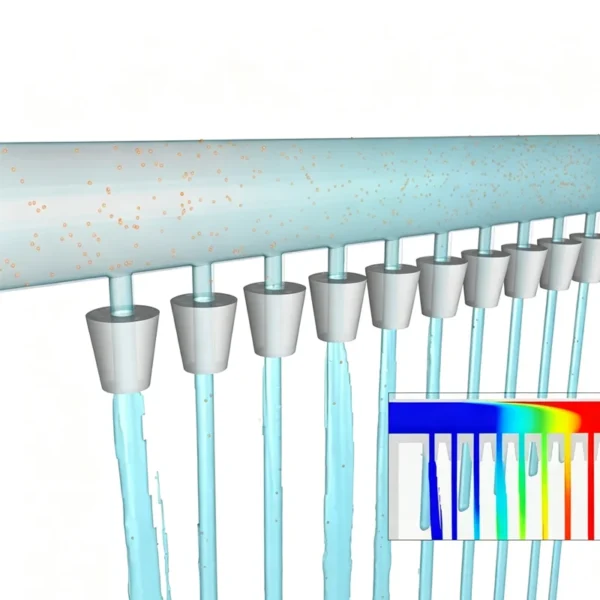
Balancing Nozzle Velocity with Water Volume
When developing our
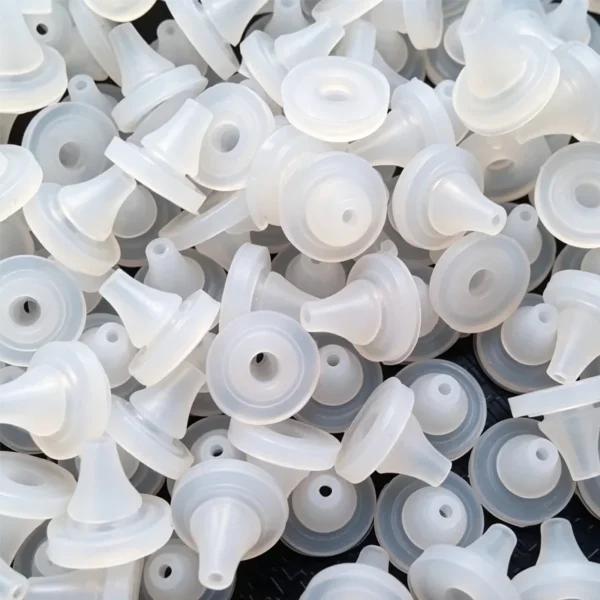
OEM shower head solutions, we do not rely on standard plastic washers to achieve compliance. A key advantage of partnering with our engineering team is our ability to match the external nozzle geometry with the internal flow rate. For a 1.8 GPM California-compliant model, we optimize the nozzle tapering and utilize Liquid Silicone Rubber (LSR) to accelerate the water precisely at the exit point.
Integrating Advanced Flow Regulators
To solve the industry-wide problem of weak spray at low GPMs, JEKARE engineers focus heavily on the internal fluid dynamics of the shower head. We integrate advanced pressure-compensating flow regulators (such as Neoperl components, upon client request). These regulators dynamically adjust to incoming water pressure, ensuring that the user experiences a consistent, forceful spray. This allows our B2B clients to market “high-pressure feel” fixtures while maintaining strict CEC and EPA compliance.
Our Approach to OEM Shower Head Development
Successful product development requires looking beyond the outer shell. We utilize 3D CAD fluid dynamics to optimize the internal water cavity, eliminating dead zones that reduce pressure before the water reaches the spray face. This engineering-first approach ensures that
our OEM manufacturing process delivers a product that performs flawlessly in both 1.8 GPM and 2.5 GPM configurations.
Practical Decision Framework: Specifying the Right GPM
For product managers evaluating a new shower collection, defining the 1.8 vs. 2.5 GPM requirement requires a systematic engineering approach.
Auditing Regional Regulatory Baselines
Determine exactly where the product will be sold. If the goal is a unified North American SKU to simplify inventory, the product must be engineered to a maximum of 1.8 GPM to satisfy CEC requirements, or 2.0 GPM to meet WaterSense certification for nationwide utility rebate programs.
Evaluating Internal Waterway CAD Models
When auditing a potential manufacturing partner, request detailed manufacturing data regarding how they achieve the target flow rate. Ensure they can provide 3D flow simulations demonstrating how water velocity is maintained when volume is reduced to 1.8 GPM.
Mandating Multi-Pressure Factory Testing
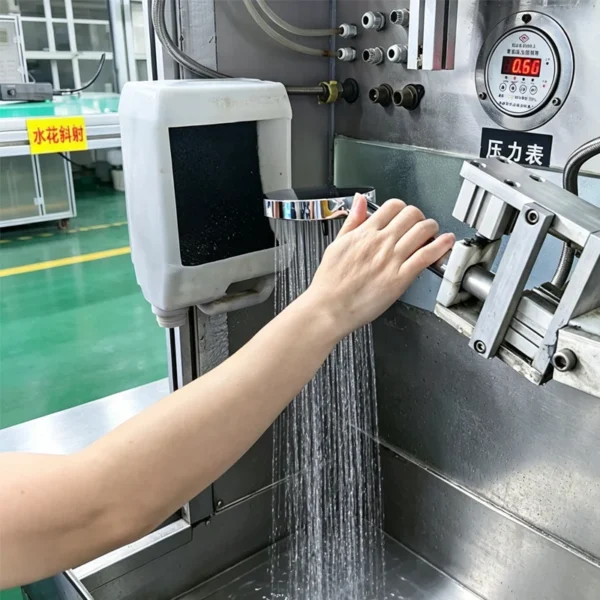
Do not accept estimated GPM values. Ensure your manufacturer operates a comprehensive
quality control laboratory with automated flow rate testing stations. The factory should provide testing reports showing the fixture’s flow rate across a spectrum of pressures (e.g., 20, 45, 60, and 80 PSI) to verify the restrictor’s performance stability.
What This Means for Your Brand
The transition toward ultra-low GPM fixtures fundamentally alters how bathroom brands position their products in the market, shifting the focus from simple water delivery to advanced engineering.
Moving From Compliance to Competitive Advantage
By specifying advanced pressure-compensating components and partnering with a manufacturer capable of executing complex fluid dynamic engineering, brands eliminate the regulatory risks associated with non-compliant products. A shower head that delivers a luxurious bathing experience while meeting 1.8 GPM standards becomes a powerful marketing asset, rather than a technical compromise.
Future-Proofing Supply Chains Against Changing Codes
As water scarcity concerns grow globally, regulations will only become stricter. Brands that proactively align their supply chains with 1.8 GPM architecture—and understand the
manufacturing processes required to build them correctly—will avoid costly redesigns and inventory write-offs in the future.
Conclusion
The question of whether a 1.8 or 2.5 GPM shower head is “better” depends entirely on your market geography and engineering capabilities. For global bathroom brands, 1.8 GPM is rapidly becoming the mandatory standard, making 2.5 GPM a legacy specification in many key markets. By moving away from rudimentary flow restrictors and investing in pressure-compensating regulators and optimized nozzle geometries, OEM procurement teams can confidently navigate stringent compliance mandates. Ultimately, specifying the correct GPM architecture protects brand equity, eliminates legal risks, and ensures a premium user experience regardless of geographic water pressure variations.
FAQ
1. What is the actual difference in user experience between a 1.8 and 2.5 GPM shower head?
If engineered poorly, a 1.8 GPM shower head feels weak and fails to rinse soap effectively. However, if engineered with optimized fluid dynamics and air-injection technology, a 1.8 GPM shower head can provide a tactile spray force that feels nearly identical to a traditional 2.5 GPM model.
2. How do pressure-compensating flow regulators work?
Unlike a static washer with a fixed hole, a pressure-compensating regulator contains a flexible O-ring that reacts to water pressure. As pressure increases, the O-ring compresses to restrict the opening; as pressure drops, it expands to allow more water through, maintaining a steady, compliant flow rate.
3. Are all 1.8 GPM shower heads automatically CEC compliant?
No. Meeting the flow rate requirement is only the first step. The product must be officially tested by an approved laboratory and registered in the California Energy Commission’s MAEDbS (Modernized Appliance Efficiency Database System) before it can be legally sold or distributed in California.
4. Can an OEM manufacturer customize the GPM for different global markets using the same shower head shell?
Yes. A capable OEM partner can utilize the same exterior molds and surface finishes while swapping the internal flow regulators and optimizing the silicone spray plates to create distinct SKUs (e.g., 2.5 GPM for unregulated zones, 1.8 GPM for California, and 9 Liters/Min for European markets).
5. How does hard water affect low GPM shower heads?
Low GPM shower heads are more susceptible to calcium buildup, which can choke the already restricted water flow. It is critical to use high-grade Liquid Silicone Rubber (LSR) nozzles that allow users to easily rub away mineral scale, maintaining the precise nozzle geometry required for spray force.
About the Author
Sunny is a Senior Shower Systems Engineer at JEKARE with over 20 years of experience in sanitary ware product development and OEM manufacturing.He specializes in shower system engineering, water flow optimization, spray plate design, structural improvement, and compliance-driven product development.With extensive experience working with global bathroom brands and distributors, Sunny focuses on creating reliable, cost-effective bathroom solutions through engineering innovation and strict quality control.
References
-
U.S. Environmental Protection Agency (EPA) – WaterSense Specification for Showerheads
https://www.epa.gov/watersense/showerheads
-
California Energy Commission (CEC) – Appliance Efficiency Regulations
https://www.energy.ca.gov/rules-and-regulations/appliance-efficiency-regulations
-
Grand View Research – Plumbing Fixtures Market Size & Trends
https://www.grandviewresearch.com/industry-analysis/plumbing-fixtures-market
Request Engineering Review
Whether you need custom shower systems, faucets, toilet seats, or complete bathroom solutions, JEKARE provides engineering-driven OEM manufacturing support from concept development to mass production.Contact our team to discuss your next bathroom product project.