Call us: +86-18965139230 | Mail to us: info@jekare.com

In December 2024, the EPA opened a draft revision to its WaterSense Specification for Private Lavatory Faucets — Version 2.0 — proposing to lower the maximum labeled flow rate from the current 1.5 gallons per minute to as low as 1.2 or even 1.0 gpm. This isn’t a minor technical tweak: several U.S. states have already adopted 1.2 gpm as a hard ceiling for private lavatory sink faucets sold within their borders, and the federal baseline itself sits at 2.2 gpm under 10 CFR Part 430. Every step down in allowable flow rate pushes more of the engineering burden onto a single, often-overlooked component: the flow restrictor.
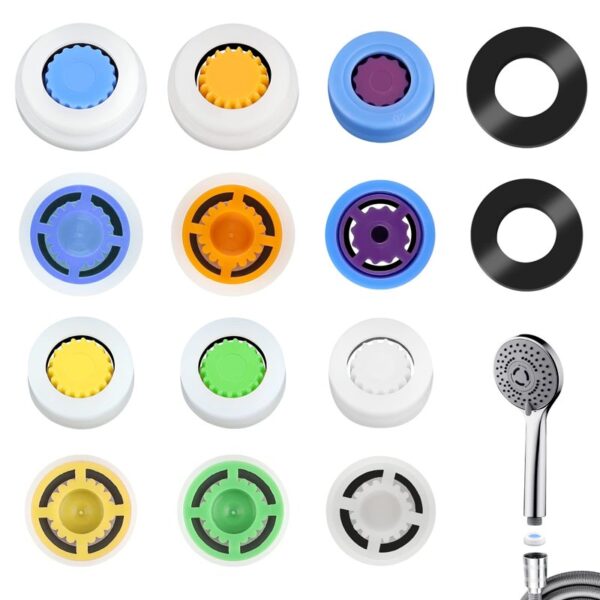
For an OEM buyer, flow rate isn’t just a spec sheet number — it determines which markets a faucet can legally be sold into, whether it can carry the WaterSense label at all, and how a product performs once it’s actually installed. A faucet that meets the letter of a flow-rate ceiling but delivers an unstable or weak-feeling stream generates returns and warranty claims regardless of whether it’s technically compliant. As flow-rate ceilings tighten further, the difference between a well-engineered restrictor and a generic insert becomes a bigger part of both compliance risk and customer satisfaction.
According to The Business Research Company’s Faucet Market Report 2026, the global faucet market reached USD 45.67 billion in 2025 and is projected to grow to USD 73.9 billion by 2030, at a compound annual growth rate of roughly 10.1%. The same report identifies touchless and sensor-activated kitchen faucets as one of the fastest-growing segments, driven by hygiene and water-management demand. That shift matters for flow restrictor design specifically: sensor-activated faucets open and close far more frequently per day than manual faucets, which puts more cycles of pressure change through the restrictor and raises the practical importance of consistent, stable flow rather than just a capped maximum.

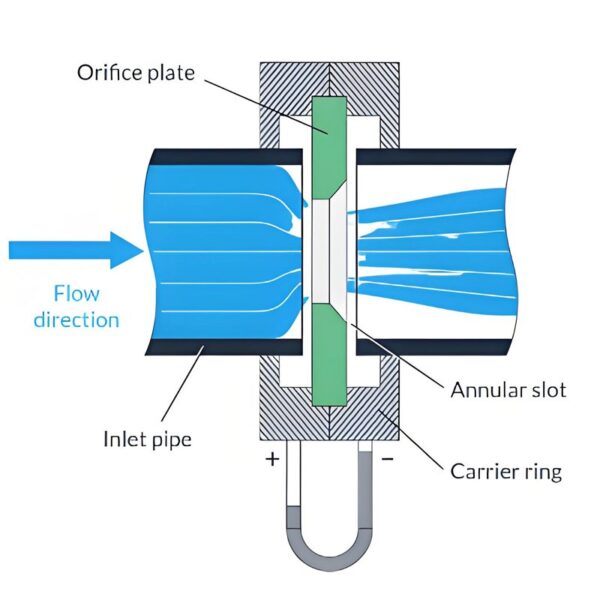
A flow restrictor operates on a simple hydraulic principle: controlled pressure loss through a reduced flow passage. It is typically built as a fixed or semi-controlled orifice — most often produced through precision plastic molding — that narrows the cross-sectional area of the water path. As water passes through this restricted geometry, velocity increases and pressure drops locally, producing a controlled, limited flow rate at the outlet.
In practical use, even when upstream pressure fluctuates, a well-designed restrictor holds discharge relatively stable within its intended range — which matters in building water systems where pressure varies with elevation, simultaneous fixture use, or an inconsistent municipal supply. Flow restriction is only one part of overall faucet performance; cartridges, aerators, and valve assemblies all contribute to how the finished product actually feels to a user.
The primary job of a flow restrictor is capping maximum flow according to a target specification, so water delivery stays within regulatory or product-defined limits regardless of upstream pressure. This lets manufacturers hit a specific flow rating consistently across different installation environments, from lavatory faucets to bathtub and shower faucets.
Beyond flow limitation, the restrictor stabilizes system behavior. By introducing a controlled pressure drop, it dampens the impact of sudden pressure swings and keeps output more uniform — particularly relevant in multi-point systems where demand changes frequently.
A restrictor also contributes to water-efficiency targets by limiting excess flow without necessarily sacrificing perceived performance, especially when paired with a well-matched aerator. And by capping peak flow intensity, it reduces mechanical stress on downstream cartridges, seals, hoses, and connectors during cartridge assembly — which has a direct bearing on long-term durability and warranty claim rates.
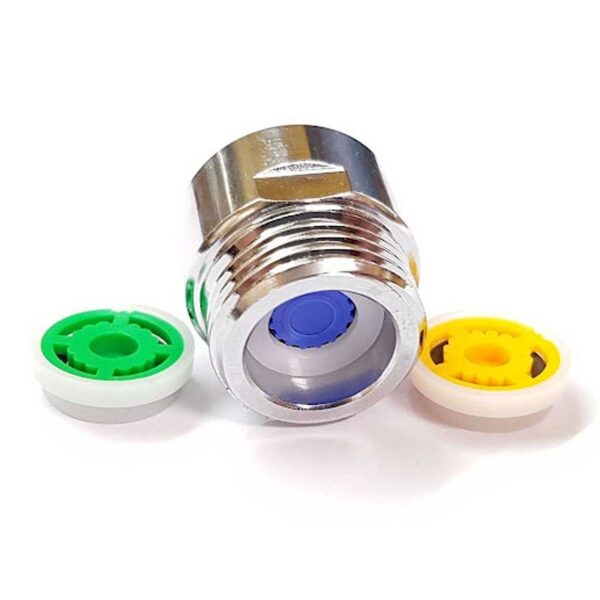
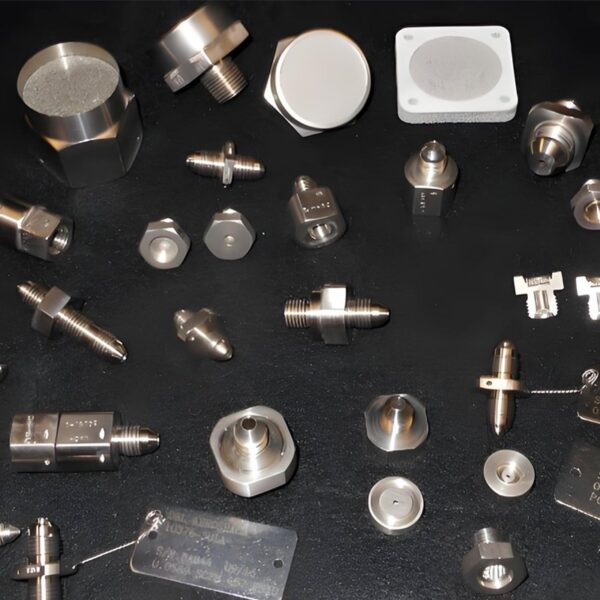
Only a handful of restrictor designs see wide use in faucet systems, because they need to balance compact size, cost, and long-term reliability. The real difference between them isn’t just structure — it’s how each one manages the relationship between pressure and flow.
The single-orifice restrictor is the simplest and most common type, using one fixed opening whose flow rate depends mainly on opening size and inlet pressure. It’s low-cost and easy to design around, but output is sensitive to pressure swings, and any partial blockage affects the entire flow path.
The multi-orifice restrictor splits flow across several smaller channels instead of one opening. Because load is shared, partial blockage in any single channel has less impact, and turbulence is generally lower — which tends to produce more stable flow and better tolerance of scale or particulate in real-world water.
The adjustable restrictor lets the effective flow area be changed mechanically, tuning the system to a target flow rate. It doesn’t automatically stabilize flow against pressure changes on its own — its role is setting a level, not maintaining consistency.
The pressure-compensating regulator works differently: rather than a fixed opening, its internal structure adjusts automatically as pressure changes, narrowing the passage when pressure rises and opening it when pressure drops. This is the only design among the four that actively holds flow rate steady rather than simply capping it — which matters more as flow-rate ceilings get tighter and there’s less margin for pressure-driven variation.
Restrictor performance is primarily defined by its flow capacity range, expressed in liters or gallons per minute, which has to align with both product targets and the regional regulatory ceiling it needs to meet.
Operating pressure range matters because the restrictor has to behave consistently across the pressures it will actually see in the field — alongside other supply-side fluid-control components such as angle valves, residential systems typically sit in a moderate range, but real installations vary significantly by infrastructure and region.
Pressure drop characteristics require a deliberate balance: too much pressure loss weakens perceived performance, while too little restriction can miss the regulatory or water-saving target entirely.
Clog resistance matters especially in hard-water regions or areas with particulate in the supply — internal geometry, material choice, and self-cleaning flow paths are typically optimized to reduce blockage risk and preserve performance over the product’s life, a property verified through inspection rather than assumed from material spec alone.

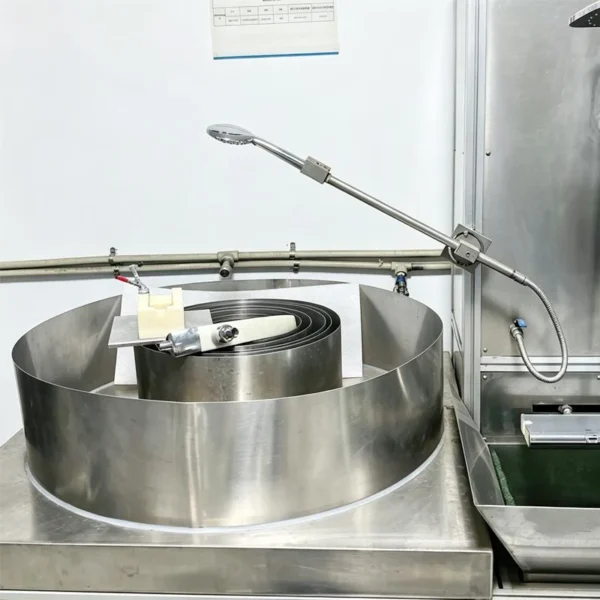
In the North American market, flow restrictor design is shaped directly by EPA WaterSense requirements and the ASME A112.18.1/CSA B125.1 Plumbing Supply Fittings standard used to test faucet flow rate — making flow control, and the certifications that back it up, an essential compliance element rather than an optional feature.
European markets tend to balance water efficiency against comfort under EN-based frameworks, encouraging more refined flow-control strategies rather than a single hard flow cap.
In parts of Southeast Asia and South America, where municipal water pressure fluctuates more significantly, restrictor design tends to prioritize pressure tolerance and adaptability over strict flow-rate limitation alone.
[INSERT VERIFIED CUSTOMER/SALES OBSERVATION — a real, confirmable pattern from JEKARE’s engineering or sales team about how OEM buyers are currently specifying flow restrictor type or flow-rate targets, drawn from actual project inquiries or order data rather than a general assumption about the market.]
Before locking in a flow restrictor design for a new faucet program, it’s worth working through a short set of questions:
Flow restrictor selection is the first link in a longer chain: it determines whether a faucet program can carry a given compliance label, which determines which project types and regions the product line can be sold into, which in turn shapes how a brand positions that line against WaterSense-driven institutional and hospitality demand versus markets with looser flow-rate rules.
Treating restrictor design as a compliance and performance lever — rather than a low-cost commodity insert — is what keeps a product line sellable as regulations tighten further, and keeps warranty costs predictable as faucet programs scale into new regions with different flow-rate rules.
No — an aerator mixes air into the water stream to shape the spray pattern and perceived pressure, while a flow restrictor limits the actual volume of water passing through, regardless of how it’s aerated. Many faucets use both together.
In some cases yes, typically inside the aerator housing or supply line, but retrofit restrictors aren’t tested as part of the original product’s certification, so performance and compliance should be re-verified rather than assumed.
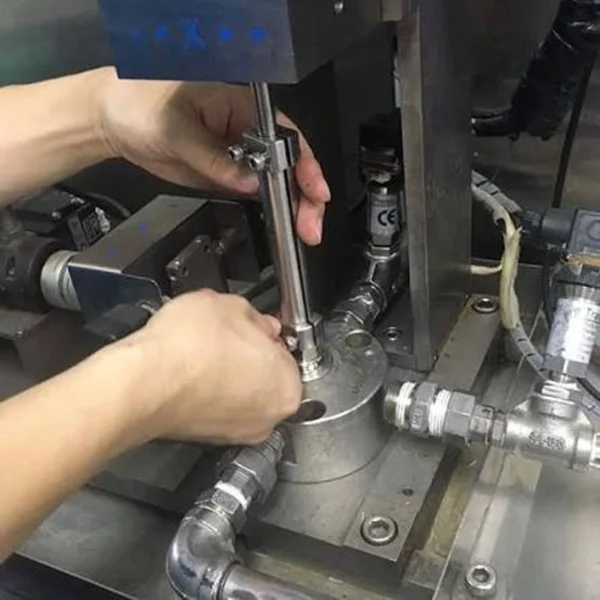
Validation typically involves flow testing across a range of inlet pressures (commonly 20, 45, and 80 psi under ASME A112.18.1/CSA B125.1 protocols) to confirm the restrictor holds its target range throughout, not just at a single test pressure.
Yes — mineral scaling in hard-water areas and material fatigue in the orifice or compensating mechanism can gradually shift flow rate away from its original spec, which is why clog resistance and material selection are treated as design parameters rather than afterthoughts.
Not necessarily — perceived strength depends heavily on how the restrictor is paired with the aerator and spray geometry; a well-matched pressure-compensating design can maintain strong perceived performance at a lower actual flow rate than a poorly matched fixed-orifice design at a higher one.
Ask which specific regulatory version (e.g., current WaterSense 1.5 gpm vs. a state-level 1.2 gpm requirement) the restrictor was validated against, and whether that validation used the same standard test protocol the finished product’s certifications are based on.
Kevin Lawson is Senior Industrial Engineer at JEKARE, specializing in faucet engineering and fluid control systems. He focuses on optimizing water flow performance, manufacturing consistency, and product reliability across faucets, shower systems, and related bathroom components, including flow restrictor integration, cartridge assembly optimization, injection molding processes, and production quality control. He shares engineering insights on water-saving technologies and hydraulic performance to help manufacturers, distributors, and project engineers better understand modern bathroom product design.
1.The Business Research Company — Faucet Market Report 2026
https://www.thebusinessresearchcompany.com/report/faucet-global-market-report
2.U.S. EPA WaterSense — Specification for Private Lavatory Faucets (Version 2.0 Draft)
https://www.epa.gov/watersense/bathroom-faucets
✔ 20+ Years of OEM & ODM Manufacturing Experience ✔ Complete Faucet, Shower and Bathroom Product Solutions ✔ Engineering Support from Design to Production ✔ Flow-Rate and Pressure Range Testing Built Into Standard QC ✔ Flexible Customization for Different Regional Markets ✔ Manufacturing Partner for Global Distributors and Brands
If your team is evaluating flow restrictor options against a specific regional flow-rate target, it’s worth reviewing restrictor type, pressure range, and clog-resistance requirements together rather than as separate line items. JEKARE’s OEM/ODM project process works through these tradeoffs with OEM partners from initial specification through DFM review and production.