Call us: +86-18965139230 | Mail to us: info@jekare.com

The global bidets market was valued at USD 30.29 billion in 2025 and is projected to reach USD 41.21 billion by 2030, growing at a CAGR of 6.3%, according to The Business Research Company, with growth attributed to rising hygiene awareness and expanding adoption across both residential and commercial settings. For a brand evaluating “is this worth it,” market growth alone answers only half the question — the other half is whether that demand translates into an economically sound line extension for a specific brand’s existing supplier relationships and channel mix.
Beyond residential retrofit demand, Technavio’s market analysis identifies touchless bidet operation in commercial restrooms as an emerging category setting new public hygiene standards — a signal that the addressable market for a bidet sprayer line extends beyond individual consumer purchases into commercial and hospitality procurement, a channel many bathroom brands are already positioned to serve.
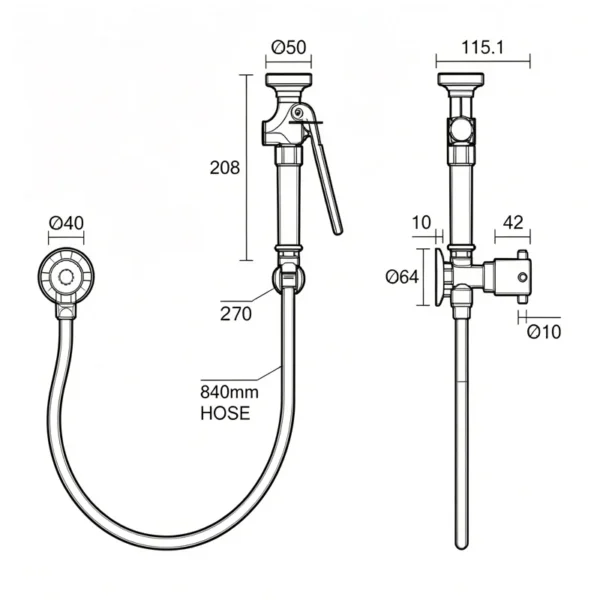
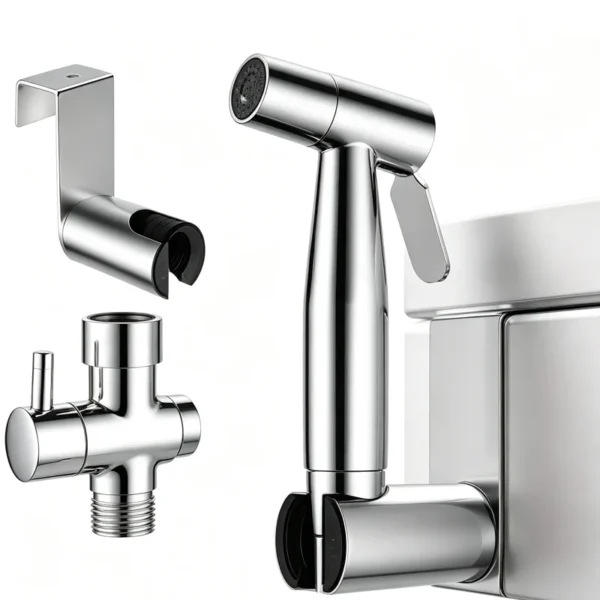
Market growth data answers “does demand exist,” but a brand’s actual “worth it” question is narrower: does adding a bidet sprayer require new tooling, new supplier relationships, and new compliance investment that offsets the category’s margin potential, or can it be developed as a genuine extension of existing manufacturing capability?
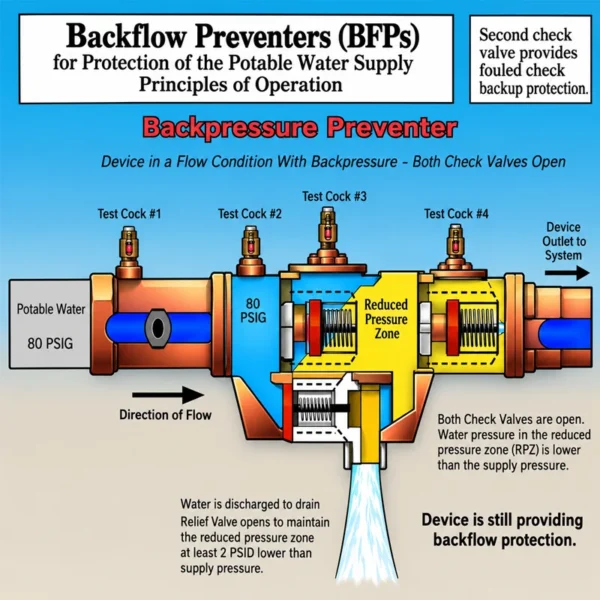
A bidet sprayer’s nozzle operates in close proximity to the toilet bowl, making backflow contamination a genuine safety consideration, not a theoretical one. Skipping proper backflow-compliant engineering to reduce upfront cost creates liability exposure that can far exceed whatever was saved in initial tooling investment.
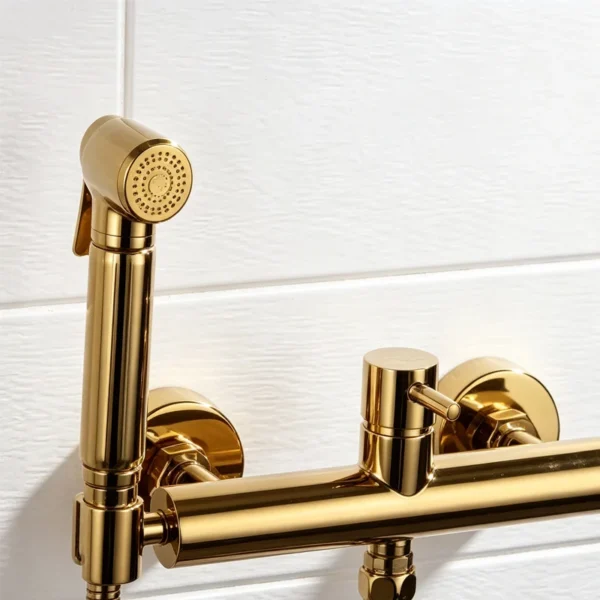
Because a bidet sprayer shares engineering elements — valves, hose connections, trigger mechanisms — with a brand’s existing faucet line, the “worth it” decision isn’t isolated; it interacts with existing supplier capacity, finish-matching requirements, and how the new product is positioned relative to the rest of the catalog.
The Business Research Company’s analysis identifies hygiene awareness and sanitation development initiatives as the primary drivers of continued bidet market growth — a demand foundation that has proven durable rather than a short-lived pandemic-era spike, which matters for a brand evaluating whether this is a category worth long-term tooling investment.
Technavio’s analysis specifically flags touchless operation in commercial restrooms as a distinct growth vector — relevant to brands with existing hospitality or commercial contract channels, since it suggests demand isn’t limited to the residential retrofit market most bidet sprayer marketing targets.
Hand-held fittings with hose connection outlets — the category a bidet sprayer falls into — must either conform to ASME A112.18.1/CSA B125.1 or incorporate an ASME A112.18.3 backflow prevention device. This compliance requirement is a real, quantifiable cost input — engineering and testing a compliant backflow device is not optional, and any “worth it” cost analysis that omits this requirement is working from an incomplete cost basis.
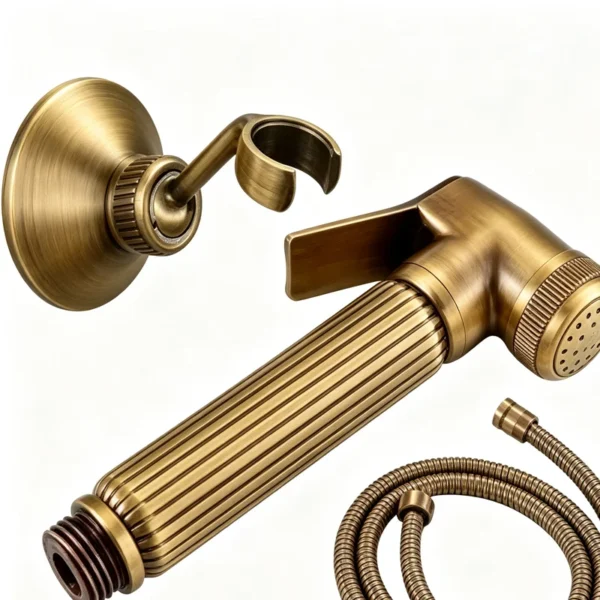
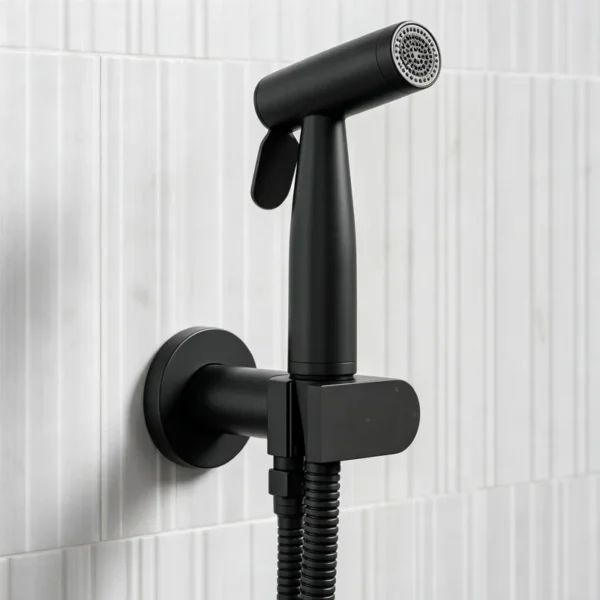
Over the past several years, our engineering team has worked with global bathroom brands evaluating whether bidet sprayers should be developed as a standalone category or introduced as an extension of an existing faucet and bathroom accessory portfolio.
A recurring question from B2B buyers is not simply whether market demand exists, but whether the additional tooling, compliance requirements, and supplier coordination justify creating a new product line.
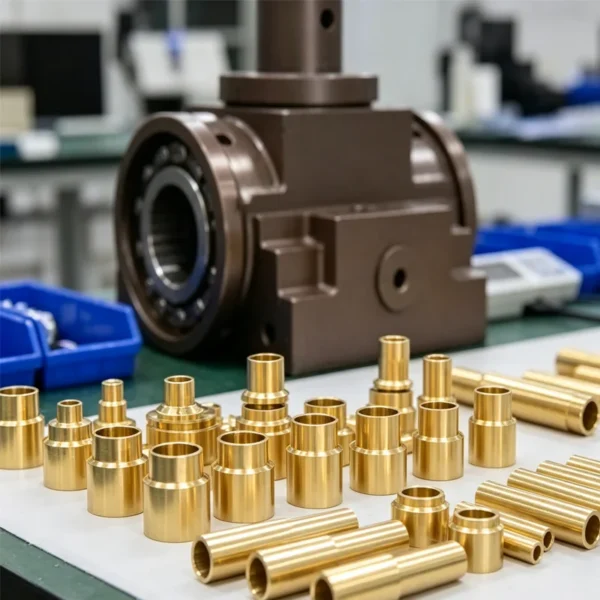
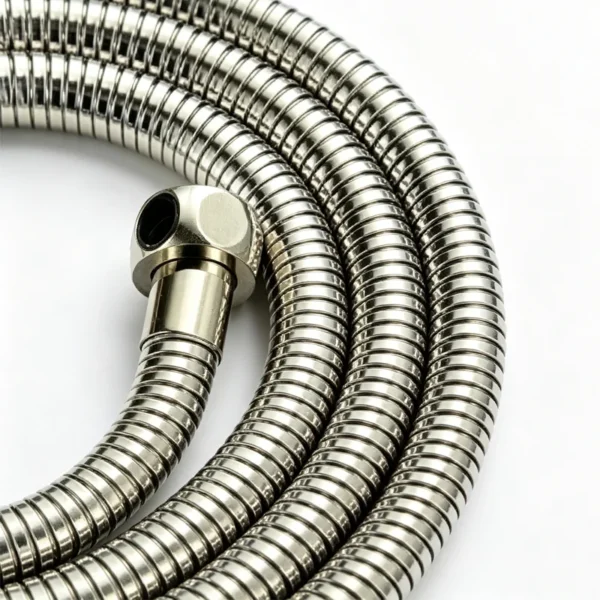
Through product development discussions, we have found that brands with existing faucet programs often underestimate the amount of shared engineering already available. Components such as brass valve bodies, trigger mechanisms, hose connections, surface finishing systems, and inspection procedures can often be adapted from existing faucet manufacturing capabilities rather than developed completely from the beginning.
One of the most important evaluation points during early-stage development is backflow protection. Many buyers initially focus on appearance, finish matching, and retail positioning, but the engineering review must begin with compliance requirements. For hose-connected bidet sprayers, the backflow prevention approach directly affects product architecture, component selection, testing requirements, and development timeline.
During DFM reviews, our engineering team typically evaluates the following areas before moving into tooling:
From a manufacturing perspective, the strongest line extension opportunities are usually created when brands treat bidet sprayers as an extension of their existing bathroom product ecosystem rather than as an isolated accessory.
By evaluating supplier capability early — including tooling requirements, compliance preparation, production process compatibility, and volume expectations — brands can make more accurate investment decisions and reduce unnecessary development risks before committing to mass production.
Request a realistic cost estimate for tooling, backflow compliance engineering, and initial production run before committing — a bidet sprayer line only makes economic sense at a volume that amortizes these upfront costs within an acceptable timeframe for your business.
Ask specifically whether a prospective manufacturing partner has existing backflow-compliant fitting designs, or whether this compliance work would need to be developed from scratch — the latter adds meaningful cost and timeline that should factor into the “worth it” decision upfront.
If your brand already sources faucets from a manufacturing partner, ask directly whether that same partner can extend into bidet sprayer production using shared valve and casting capability — this can substantially change the line extension’s cost profile compared to sourcing from an entirely new supplier.
Given the distinct growth in commercial and touchless applications, decide early whether the product is being developed for residential retrofit, commercial/hospitality specification, or both — this affects finish requirements, packaging, and even which compliance documentation matters most to your buyers.
The “is it worth it” question resolves differently for different brands — it depends heavily on whether a brand can extend existing faucet manufacturing capability into this category or whether it requires building an entirely new supplier relationship from scratch. For brands with an existing faucet program, the incremental cost of a well-engineered bidet sprayer line extension is often considerably lower than the category’s growth data alone would suggest, since much of the underlying engineering and supplier relationship already exists.
More broadly, as commercial and touchless applications continue expanding the category beyond residential retrofit, brands with existing hospitality or commercial channel relationships have a demand pathway that a purely residential-focused competitor doesn’t — a factor worth weighing alongside pure market size data when making this decision.
JEKARE’s engineering and die casting capability, already applied across its faucet product line, directly addresses the cost question at the center of this analysis — a bidet sprayer developed as an extension of existing brass valve and trigger engineering carries meaningfully lower incremental tooling cost than building a new supplier relationship from scratch. Brands can review how this kind of extension is typically scoped through JEKARE’s product line extension solution.
At least four specific factors that affect the actual cost-benefit calculation: first, surface finishing capability that supports matching a new bidet sprayer’s finish to an existing faucet line without a separate finishing supplier relationship; second, backflow-compliant valve and trigger engineering that avoids the cost of developing compliance from a blank slate; third, direct coordination through JEKARE’s OEM/ODM project process that can shorten development timeline for brands already familiar with the process; and fourth, shared production capacity with existing faucet programs, which can reduce the minimum order volume threshold needed to make the line extension economically viable.
Whether bidet sprayers are “worth it” depends less on category-wide market growth and more on a specific brand’s manufacturing starting point — brands able to extend existing faucet engineering and supplier relationships face a meaningfully different cost-benefit calculation than those building a new supplier relationship from scratch. For B2B buyers, the practical takeaway is to run this analysis against actual tooling and compliance cost estimates from a specific manufacturing partner, rather than relying on market growth data alone to justify the investment.
It depends heavily on whether tooling and compliance costs can be shared with an existing faucet program — a brand building an entirely new supplier relationship generally needs higher volume to justify the investment than one extending existing manufacturing capability.
The engineering and testing investment is largely a one-time development cost rather than a significant per-unit cost once designed, which is why amortizing this cost across realistic production volume matters more than the incremental unit cost itself.
This depends on channel strategy — bundling with an existing collection can support cross-selling and simplify finish-matching, while a standalone SKU offers more flexibility for brands targeting a specific commercial or hospitality buyer separate from their core faucet customers.
Commercial applications often prioritize touchless operation, durability under higher use frequency, and documentation for institutional procurement, while residential retrofit demand is
typically more finish- and price-sensitive — these different priorities should inform product development decisions.
Timelines vary based on how much of the underlying engineering (valve, trigger, backflow compliance) already exists within a manufacturing partner’s capability — extending an existing faucet program’s engineering is typically faster than developing compliance and tooling from a blank slate.
Jimmy is a Product Development Engineer at JEKARE with over 20 years of experience in bathroom fixture development and OEM manufacturing. He specializes in product line extension planning, cost and tooling analysis, and cross-category component engineering across faucet and bathroom accessory lines. With extensive experience supporting global bathroom brands and distributors through new category development, Jimmy focuses on helping buyers evaluate line extension decisions against actual manufacturing cost data rather than market growth figures alone.