Call us: +86-18965139230 | Mail to us: info@jekare.com

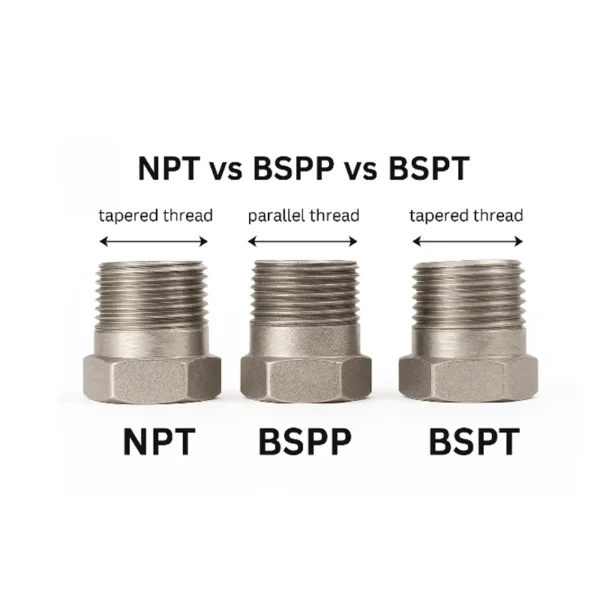
Plumbing thread standards differ meaningfully by region: North America uses NPT (National Pipe Taper) threads under ASME B1.20.1, while most other markets — Europe, the UK, much of Asia, and Australia — use BSP (British Standard Pipe) threads under ISO standards. These aren’t cosmetic naming differences; NPT uses a 60-degree tapered thread form, while BSP parallel threads (BSPP, designated “G”) use a 55-degree form under ISO 228-1, and the two are not interchangeable without an adapter.
Beyond thread geometry, shower hose dimensional characteristics — including length and fitting dimensions — are directly addressed by EN 1113, the European standard specifying the dimensional, leak-tightness, mechanical, and hydraulic characteristics shower hoses must meet. The existence of a dedicated standard for these dimensions is itself evidence that “shower hose size” was never meant to be assumed — it’s a specified, testable characteristic.
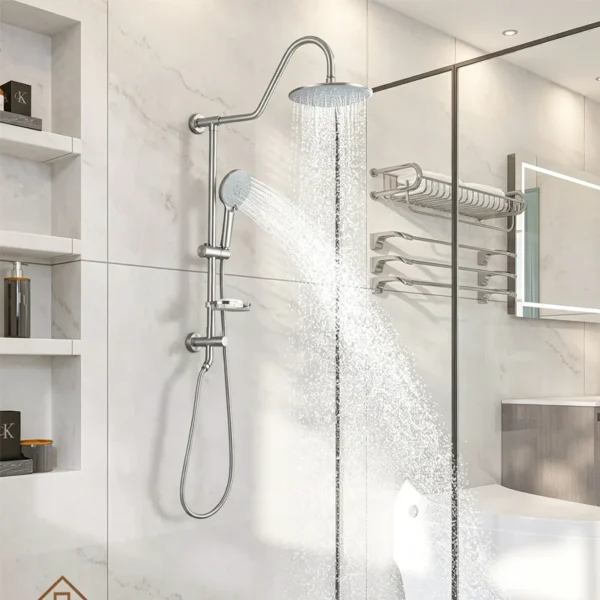
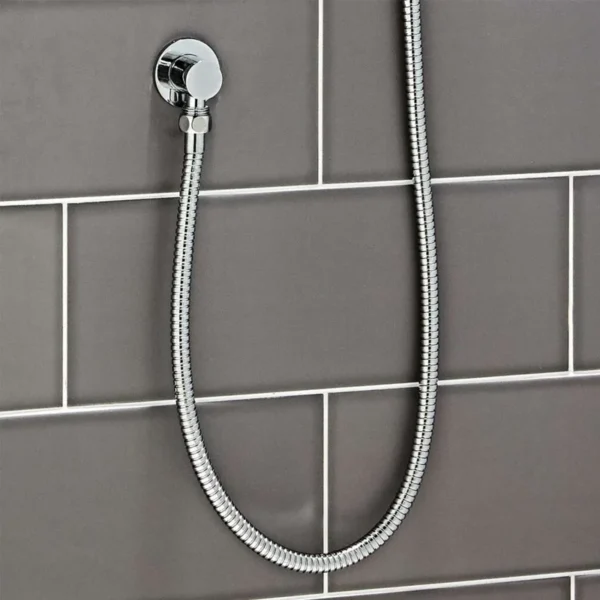
A hose manufactured correctly to spec but with the wrong thread standard for its destination market isn’t defective — it’s simply incompatible with the fixtures it’s meant to connect to in that market. This kind of failure surfaces at installation, not during factory inspection, which makes it a particularly frustrating and costly discovery.
A callout of “1/2 inch” on a purchase order is genuinely ambiguous: 1/2 NPT measures roughly 0.840 inches in outer diameter, while G1/2 (BSP parallel) is a different physical dimension entirely. Without specifying the actual standard, “half-inch” describes a nominal size category, not a verifiable physical measurement.
Brands sourcing from a manufacturer for export into a specific market need the manufacturing partner to build to that market’s thread standard by default — not assume it, and not default to whatever standard is most common in the factory’s home market unless that happens to match the destination.
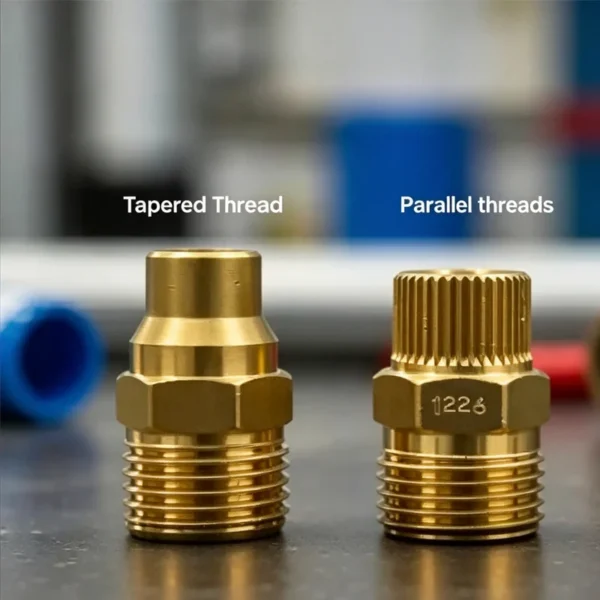
NPT threads, standardized under ASME B1.20.1, are tapered and seal via interference fit between the male and female thread flanks, typically requiring a sealant such as PTFE tape for a pressure-tight connection. This is the default standard for plumbing connections throughout the United States and Canada.
BSP thread standards split into two families: BSPP (parallel, ISO 228-1), which typically seals via a washer or O-ring rather than the thread itself, and BSPT (tapered, ISO 7-1), which seals on the thread similarly to NPT. Both are common outside North America, and neither is dimensionally or geometrically compatible with NPT without an adapter fitting.
EN 1113 applies specifically to shower hoses connected downstream of a tapware’s shutoff valve, and covers hoses of any material — meaning the standard’s dimensional requirements apply regardless of whether a hose is constructed from braided stainless steel, PVC, or another material. This gives buyers a specific reference point for verifying hose dimensions independent of the material or brand supplying it.
At JEKARE, we have found that thread compatibility is one of the specifications that requires the earliest confirmation during shower product development, especially when a single product platform is planned for multiple export markets.
From an engineering perspective, the challenge is not producing a shower hose with a specific thread standard — both NPT and BSP configurations can be manufactured according to defined requirements. The critical point is ensuring that the thread specification is identified correctly at the beginning of the project and consistently maintained through drawings, samples, tooling, and mass production.
During product development, we typically review connection requirements together with other key specifications, including shower head inlet type, hose fitting structure, installation environment, and target market requirements. This prevents situations where a product sample appears acceptable during early evaluation but creates installation issues after reaching the destination market.
Another important observation from manufacturing is that thread mismatch is often not caused by machining capability, but by specification ambiguity. Terms such as “1/2 inch connection” or “standard shower hose” may be interpreted differently across regions if the exact thread designation is not clearly defined. For OEM projects involving North America, Europe, Australia, or other export markets, the complete thread callout should be treated as a controlled product specification rather than a general description.
For bathroom brands and distributors developing shower product lines, confirming thread standards before tooling and production approval helps reduce unnecessary revisions, avoid installation compatibility issues, and create a more reliable supply chain for multi-market distribution.
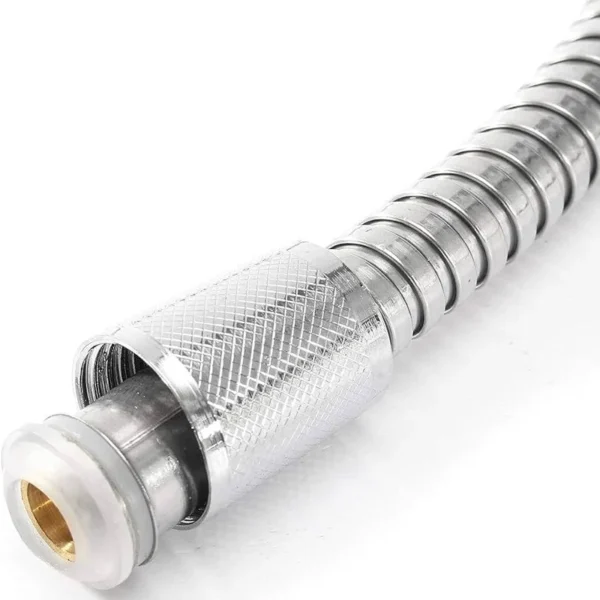
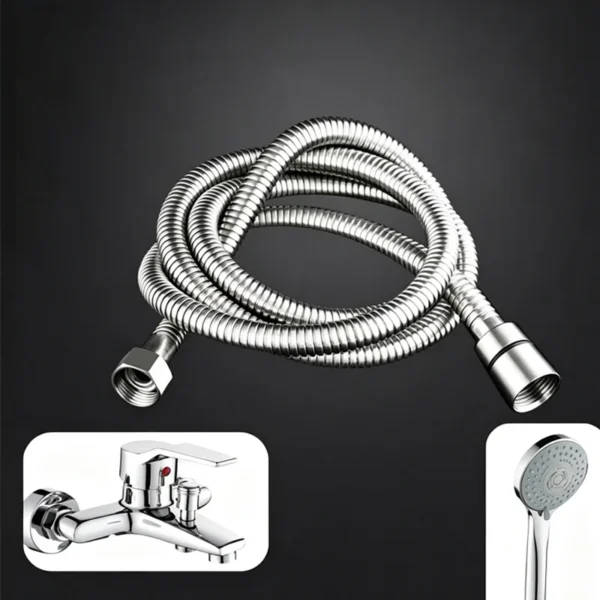
Specify the complete thread designation on any purchase order or spec sheet — “1/2 NPT” or “G1/2 BSPP,” not simply “1/2 inch” — since the nominal size alone doesn’t identify which physical standard applies.
Verify with the manufacturer which thread standard a given product batch is being built to, and confirm it matches the plumbing convention of the specific country or region the product will actually be installed in — not just the country the brand is headquartered in.
Confirm hose length is specified and tested against EN 1113 or the applicable regional dimensional standard, particularly for products where hose length affects usability, such as handheld showers in accessible bathroom installations.
For a new supplier relationship or a first production run, request that thread dimensions be verified with an actual thread gauge and documented, rather than relying solely on a written spec sheet confirmation.
Thread and dimensional compatibility connects directly to installation success rate and return volume — a hose that’s otherwise well-built but incompatible with local plumbing fittings generates the same customer complaint and return cost as a genuinely defective product, even though nothing about the hose itself failed. Treating thread specification as an assumed default rather than an explicitly verified requirement is a quiet but recurring source of avoidable field issues.
More broadly, as bathroom brands expand into multiple regional markets, thread standard becomes a genuine SKU-management consideration — the same base hose design may need to exist in NPT and BSP variants depending on target market, which affects both tooling and inventory planning, not just a single spec sheet line item.
JEKARE’s shower product line is developed with thread specification confirmed against the target market at the design stage, rather than assumed by default — addressing directly the ambiguity that leads to thread-mismatch issues in export programs sourced without explicit specification.
For brands developing a complete shower system, JEKARE’s custom rain shower head programs coordinate hose, fitting, and fixture connection dimensions as part of a single engineering process, reducing the risk of a mismatch between components sourced or specified separately. Brands can work directly through JEKARE’s OEM/ODM project process to confirm thread and dimensional specifications for a specific target market before production begins.
Shower hoses are not a single universal size — thread standard alone splits into NPT and multiple BSP variants depending on target market, and dimensional characteristics are specifically governed by standards like EN 1113 rather than left to informal convention. For B2B buyers, the practical takeaway is to treat thread and dimensional specification as an explicit, written requirement on every purchase order, particularly for export programs, rather than an assumed default that happens to work out.
Yes, adapters exist to connect NPT and BSP threads, but this adds a connection point and potential leak risk compared to a matched thread standard, and isn’t a substitute for specifying the correct thread in the original product design.
No — manufacturers in China commonly produce to whichever thread standard a specific export order requires, so a buyer should never assume metric, BSP, or NPT threading based solely on country of manufacture; the destination market’s convention is what should drive the specification.
This varies by application and region, but BSPP (parallel) is common where a separate seal — such as a washer or O-ring — is used at the connection, which is a frequent design choice for shower hose fittings; confirming the specific variant with a manufacturer is more reliable than assuming based on general BSP familiarity.
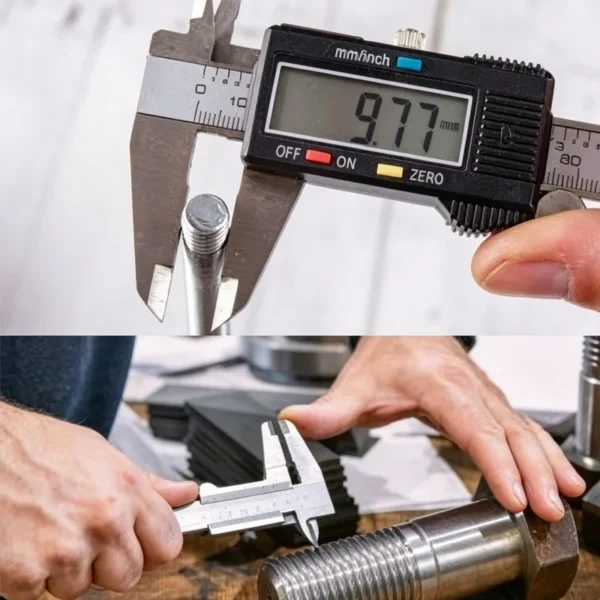
A basic thread pitch gauge and caliper can verify thread count and outer diameter against published standard tables, though for production-scale verification, requesting the manufacturer’s own gauge-checked documentation is more practical than relying on manual measurement alone.
Length isn’t fixed by a single universal number, but dimensional testing under standards like EN 1113 confirms a hose performs to its rated specification at whatever length is specified — buyers should treat length as a defined spec to confirm with the manufacturer, not an assumed standard size.
Susan is a Senior Shower Systems Engineer at JEKARE with over 20 years of experience in bathroom fixture development and OEM manufacturing. She specializes in connection and fitting compatibility, dimensional specification verification, and multi-market product engineering across shower and faucet product lines. With extensive experience supporting global bathroom brands and distributors through export program development, Susan focuses on helping buyers avoid the kind of thread and dimensional mismatches that surface only after a product reaches its destination market.
1. ASME — B1.20.1: Pipe Threads, General Purpose, Inch
https://www.asme.org/codes-standards/find-codes-standards/b1201-pipe-threads-general-purpose-inch
2. International Organization for Standardization — ISO 228-1:2000: Pipe Threads Where Pressure-Tight Joints Are Not Made on the Threads
https://www.iso.org/standard/4045.html
3. European Committee for Standardization — EN 1113: Sanitary Tapware, Shower Hoses for Sanitary Tapware
https://www.en-standard.eu/din-en-1113-sanitary-tapware-shower-hoses-for-sanitary-tapware-for-water-supply-systems-of-type-1-and-type-2-general-technical-specification/
A thread mismatch rarely shows up on a spec sheet — it shows up in an installer’s hands, weeks after the shipment has already landed. If your team is finalizing a new shower or faucet program for a market you haven’t sourced into before, it’s worth a direct conversation about which thread standard the destination actually uses, and how that gets written into the purchase order in a way a factory can’t misread.
JEKARE‘s engineering team works through exactly this kind of market-specific specification as a standard part of new product development — reach out if it would help to walk through your next program’s connection requirements before tooling is finalized.