Call us: +86-18965139230 | Mail to us: info@jekare.com

The global hose market was valued at USD 30.90 billion in 2025 and is projected to reach USD 44.62 billion by 2033, growing at a CAGR of 4.7% from 2026 to 2033, according to Grand View Research. While this figure spans industrial, automotive, and domestic hose applications broadly, it reflects sustained demand and continued material innovation across the flexible-hose category that plumbing and sanitary hoses fall within.
Unlike many bathroom accessory components that get evaluated informally, shower hoses have their own dedicated technical standards addressing dimensional, leak-tightness, mechanical, and hydraulic performance — a level of specification most buyers apply readily to a faucet or shower head, but often overlook for the hose connecting them.
A shower system can have a well-engineered valve, a precisely machined faucet body, and a durable finish — and still fail in the field because of a substandard hose. The hose is a wear component subject to constant flexing, water pressure, and mechanical stress, making it disproportionately likely to be the actual point of failure in an otherwise solid product.
A burst or leaking hose typically causes water damage beyond the fixture itself, which tends to generate a more serious customer complaint and higher-cost warranty resolution than a cosmetic finish issue elsewhere in the product.
Shower hose standards differ between regions — a hose compliant for one target market isn’t automatically compliant for another, which creates a specific verification requirement for brands selling into multiple geographies.
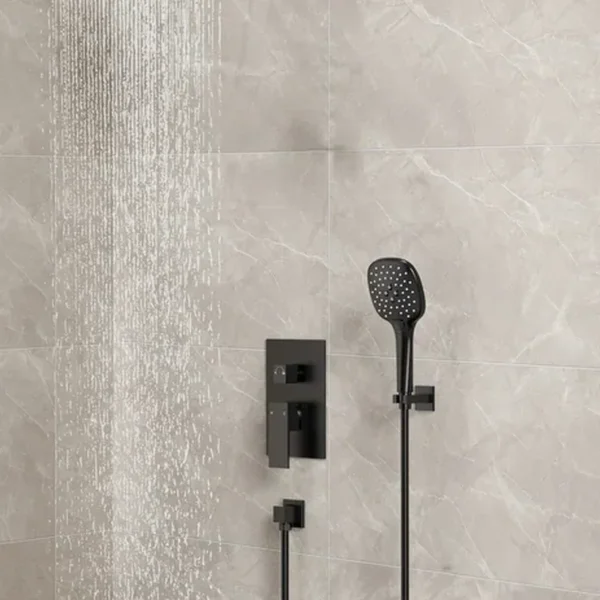
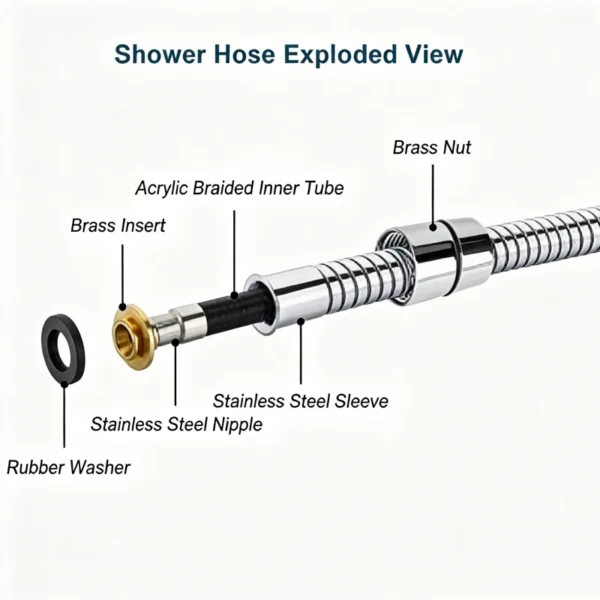
In Europe, shower hoses are evaluated against EN 1113, the sanitary tapware standard specifying dimensional, leak-tightness, mechanical, and hydraulic characteristics a shower hose must meet, along with the procedures for testing those characteristics. Notably, the standard applies to shower hoses of any material, and specifically covers hoses connected downstream of the tapware’s shutoff valve — meaning it addresses the hose as a distinct, separately-testable component rather than treating it as inseparable from the fixture it connects to.
In North America, hand-held showers and fittings with hose connection outlets fall under ASME A112.18.1/CSA B125.1, the plumbing supply fittings standard, which sets performance requirements applicable to hose-connected fixtures. A hose assembly tested and compliant under EN 1113 for a European program is not automatically compliant under the ASME/CSA standard for a North American program — these are separate technical requirements, even though both address similar underlying performance concerns.
The continued growth of the broader hose market, per Grand View Research’s analysis, reflects ongoing material innovation across rubber, PVC, thermoplastic, and composite hose types — the same material categories relevant to shower hose construction, meaning buyers evaluating hose material options today have more genuine choice than in previous product cycles, provided that choice is backed by standard-specific testing.
At JEKARE, we have observed that the biggest challenge brands face when developing shower column programs is not the availability of components — it is the integration of multiple manufacturing processes into one reliable finished system.
Many OEM buyers initially evaluate shower columns based on visible features such as shelf design, spray functions, finish options, or thermostatic control. However, during product development, the critical engineering questions usually emerge around structural stability, internal water routing, and long-term component compatibility.
From our production experience, shower columns require a higher level of cross-process coordination compared with standard shower heads or individual bathroom accessories. The aluminum or stainless steel column structure, brass valve components, ABS injection-molded parts, ceramic or thermostatic cartridges, and surface finishes must all meet dimensional and functional requirements simultaneously.
A common issue we identify during early-stage product reviews is that some designs are developed around appearance first, while manufacturing feasibility is considered later. For example, insufficient internal space for water channels, limited access for CNC machining, or inconsistent connection tolerances between metal and plastic components can create unnecessary tooling adjustments, assembly difficulties, and quality risks during mass production.
For OEM brands expanding into shower column categories, supplier capability should therefore be evaluated beyond the ability to assemble finished products. The key differentiator is whether the manufacturer can control the complete development process — from structural design optimization and material selection to precision machining, injection molding, surface finishing, and final water-pressure testing.
JEKARE approaches shower column manufacturing as an integrated engineering project rather than a simple product assembly process. By coordinating multiple production capabilities within one manufacturing system, we help bathroom brands reduce development uncertainty, improve production consistency, and launch shower systems that meet both market expectations and long-term reliability requirements.
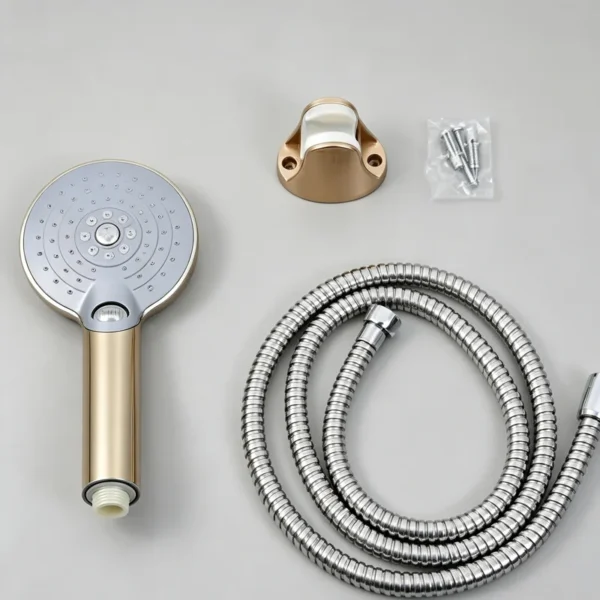
Ask explicitly whether a shower hose has been tested against EN 1113, ASME A112.18.1/CSA B125.1, or another applicable regional standard — and confirm this matches the target market before finalizing a purchase order, rather than assuming a supplier’s general “tested” claim covers the specific market’s requirement.
Request the hose’s rated working pressure and burst pressure test data, and confirm the margin between the two is adequate for the actual water pressure conditions in the target market — a hose rated close to its burst pressure under normal operating conditions leaves little safety margin.
Ask how kink resistance is tested and what construction (braided, coiled, smooth-bore) the hose uses — kinking under normal use is one of the more common consumer complaints tied to hose quality, independent of burst pressure performance.
Confirm the hose’s exterior finish process and material are consistent with the finish and corrosion resistance of the fixture it connects to, so the two components age and perform consistently rather than the hose becoming a visible weak point in an otherwise cohesive product.
Hose specification connects directly to overall product reliability in a way that’s easy to underweight during sourcing, precisely because a hose looks like a simple, interchangeable accessory rather than an engineered component. A brand that applies rigorous testing standards to a shower head or faucet body but treats the connecting hose as an afterthought is leaving a real reliability gap in an otherwise well-specified product.
More broadly, as bathroom brands expand into multiple regional markets, hose standard compliance becomes a genuine multi-market sourcing consideration — a manufacturing partner capable of producing and testing hose assemblies against both EN 1113 and ASME A112.18.1/CSA B125.1 reduces the sourcing complexity of maintaining separate hose specifications for different regions.
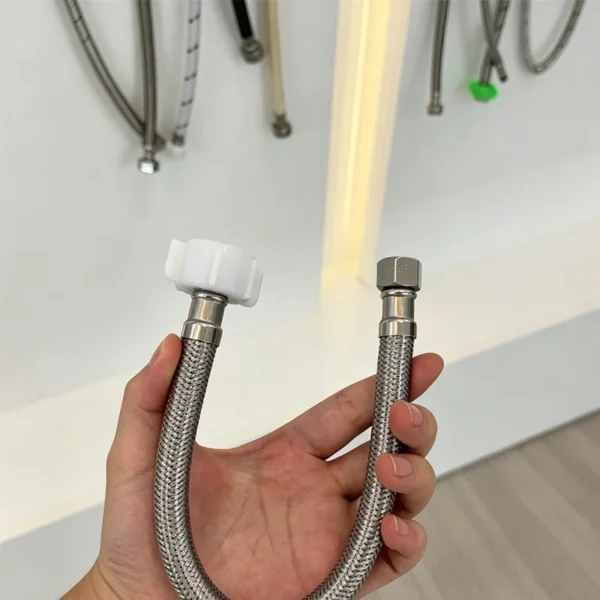
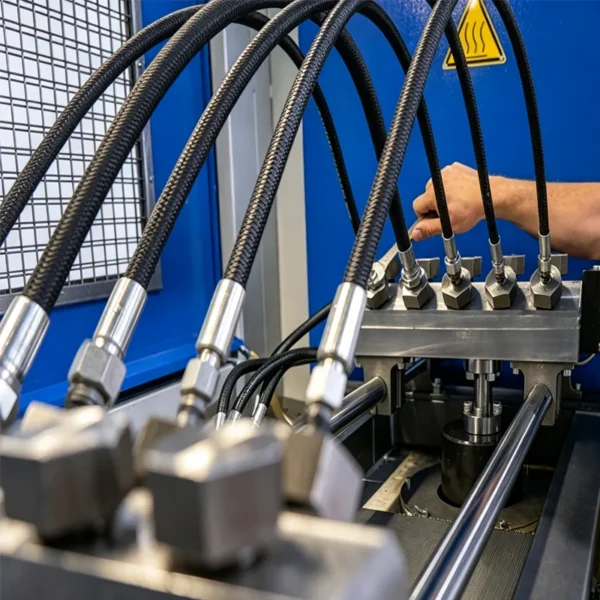
JEKARE’s shower product line is developed with hose and fitting components engineered as part of the overall shower system, rather than sourced as a generic add-on component after the fixture design is finalized — addressing directly the coordination gap that leads to mismatched hose and fixture quality in some sourcing programs.
For brands developing a complete shower system, JEKARE’s custom rain shower head programs include coordinated finish and material selection across the fixture, mounting hardware, and connecting hose, supporting the kind of consistent product presentation and durability alignment buyers evaluate when comparing a fully engineered system against components sourced separately. Buyers can review current test documentation through JEKARE’s quality inspection process when evaluating a new shower system program.
Shower hose specification deserves the same scrutiny bathroom brands typically apply to the fixture it connects to — standards like EN 1113 in Europe and ASME A112.18.1/CSA B125.1 in North America exist specifically because hose performance is testable, verifiable, and distinct from fixture performance. For B2B buyers, the practical takeaway is to request standard-specific hose test data as a standing part of supplier evaluation, rather than treating the hose as an interchangeable accessory that inherits the fixture’s quality by association.
Not automatically — a hose tested and compliant under EN 1113 isn’t necessarily compliant under ASME A112.18.1/CSA B125.1, so a brand selling into both regions should confirm separate standard compliance rather than assuming one certification covers both markets.
This depends on the specific product application and target price point — braided metal hoses generally offer strong burst resistance and kink resistance, while PVC and thermoplastic hoses offer flexibility and cost efficiency; the right choice depends on weighing these tradeoffs against the specific product’s use case.
There’s no universal mandatory interval, but a manufacturer should re-test if the hose material, construction, or supplier source changes — an unchanged, previously-qualified hose generally doesn’t require re-testing on a fixed schedule.
Length itself doesn’t directly change pressure rating requirements, but longer hoses may see more mechanical stress from handling and coiling over their lifespan, which is a separate durability consideration worth discussing with a manufacturer alongside pressure rating.
Not universally — a well-constructed rubber or PVC hose can perform reliably within its rated pressure range, while a poorly constructed braided hose can still fail; construction quality and testing data matter more than material category alone.
Jenny is a Manufacturing Engineer at JEKARE with over 20 years of experience in bathroom fixture development and OEM manufacturing. She specializes in component-level testing, hose and fitting assembly engineering, and multi-market standard compliance across shower and faucet product lines. With extensive experience supporting global bathroom brands and distributors through supplier qualification, Jenny focuses on helping buyers evaluate accessory components like hoses with the same rigor applied to the primary fixture.
1. Grand View Research — Hose Market Size, Share & Growth Report
https://www.grandviewresearch.com/industry-analysis/hose-market-report
2. European Committee for Standardization — EN 1113: Sanitary Tapware, Shower Hoses for Sanitary Tapware
https://www.en-standard.eu/din-en-1113-sanitary-tapware-shower-hoses-for-sanitary-tapware-for-water-supply-systems-of-type-1-and-type-2-general-technical-specification/
3. CSA/ASME — A112.18.1-2024/CSA B125.1-2024: Plumbing Supply Fittings
https://webstore.ansi.org/standards/csa/csaasmea112182024b125
✔ 20+ Years of OEM & ODM Manufacturing Experience
✔ Shower Systems Engineered With Coordinated Hose and Fixture Components
✔ Multi-Market Standard Compliance Testing Support
✔ Complete Faucet, Shower, and Accessory Solutions
✔ Finish-Matched Product Programs From Fixture to Hardware
✔ Reliable Manufacturing Partner for Global Distributors and Brands
Whether you’re evaluating hose specification for an existing shower line or developing a new coordinated shower system, JEKARE provides engineering-driven OEM manufacturing support from concept development through mass production.Contact our team to discuss your next bathroom product project.