Call us: +86-18965139230 | Mail to us: info@jekare.com

The global shower heads market was valued at USD 13.3 billion in 2024 and is projected to reach USD 20.41 billion by 2030, growing at a CAGR of 7.8%, according to Grand View Research. As this market continues to grow across multiple regions, the plumbing connection standards a shower head must match to actually install correctly remain genuinely different from market to market — a detail easy to overlook when “size” is treated as a single, simple spec.
Asking “are all shower heads the same size” conflates two entirely separate dimensions: the spray face diameter (which varies intentionally by product design, from compact fixed heads to large rain shower panels) and the connection thread where the fixture attaches to the shower arm (which is governed by regional plumbing standards, not product design choice). These require entirely different answers.
A brand sourcing across a product line with varying spray face sizes still needs every one of those products to share a correct, market-appropriate connection thread — spray face size is a design decision, connection thread is a compliance requirement, and treating them as the same kind of “size” spec creates confusion during sourcing conversations.
A supplier describing a shower head as having a “standard” or “universal” fit is making a claim that needs to be verified against a specific thread standard — because what counts as standard in one region (NPT in North America) is a different physical connection than what’s standard elsewhere (BSP in most other markets).
A shower head manufactured correctly to spec but with the wrong connection thread for its destination market isn’t defective — it simply won’t thread onto the shower arm fittings actually installed in that market without an adapter, which surfaces as an installation failure, not a manufacturing one.
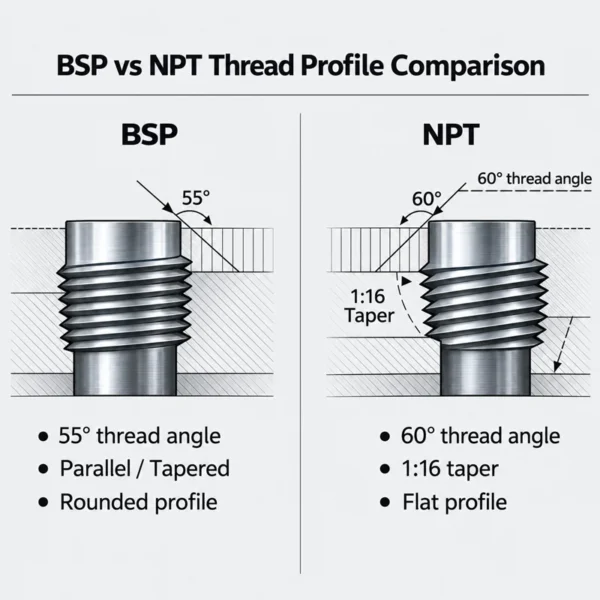
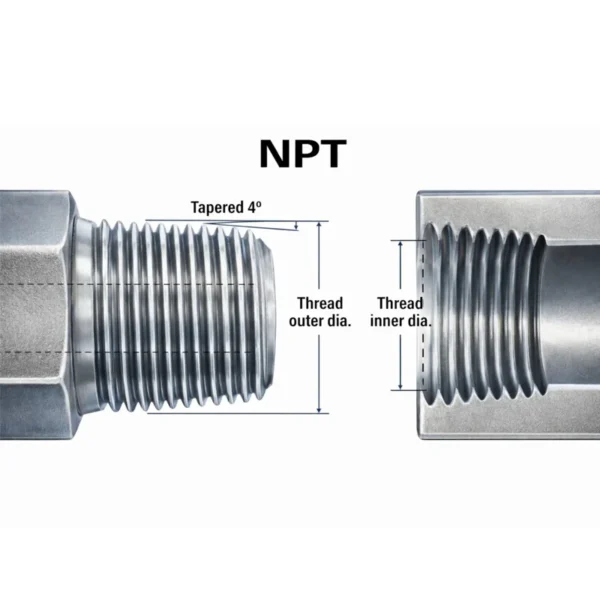
Shower arm and shower head connections in the United States and Canada are generally built to NPT (National Pipe Taper) thread standards under ASME B1.20.1, a 60-degree tapered thread form that seals via interference fit between mating threads, typically with PTFE tape.
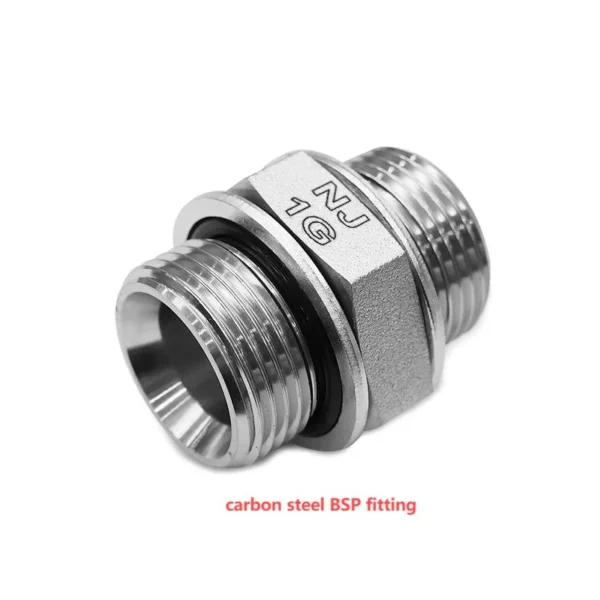
Most markets outside North America — including Europe, the UK, and much of Asia — use BSP (British Standard Pipe) threads, with BSPP (parallel) threads standardized under ISO 228-1. BSP and NPT threads are not dimensionally or geometrically interchangeable without an adapter fitting, regardless of how similar their nominal size designation appears on a spec sheet.
Shower heads and hand-held shower fittings fall under ASME A112.18.1/CSA B125.1, the plumbing supply fittings standard establishing performance requirements for these products in North America. Compliance with this standard confirms a product’s connection and performance meets recognized North American criteria — but it says nothing about whether that same connection thread will match the shower arm fittings installed in a different target market.
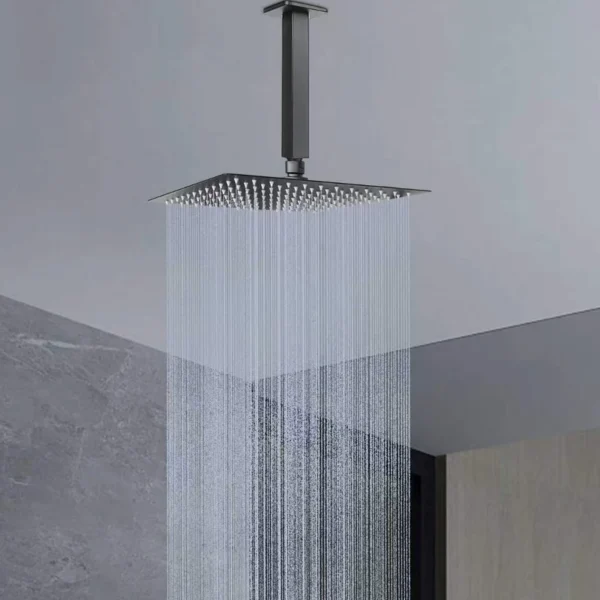
Over the past several years, our engineering team has supported global bathroom brands, distributors, and private-label customers developing shower products for different regional markets. One consistent observation we have made is that many installation issues are not caused by manufacturing defects — they often originate from unclear connection specifications during the early sourcing and product development stages.
In many buyer conversations, the term “shower head size” is used to describe multiple product dimensions at the same time. However, spray face diameter and connection thread serve completely different purposes. The spray face is primarily a design and performance choice, while the connection thread must match the plumbing standard of the destination market.
From an engineering perspective, connection compatibility needs to be treated as a controlled specification rather than an assumption. A shower head manufactured with accurate dimensions can still create installation problems if the thread standard does not match the local plumbing system. For export programs, this difference between NPT and BSP standards is one of the most common areas requiring early technical confirmation.
Our engineering team has observed that many compatibility risks can be eliminated before production by confirming several key details upfront, including target market, thread standard, installation environment, and required documentation. This approach prevents unnecessary adapter usage, installation delays, and potential after-sales issues caused by specification mismatch.
At JEKARE, we integrate connection compatibility review into the OEM/ODM development process. Before production begins, our engineering team works with customers to confirm market-specific thread requirements and verify critical connection dimensions through inspection procedures.
By treating connection standards as an engineering requirement rather than a packaging detail, JEKARE helps bathroom brands develop shower products that install correctly across different global markets while reducing avoidable sourcing risks.
When discussing “size” with a manufacturer, specify explicitly which dimension is being confirmed — spray face diameter, ceiling arm length, or connection thread — rather than using “size” as a single undifferentiated term that can be interpreted multiple ways.
Write the complete thread designation into any purchase order or spec sheet — “1/2 NPT” or “G1/2 BSPP,” not simply “standard” or “universal” — and confirm this matches the actual plumbing convention of the specific market the product will be installed in.
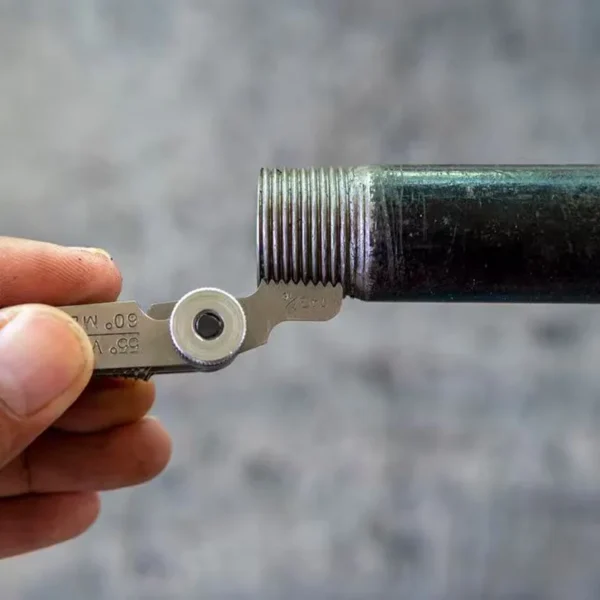
For a first production run with a new manufacturing partner, request that connection threads be verified with an actual thread gauge and documented, rather than relying solely on a written spec sheet confirmation.
While NPT-to-BSP adapters exist, relying on them as a routine solution adds a connection point, potential leak risk, and installer confusion — it’s a workaround, not a substitute for specifying the correct thread standard for the actual target market from the start.
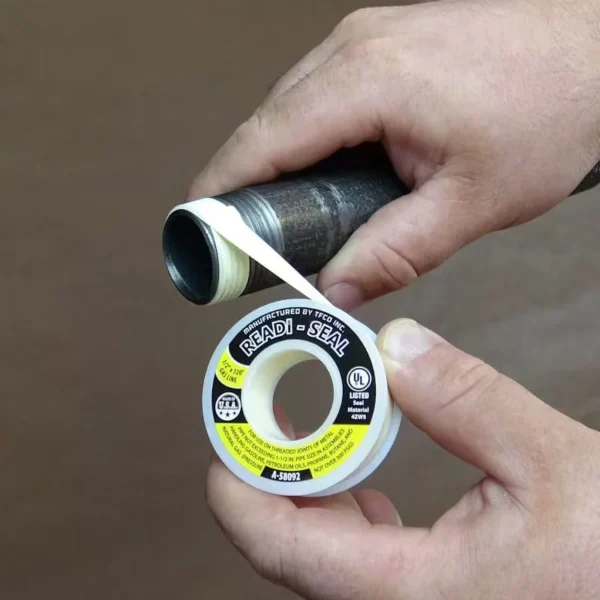

Connection thread compatibility connects directly to installation success rate and return volume across a brand’s distribution footprint — a shower head that performs perfectly but doesn’t thread correctly onto locally installed fittings generates the same field complaint and return cost as a genuinely defective product.
As brands increasingly source and distribute across multiple regional markets, treating connection thread as an explicitly verified specification — rather than an assumed default — becomes a meaningful part of avoiding avoidable installation failures at scale.
JEKARE’s shower product line, including custom rain shower head programs, is developed with connection thread standard confirmed against the target market at the design stage, addressing directly the NPT/BSP mismatch risk that surfaces in export programs sourced without explicit thread specification. JEKARE’s quality inspection process verifies connection dimensions as part of standard product qualification, and brands can confirm market-specific thread requirements directly through JEKARE’s OEM/ODM project process before production begins.
Shower heads aren’t a single universal size — spray face diameter varies intentionally by product design, while connection thread standard (NPT versus BSP) is governed by regional plumbing convention and must match the actual installation market. For B2B buyers, the practical takeaway is to treat connection thread as an explicit, written specification on every purchase order — particularly for export programs — rather than an assumed default that happens to work out.
No — spray face diameter and connection thread are independent design elements; a large rain shower panel and a compact fixed head can both use the same connection thread standard, or different ones, depending on the manufacturer’s design choice for each product.
Yes — this is common practice for brands selling into multiple regions, where the same external product design is manufactured with different connection threading to match each target market’s plumbing convention.
A basic thread pitch gauge and caliper can confirm thread count and outer diameter against published standard reference tables, though for production-scale verification, requesting the manufacturer’s own gauge-checked documentation is more practical.
No — manufacturers commonly produce to whichever thread standard a specific export order specifies, so buyers should never assume a default based on country of manufacture; the destination market’s convention should drive the specification.
It’s a separate specification from both spray face diameter and connection thread — ceiling or wall arm length affects installation reach and should be confirmed independently based on the specific mounting configuration required.
Susan is a Senior Shower Systems Engineer at JEKARE with over 20 years of experience in bathroom fixture development and OEM manufacturing. She specializes in connection standard compliance, dimensional specification verification, and multi-market product engineering across shower and faucet product lines. With extensive experience supporting global bathroom brands through export program development, Susan focuses on helping buyers avoid the kind of thread mismatches that only surface after a product reaches its destination market.