Call us: +86-18965139230 | Mail to us: info@jekare.com

Toilet seat development requires more than creating an attractive shape. A successful toilet seat must balance structural strength, user comfort, material performance, injection molding feasibility, assembly efficiency, and long-term durability.
Poor design decisions during the early development stage can lead to warpage after molding, cracking during use, hinge failures, poor installation experience, high tooling modification costs, and unstable mass production.
This Toilet Seat Design & DFM Guide from JEKARE explains the key engineering considerations for developing reliable toilet seat products from concept design to scalable OEM production.
A toilet seat structure must support repeated daily use while maintaining comfort, appearance, and dimensional stability.
Seat ring, cover, hinge system, mounting area, reinforcement ribs, buffer pads — each requiring different engineering considerations.
Toilet seats experience repeated mechanical loading during daily use. Potential failure points include seat cracking, hinge breakage, mounting deformation, and stress concentration areas.
A good design distributes force evenly, avoids concentrated stress, and reinforces high-load areas.
Important areas include the front loading area, side support areas, and hinge connection area.
Optimized rib structures, increased support thickness, reinforced mounting points.
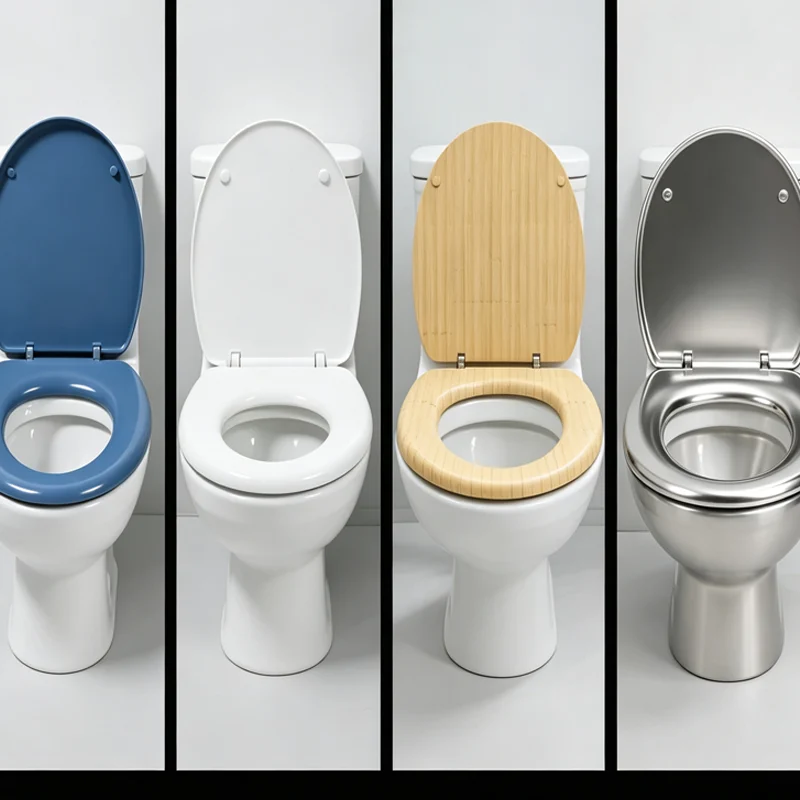
Material selection directly affects structural design and manufacturing strategy.
| Material | Advantages | Design Considerations | Suitable For |
|---|---|---|---|
| PP | Lightweight, excellent chemical resistance, cost-effective | Higher shrinkage, warpage control, rib optimization | Standard toilet seats, high-volume OEM programs |
| ABS | Premium appearance, better surface finishing | Stress cracking prevention, surface quality control | Premium toilet seats, customized designs |
| UF | Hard surface, ceramic-like appearance | Impact sensitivity, mold design control | Premium traditional bathroom products |
| PBT | Heat resistance, dimensional stability | — | Heated bidet seats, smart toilet components |
For full material property comparisons, see JEKARE’s Plastic Toilet Seat Material Selection Guide, PP Material Guide, and PBT Material Guide.
Wall thickness is one of the most important DFM factors in plastic toilet seat manufacturing. Poor wall thickness design can cause sink marks, internal stress, warpage, uneven cooling, and appearance defects.
Better mold filling, reduced deformation, improved production stability.
Ribs improve structural strength without significantly increasing material usage — increasing stiffness, reducing deformation, and improving load performance.
Avoid excessive rib thickness, sharp transitions, and poor draft design, which can cause sink marks, flow problems, and visible surface defects.
The hinge area is one of the highest-risk areas in toilet seat development, facing repeated opening and closing, installation tolerance requirements, stress concentration, and mechanical wear.
Evaluate hinge position, load transfer, fastening method, and reinforcement structure.
Soft-close systems require precise hinge alignment, stable mounting structure, and long cycle durability.
Toilet seats are typically large injection molded components requiring careful mold engineering.
Affects filling balance, weld lines, appearance, and mechanical strength.
Recommended for large seat structures, complex designs, and multi-functional products — helps predict filling behavior, warpage risks, and pressure distribution.
Important for dimensional stability, cycle time optimization, and production efficiency.
Large plastic components are sensitive to deformation after molding.
Uneven cooling, material shrinkage, uneven wall thickness, improper process settings.
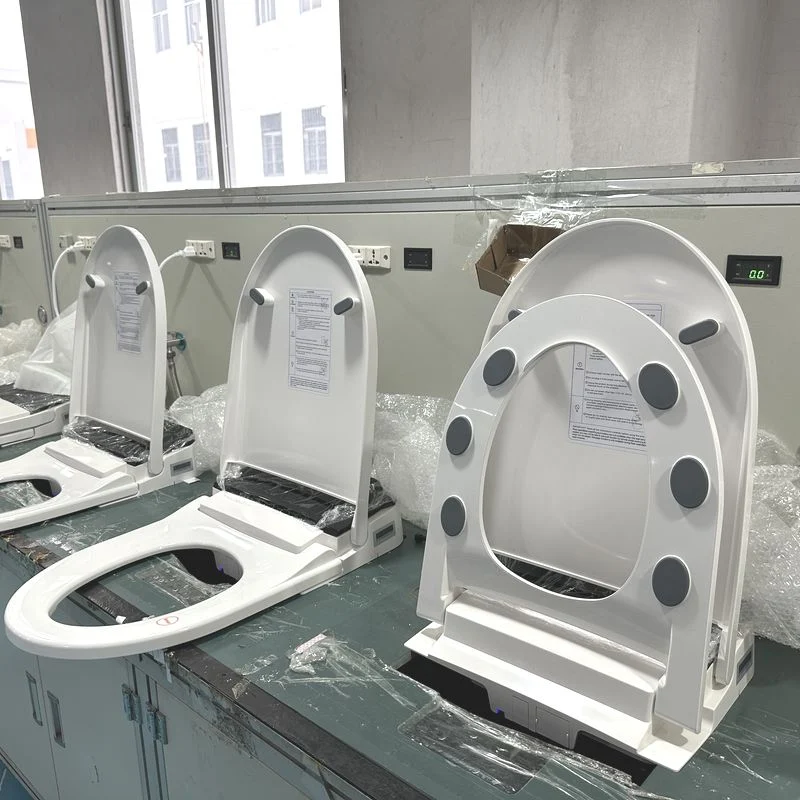
Modern toilet seats may include soft-close mechanisms, quick-release systems, heating systems, and bidet functions.
Important for hinge fitting, cover alignment, and functional movement.
Consider assembly sequence, production efficiency, and service requirements.
Before mass production, toilet seats should undergo engineering validation.
Static load testing, impact testing, hinge durability testing.
Opening/closing cycle testing, installation testing, alignment verification.
Chemical resistance, heat aging, moisture exposure.
The most important factors are structural strength, material selection, hinge reliability, and injection molding feasibility. A successful design must balance user experience and manufacturing requirements.
Common causes include uneven wall thickness, material shrinkage, cooling imbalance, and improper molding parameters. DFM review can identify these risks before tooling development begins.
It depends on the application: PP for cost-effective standard seats, ABS for premium appearance, UF for ceramic-like premium products, and PBT for heated and smart toilet systems. See JEKARE’s Plastic Toilet Seat Material Selection Guide for the full comparison.
Effective methods include early DFM review, simplified structures, optimized parting line design, and correct material selection from the outset.
JEKARE supports complete toilet seat OEM development, including:
Our engineering team helps global bathroom brands transform toilet seat concepts into reliable mass-production solutions — backed by ISO 9001:2015 certified manufacturing, following the standard development process outlined in JEKARE’s Bathroom Product Development Process Guide.
Share your drawings, samples, or product ideas with our engineering team.