Call us: +86-18965139230 | Mail to us: info@jekare.com

Bathroom products operate in environments where metal components and surface finishes are continuously exposed to water, humidity, cleaning chemicals, temperature changes, and daily handling. For faucets, shower systems, and bathroom hardware, corrosion resistance is a key indicator of long-term product reliability and customer satisfaction.
Salt spray testing is a widely used accelerated corrosion test method to evaluate the durability of chrome plating, PVD coatings, stainless steel surfaces, metal substrates, and decorative finishes.
This Bathroom Salt Spray Testing Guide from JEKARE explains the purpose, testing methods, standards, evaluation criteria, and engineering considerations behind corrosion resistance validation for bathroom OEM products.
Bathroom products must maintain appearance and function throughout years of daily use. Corrosion may cause surface discoloration, rust formation, coating peeling, loss of appearance quality, and product failure.
Salt spray testing is commonly applied to:
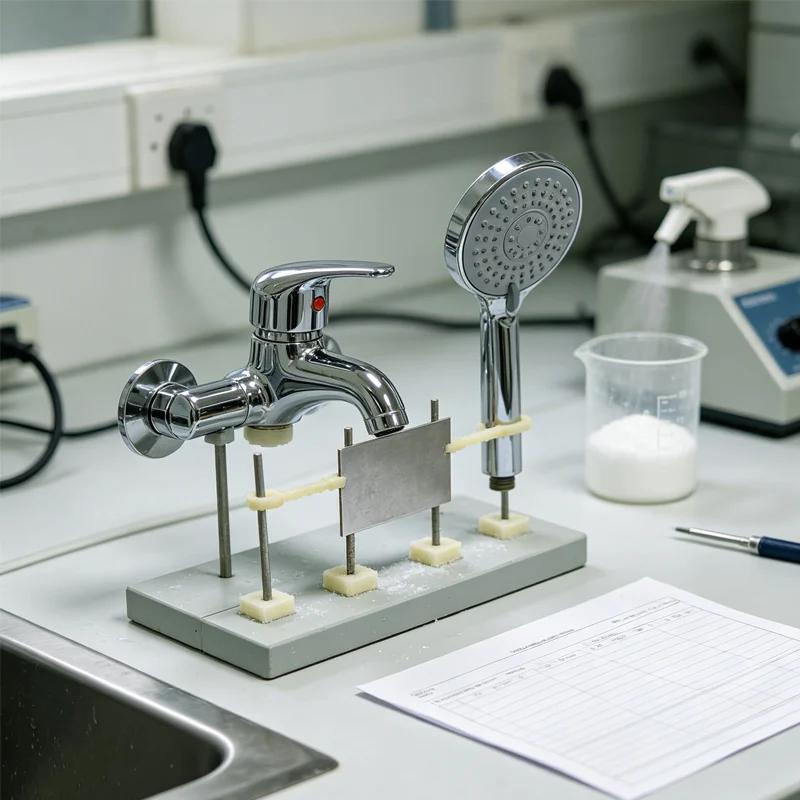
Salt spray testing accelerates corrosion by exposing products or coated samples to a controlled salt mist environment.
The testing process controls:
The test simulates aggressive environments and helps compare:
Different surface finishes may require different testing conditions.
| Method | Description | Typical Applications |
|---|---|---|
| NSS (Neutral Salt Spray) | Most common bathroom testing method — uses a neutral sodium chloride solution | Chrome plating, stainless steel, decorative metal finishes |
| ASS (Acetic Acid Salt Spray) | More aggressive corrosion environment | Higher corrosion resistance requirements, premium surface treatments, high-end faucets, luxury bathroom collections |
| CASS (Copper Accelerated Acetic Acid Salt Spray) | Most aggressive method, using copper additives | Premium decorative coatings, advanced plating systems |
NSS evaluation checks:
A professional salt spray test typically includes several stages.
Samples should represent actual production conditions, including:
Control:
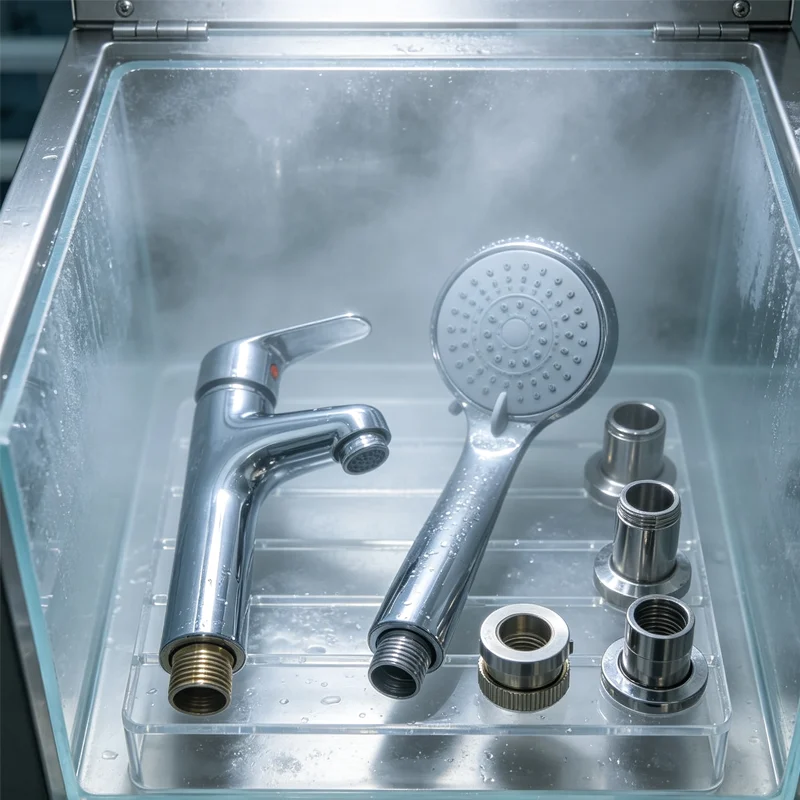
Products remain inside the test chamber for the specified period.
Common test durations:
Inspect:
Different finishes have different corrosion performance characteristics.
Chrome plating is a traditional bathroom finish valued for:
Testing focuses on:
See JEKARE’s Chrome Plating Guide for the full nickel/chrome layer engineering behind corrosion performance.
PVD coating is widely used for:
Testing evaluates:
See JEKARE’s PVD Coating Guide for the full coating technology detail.
Testing focuses on:
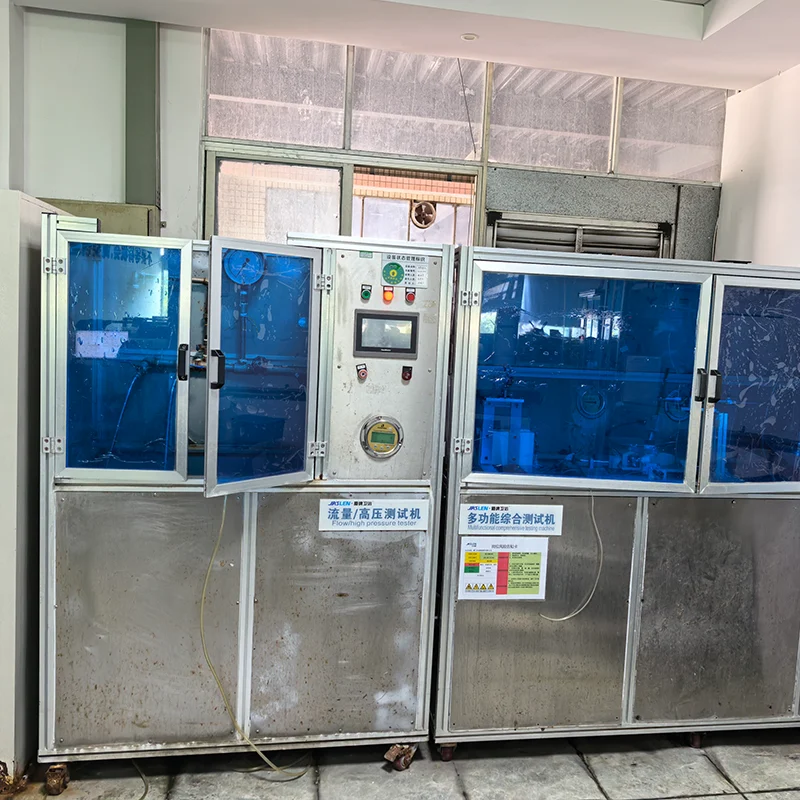
Evaluation includes:
Faucets are among the most demanding bathroom products for corrosion resistance.
Evaluate:
Evaluate:
Evaluate:
Typical faucet validation includes:
See JEKARE’s Faucet Testing & Validation Guide for the complete protocol.
Shower products face continuous humidity and water exposure.
Includes:
Evaluate:
See JEKARE’s Shower Head Testing Guide for the complete protocol.
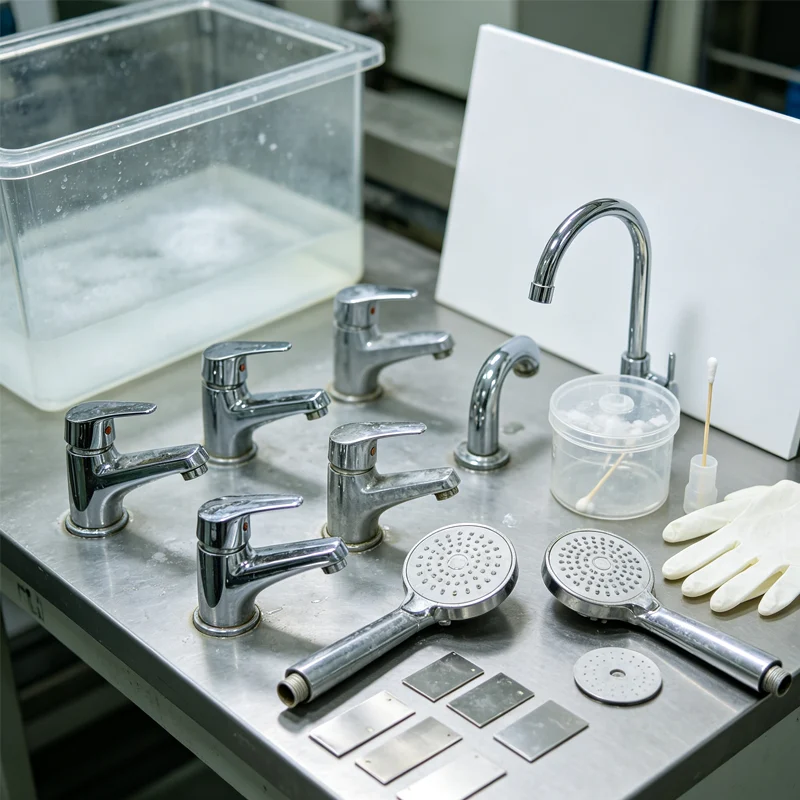
ASTM B117 is a standard practice for salt spray testing.
ISO 9227 is an international corrosion testing standard.
Many bathroom brands define additional requirements based on:
Salt spray testing results should be evaluated from multiple perspectives.
Check:
Check:
Evaluate:
Salt spray testing is valuable but should not be considered the only corrosion evaluation method.
Results may not fully represent:
Combine salt spray testing with:
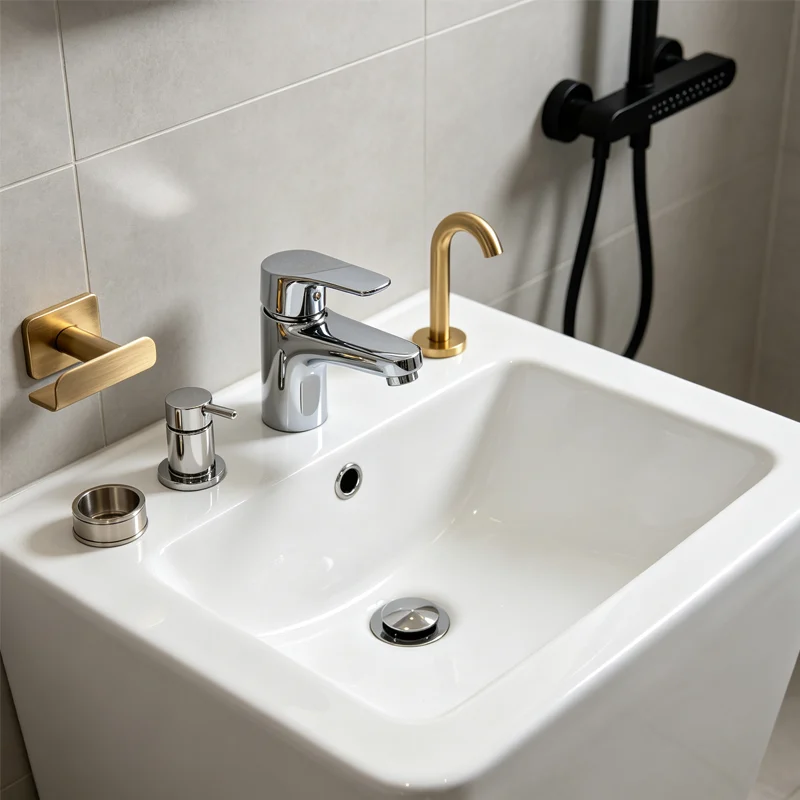
JEKARE integrates corrosion control throughout product development.
Includes:
Includes:
Includes:
Salt spray testing evaluates the corrosion resistance of metal surfaces, platings, and coatings to predict long-term surface durability.
Requirements depend on:
Common requirements range from:
Premium products often specify:
No.
Salt spray testing is an accelerated comparison method. Real-life performance also depends on:
Performance depends on process quality.
Generally:
can provide excellent corrosion resistance.
JEKARE supports bathroom brands with:
Our engineering team helps global bathroom brands develop products with reliable appearance performance and long-term durability — backed by ISO 9001:2015 certified manufacturing.
Share your product type, surface finish requirements, or testing specifications with our team.