Call us: +86-18965139230 | Mail to us: info@jekare.com

Blog EN

Table Of Contents

Bathroom Product Testing Guide: Engineering Validation for Reliable OEM Bathroom Products

Bathroom products operate in demanding environments involving continuous water exposure, pressure fluctuations, temperature changes, mechanical operation, cleaning chemicals, and high-frequency daily usage. A successful bathroom product must not only meet design requirements but also demonstrate reliable performance through systematic testing and validation.

Professional product testing helps identify potential risks before mass production, including water leakage, structural failure, surface degradation, functional problems, material performance issues, and production variation.

This Bathroom Product Testing Guide from JEKARE explains the key validation methods used to evaluate faucets, shower systems, toilet seats, smart bathroom products, and other OEM bathroom components.

1. Bathroom Product Testing System Overview

A complete bathroom product validation system evaluates multiple performance dimensions.

Testing Categories for Bathroom Products

Testing Category Purpose
Functional Testing Verify product operation
Hydraulic Testing Validate water performance
Mechanical Testing Confirm structural durability
Surface Testing Evaluate appearance durability
Material Testing Verify material performance
Reliability Testing Confirm long-term operation
Production Testing Ensure mass production consistency

Why Bathroom Product Testing Matters

Professional testing helps:

✓ Reduce product failures
✓ Improve customer satisfaction
✓ Reduce warranty risks
✓ Support market compliance
✓ Ensure stable mass production
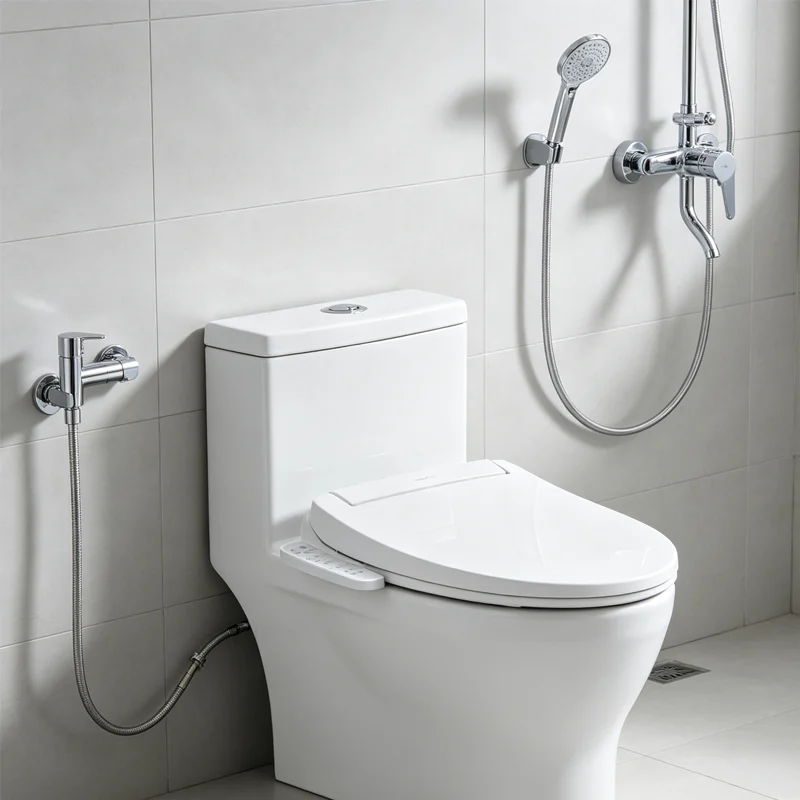
quality test

2. Hydraulic Testing for Bathroom Products

Water performance is one of the most critical validation areas for bathroom products, applicable to faucets, shower systems, bidet toilet seats, and valves.

Pressure Testing

Pressure testing verifies product strength under water pressure conditions by evaluating:

  • Body strength
  • Connection reliability
  • Internal sealing performance
  • Leakage prevention capability

For faucets, pressure testing checks body pressure resistance and cartridge sealing.

For showers, it evaluates housing strength and connection performance.

For bidet systems, it validates internal water path reliability and valve sealing.

Leakage Testing

Leakage testing identifies water leakage risks before shipment by inspecting:

  • Thread connections
  • O-rings
  • Sealing interfaces
  • Internal channels

This helps prevent:

  • Customer complaints
  • Water damage
  • Product recalls

Flow Performance Testing

Flow performance testing evaluates:

  • Flow rate
  • Water distribution
  • Spray performance

Applicable products include:

  • Faucets
  • Shower heads
  • Bidet systems

For detailed protocols, see JEKARE’s Faucet Testing & Validation Guide and Shower Head Testing Guide.

3. Mechanical Durability Testing

Bathroom products experience repeated mechanical operation throughout their lifetime.

Faucet Durability Testing

Faucet durability testing includes:

  • Cartridge cycle testing
  • Opening and closing performance evaluation
  • Handle operation testing
  • Internal wear resistance evaluation
  • Operating force testing
  • Mechanical stability verification

Toilet Seat Durability Testing

Toilet seat durability testing includes:
  • Load testing
  • Structural deformation evaluation
  • Safety performance verification
  • Hinge cycle testing
  • Soft-close mechanism reliability testing
  • Mounting durability testing

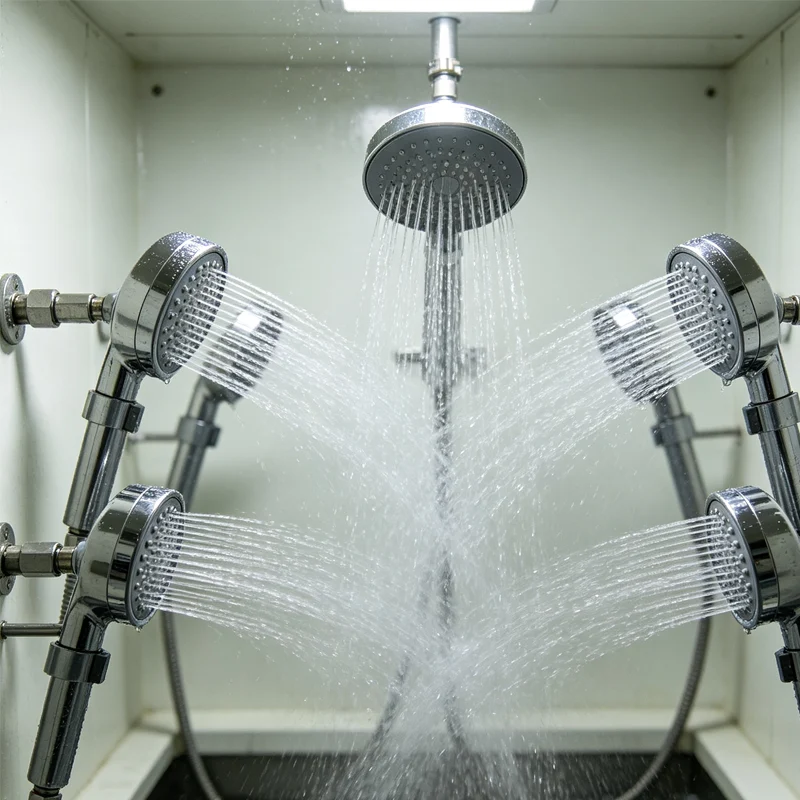
Spray water flow test

Shower Component Durability Testing

Shower durability testing includes:

  • Connection cycle testing
  • Adjustment mechanism testing
  • Assembly reliability testing

For full detail, see JEKARE’s Faucet Testing & Validation Guide and Toilet Seat Durability Testing Guide.

4. Surface Finish Testing

Bathroom products are highly appearance-focused. Surface performance directly affects brand perception, customer experience, and product lifetime.

Salt Spray Testing

Salt spray testing evaluates corrosion resistance and applies to:

  • Chrome plating
  • PVD coating
  • Stainless steel surfaces

Adhesion Testing

Adhesion testing checks:

  • Coating bonding strength
  • Surface durability

Scratch Resistance Testing

Scratch resistance testing evaluates:

  • Daily-use wear resistance
  • Surface protection performance

Appearance Inspection

Appearance inspection verifies:

  • Color consistency
  • Surface defects
  • Gloss level
  • Texture uniformity

For the full testing protocol, see JEKARE’s Bathroom Surface Finish Testing Guide.

5. Material Performance Testing

Material selection must be validated according to product requirements.

Plastic Material Testing

Plastic material testing covers:

Materials:

  • ABS
  • PP
  • PC
  • POM
  • PBT
  • PA

Testing includes:

  • Mechanical performance testing
    • Strength
    • Impact resistance
    • Hardness
  • Thermal performance testing
    • Heat resistance
    • Thermal aging
  • Environmental performance testing
    • Chemical resistance
    • Moisture exposure

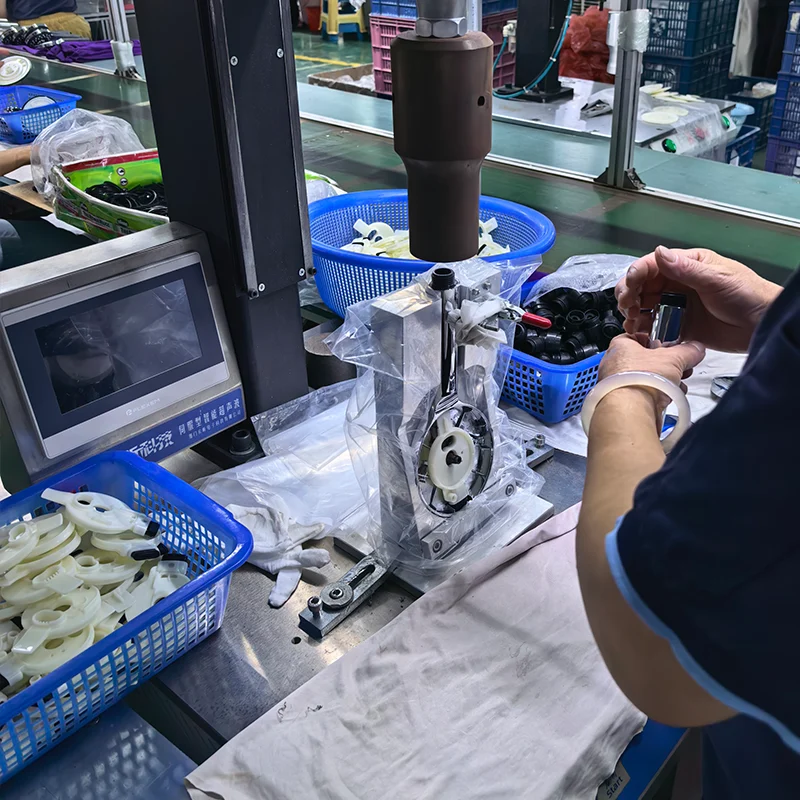
toilet lid covers

Silicone Material Testing

Silicone material testing applies to:

  • Valves
  • Seals
  • Shower nozzles
  • Gaskets

Testing includes:

  • Hardness testing
  • Compression performance
  • Aging resistance
  • Elastic recovery

Metal Material Testing

Metal material testing covers:

  • Brass
  • Stainless steel

Testing includes:

  • Material composition
  • Corrosion resistance
  • Mechanical properties

For the full testing protocol across all material types, see JEKARE’s Bathroom Material Validation Guide.

6. Reliability & Life Cycle Testing

Reliability testing simulates long-term product usage across different bathroom product categories.

Faucet Reliability Testing

Includes:

  • Valve movement cycles
  • Handle operation cycles
  • Pressure aging testing

Shower Reliability Testing

Includes:

  • Water pressure cycles
  • Spray performance stability
  • Connection durability testing

Toilet Seat Reliability Testing

Includes:

  • Hinge cycle testing
  • Load repetition testing
  • Soft-close durability testing

Smart Bathroom Reliability Testing

Includes:

  • Heating cycle testing
  • Electrical operation testing
  • Waterproof validation

For the full protocol, see JEKARE’s Bathroom Reliability Testing Guide.

7. Product Validation from Prototype to Mass Production

Professional OEM development requires different validation stages.

EVT (Engineering Validation Test)

Purpose:

  • Verify basic design feasibility
  • Confirm functional performance
  • Identify engineering risks

DVT (Design Validation Test)

Purpose:

  • Confirm final product design
  • Verify performance requirements
  • Validate reliability targets

PVT (Production Validation Test)

Purpose:

  • Verify manufacturing process
  • Confirm production consistency
  • Ensure quality stability

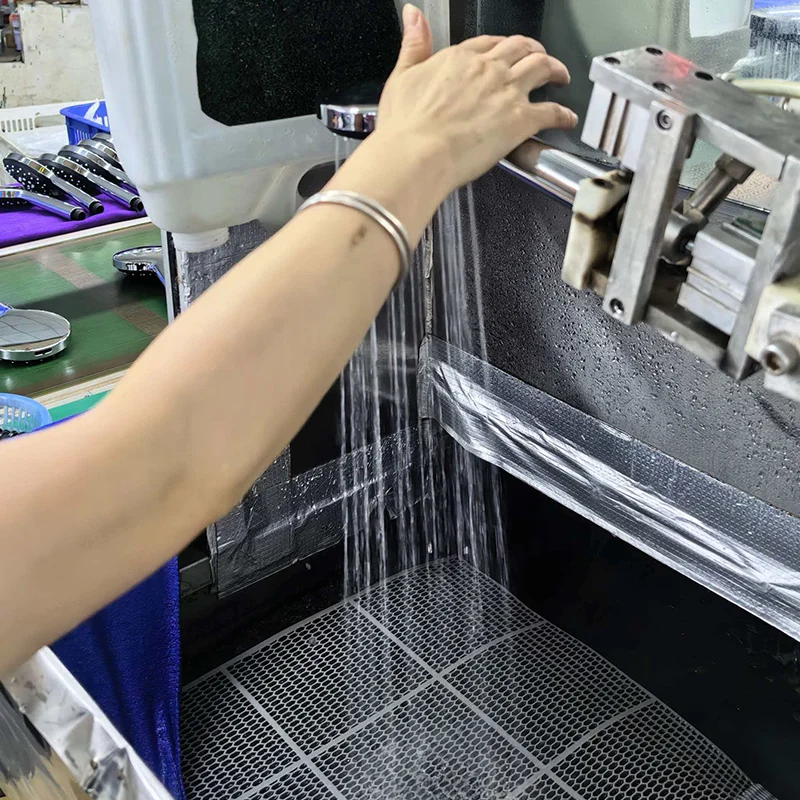
water tester

MP (Mass Production)

Includes:

  • Process monitoring
  • Quality inspection
  • Continuous improvement

For full detail on each stage, see JEKARE’s Bathroom Product Validation Process Guide.

8. Production Quality Testing

Testing does not stop after product approval. Mass production requires continuous quality control.

Incoming Quality Control (IQC)

Includes:

  • Raw materials inspection
  • Components inspection
  • Supplier quality verification

In-Process Quality Control (IPQC)

Includes:

  • Manufacturing parameter monitoring
  • Assembly process control
  • Product consistency verification

Final Quality Control (FQC)

Includes:

  • Appearance inspection
  • Function testing
  • Packaging inspection
  • Performance verification

Traceability Management

Includes:

  • Production records
  • Inspection data
  • Batch information

For full detail, see JEKARE’s Bathroom Quality Control Guide for OEM Production.

9. Testing Requirements by Product Category

Faucet Testing Requirements

Key testing focus:

  • Pressure testing
  • Leakage testing
  • Cartridge cycle testing
  • Corrosion testing

Shower Head Testing Requirements

Key testing focus:

  • Flow testing
  • Spray pattern testing
  • Pressure testing
  • Leakage testing

Toilet Seat Testing Requirements

Key testing focus:

  • Load testing
  • Hinge cycle testing
  • Impact testing

Bidet Seat Testing Requirements

Key testing focus:

  • Water system testing
  • Heating testing
  • Electrical testing
  • Waterproof testing

Bathroom Accessories Testing Requirements

Key testing focus:

  • Strength testing
  • Appearance inspection
  • Durability testing

FAQs

Why is bathroom product testing important?

Because bathroom products face continuous water exposure, mechanical operation, and environmental changes, testing ensures products perform reliably after market launch — when failures are far more costly to address.

What tests are required for faucets?

Common tests include:

  • Pressure testing
  • Leakage testing
  • Flow testing
  • Cartridge cycle testing
  • Surface corrosion testing

See the Faucet Testing & Validation Guide for the complete protocol.

How do you test toilet seat durability?

Typical validation includes:

  • Load testing
  • Hinge cycle testing
  • Impact testing
  • Environmental testing

See the Toilet Seat Durability Testing Guide for the complete protocol.

When should testing start during product development?

Testing should begin during prototype development and continue through:

  • EVT
  • DVT
  • PVT
  • Mass production

See the Bathroom Product Validation Process Guide for how these stages fit together.

JEKARE Quality & Testing Support

JEKARE provides complete bathroom product validation support, including:

Product Testing Support

  • Product testing planning
  • Hydraulic performance testing
  • Mechanical durability testing
  • Surface finish evaluation
  • Material validation
  • Production quality control

Our engineering and quality teams help global bathroom brands reduce development risks and achieve reliable OEM production — backed by ISO 9001:2015 certified manufacturing.

Need a Bathroom Product Testing Plan?

Share your product type, specifications, drawings, or target market requirements with our team.

Request A Call Back

Share your drawings, samples, or product requirements to receive an initial engineering and manufacturing review from JEKARE.