Call us: +86-18965139230 | Mail to us: info@jekare.com

Developing a successful bathroom product requires more than manufacturing capability. A reliable OEM partner must support the complete product development journey, including product concept evaluation, engineering design, material selection, DFM analysis, tooling development, prototype validation, quality testing, and mass production.
Without a structured development process, bathroom projects may face unexpected tooling modifications, product performance issues, delayed launch schedules, unstable production quality, and higher development costs.
This Bathroom OEM Development Process Guide from JEKARE explains how professional bathroom brands can move from an initial idea to reliable mass production through an engineering-driven development approach.
A professional bathroom OEM development process typically follows these stages:
Product Concept → Engineering Review → DFM Analysis → Tooling Development → Prototype Sampling → Testing & Validation → Production Approval → Mass Production
Each stage reduces technical risks before moving to the next phase.
Why a structured OEM process matters:
✓ faster product launch
✓ lower tooling risks
✓ better cost control
✓ stable product quality
✓ long-term supply reliability
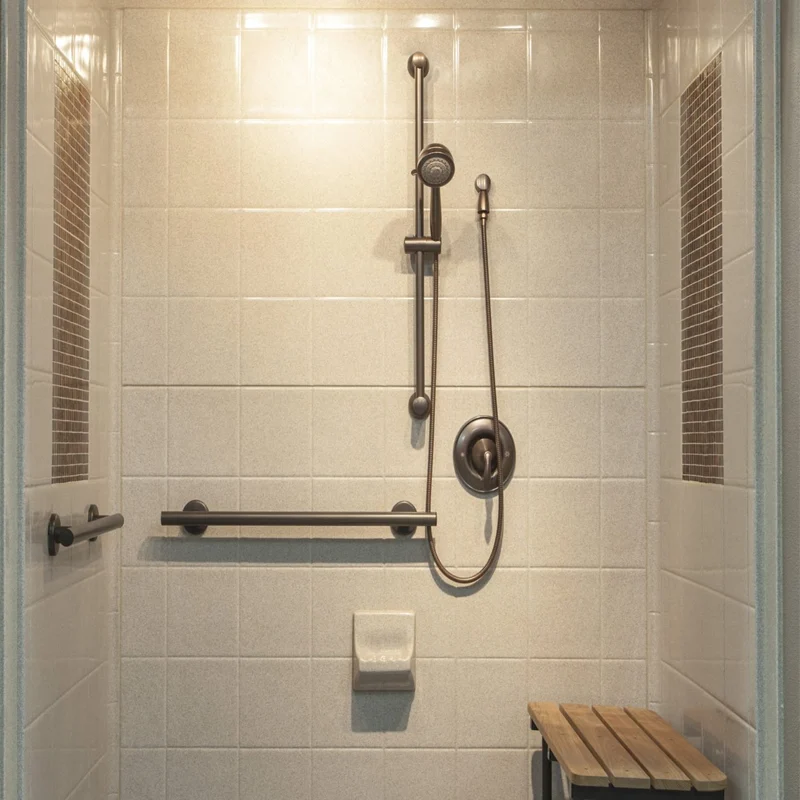
Every successful bathroom product starts with a clear understanding of product goals.
Product requirements: product category, target market, functional requirements, design expectations.
Commercial requirements: target price, estimated volume, launch timeline, market positioning.
Technical requirements: material requirements, performance expectations, certification needs.
Typical input from customers: product sketches, existing samples, reference products, 3D files, technical drawings.
Before tooling, engineering feasibility should be confirmed.
Product structure review: component design, assembly method, functional structure.
Material evaluation: performance requirements, manufacturing suitability, cost optimization — examples include ABS, PP, PC, POM, PBT, PA, and silicone. See JEKARE’s Material Guides for the full material selection library.
Manufacturing feasibility: injection molding, metal processing, surface finishing, assembly requirements.
Engineering output:
✓ design recommendations
✓ manufacturing suggestions
✓ risk identification
✓ cost optimization opportunities
DFM is one of the most important stages in bathroom OEM development. The goal: design products that are attractive, functional, and manufacturable.
Plastic product DFM: wall thickness, draft angle, rib design, shrinkage control, warpage risk.
Metal product DFM: casting structure, machining requirements, surface treatment, assembly feasibility.
Assembly DFM: component quantity, assembly sequence, production efficiency.
DFM benefits:
✓ reduce tooling modifications
✓ improve production stability
✓ control manufacturing cost
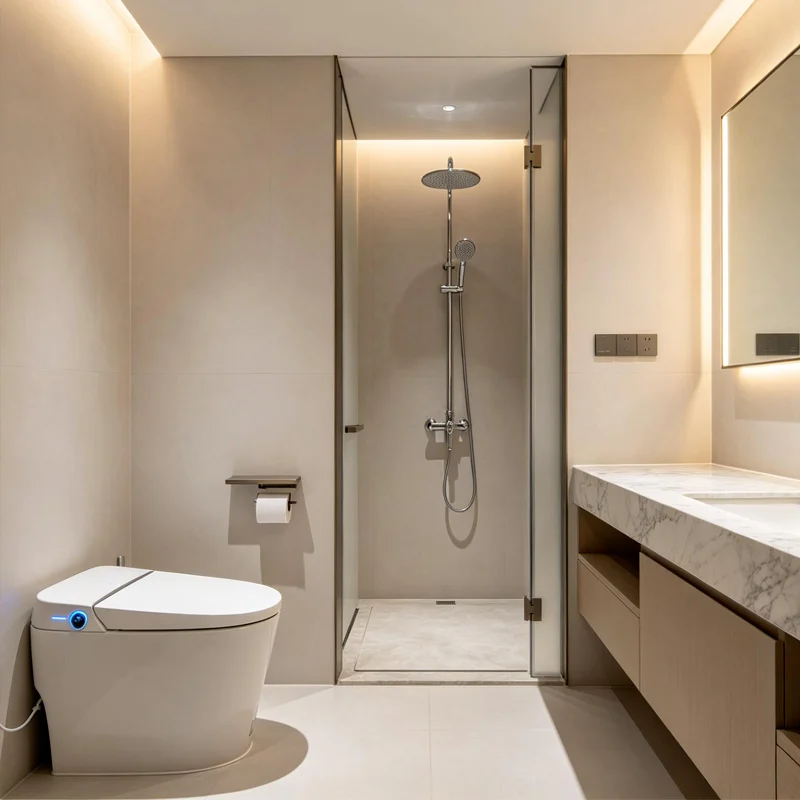
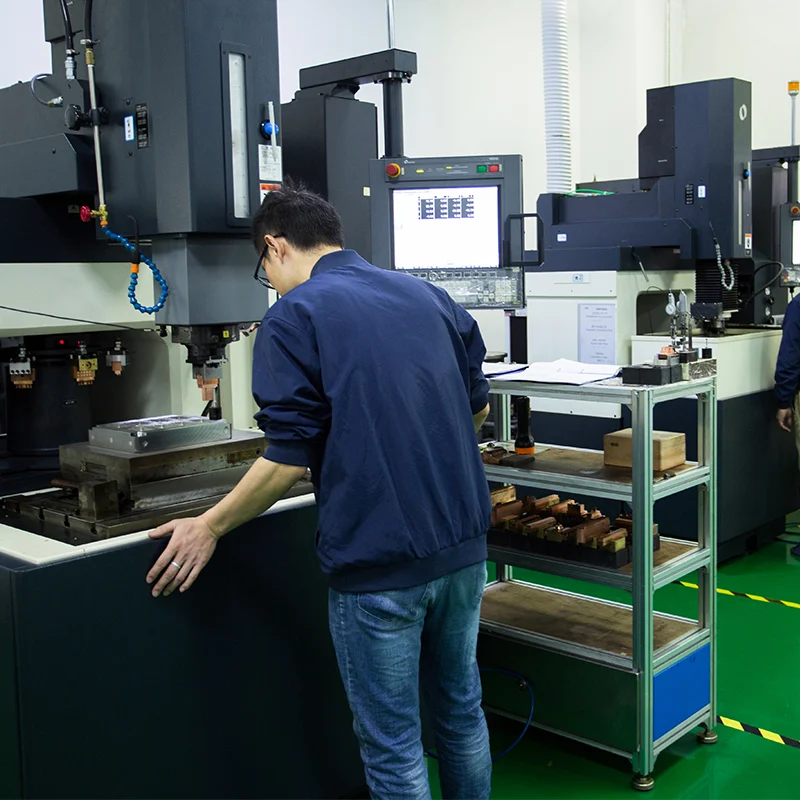
After design approval, tooling development begins.
Mold design: 3D mold design, mold structure review, gate design, cooling design.
Mold manufacturing: CNC machining, EDM processing, polishing, mold assembly.
Tooling validation: trial molding, sample inspection, design optimization.
Applicable processes: plastic injection molds, silicone/LSR molds, metal tooling, precision components. See JEKARE’s Bathroom Mold Design Guide and Bathroom Injection Molding Guide for the full engineering detail behind this stage.
Prototype samples verify whether the product meets design expectations.
Appearance review: surface quality, color, finish consistency.
Functional testing: product operation, water performance, assembly function.
Engineering verification: dimensions, fit, manufacturing feasibility.
Typical sample stages:
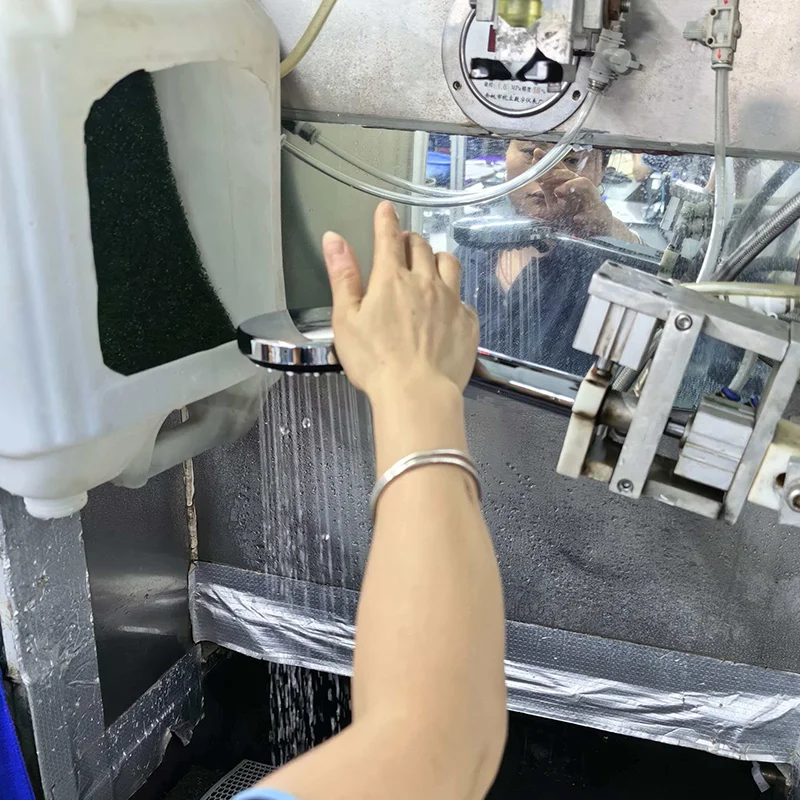
Before mass production, products require comprehensive performance validation.
Hydraulic testing for faucets, shower systems, and bidet products.
Mechanical testing for cycle, load, and durability.
Surface testing for corrosion, adhesion, and scratch resistance.
Material testing for mechanical, thermal, and chemical performance.
See JEKARE’s Bathroom Product Testing Guide for the full validation framework, and the dedicated Faucet Testing & Validation Guide, Shower Head Testing Guide, and Toilet Seat Durability Testing Guide for product-specific protocols.
Before full production, production capability must be verified.
PVT purpose: confirm manufacturing process stability, product consistency, and quality control effectiveness.
Production process: process parameters, assembly procedures, inspection methods.
Quality system: inspection standards, traceability, documentation.
Output stability: production efficiency, defect rate, repeatability.
See JEKARE’s Bathroom Product Validation Process Guide for how EVT, DVT, and PVT fit together as a complete validation sequence.
After approval, products move into regular production.
Manufacturing: injection molding, metal processing, surface finishing, assembly.
Quality control: incoming inspection, process inspection, final inspection.
Supply management: production scheduling, packaging, shipment coordination.
OEM partnership does not end after production begins.
Product optimization: cost reduction, material improvement, assembly optimization.
Quality improvement: failure analysis, process improvement, preventive actions.
Product line expansion: support for new models, new finishes, new functions.
For customers who want the short version, JEKARE’s development pathway breaks down into five practical steps:
Share your product idea — drawings, samples, product concepts.
Engineering review — JEKARE evaluates feasibility, materials, manufacturing approach.
Development & tooling — DFM, mold development, prototype samples.
Validation — product testing, quality verification.
Mass production — manufacturing, inspection, global delivery.
Development time depends on product complexity, tooling requirements, and testing requirements. Simple products may require several weeks, while complex smart bathroom products require longer validation cycles.
Yes. JEKARE supports concept evaluation, engineering review, product development, and manufacturing from early ideas through to mass production.
No. Customers can provide samples, sketches, reference products, or simply product requirements — JEKARE’s engineering team can support development from there.
Examples include faucets, shower heads, shower systems, toilet seats, heated bidet seats, and bathroom accessories.
JEKARE provides complete bathroom product development services, including:
Our engineering-driven approach helps global bathroom brands transform product concepts into reliable, scalable manufacturing solutions — backed by ISO 9001:2015 certified manufacturing.
Share your product idea, drawings, samples, or requirements with our engineering team.