Call us: +86-18965139230 | Mail to us: info@jekare.com

The global shower heads market was valued at USD 13.3 billion in 2024 and is projected to reach USD 20.41 billion by 2030, growing at a CAGR of 7.8%, according to Grand View Research, with rain and multi-nozzle configurations representing a growing share of that demand as brands respond to consumer interest in hotel-style bathroom experiences.
Rain shower heads present a genuinely different measurement problem than a standard single-outlet fixture: a large overhead panel with dozens of individual nozzles doesn’t map cleanly onto flow-rate rules originally written with a single-outlet shower head in mind. As product design has grown more complex, the regulatory definitions governing how flow rate is measured and reported have had to catch up — and have shifted more than once in recent years.
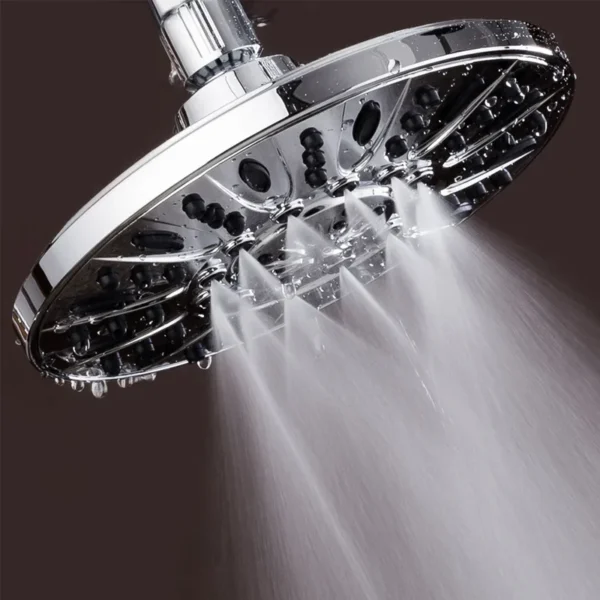
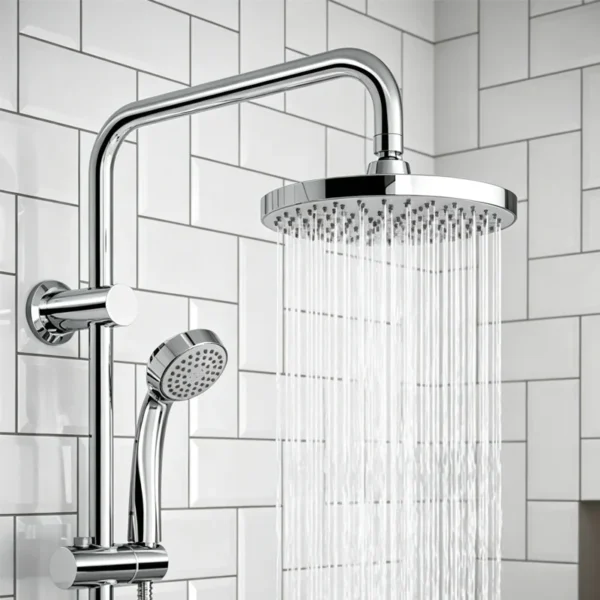
A “2.0 gpm” claim on a rain shower head spec sheet means something different depending on whether it reflects total output across all nozzles or a per-nozzle measurement. A brand that repeats a supplier’s flow-rate claim without understanding which measurement method it reflects risks publishing a water-use number it can’t actually defend.
Unlike a standard shower head with a single outlet, a rain shower panel’s total water output depends on nozzle count and density, not just a single flow-rate figure — which means two products both labeled “2.0 gpm” can deliver meaningfully different total water volumes depending on how that figure was calculated.
Retail platforms, green-building certifications, and hospitality sustainability programs increasingly require accurate water-use documentation. A brand that can’t substantiate a flow-rate or water-savings claim on request faces real risk beyond a simple marketing correction.
According to the EPA’s WaterSense program, showering accounts for nearly 17% of residential indoor water use, adding up to nearly 40 gallons per day for the average family — a figure driven by the combination of a shower head’s flow rate (gallons per minute) and shower duration, meaning actual water use scales directly with both variables, not flow rate alone.
The EPA notes that standard showerheads use 2.5 gallons per minute, while showerheads earning the WaterSense label must demonstrate a maximum of 2.0 gpm while still meeting spray coverage and intensity performance criteria — giving buyers two clear, named benchmarks to check any flow-rate claim against, rather than accepting a supplier’s number without a reference point.
In April 2025, the U.S. Department of Energy issued a final rule rescinding the 2021 federal definition of “showerhead” that had required multi-nozzle shower systems to be measured as a single combined 2.5 gpm unit across all nozzles, reverting to the narrower pre-2021 statutory definition. This is directly relevant to rain shower head flow-rate claims: a multi-nozzle rain panel that would have needed to stay under a combined 2.5 gpm limit under the 2021 rule is no longer bound by that aggregation requirement at the federal level, even though WaterSense’s voluntary 2.0 gpm labeling standard remains unchanged. A flow-rate claim on a rain shower head published today may reflect either measurement approach, depending on when it was calculated and which standard the manufacturer references.
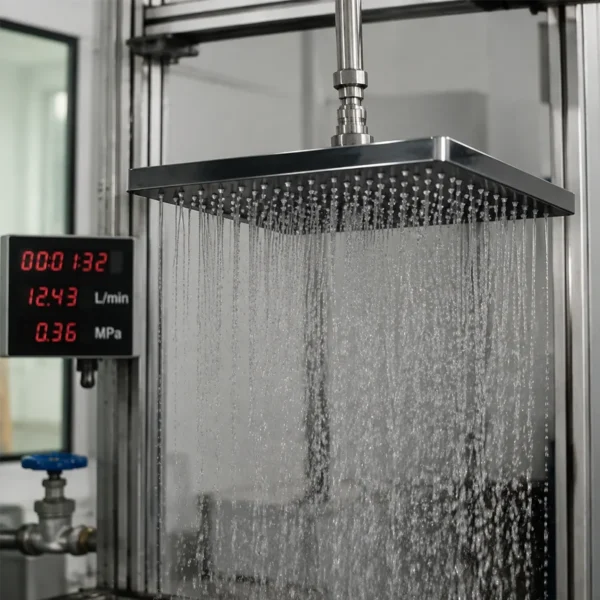
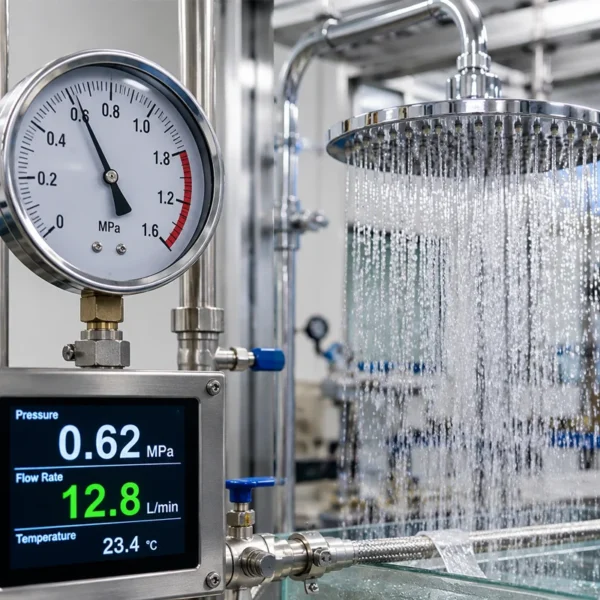
Our engineering team frequently sees OEM buyers focus on the rated GPM value listed on a shower head specification sheet, while overlooking the testing conditions and engineering variables behind that number.
For rain shower heads, especially large-format and multi-nozzle designs, flow-rate verification is not simply a compliance checkbox. During product development discussions, brands often need to balance three competing requirements: consistent spray coverage, acceptable water pressure performance, and regulatory flow limitations.
From a manufacturing perspective, the challenge is rarely achieving a target flow number alone — the challenge is maintaining that performance consistently across different production batches. Nozzle diameter, spray plate thickness, internal water channels, flow restrictor positioning, and inlet structure all influence the final measured output.
We recommend that OEM buyers evaluate suppliers based on their ability to provide traceable flow testing data, not only a printed specification. A reliable manufacturing partner should be able to explain:
In our experience supporting global bathroom brands, the most successful shower programs are developed when flow engineering is considered during the design stage — not adjusted after production begins. By integrating nozzle optimization, tooling control, and validation testing early in the OEM development process, brands can achieve a better balance between water efficiency, user experience, and long-term product reliability.
Ask a manufacturer for both the per-nozzle flow rate and the total aggregate output at a specified water pressure, rather than accepting a single gpm figure without knowing which measurement it represents.
Flow rate figures are pressure-dependent — request the specific pressure point (commonly tested at 20, 45, or 80 psi) a manufacturer’s flow-rate claim was measured at, since a figure quoted at one pressure isn’t directly comparable to a figure quoted at another.
Ask explicitly whether a flow-rate or water-savings claim is based on the federal 2.5 gpm standard, the voluntary WaterSense 2.0 gpm label, or a different regional benchmark — and confirm this in writing before repeating the claim in your own marketing materials.
If publishing a water-use estimate (e.g., “gallons per shower”), use the actual flow rate × a clearly stated shower duration assumption, and cite both figures — an unqualified single number invites the same kind of scrutiny a supplier’s own unverified claim would.

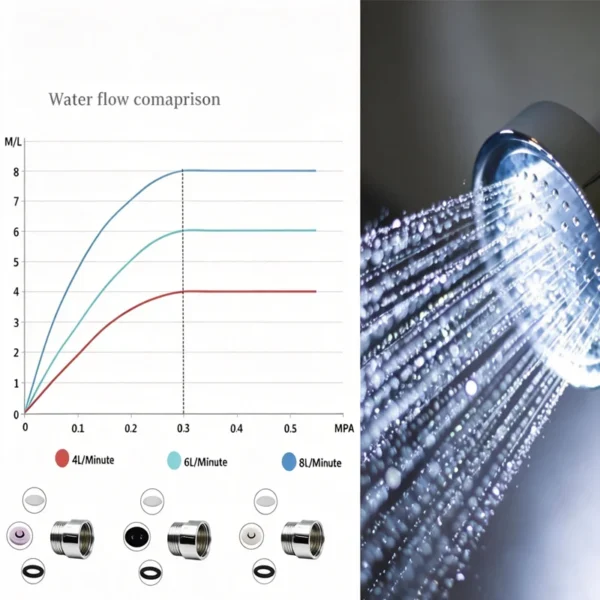
Verified flow-rate data connects directly to how a brand can credibly market water efficiency — a claim a brand can’t trace back to a specific, named test condition is a liability the moment a retailer, certification body, or customer asks for substantiation. Treating flow-rate verification as a one-time spec-sheet checkbox, rather than an ongoing part of supplier documentation, leaves brands exposed exactly as multi-nozzle measurement rules continue to shift.
More broadly, as flow-rate regulation continues to move — the 2025 federal rule change being the clearest recent example — brands that build the habit of verifying and re-confirming water-use claims with their manufacturing partner are better positioned to update marketing and compliance documentation quickly, rather than discovering a claim has become outdated only when a customer or regulator flags it.
JEKARE’s rain shower head line is engineered using validated flow-profiling to confirm actual output at specified pressure conditions, rather than relying on a calculated or estimated figure — addressing directly the per-nozzle versus aggregate measurement question that comes up most often when buyers evaluate flow-rate claims.
Nozzle geometry and spray plate design on JEKARE’s custom rain shower head products are developed to deliver consistent spray coverage at a documented flow rate, which allows a brand to publish a water-use figure backed by actual test data rather than an assumption based on panel size alone. Buyers can review current test documentation directly through JEKARE’s quality inspection process when evaluating a new rain shower head program.
“How much water does a rain shower head use” doesn’t have a single universal answer — it depends on nozzle count, testing pressure, and which regulatory standard a flow-rate figure was measured against, a picture that became more complicated after the U.S. federal definition of “showerhead” changed again in 2025. For B2B buyers, the practical takeaway is to treat flow-rate and water-savings claims as verifiable data points requiring specific documentation, not marketing language to repeat without confirmation.
Not necessarily — total water output depends on nozzle count and flow rate per nozzle, not panel size alone, so a larger panel with fewer, lower-flow nozzles can use less water than a smaller panel with more nozzles at higher individual flow.
It’s generally calculated as flow rate (gallons per minute) multiplied by shower duration in minutes — any published “gallons per shower” figure should specify both the flow rate and the duration assumption used, since changing either input changes the result significantly.
No — WaterSense labeling requires third-party certification against EPA’s specific criteria; a product cannot be marketed as WaterSense certified based solely on a manufacturer’s internal testing or self-declaration.
No, it specifically affects the U.S. federal regulatory definition and does not alter flow-rate requirements in other markets, which may follow entirely different national or regional standards for shower fixtures.
It’s worth confirming — while an existing WaterSense-labeled product’s 2.0 gpm certification isn’t affected by the federal definitional change, any marketing claim that previously referenced the now-superseded 2021 aggregation rule should be reviewed to ensure it still accurately reflects current federal measurement requirements.
Susan is a Senior Shower Systems Engineer at JEKARE with over 20 years of experience in bathroom fixture development and OEM manufacturing. She specializes in flow-rate engineering, nozzle and spray-plate design, and flow verification testing across rain, handheld, and multi-function shower systems. With extensive experience supporting global bathroom brands and distributors through product data verification, Susan focuses on helping buyers distinguish between marketing-language water-use claims and figures backed by actual, documented flow testing.
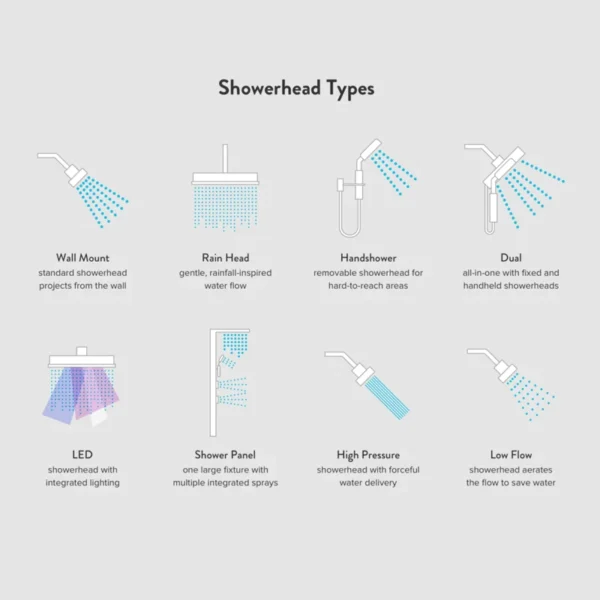
1. Grand View Research — Shower Heads Market Size To Reach $20.41 Billion By 2030
https://www.grandviewresearch.com/press-release/global-shower-heads-market
2. U.S. Environmental Protection Agency — WaterSense Showerheads
https://www.epa.gov/watersense/showerheads
3. U.S. Department of Energy — Energy Department Simplifies Water Conservation Standards by Repealing Cumbersome Legal Definition of “Showerhead”
https://www.energy.gov/cmei/articles/energy-department-simplifies-water-conservation-standards-repealing-cumbersome-legal
✔ 20+ Years of OEM & ODM Manufacturing Experience
✔ Validated Flow-Profiling and Documented Test Data
✔ Complete Rain, Handheld, and Multi-Function Shower Solutions
✔ Precision Nozzle Engineering for Consistent Spray Coverage
✔ Flexible Configuration Across Finish and Nozzle Design Options
✔ Reliable Manufacturing Partner for Global Distributors and Brands
Whether you’re verifying flow-rate claims on an existing product line or developing a new rain shower head program, JEKARE provides engineering-driven OEM manufacturing support from concept development through mass production.Contact our team to discuss your next bathroom product project.