Call us: +86-18965139230 | Mail to us: info@jekare.com

The revised ISO 9001:2026 has now been published, the first update to the world’s most widely used quality management standard since 2015, according to DNV. Organizations certified to ISO 9001:2015 must transition to the new edition within three years. For bathroom brands, this means a supplier’s certificate is now a moving reference point. Buyers should ask which edition a factory holds and when its transition is planned.
A quality management certificate describes a system. It does not show what happens to a faucet body between casting and the plating line. In brass fixtures, most field failures trace back to a specific production stage: porosity from casting, a dimensional drift in machining, or a thin or poorly adhered plating layer. Brands that audit by stage find problems earlier than brands that audit only the finished product.
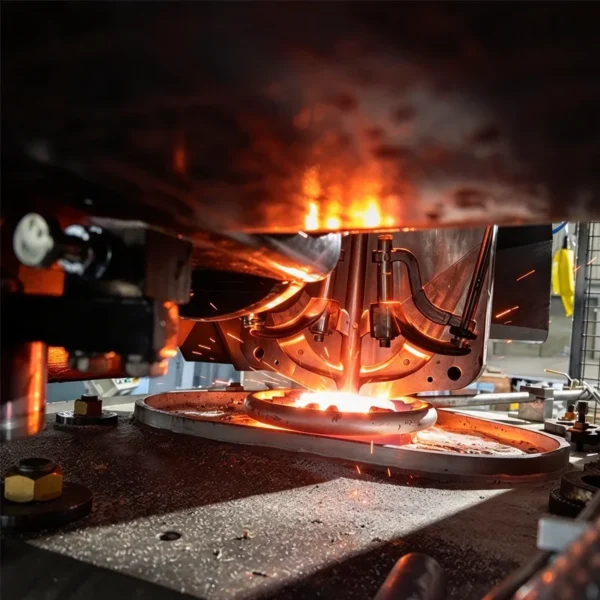

Casting porosity may be invisible until machining opens the surface. A polishing flaw may only show after plating. A leak may only appear under pressure testing. A defect missed at one stage is more expensive to find at the next, and cheapest of all to prevent at the source.
A single end-of-line pass rate hides where scrap and rework are generated. Buyers who ask for yield by process stage can see whether a supplier controls its process or simply inspects out defects at the end.
A faucet can leak or fail internally without the customer noticing. A blistered or discolored finish is obvious immediately. That is why plating quality drives a large share of visible warranty complaints, even when the underlying casting and machining are sound.
ISO 1456 sets requirements for decorative nickel, nickel plus chromium, copper plus nickel, and copper plus nickel plus chromium coatings. These apply to copper alloys such as brass, as well as to steel, zinc alloys and aluminium. The standard covers coating types, chromium thickness, thickness measurement methods, and corrosion resistance in CASS and salt spray tests. It also notes that multilayer nickel coatings generally protect better than single-layer coatings of equal thickness. A plating spec that names no layer structure or thickness gives a buyer nothing to verify.
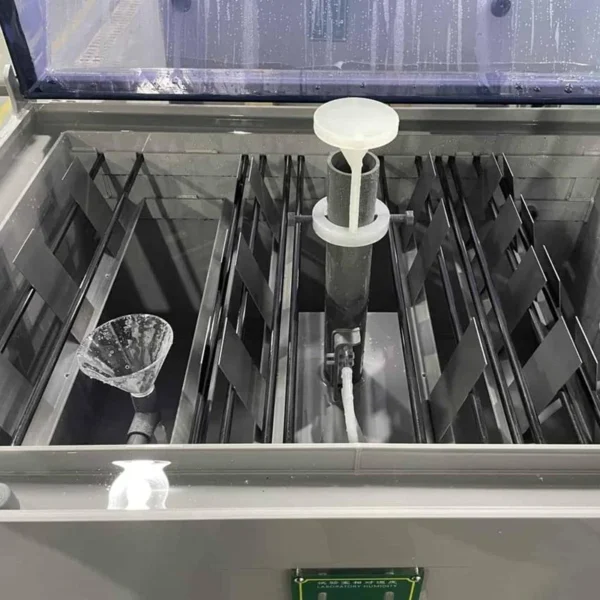
ISO 9227:2022 covers the neutral salt spray (NSS), acetic acid salt spray (AASS) and copper-accelerated acetic acid salt spray (CASS) tests. The standard describes these tests as particularly useful for detecting discontinuities such as pores in coatings. It also says AASS and CASS are especially suited to decorative copper-nickel-chromium coatings. A salt spray result is only meaningful if it names the test method, duration and acceptance criterion.
“Passed salt spray” is not a specification. Hours under NSS, AASS and CASS are not interchangeable, because the test conditions differ. A buyer comparing two suppliers’ results must confirm both were run under the same method before treating the numbers as comparable.
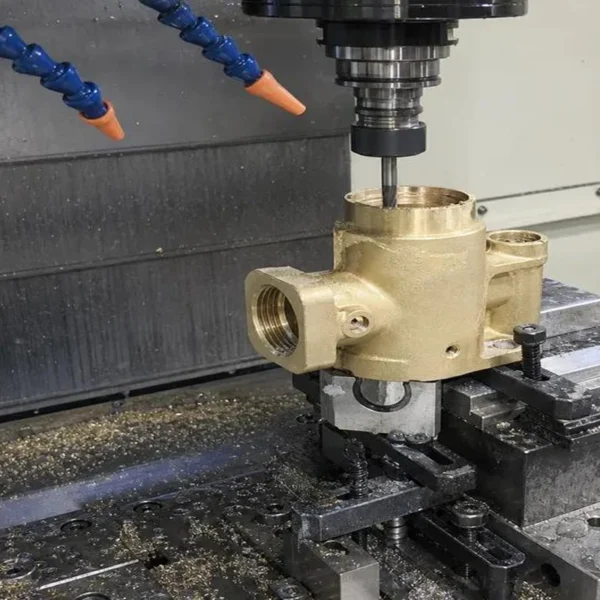
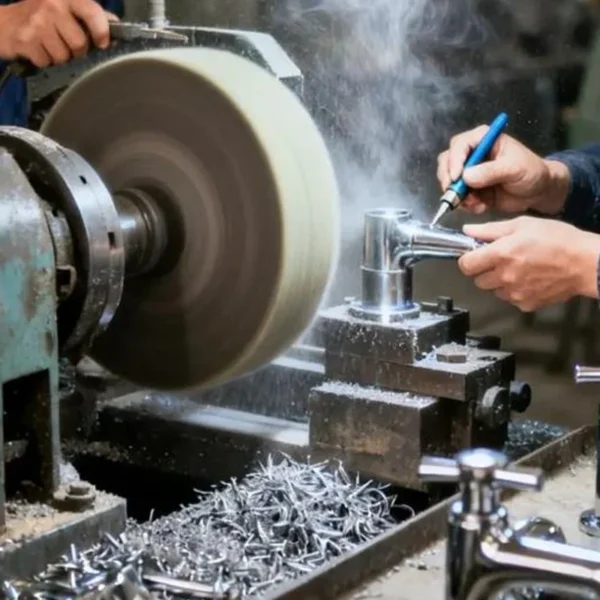
During recent OEM faucet and shower fixture development projects, JEKARE’s engineering and quality teams have observed that more global bathroom brands are moving from certificate-based supplier evaluation toward process-based quality audits. Purchasing teams are increasingly requesting visibility into each manufacturing stage, including brass material control, casting inspection, CNC machining accuracy, surface finishing procedures, and final performance testing, before approving a long-term manufacturing partner.
From direct communication with international brands and distributors, one common concern is that finished product inspection alone cannot fully prevent quality risks. Issues such as casting porosity, inconsistent machining tolerances, or unstable plating adhesion may remain hidden until products reach the market. As a result, buyers are placing greater importance on suppliers that can provide traceable production records, defined inspection procedures, and clear corrective action systems.
At JEKARE, we have found that reliable bathroom fixture quality is built through controlled processes rather than final inspection alone. By integrating casting, machining, surface finishing, assembly, and testing within a structured manufacturing system, our engineering team helps customers evaluate potential risks earlier and develop faucet and shower products with more predictable performance, durability, and long-term market reliability.
Ask how alloy composition is verified for each batch, how porosity is detected, and what happens to a casting that fails. A supplier that repairs defective castings instead of rejecting them is hiding a process problem.
Ask which dimensions are checked in-process and which are checked after machining. Critical features include cartridge seats, thread engagement and sealing faces. Ask whether gauge records are kept by batch.
Polishing quality determines how a plated surface looks. Ask how surface defects are screened before parts go to plating, since plating amplifies underlying flaws rather than hiding them.
Ask for the layer structure (for example copper plus nickel plus chromium), the thickness measurement method, and how often thickness is checked. Ask for salt spray results that name the method and hours, referencing ISO 9227.
Ask whether pressure and leak testing is 100% inspection or sampling. For sampled tests, ask for the sampling rate. Ask how a failed unit is isolated and traced back to its batch.
Ask whether a defect found in the field can be traced to a casting batch and plating lot. Traceability is what turns a complaint into a corrective action rather than a debate.
Stage-level auditing changes the supplier conversation from “do you have quality control?” to “show me where defects are caught and what you do about them.” Brands that make this shift tend to spot weak process control during qualification, before it appears as warranty cost.
It also strengthens the brand’s own position with retail and hospitality customers. A brand that can describe a supplier’s casting, machining, plating and testing steps in specific terms has a more defensible quality story than one repeating a generic assurance.
JEKARE’s faucet product line is built using in-house die casting, gravity casting, CNC machining and surface finishing. Keeping these stages within one manufacturing system gives buyers one place to audit each step rather than tracing parts across several vendors. Buyers can review the factory facilities as part of qualification.
The Chrome Brass Shower Column with Exposed Valve System is a representative example. Brass components move through casting, machining and chrome finishing, so each of the stages above is directly relevant to how the finished product performs.
Four advantages to weigh in a sourcing decision:
New programs can be scoped through JEKARE’s OEM/ODM project process.
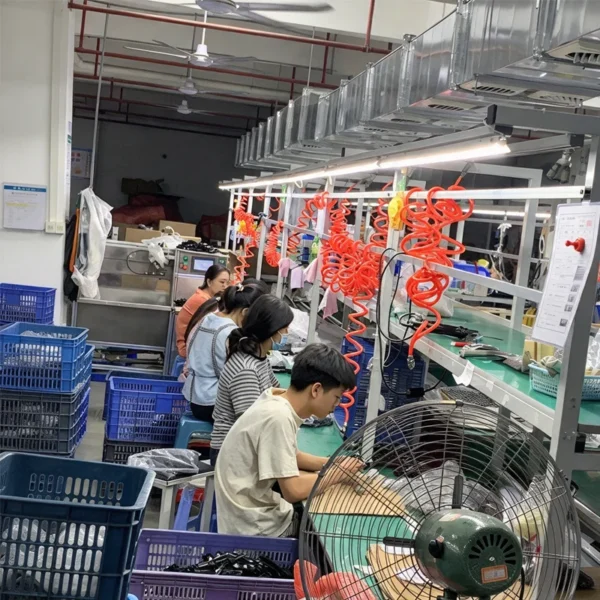
Quality control in bathroom fixture manufacturing is best audited stage by stage, from alloy and casting through machining, polishing, plating and final testing. With ISO 9001:2026 now published, and recognized standards such as ISO 1456 and ISO 9227 providing named benchmarks for plating and corrosion testing, buyers have clearer reference points than ever. The practical takeaway is to ask suppliers for stage-level data tied to named standards, rather than accepting a general quality claim.
Not immediately. ISO 9001:2015 certificates remain valid during the transition period. It is reasonable to ask which edition a supplier holds and what its transition timeline is.
Not on its own. Hours are only comparable when the same test method (NSS, AASS or CASS) and acceptance criteria are used. Confirm the method before comparing results between suppliers.
Layer structure affects corrosion resistance. ISO 1456 notes that multilayer nickel coatings generally protect better than single-layer coatings of equal thickness, so two visually identical finishes can perform differently over time.
It depends on the product and risk tolerance. Fixtures that carry water under pressure justify tighter testing. The key is to know which approach the supplier uses and to confirm it matches your requirement.
Ask for composition and inspection records by batch, and consider a third-party inspection or an on-site audit that follows a sample through each production stage.
Mike is a Senior Faucet Engineer at JEKARE with over 20 years of experience in bathroom and kitchen fixture development and OEM manufacturing. He specializes in casting and plating process control, corrosion testing, and quality documentation across faucet and shower product lines. Mike has supported global bathroom brands and distributors through supplier qualification and factory audits. His focus is helping buyers evaluate quality stage by stage, using named standards and verifiable data.