Industry Background: The Evolution of Accessible Bathroom Manufacturing
The global sanitary ware procurement market is experiencing an unprecedented shift toward accessible, health-focused bathroom engineering. According to a 2025 demographic and senior-care infrastructure report by
Grand View Research, the aging global population has driven an exponential rise in demand for ergonomic bathroom safety solutions. For brand owners and B2B procurement managers, this trend requires a deeper understanding of how specialized products—such as raised toilet seats combined with integrated bidet functions—are engineered and manufactured at scale.
Rising Demand for Inclusive and Assistive Sanitary Fixtures
Market intelligence from
The Business Research Company highlights that commercial and residential real estate sectors are rapidly adopting universal design principles. Assistive bathroom products can no longer be treated as basic medical accessories; they must meet high aesthetic and functional standards expected in premium hospitality and residential environments.
Stricter Compliance and Safety Standards for Assistive Devices
Regulatory bodies across North America and Europe enforce strict load-bearing, non-slip, and electrical safety standards for bathroom fixtures incorporating hygiene technology. Direct manufacturing partners must maintain certified quality management systems aligned with
ISO (International Organization for Standardization) to ensure structural safety and user compliance.
Why Combining Bidet Features with Raised Seats Matters for Brands
Integrating electronic or mechanical bidet systems into elevated seating introduces complex engineering challenges that standard manufacturing setups cannot accommodate without specialized design modifications.
Ergonomic Challenges in Elevated Seating Design
Raising the seating plane alters user posture and weight distribution. Engineers must ensure that the structural rigidity of the seat can withstand asymmetric loads without flexing or compromising the internal water delivery channels required for bidet functionality.
Balancing Hygiene Technology with Accessibility
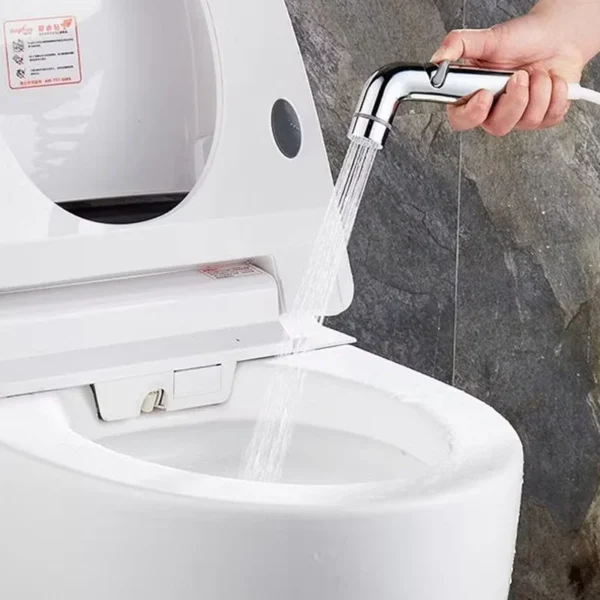
Procuring brands must evaluate whether an integrated bidet mechanism fits seamlessly within the contoured perimeter of an ergonomic raised seat. This requires precise spatial planning during the initial tooling phase to prevent mechanical interference between the lifting brackets and internal spray nozzles.
Material Selection: Duroplast vs. Polypropylene for Bidet-Compatible Seats
Choosing the correct polymer is critical for ensuring long-term structural integrity, scratch resistance, and chemical stability in moisture-rich environments.
The Superiority of Duroplast (UF) in Heavy-Duty Applications
Duroplast, also known as Urea-Formaldehyde (UF), offers exceptional surface hardness, a ceramic-like feel, and superior resistance to cleaning chemicals. Its high density prevents micro-scratching, which is essential for maintaining hygienic surfaces on healthcare-focused fixtures.
Comparing Impact Resistance with Polypropylene (PP) Alternatives
While Polypropylene (PP) provides high impact flexibility and lower raw material costs, it lacks the rigidity required for heavy-duty raised seating frames. Duroplast maintains its structural shape under sustained vertical pressure far better than standard thermoplastics.
Manufacturing Process: From Polymer Synthesis to Bidet Integration
The production of a bidet-compatible raised toilet seat requires precise thermal compression molding, automated CNC trimming, and meticulous component assembly.
Compression Molding of Duroplast UF Shells
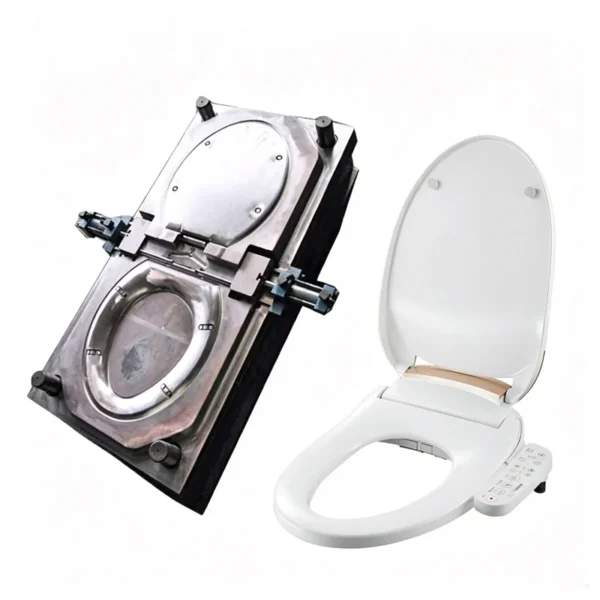
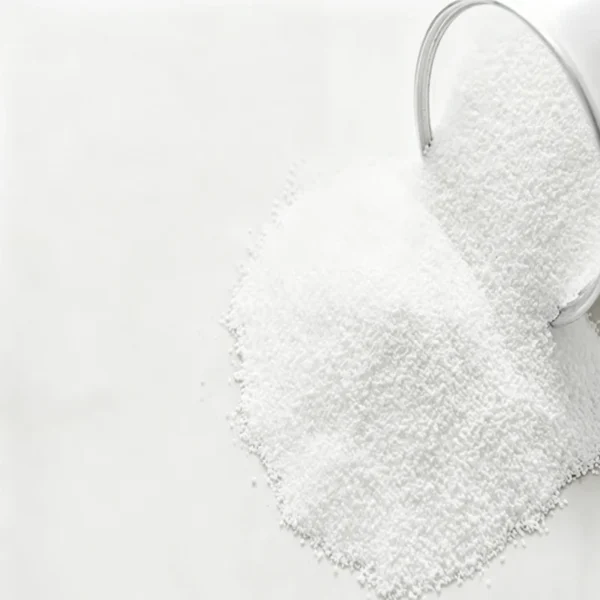
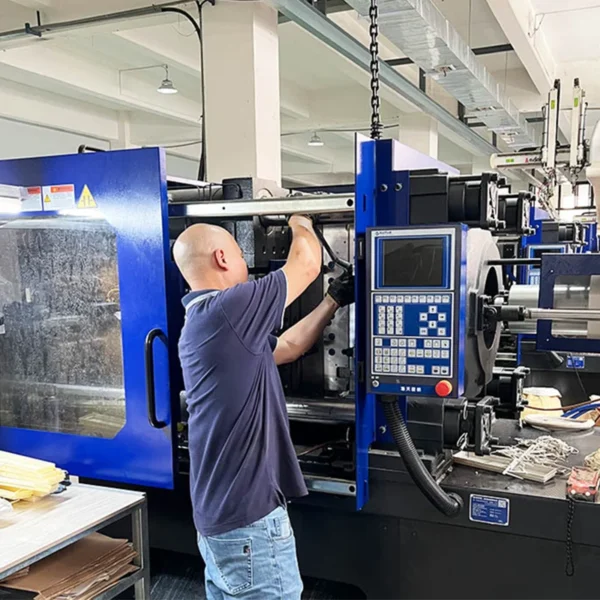
Unlike injection-molded plastics, Duroplast components are produced using high-pressure compression molding. Pre-measured thermoset powder is compressed under extreme heat, cross-linking the polymer chains into a rigid, permanent shape.
Precision Machining of Internal Water Channels
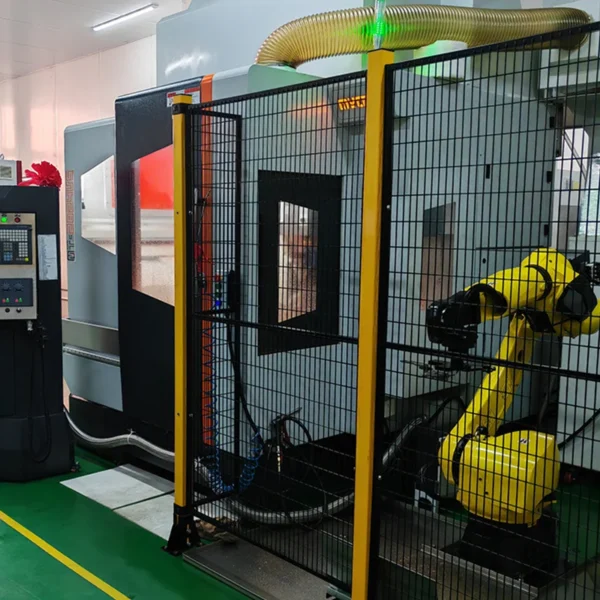
Once the structural shell is cured, high-speed
CNC machining centers mill precise internal pathways for bidet water nozzles, control valves, and electronic wiring harnesses if the unit is powered.
Surface Finishing and Anti-Microbial Coatings
Maintaining absolute cleanliness is paramount. Advanced
surface finishing techniques apply smooth, non-porous coatings that resist bacterial colonization and withstand frequent chemical sanitization.
Engineering Application: Scalable OEM Toilet Seat Solutions
For procurement teams seeking a reliable manufacturing partner with specialized expertise in ergonomic and hygienic sanitary ware, JEKARE offers comprehensive OEM and ODM solutions tailored to global brands and distributors.
JEKARE Manufacturing Capabilities in Action
A prime example of our production excellence is demonstrated in our specialized product lines, including our precision-engineered
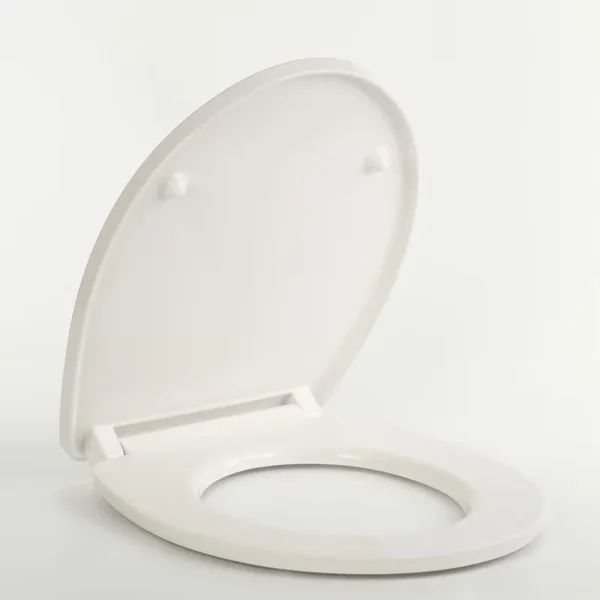
D-shaped Duroplast toilet seats. Built for high-end distribution, these models combine dense UF material with 360-degree quick-release mechanisms, ensuring superior durability and effortless maintenance.
Key Advantages for Procurement Managers:
-
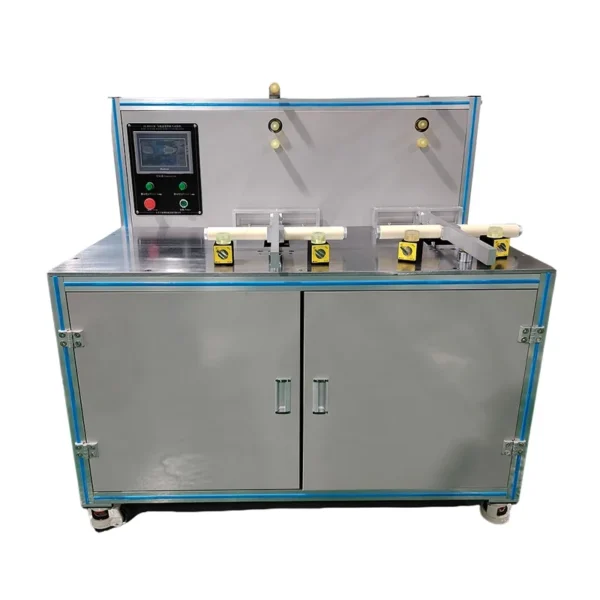
Rigorous Load Testing: Every seat frame undergoes cyclic vertical load testing to verify long-term structural safety.
-
Customization Flexibility: Full support for customized lift heights, integrated bidet nozzle configurations, and private-label packaging.
-
Compliance Readiness: Designed to meet international safety and material purity standards.
Quality Control and Mechanical Durability Testing Protocols
Ensuring zero defects in assistive bathroom products requires rigorous testing infrastructure that simulates years of intensive daily usage.
Cyclic Hinge and Soft-Close Mechanism Testing
Bidet-compatible raised seats incorporate specialized damping hinges. Automated testing rigs cycle the cover and ring thousands of times to verify consistent soft-close performance without mechanical degradation.
Hydrostatic Leak Testing for Integrated Bidet Waterways
Internal water delivery channels undergo rigorous pneumatic and hydrostatic pressure testing to guarantee absolute water-tightness before final packaging and distribution.
Practical Decision Framework for B2B Procurement Teams
Before finalizing a manufacturing contract for specialized bathroom safety fixtures, procurement managers should run a systematic audit against the following criteria.
Evaluating Factory Infrastructure and Tooling Control
-
✓ Does the manufacturer possess in-house compression molding presses specifically calibrated for high-density Duroplast processing?
-
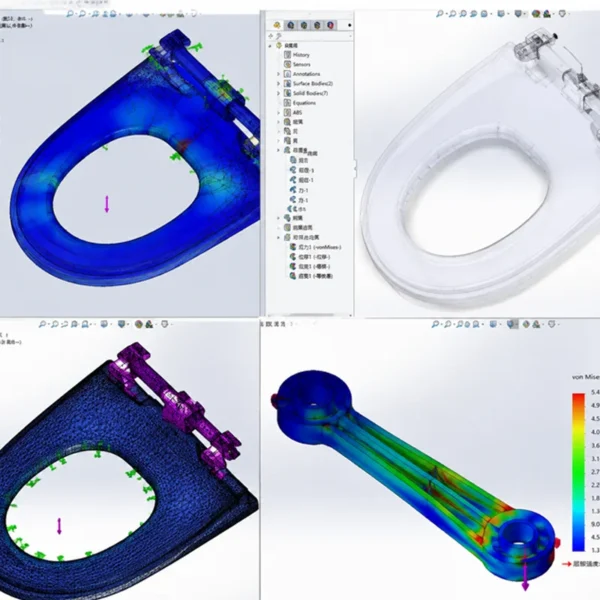
✓ Can the engineering team provide finite element analysis (FEA) reports on load distribution for raised seating profiles?
Auditing Quality Control and Testing Protocols
What This Means for Your Brand
Partnering with an experienced manufacturer allows brand owners to capture high-margin segments in the assistive and hospitality sectors without incurring unexpected development risks.
Protecting Brand Reputation through Structural Reliability
By sourcing engineered solutions from verified factories, brands eliminate costly field failures, hinge breakdowns, and water leakage claims, safeguarding long-term customer trust.
Accelerating Time-to-Market for Inclusive Collections
Working with a partner that has established tooling and DFM expertise for complex ergonomic configurations drastically reduces product development cycles.
Conclusion
Integrating bidet functionality into raised toilet seats requires advanced material selection, precise compression molding, and rigorous mechanical testing. By partnering with an engineering-driven OEM manufacturer, global brands can deliver safe, durable, and highly functional sanitary solutions to an expanding demographic market.
FAQ
-
Why is Duroplast (UF) preferred over Polypropylene for raised bidet toilet seats?
Duroplast provides superior rigidity, a ceramic-like scratch-resistant surface, and better structural stability under heavy vertical loads compared to flexible thermoplastics like PP.
-
How do manufacturers ensure structural safety for elevated seating designs?
Manufacturers utilize finite element analysis (FEA) during design and conduct rigorous cyclic vertical load testing on finished seat frames to prevent flexing or cracking.
-
What challenges arise when combining bidet systems with raised toilet frames?
The primary engineering challenge is routing internal water channels and control mechanisms without weakening the load-bearing structural walls of the raised seat.
-
What quality control tests are mandatory for bidet-integrated toilet seats?
Mandatory tests include cyclic hinge soft-close evaluations, hydrostatic water channel pressure testing, salt-spray corrosion resistance, and chemical sanitization durability trials.
-
How do OEM factories handle custom mounting configurations for different ceramic bowls?
Factories utilize adjustable 360-degree quick-release stainless steel hinges that accommodate varied bolt spread distances across global ceramic standards.
About the Author
Mike is a Senior Sanitary Ware Engineer at JEKARE with over 20 years of experience in product development and OEM manufacturing for global brands and distributors. He specializes in ergonomic fixture engineering, material selection optimization, structural improvement, and compliance-driven product development. Focusing on eliminating production risks early in the DFM stage, Mike helps international bathroom brands create reliable, cost-effective, and highly scalable fixture solutions through rigorous engineering and strict quality control.
References
-
Grand View Research
https://www.grandviewresearch.com/industry-analysis/home-healthcare-market
-
The Business Research Company
https://www.thebusinessresearchcompany.com/
-
ISO (International Organization for Standardization)
https://www.iso.org/iso-9001-quality-management.html
Why Global Bathroom Brands Choose JEKARE
Whether you are developing standard Duroplast seats or specialized assistive bidet systems, JEKARE provides engineering-driven OEM manufacturing support from concept to mass production.
Contact our engineering team today to eliminate production risks and accelerate your product development cycle