Call us: +86-18965139230 | Mail to us: info@jekare.com

Almost every plastic bathroom component a brand sells — toilet seat covers, shower brackets, valve housings, faucet handles, cistern fittings — starts the same way: as resin pellets, melted and forced under pressure into a steel mold.Grand View Research values the global injection molding market at USD 312.7 billion in 2025, projecting growth to USD 462.5 billion by 2033 at a 5.1% CAGR, with Asia Pacific holding the largest regional share at 41.2%. Within that broader market, Grand View Research’s injection molded plastics report notes that polypropylene alone accounts for close to 35% of raw material revenue share — a material choice that shows up directly in how a bathroom brand’s products perform, feel, and age.
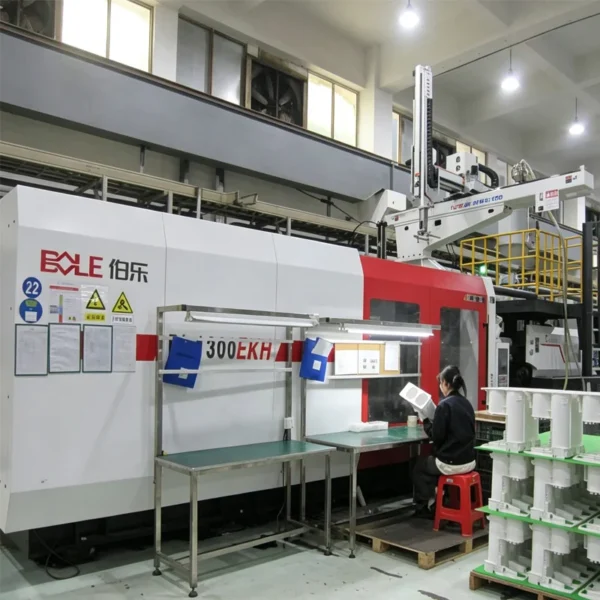
For a brand sourcing private-label shower and bathroom accessories, what happens inside that workshop — which resin is specified, how the mold is designed, what gets measured before a part ships — determines far more about the finished product than most product listings ever describe.
A bathroom brand rarely specifies injection molding parameters directly — that’s the OEM’s job. But the brand still owns the consequences of how those parameters were set. A part molded with the wrong cooling time warps slightly, and a warped valve housing means an angle valve that never quite seals flush against the wall. A part molded from an under-specified resin becomes brittle at low temperatures and cracks during a cold shipping season. A part with an unverified flame rating creates a compliance problem the brand won’t discover until a retailer’s inbound QC catches it — or worse, until it doesn’t.
None of these failures show up in a spec sheet the way a showerhead’s spray pattern does. They show up months later, as a return reason code, a retailer compliance rejection, or — in the case of drinking-water-contact components like valve bodies and cartridge housings — a certification gap that blocks market entry entirely in regions requiring NSF/ANSI/CAN 61 compliance. Understanding what actually happens on the molding floor is how a brand asks its OEM the right questions before tooling, rather than after a complaint pattern forces a redesign.
Two process realities explain why molding-stage decisions carry so much downstream weight.
Shrinkage and warpage are measurable, standardized, and frequently under-specified.ISO 294-4 defines the method for determining moulding shrinkage and post-moulding shrinkage of injection-molded thermoplastic specimens, in the directions both parallel and perpendicular to melt flow — a formal acknowledgment that plastic parts don’t cool to their designed dimensions uniformly, and that the deviation is directional, not random. A bracket or valve body designed without accounting for directional shrinkage will hold true in one orientation and drift out of tolerance in another, which is precisely the kind of defect that passes a visual inspection and fails an installation.
Flammability and drinking-water-contact ratings are not universal defaults — they’re specified, tested, and often assumed rather than verified. UL 94 is the standard test for how a plastic material ignites, burns, and self-extinguishes, with ratings ranging from HB (slow horizontal burn) up to V-0 (self-extinguishes within 10 seconds, no flaming drips) — a rating that matters for any component near electrical fixtures or heating elements. Separately,NSF/ANSI/CAN 61governs which materials are approved for contact with drinking water, covering exactly the category of parts — valves, fittings, faucet internals — that many bathroom brands assume are “just plastic” without confirming which plastic, and to which standard it was tested.
In 2022, a European bathroom brand approached JEKARE during the development stage of a new injection-molded shower accessory series. The customer had already completed the initial product design, but during the tooling review phase, JEKARE’s engineering team identified potential dimensional risks in one of the ABS plastic mounting components. The part looked acceptable from a visual perspective, but its structure contained uneven wall thickness ranging from 1.8 mm to 4.5 mm, creating different cooling rates across the molded area. Based on the initial mold-flow evaluation, the expected shrinkage difference could result in approximately 0.35–0.45 mm dimensional deviation around the assembly points after cooling.
For a standalone plastic component, this tolerance difference may appear minor. However, in a bathroom product assembly, a deviation of less than 0.5 mm can affect how multiple parts interact. During the engineering review, JEKARE simulated the potential impact on the final assembly: the mounting position could shift by approximately 0.4 mm, increasing stress around screw-fixing areas and creating a higher risk of uneven fitting between the bracket and the supporting structure. The concern was not an immediate visible defect, but a long-term reliability issue that could appear after repeated installation and use.
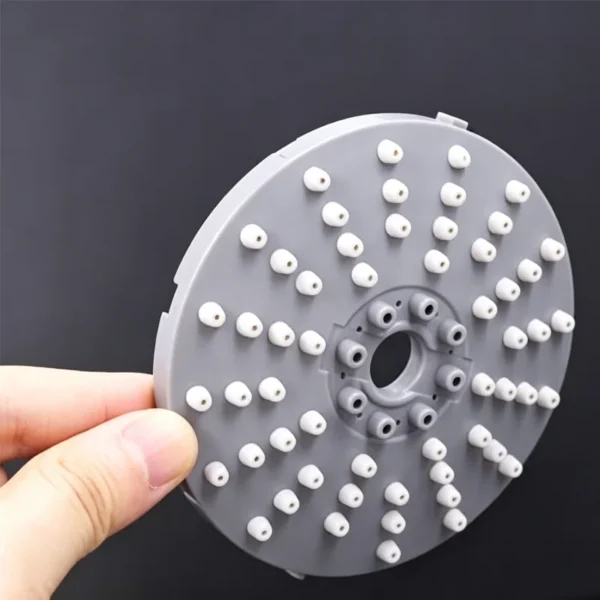

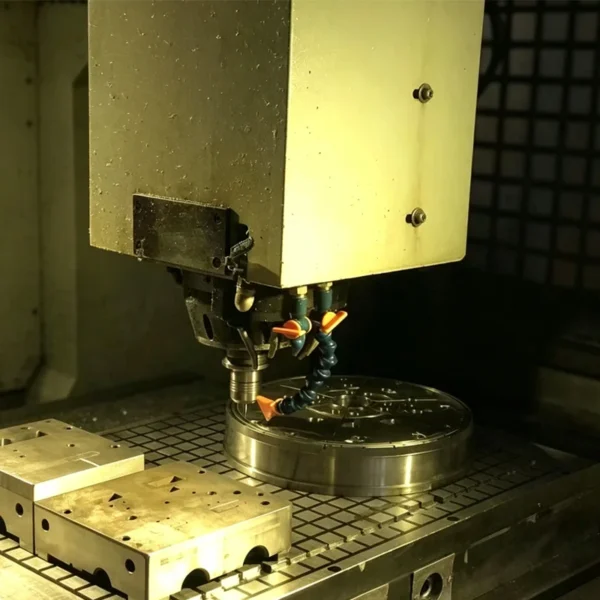
To address the risk before mass production, JEKARE worked with the customer’s product development team through three engineering adjustments. First, the material specification was reviewed. The original design considered a general-purpose ABS resin, but the team evaluated an alternative ABS grade with improved dimensional stability and impact resistance for bathroom environments. Second, the mold design was modified by optimizing the cooling channel layout to achieve more uniform temperature distribution during the cooling cycle. Third, the tooling dimensions were compensated according to the expected molding shrinkage rate instead of using nominal CAD dimensions directly.
After the mold modification, JEKARE produced the first trial batch of 500 injection-molded samples for dimensional verification. The QC team measured 12 critical dimensions, including mounting-hole spacing, assembly height, and locking positions. Compared with the first trial samples, the dimensional variation in key assembly areas was reduced from approximately 0.4 mm to within 0.15 mm, allowing the component to meet the customer’s assembly requirements before entering volume production.
This case reflects a broader challenge in bathroom product development: injection molding problems rarely begin as obvious defects. They usually start as small engineering gaps in material selection, mold compensation, cooling design, or tolerance planning. For global bathroom brands developing private-label products, early involvement of an experienced OEM partner can transform these risks from post-production complaints into controlled engineering decisions made before the mold is finalized.
At JEKARE, this engineering approach is applied across plastic bathroom components, including shower brackets, accessory housings, toilet seat components, and other injection-molded parts. By connecting material selection, tooling development, dimensional inspection, and production validation within one manufacturing process, brands can reduce the risk of discovering molding-related problems only after products reach the market.
Three questions give a brand a working vocabulary for evaluating what happens on an OEM’s molding floor — without needing to become a process engineer.
| ABS | Polypropylene (PP) | POM (Acetal) | |
| Typical bathroom use | Covers, housings, decorative trim | Brackets, valve bodies, flexible clips | High-wear mechanisms (hinges, latches) |
| Impact resistance | Good | Good, more flexible | Excellent |
| Surface finish quality | Excellent — takes plating/paint well | Moderate — matte, less paintable | Good, low-friction natural finish |
| Cost | Moderate | Lower | Higher |
| Common rating to verify | UL 94 (if near electrical) | NSF/ANSI/CAN 61 (if water-contact) | Dimensional stability under repeated cycling |
Understanding the molding process doesn’t turn a brand’s product team into engineers — it changes what they ask their OEM partner during quoting and tooling review, which is exactly where most avoidable plastic-component defects are still preventable rather than already baked into a mold. A brand that asks about shrinkage direction, resin grade, and certification status before tooling is negotiating from a materially different position than one that only asks about unit price and lead time.
Commercially, this connects directly to the packaging and kitting decisions covered elsewhere on this site: a warped bracket or an out-of-tolerance valve housing doesn’t just fail on its own — it becomes the root cause of the “doesn’t fit” and “doesn’t seal” complaints that show up downstream in a fully assembled kit. Molding-stage quality control is, in a real sense, where kitting-level compatibility problems either get prevented or get built in.
The plastic components inside a bathroom product — brackets, housings, valve bodies, covers — are shaped by decisions made on the molding floor long before a brand ever sees a finished part: which resin grade, how long the cooling cycle runs, whether shrinkage was measured in both flow directions, whether the right flammability or drinking-water certification was actually verified rather than assumed. Brands that treat the molding process itself as part of their product-development conversation — not just a black box their OEM handles — catch dimensional and material problems while they’re still a tooling adjustment, not a return reason code.
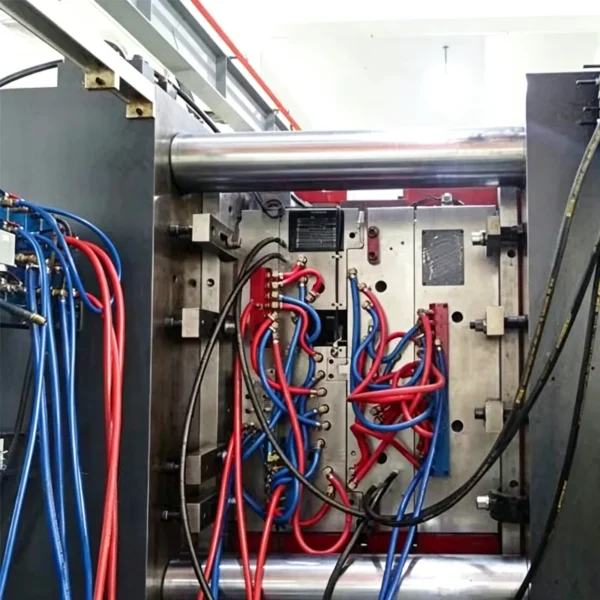
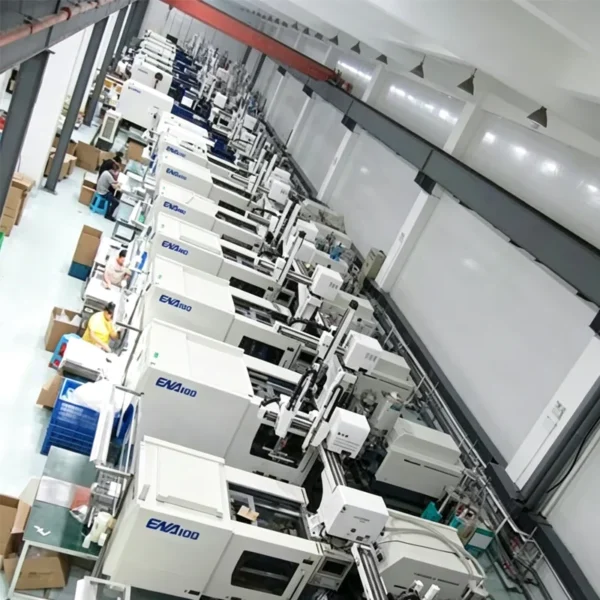
Warpage is usually a molding-stage issue related to how the part cooled — shrinkage occurs at different rates parallel versus perpendicular to the direction the melted plastic flowed into the mold, as defined in ISO 294-4. If the mold or cooling cycle wasn’t adjusted for this directional difference, the part can drift out of its designed dimensions over time.
It depends on the part. ABS generally gives a better surface finish and takes plating or paint more readily, making it common for visible covers and trim. Polypropylene is more flexible and lower-cost, often used for brackets and valve bodies where surface finish matters less than impact resistance and price.
It measures how a plastic material behaves when exposed to an open flame — whether it self-extinguishes, how quickly, and whether it drips flaming material. Ratings range from HB (slowest, least stringent) to V-0 (self-extinguishes within 10 seconds, no flaming drips), and the appropriate rating depends on how close the component sits to electrical fixtures or heat sources.
Only components that contact drinking water — valve bodies, cartridge housings, faucet internals, and similar parts. A decorative cover or a wall bracket that never touches the water supply typically doesn’t require this certification, but valve and fitting components generally do for markets that mandate it.
Cutting cooling time shortens the production cycle and lowers cost per part, but it’s also the most common cause of warpage — the part is ejected before it has fully stabilized dimensionally, and it continues to shrink and distort slightly after leaving the mold.
Ask for the specific resin grade designation (not just the generic material name), request UL 94 and NSF/ANSI/CAN 61 test documentation where relevant, and ask whether shrinkage has been measured per ISO 294-4 in both flow directions rather than assumed from a generic datasheet.
This article was prepared by David Lin, Packaging & Supply Chain Engineer at JEKARE. [PLACEHOLDER — not verified against jekare.com; for a molding/materials-focused article, a Product or Process Engineer byline may be a better real-world fit than a packaging-focused one — let me know who should actually be credited]: “I work with our molding and quality teams on material selection and dimensional verification for JEKARE’s bathroom accessory OEM clients.” Learn more about JEKARE’s OEM/ODM manufacturing capabilities.
1.Grand View Research — Injection Molding Market Size & Share Report
https://www.grandviewresearch.com/industry-analysis/injection-molding-market-report
2.Grand View Research — Injection Molded Plastics Market Report
https://www.grandviewresearch.com/industry-analysis/injection-molded-plastics-market
3.UL Standards & Engagement — UL 94 Tests for Flammability of Plastic Materials
https://www.shopulstandards.com/ProductDetail.aspx?productId=UL94_7_S_20230228
Specifying Plastic Components for Your Next Bathroom Product? If you’re not sure your current supplier is verifying resin grade, shrinkage direction, or certification status before tooling, JEKARE’s engineering team can walk through your part spec before the mold is cut.