Call us: +86-18965139230 | Mail to us: info@jekare.com

The regulatory baseline for shower fixtures has undergone a structural transformation over the past decade. While the historic U.S. federal standard established a maximum flow rate of 2.5 Gallons Per Minute (GPM) at 80 PSI under ASME requirements, the introduction of the U.S. Environmental Protection Agency’s (EPA) WaterSense program created a rigorous secondary benchmark. The program mandates that certified fixtures consume no more than 2.0 GPM while successfully passing stringent spray force and distribution coverage tests.
Regional legislation has rapidly outpaced federal baselines, introducing multi-tier compliance challenges for OEM brands and distributors. The California Energy Commission (CEC) enforces a strict maximum flow rate of 1.8 GPM for all shower heads distributed or installed within the state. States such as Colorado, Washington, and New York have adopted comparable efficiency mandates, effectively phasing out legacy 2.5 GPM designs across major North American commercial distribution hubs.
Global compliance extends far beyond North America. European markets enforce rigorous compliance criteria through regional standard bodies and voluntary efficiency labeling schemes, while Australia implements the Water Efficiency Labelling and Standards (WELS) scheme. These international frameworks require sanitary ware manufacturers to engineer adaptable fluid pathways capable of satisfying diverse regulatory thresholds within a single core product architecture.
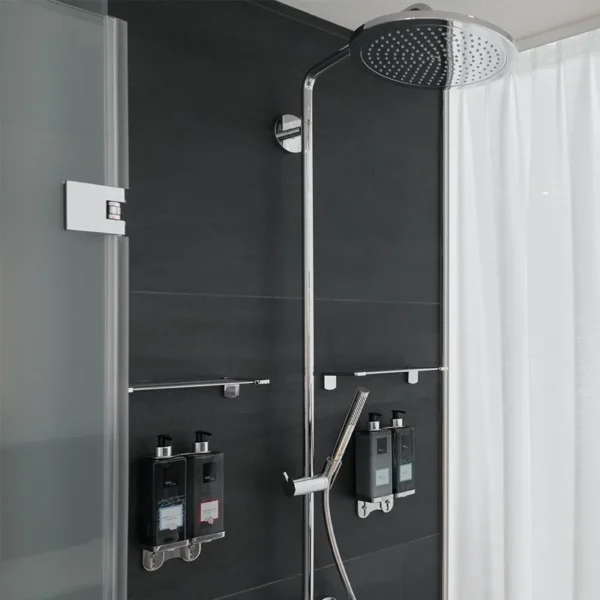
For brand owners and sanitary ware importers, managing disparate flow rate requirements introduces severe operational friction. Distributing a unified product catalog becomes impossible if internal components cannot be easily adapted or swapped. Companies failing to plan their manufacturing tooling around regional variations face costly inventory fragmentation, warehousing inefficiencies, and legal distribution blocks in key economic regions.
Reducing water volume without altering internal fluid dynamics inevitably produces a weak, unconditioned spray that fails to rinse soap effectively. In the consumer and commercial hospitality sectors, a low-flow fixture perceived as inadequate is immediately categorized as a defective product. Brand equity suffers when water conservation measures translate into an inferior user experience during daily bathing routines.
When basic flow restrictors are retrofitted into shower heads designed for higher volumes, the resulting pressure drops and whistling noises trigger high rates of consumer returns. Sourcing low-quality flow-restricting washers that degrade or scale over time leads to fluctuating GPM performance, prompting commercial warranty claims and straining distributor relationships.
According to market analysis published by Grand View Research, the global plumbing fixtures market is expanding rapidly, with an aggressive upward trajectory for water-saving and eco-conscious bathroom technologies. Market demand is increasingly concentrated on fixtures that combine high-efficiency consumption profiles with advanced tactile performance.
Commercial real estate developers and corporate hospitality chains are bound by strict Environmental, Social, and Governance (ESG) targets. Property management groups routinely audit domestic water consumption metrics across thousands of guest rooms, prioritizing procurement contracts that lower thermal energy consumption (heating less water) without triggering occupant complaints.
OEM procurement inquiries increasingly demand multi-function showering configurations that allow users to toggle between standard efficiency and ultra-low eco-modes. This shift reflects a maturing market where water conservation is no longer an afterthought, but a core parameter embedded in initial industrial design briefs.
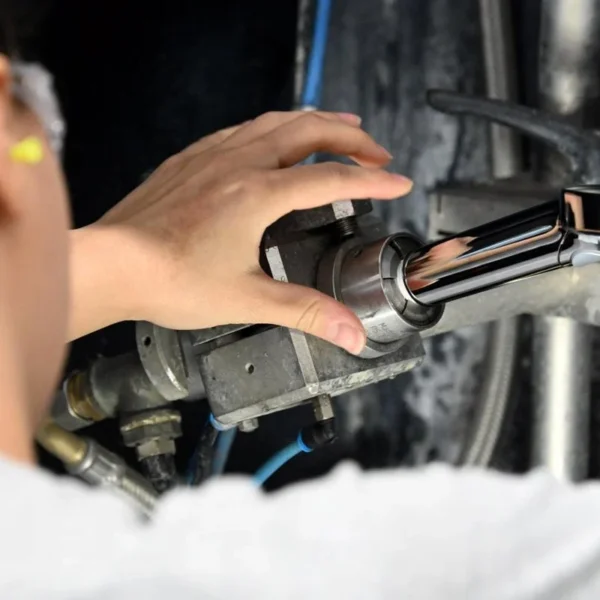
Lowering water volume from 2.5 GPM to 1.8 GPM or 1.5 GPM drastically reduces the kinetic energy available at the spray face. To counteract this energy loss, engineering teams must optimize the internal water cavity using advanced 3D CAD fluid dynamics simulation. Eliminating turbulent stagnation zones inside the handle and shower head body preserves internal pressure, ensuring that water reaches the discharge nozzles with maximum velocity.
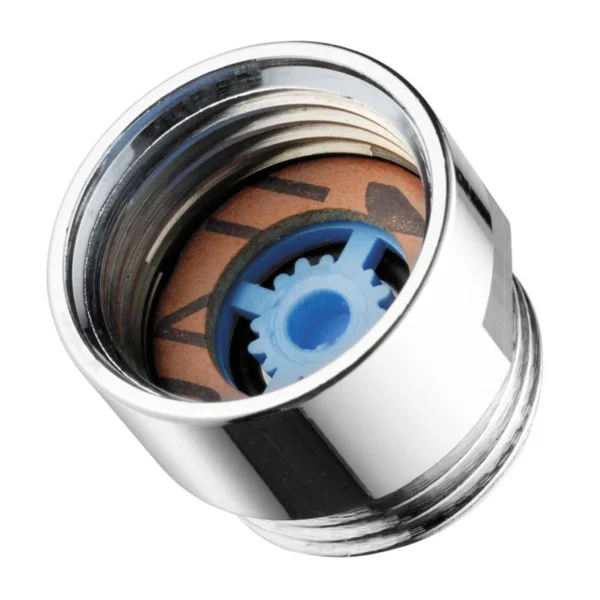
Basic fixed-orifice washers restrict water volume effectively at high pressure (80 PSI) but cause the flow rate to plummet unacceptably at low pressure (20 PSI). Modern engineering specifications mandate the integration of precision pressure-compensating flow regulators. These dynamic components automatically adjust their internal aperture in response to incoming line pressure, guaranteeing a consistent GPM output across fluctuating municipal supply environments.
To replicate the physical sensation of a high-volume shower under strict regulatory limits, manufacturers utilize air-injection (aeration) systems. By creating a negative pressure differential inside the waterway, ambient air is drawn in and thoroughly blended with the water stream. This expands droplet size and increases droplet velocity, providing a robust, voluminous spray sensation while consuming up to 30% less water.
Strict water efficiency standards mean internal flow channels are narrower and more susceptible to scaling from hard water minerals. Sourcing high-grade engineering polymers—such as stabilized ABS and specialized acetal resins—prevents internal surface pitting and minimizes mineral adherence along restricted water channels.
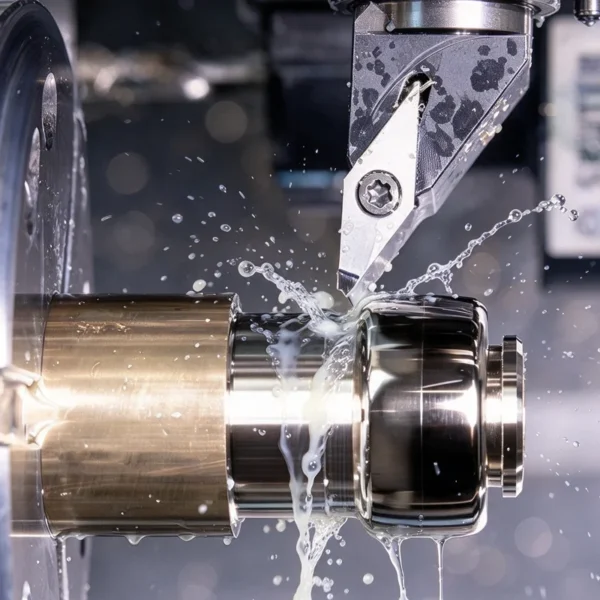
Achieving uniform droplet dispersion at low flow rates requires microscopic precision in nozzle fabrication. Utilizing multi-axis JEKARE CNC Machining Capability allows manufacturing teams to mill precise internal taper angles and smooth exit walls, eliminating internal burrs that cause erratic spray patterns.
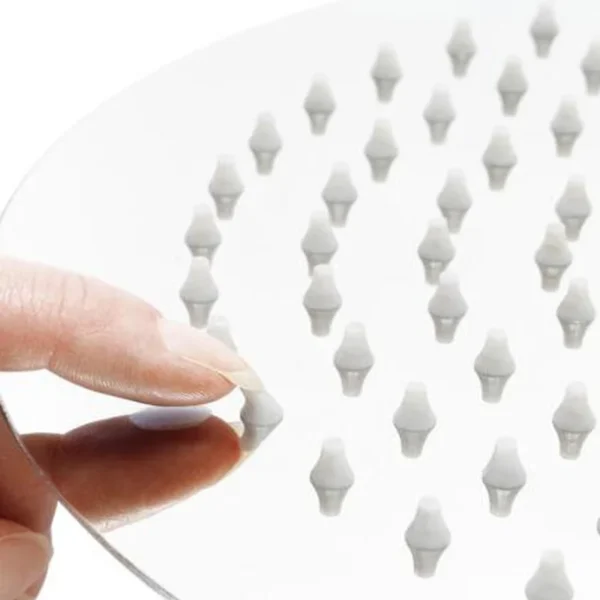
Flexible spray faces molded from Liquid Silicone Rubber (LSR) are essential for maintaining long-term flow efficiency in regulated fixtures. LSR nozzles allow end-users to effortlessly wipe away calcium and lime deposits, ensuring that the critical nozzle geometry required for spray acceleration remains uncompromised throughout the product lifecycle.
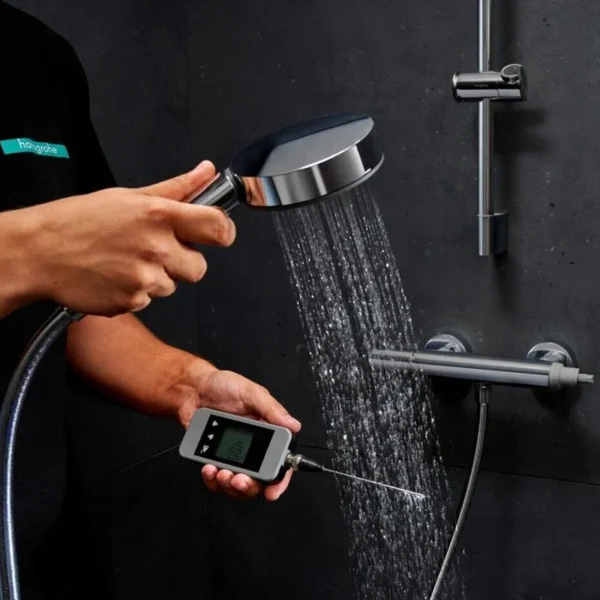
Over the past several years, JEKARE’s engineering team has observed a clear shift in global shower head development projects: water efficiency compliance is no longer treated as a final certification requirement, but as a core engineering parameter defined at the beginning of product development.
During discussions with bathroom brands, distributors, and project suppliers in North America and Europe, we have seen increasing demand for shower systems that achieve regulated flow rates such as 1.8 GPM and 1.5 GPM while maintaining strong spray coverage, user comfort, and consistent performance under different water pressure conditions.
Many buyers are moving away from simple fixed flow restrictor solutions because these components can create unstable performance when installed in buildings with fluctuating water pressure. Low-pressure residential environments, multi-story buildings, and commercial properties often require more precise flow management to avoid weak spray performance and customer complaints.
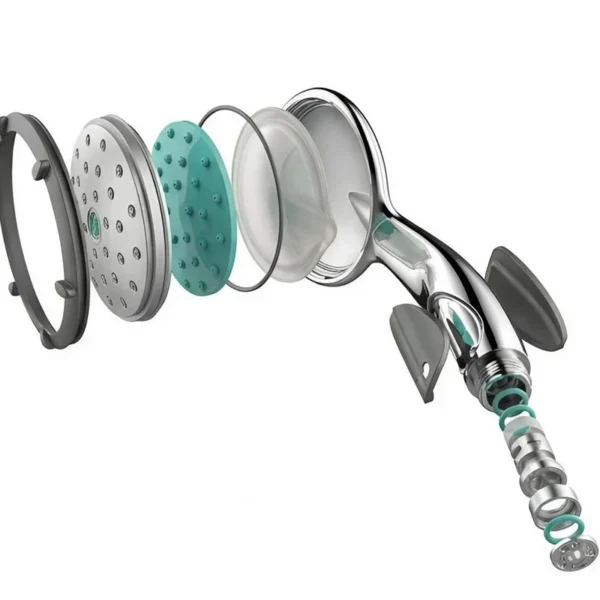
At JEKARE, our engineering approach focuses on balancing regulatory compliance with real-world user experience. Instead of limiting water output through basic restriction alone, we evaluate the complete hydraulic system, including internal water channels, flow regulators, spray plate geometry, nozzle design, and material selection.
By combining precision component development, flow testing, and manufacturing control, JEKARE helps global bathroom brands develop shower heads that meet regional efficiency requirements while maintaining reliable spray performance. This approach enables customers to create adaptable product platforms that support multiple markets without increasing unnecessary SKU complexity.
When developing high-efficiency shower fixtures, our engineering approach focuses heavily on harmonizing the internal flow regulator with the external nozzle matrix. Rather than relying on generic off-the-shelf components, we custom-tune the internal fluid channels to match regional regulatory targets, ensuring uniform water distribution across every individual spray pattern.
For brand owners and product managers navigating tightening environmental codes, collaborating with an experienced manufacturing partner is essential. JEKARE OEM Shower Head Solutions provide complete engineering and production support tailored to global compliance frameworks.
Our manufacturing infrastructure integrates advanced fluid dynamic simulation, rigorous prototype testing, and automated assembly to deliver shower head collections that satisfy EPA WaterSense and California CEC mandates. By combining precision pressure-compensating components with durable, anti-scaling LSR nozzles, we help global brands eliminate compliance risks, protect their market access, and deliver an exceptional bathing experience.
Before finalizing mold designs, procurement teams must map their exact distribution footprint. If a product line is intended for nationwide distribution in North America, tooling must accommodate components that meet or exceed CEC and WaterSense criteria, avoiding costly post-production modifications.
Never rely on estimated theoretical flow rates. Require your manufacturing partner to validate every shower head batch inside a dedicated JEKARE Quality Control Laboratory, generating empirical flow curves across a pressure spectrum ranging from 20 PSI to 80 PSI.
Ensure that material selections and internal anti-scaling mechanisms are subjected to accelerated hard-water endurance testing. A compliant fixture must maintain its certified flow rate and spray integrity after thousands of operating cycles.

Water efficiency regulations should not be viewed merely as a manufacturing hurdle. Brands that master low-flow fluid engineering can position their collections as premium, eco-friendly assets that appeal directly to ESG-focused commercial buyers and environmentally conscious retail consumers.
By adopting a modular manufacturing approach—where the exterior shell remains constant while internal flow regulators and spray plates are customized per market—brands can achieve global SKU consolidation. This engineering strategy significantly lowers tooling expenditure and streamlines international inventory logistics.
Water efficiency regulations have fundamentally transformed shower head design from a matter of basic aesthetics into an advanced exercise in fluid dynamics and materials engineering. As global authorities continue to lower flow rate ceilings, bathroom brands must move beyond rudimentary flow restrictors. By investing in pressure-compensating technology, air-injection systems, and precision nozzle geometries, OEM buyers can successfully navigate strict compliance mandates, protect their brand equity, and deliver superior performance across all operating environments.
Lowering the flow rate reduces the volume of water moving through the fixture, which can decrease kinetic energy and spray force if internal waterways are unoptimized. Modern engineering counteracts this by utilizing pressure-compensating regulators and aerodynamic internal cavities to maintain high exit velocity.
No. In addition to meeting the 1.8 GPM flow rate ceiling, the product must undergo formal laboratory testing and be officially registered in the California Energy Commission (CEC) MAEDbS database before legal commercial distribution can occur.
A static restrictor features a fixed opening that limits water volume proportionally to line pressure, resulting in very weak flow in low-pressure buildings. A pressure-compensating valve features a dynamic elastomer that adjusts its opening size based on incoming pressure, ensuring a steady, compliant GPM across diverse building heights.
Air-injection introduces ambient air into the water stream, enlarging water droplets and increasing perceived spray volume. This tactile illusion allows a 1.5 or 1.8 GPM shower head to feel as powerful as a traditional 2.5 GPM model.
Narrower internal channels and precise nozzle apertures required by low-flow designs make them more susceptible to calcium and lime clogging. Using flexible Liquid Silicone Rubber (LSR) nozzles allows users to easily dislodge mineral buildup and maintain certified flow performance.
Sunny is a Senior Shower Systems Engineer at JEKARE with over 20 years of hands-on experience in sanitary ware product development and OEM manufacturing.
He specializes in fluid dynamics optimization, flow rate regulation, structural mold design, and compliance-driven product development for global markets.
Working closely with product managers and engineering directors across international bathroom brands, Sunny focuses on converting complex regulatory standards into reliable, high-performance manufacturing solutions.
Grand View Research
Plumbing Fixtures Market Size, Share & Trends Analysis Report
https://www.grandviewresearch.com/industry-analysis/plumbing-fixtures-market
U.S. Environmental Protection Agency (EPA)
WaterSense Specification for Showerheads
https://www.epa.gov/watersense/showerheads
California Energy Commission (CEC)
Modernized Appliance Efficiency Database System (MAEDbS) Regulations
https://www.energy.ca.gov/rules-and-regulations/appliance-efficiency-regulations
✔ 20+ Years of OEM & ODM Manufacturing Experience
✔ Complete Shower, Faucet, and Bathroom Product Solutions
✔ Professional Engineering Support from Design to Production
✔ Strict Quality Control and Comprehensive Flow Testing
✔ Flexible Customization for Global Regulatory Markets
✔ Reliable Manufacturing Partner for Global Distributors and Brands
Whether you need custom shower systems, high-efficiency shower heads, or complete bathroom solutions, JEKARE provides engineering-driven OEM support from concept development to mass production.Request Engineering Review & Discuss Your Project