Call us: +86-18965139230 | Mail to us: info@jekare.com

Shower hose performance is governed by EN 1113, the European standard that defines dimensional, leak-tightness, mechanical, and hydraulic requirements for shower hoses — including a specific flexibility test in which the hose is wound around a small-diameter mandrel under tension. That a dedicated mechanical test exists at all signals something buyers often underweight: hose failure is a structural engineering problem, not just a material-quality one.
At the same time, demand for shower systems overall continues to climb — the global shower heads market is projected to grow from USD 13.3 billion in 2024 to USD 20.4 billion by 2030, according to Grand View Research — which puts more shower hose volume into daily use across more product tiers, and more field exposure for hoses that aren’t engineered to manage rotational stress.
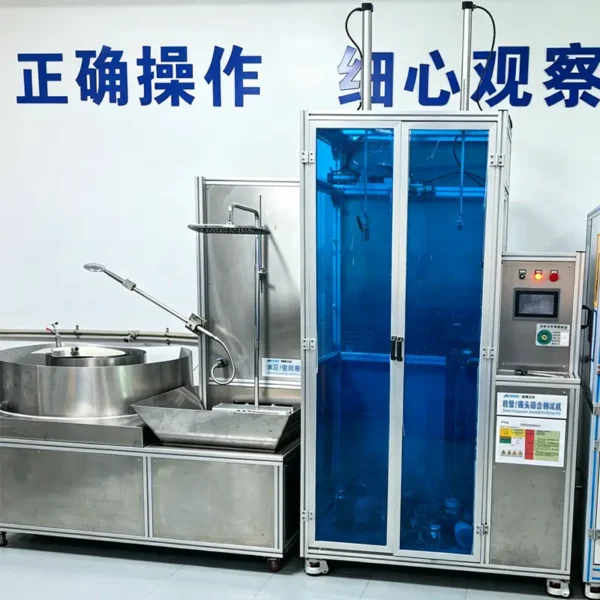
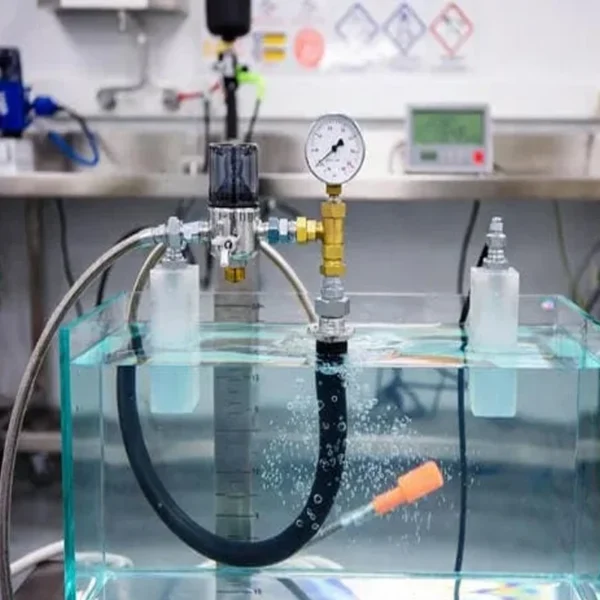
A shower hose is a small line item in a shower system’s bill of materials, but twisting, kinking, and connector failure are among the most common accessory-level complaints — and because the component looks simple, buyers often under-specify testing for it relative to higher-visibility parts like the shower head or valve.
Because a shower hose functions as part of a rotational system with the wall outlet, connector, and shower head, a hose that tests fine in isolation can still fail in the field if the connector it ships with restricts rotation — which means hose and connector need to be qualified together, not as separate purchasing line items.
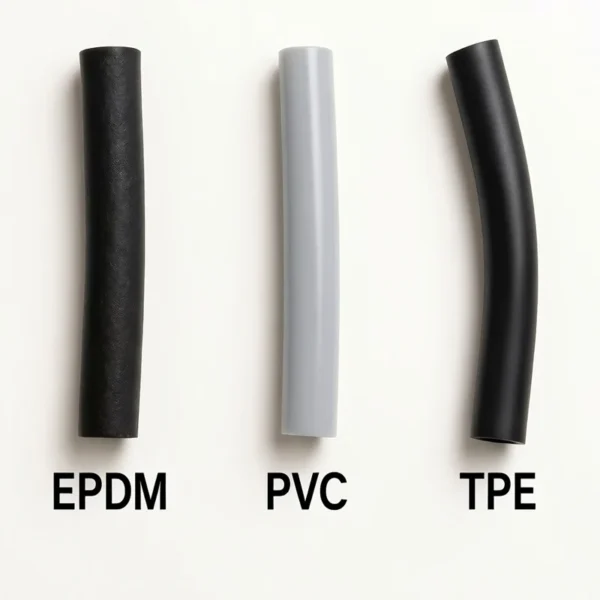
PVC hoses are the lowest-cost option but are more prone to retaining deformation under heat and repeated use; EPDM, TPE, and stainless steel options cost more but recover shape more consistently — so a sourcing decision based on unit price alone can shift warranty exposure onto the brand without that trade-off being visible upfront.
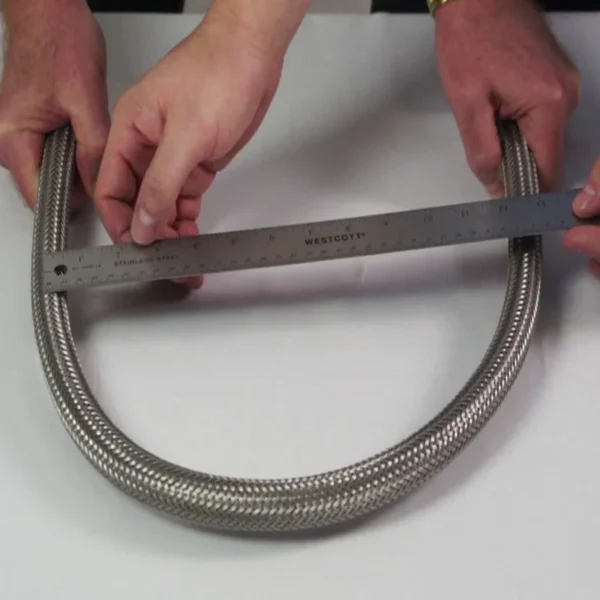
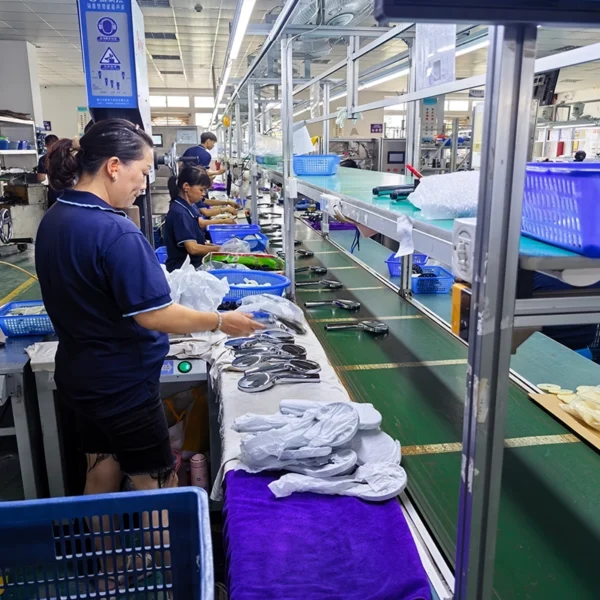
EN 1113 applies to shower hoses of any material and specifies procedures for testing mechanical and hydraulic characteristics, including flexibility under tension — meaning a hose can meet a stated material spec (PVC, EPDM, TPE, stainless steel) and still fail the standard’s mechanical requirements if connector and internal layer design aren’t validated together.
Grand View Research attributes projected shower head market growth through 2030 in part to demand for water-efficient, technologically differentiated fixtures — a trend that raises expectations for supporting components like hoses and connectors, not just the shower head itself.
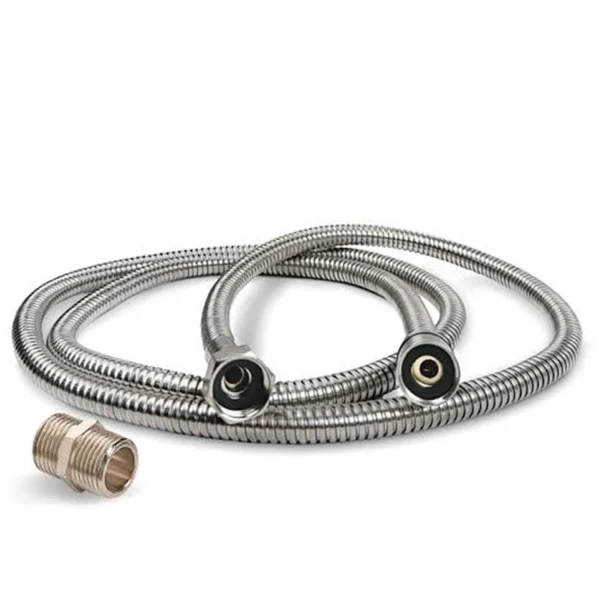
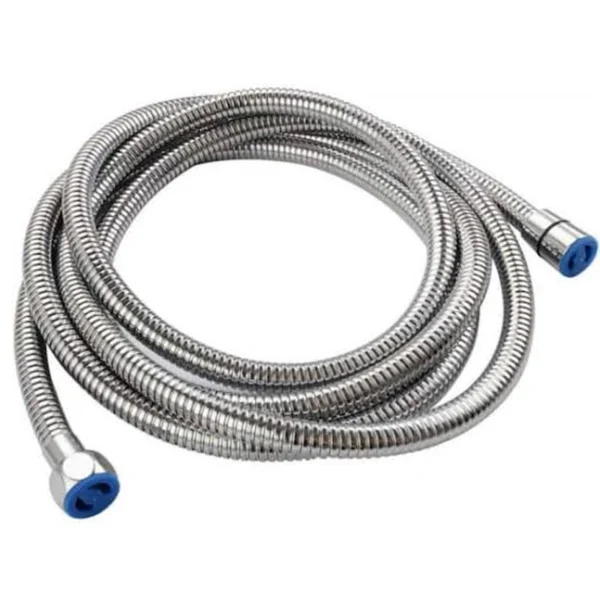
A European mobile hydraulic equipment manufacturer (annual production of roughly 8,000–10,000 units) came to us after months of field complaints about hose twisting and premature wear near the connector area. Their engineering team’s first assumption was installation error — until a review of warranty return data showed ~6.5% of hose-related claims traced back to rotation at the connector interface, with hoses on high-vibration equipment rotating 15–25 degrees within the first 100–150 operating hours. The original connector — fixed-angle, carbon steel, zinc-plated, 45 Nm assembly torque, no rotation allowance — gave any twisting force nowhere to go except into the hose itself.
The first iteration switched to a swivel-type connector with a full 360° controlled rotation path, a dual sealing ring, an extended 48mm crimp, and a harder connector body (HRC 26–28, up from HRC 20–22). Fifty prototype assemblies went through a 500-hour endurance test across three machine models, and the field trial that followed cut hose twisting substantially and reduced installation time by ~18%. But it also surfaced a problem the lab test hadn’t caught: on continuously vibrating machines, the swivel connector felt too loose — rotation and looseness turned out to be two separate failure modes.
Solving the looseness took a friction washer structure, a 35% increase in spring preload, and a switch from standard NBR to reinforced HNBR sealing material — extending the temperature range from -30°C/100°C to -40°C/150°C and raising the vibration cycle requirement from 200,000 to 500,000 cycles. Rotation torque was retuned from 0.8–1.2 Nm to a 2.0–2.8 Nm target, landing at 2.1–2.5 Nm in testing.
Final testing ran across six machines in three different working environments for more than 3,000 combined operating hours — deliberately spread across conditions rather than a single-setup lab certification, to catch the kind of vibration-dependent failure the first prototype had missed. Rotation after 150 hours came down from 15–25° to under 5°, warranty claims fell from 6.5% to 1.8%, and estimated connector replacement frequency moved from every 12–18 months to 24+ months. The customer approved the design for a first production batch of 2,500 assemblies, with an annual forecast of 15,000–20,000 units.
A warranty-data pattern that looked like installation error turned out to be a system-level mismatch between rotation control, vibration load, and sealing material — three variables that only revealed their interaction once tested together in the field, not in isolation on a bench.
Before finalizing a shower hose specification with an OEM partner, ask:
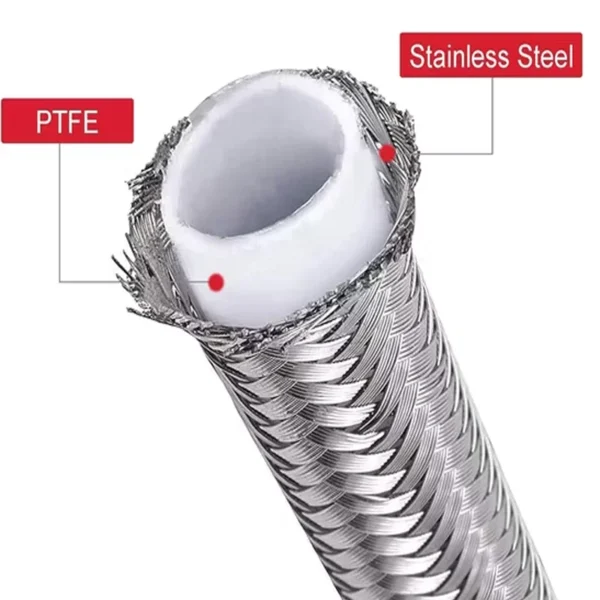
Hose and connector engineering sits close to the end of most shower system bills of materials, but the field complaints it generates — twisting, stiffness, connector leaks — are disproportionately visible to end users because they happen every time the product is used, not occasionally.
For product lines split across price tiers, that argues for treating rotation-system testing as a baseline requirement across all materials, not a premium-tier-only step. A design and development process that qualifies hose, connector, and shower head as one rotational system — rather than sourcing them as independent components — is what prevents a low-cost material choice from becoming a high-cost warranty pattern later.
EN 1113 specifies dimensional, leak-tightness, mechanical, and hydraulic test procedures for shower hoses of any material — including a flexibility test where the hose is wound under tension around a mandrel — so compliance depends on structural and connector performance, not just the material used.
Not automatically — stainless steel generally offers strong torsional stability and durability, but the connector and internal layer design still have to be validated together with the hose material, since a well-made connector paired with a lower-tier material can outperform a poorly matched stainless steel assembly.
Because standard inspection often checks dimensional and leak-tightness specs at a single point in time, while twisting is a cumulative effect of repeated rotational stress that only shows up after extended use — which is why cyclical and system-level testing matters more than a one-time check.
Yes — hose lengths that are too short create constant tension at both connection points, while excessive length increases movement randomness, so length has to be evaluated as part of the same system-level assessment as material and connector design.
Kevin Liu is a Product Engineer at JEKARE, focusing on bathroom fixtures and accessory development, product optimization, and manufacturing process improvement. With experience in material selection, structural design, and production coordination, he works on the practical engineering problems behind everyday bathroom accessories, including how rotational stress and material recovery affect long-term product performance.
1.EN 1113 — Sanitary Tapware: Shower Hoses, Key Test Points (via LF Technologies)
https://www.lf-technologies.com/hydraulic-test-benches/blog/what-are-the-main-test-points-for-a-sanitary-fitting-2
2.Grand View Research — Shower Heads Market Size & Share Report, 2030
https://www.grandviewresearch.com/industry-analysis/shower-heads-market-report
✔ 20+ Years of OEM & ODM Manufacturing Experience ✔ Complete Shower, Faucet and Bathroom Accessory Solutions ✔ Engineering Support from Design to Production ✔ Rotation and Material Recovery Testing Built Into Standard QC ✔ Flexible Customization for Different Markets ✔ Manufacturing Partner for Global Distributors and Brands
Whether you’re specifying a PVC economy line or a stainless steel premium tier, JEKARE’s OEM/ODM project process qualifies hose, connector, and shower head as one system from the design stage rather than as separate components.