Call us: +86-18965139230 | Mail to us: info@jekare.com

The global ceramic sanitary ware market was valued at USD 44.3 billion in 2023 and is projected to reach USD 80.99 billion by 2030, growing at a CAGR of 9.4%, according to Grand View Research. Growth on this scale draws in more manufacturing capacity and more suppliers competing for OEM and ODM contracts — which is good for brands negotiating on price and lead time, but it also widens the range of supplier quality a buyer has to sort through before committing to a production partner.
More suppliers also means more variation in how “certified,” “quality-controlled,” and “reliable” get used in a sales conversation. A supplier’s own claims about certifications, facility capabilities, or production capacity aren’t independently verifiable just by reading a company profile — which is why the tools a buyer actually uses to check those claims matter more now than they did when the pool of suppliers was smaller and more consolidated.
Switching manufacturers mid-program is expensive in ways that go beyond the obvious tooling cost. A brand that discovers process or quality problems after committing to a supplier typically absorbs delayed launches, rework on existing inventory, and the cost of requalifying a new supplier under time pressure — costs that dwarf what a thorough evaluation would have taken upfront.
Retailers, distributors, and hospitality buyers increasingly require documentation of a manufacturer’s certifications and quality processes as part of vendor approval, not just certification of the finished product. A brand that can’t produce this documentation from its manufacturing partner faces a harder compliance review with its own downstream customers, regardless of how good the product itself is.
Product defects or inconsistent quality that trace back to a poorly vetted manufacturer become the brand’s problem in the market, not the factory’s — the end customer holds the brand accountable, not the OEM partner behind the scenes.
ISO 9001:2015 is the current international standard for quality management systems, applicable to organizations of any size or industry, and certification requires an organization to establish documented processes and undergo audit — either through internal review or by an independent third-party certification body — to demonstrate consistent conformity with the standard, according to the International Organization for Standardization. Importantly, ISO 9001 certification is not mandatory and organizations can choose whether to pursue third-party certification at all, which means the distinction between a manufacturer that says it “follows ISO 9001 principles” and one that holds an actual third-party-audited certificate is a real and checkable difference, not a technicality.
For plumbing products specifically, IAPMO maintains a public online Product Listing Directory that lets anyone search a manufacturer’s certification status by company name, model number, or trademark, independent of what the manufacturer states in its own sales materials. This kind of publicly searchable, third-party-maintained record is a materially different form of verification than a certificate PDF supplied directly by the supplier, since it doesn’t rely on the supplier’s own documentation being accurate or current.
Asia Pacific accounted for a revenue share of 40.4% of the global ceramic sanitary ware market in 2023, according to Grand View Research — a concentration that reflects how much of global bathroom fixture sourcing runs through a relatively dense supplier base in the region, reinforcing why differentiating between suppliers on process discipline, not just price or geography, is a meaningful part of sourcing decisions.

Don’t rely solely on a certificate a supplier emails over. Where a public directory exists — such as IAPMO’s listing database for plumbing products, or a certification body’s own registry for ISO 9001 — check the manufacturer’s status directly rather than taking the document at face value.
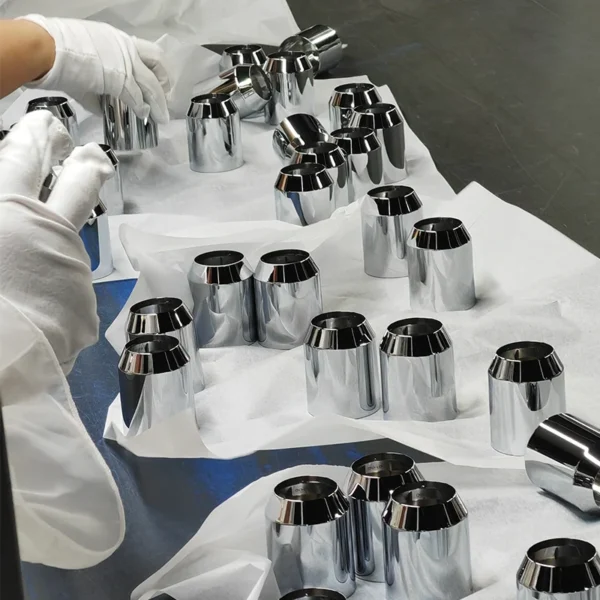
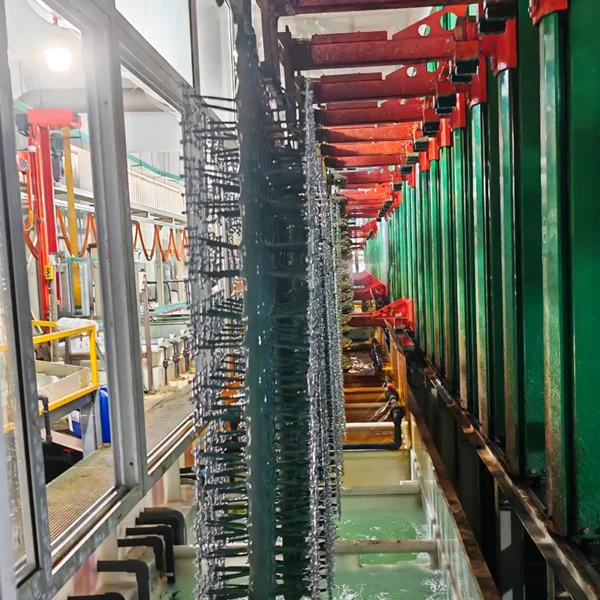
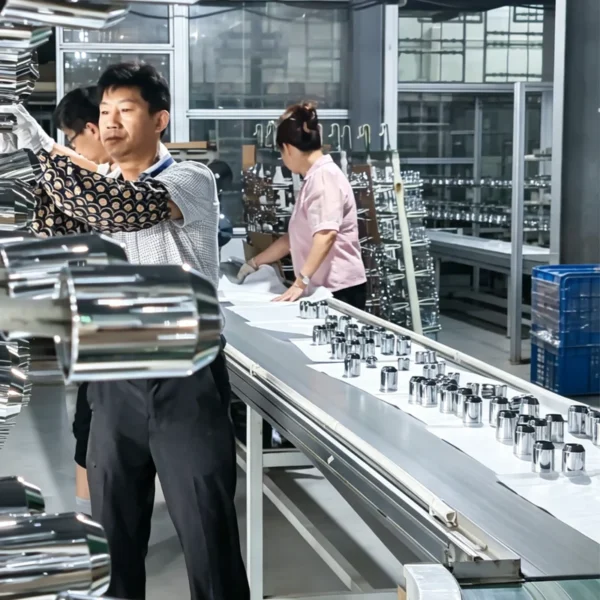
A manufacturer that performs casting, machining, and finishing in-house has more direct control over material consistency and quality tracking than one that subcontracts stages across multiple third-party shops. Ask specifically which processes happen on-site and which are outsourced, and to whom.
A reliable manufacturer should be able to provide specifics on production capacity, quality control checkpoints, and testing procedures — not just a general statement that quality is a priority. If a supplier can’t describe its own inspection process in concrete terms, that’s worth noting.
How a supplier handles technical questions during the RFQ stage is often a preview of how they’ll handle problems during production. A manufacturer with real engineering capability will engage with DFM (design-for-manufacturing) questions specifically, rather than deferring every technical question to “we can do whatever you need.”
A manufacturer that’s a strong fit for a 500-unit sample run isn’t automatically a strong fit for a 50,000-unit production order. Ask about current capacity utilization and how a new program of your expected size would actually fit into existing production schedules.
Supplier evaluation connects directly to everything downstream in a bathroom brand’s product program — the material sourcing decisions, the manufacturing process controls, and the quality assurance a brand can actually stand behind once a product reaches a retailer or hospitality buyer. A weak evaluation process at the sourcing stage tends to surface as recurring problems at every later stage, not a one-time issue that gets resolved once production starts.
More broadly, as more suppliers compete for OEM and ODM contracts in a growing market, the brands that build a genuinely rigorous supplier evaluation process — one that checks claims independently rather than accepting them at face value — are better positioned to scale into new product lines or new markets without repeating the vetting process from scratch each time.
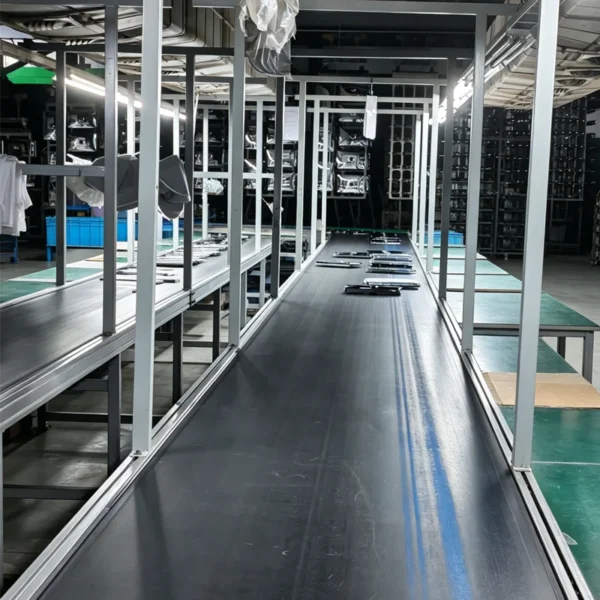
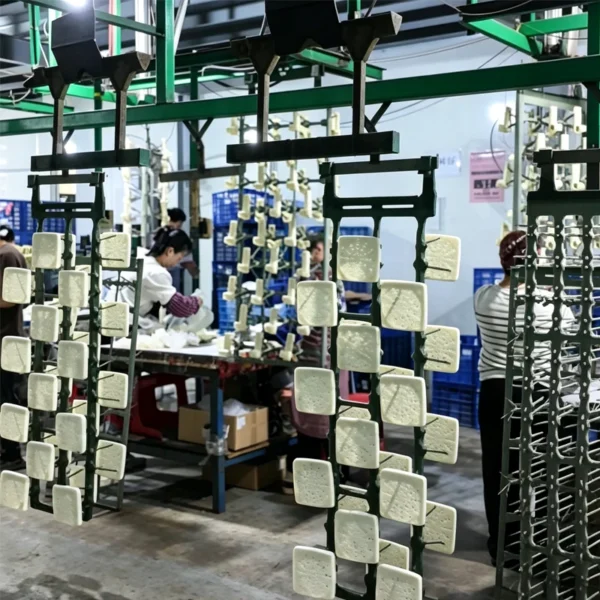
When evaluating what a manufacturer’s process claims actually look like in practice, JEKARE’s faucet product line is a useful reference point: brass components move through in-house casting, machining, and finishing within a single facility, which supports the kind of consistent material and process tracking that’s difficult to maintain when production is split across multiple subcontracted vendors. The single-handle hot-and-cold kitchen faucet reflects this approach directly — solid brass body construction, a ceramic cartridge for consistent operation, and finish options selected for durability rather than appearance alone.
Buyers evaluating JEKARE as a potential manufacturing partner can review certification documentation and facility details directly, and can walk through JEKARE’s OEM/ODM project process to see how a new program actually moves from RFQ through production — the same kind of specifics worth requesting from any manufacturer under evaluation, not information unique to how JEKARE happens to present itself.
Evaluating a bathroom manufacturer’s reliability before sourcing isn’t a matter of trusting the most confident sales pitch — it’s a process of checking specific, verifiable signals: independently confirmed certifications, transparency about which processes happen in-house, documented quality control procedures, and production capacity that genuinely matches your order volume. As the sanitary ware market continues to grow and the pool of available suppliers widens with it, a rigorous, repeatable evaluation process is what separates a sourcing decision a brand can scale from one it will have to unwind later.
There’s no fixed timeline, but rushing certification verification and facility review to compress a sourcing timeline is one of the more common reasons buyers discover process gaps only after production has already started — a thorough evaluation is generally worth the extra weeks compared to the cost of a failed program.
Documentation review (certifications, process descriptions, references) can screen out clearly unqualified suppliers, but for a significant production commitment, an in-person or third-party-conducted facility audit provides a level of verification that documents alone can’t — particularly for confirming in-house versus subcontracted capabilities.
Ask for specifics on current order backlog and existing client volume relative to your projected order size, and cross-reference against the facility size and equipment described — a manufacturer unwilling to discuss capacity specifics in concrete terms is harder to plan a production schedule around.
Not inherently — MOQ is generally a function of tooling and setup cost economics rather than a quality indicator. It’s more useful to evaluate MOQ alongside the manufacturer’s process documentation and certification status than as a standalone reliability signal.
This depends on what’s actually being sourced and for which markets — ISO 9001 certifies the quality management system generally, while product-specific certifications like IAPMO listing verify compliance with plumbing codes and standards for a specific product. A brand selling into markets requiring plumbing-specific certification should confirm that certification exists for the actual product, not assume ISO 9001 covers it.
Lily is a Senior Quality and OEM Process Engineer at JEKARE with over 20 years of experience in bathroom fixture manufacturing and supplier quality systems. She specializes in production process control, certification management, and OEM/ODM program development across faucet, shower, and toilet seat product lines. With extensive experience guiding global bathroom brands and distributors through supplier qualification and factory evaluation, Lily focuses on helping buyers ask the right technical questions during sourcing — before a program is committed to production, not after issues surface.
1. Grand View Research — Ceramic Sanitary Ware Market Report
https://www.grandviewresearch.com/industry-analysis/ceramic-sanitary-ware-market
2. International Organization for Standardization — ISO 9001:2015 Quality Management Systems
https://www.iso.org/standard/62085.html
3. IAPMO — International Association of Plumbing and Mechanical Officials
https://www.iapmo.org/