Industry Background
Selecting an OEM/ODM manufacturing partner for commercial and residential bathroom hardware is one of the most critical supply chain decisions a brand manager or purchasing executive will make. According to market research from
Grand View Research, the global sanitary ware market size was valued at USD 64.71 billion in 2023 and is projected to expand at a CAGR of 5.3% from 2024 to 2030.
As global distribution networks expand, quality control failure rates at the factory level carry amplified financial risks. Regulatory enforcement—such as mandatory compliance with the
U.S.Environmental Protection Agency (EPA) WaterSense standards, European
WRAS certifications in the UK, and strict lead-free brass mandates under NSF International (NSF/ANSI 372)—has made raw material integrity, manufacturing precision, and factory transparency central pillars of brand reputation.
Why It Matters
For B2B buyers, distributors, and private-label brands, choosing the wrong manufacturing partner can lead to catastrophic operational disruption.
-
Severe Financial and Warranty Exposures: Installing defective brass valves or sub-standard thermostatic cartridges in hospitality or residential projects results in property damage claims that dwarf the original product cost.
-
Customs Holds and Regulatory Penalties: Importers face port-of-entry rejections if brass fixtures exceed 0.25% weighted lead content or lack proper certification documents required by local water authorities.
-
Irreparable Erosion of Brand Equity: Inconsistent surface finishing, early plating peeling, and premature cartridge failure damage customer trust, destroying years of brand building.
Market Observation
Data from recent global trade fairs like ISH Frankfurt and KBIS shows that top-tier bathroom brands are shifting from cost-per-unit negotiations to total supply chain risk evaluations.
Market reports from Fortune Business Insights highlight that rising raw material volatility (such as copper and zinc price shifts) has led unverified suppliers to cut corners on alloy purities. Consequently, global buyers now require certified mill test reports (MTR) and documented process audits at every production stage.
JEKARE Perspective
Over two decades of engineering audits and customer discussions reveal that the most damaging supplier failures rarely happen on day one—they manifest six to twelve months into mass production when a supplier silently alters materials or subcontracts assembly.
Establishing clear supplier evaluation standards—verifying raw material traceability at the foundry stage and requiring transparent quality audits—allows brands to mitigate supply chain exposure before committing capital to tooling and volume orders.
7 Red Flags When Sourcing Bathroom Hardware Suppliers
Below is an engineering breakdown of the seven primary warning signs when evaluating potential manufacturing partners.
Red Flag 1: Unclear Factory Identity (Broker Masking as Manufacturer)
Intermediaries often represent themselves as direct factories. While trading companies provide value in sourcing, an undisclosed middleman introduces communication delays, hidden margins, and a lack of direct quality control.
Red Flag 2: The “Golden Sample” Fallacy
Receiving a flawless prototype sample does not guarantee mass production quality. Small workshops frequently hand-polish and custom-fit single samples using special materials that cannot be replicated economically at scale.
-
Mass-Production Tolerances: Ask for statistical process control (SPC) data and initial sample inspection reports (ISIR).
-
Batch Consistency: Require a short pilot production run (100–300 units) to verify tooling stability before signing off on full-volume tooling.
Red Flag 3: Vague Material Specifications & Unverified Alloys
Standard terms like “high-quality brass” or “stainless steel” are meaningless without exact alloy designations (e.g., HPb59-1, CW617N, DZR brass, or SUS304).

Red Flag 4: Missing In-House Quality Control & Test Equipment
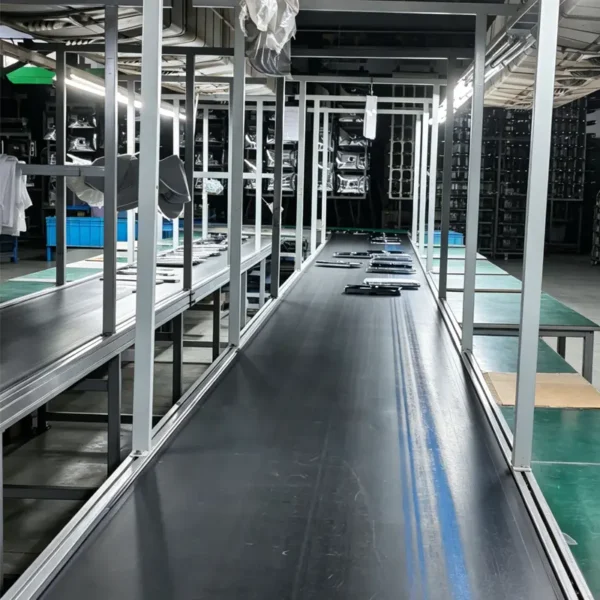
Factories that outsource basic quality checks or rely strictly on visual inspection cannot maintain technical standards across large production batches.
Red Flag 5: Outdated, Borrowed, or Unverified Certifications
Suppliers may present certificates (cUPC, WRAS, CE, WaterSense) that belong to third-party factories or have expired.
-
Certificate Verification: Cross-reference certificate numbers directly on official regulatory databases (such as the IAPMO or WRAS listing directories).
-
Scope Matching: Ensure the specific model numbers and material formulations on the certificate match your project specifications exactly.
Red Flag 6: Subcontracted Surface Finishing Without Process Controls
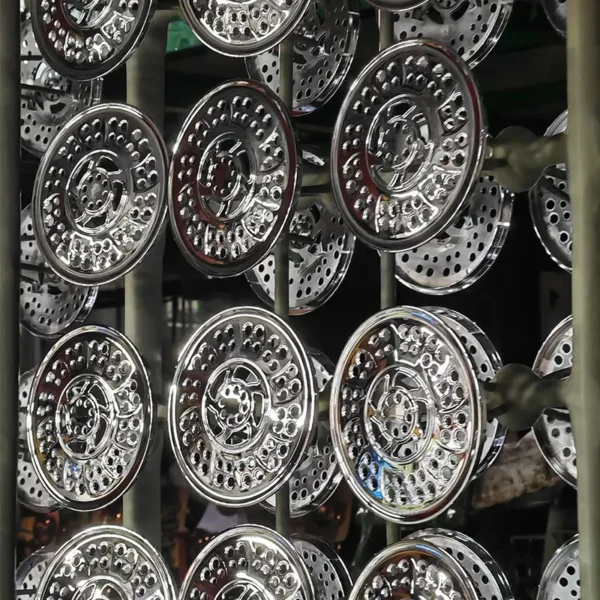
Electroplating and Physical Vapor Deposition (PVD) give fixtures their visual appeal and corrosion resistance. Factories that outsource plating without strict audit controls risk severe batch-to-batch color variations and peeling.
-
Plating Thickness Standards: Verify that the factory enforces strict thickness minimums (e.g., Acid Copper 10–15 μm, Nickel 10–12 μm, Chrome $0.25–0.35 μm.
-
CASS Testing Standards: Confirm plating samples undergo CASS salt spray testing per ASTM B368 for 24 to 48 hours without pitting or blistering.
Red Flag 7: Weak DFM (Design for Manufacturability) Engineering Support
A capable
OEM/ODM partner does not blindly accept CAD drawings. They evaluate drawings for wall thickness consistency, draft angles, thread engagement, and flow dynamics before cutting tooling.
-
Engineering Feedback: Look for suppliers that provide formal DFM reports identifying potential sink marks, casting stresses, or machining conflicts.
-
Communication Standards: Ensure their engineering team can discuss technical specifications, tolerances, and fluid mechanics directly with your product developers.
Practical Decision Framework
Before finalizing a manufacturing contract for commercial bathroom hardware, procurement managers should evaluate potential partners against this risk checklist:
What This Means for Your Brand
Selecting a bathroom hardware supplier shapes your supply chain stability, brand positioning, and long-term margins. Avoiding unverified suppliers protects your business from costly product recalls and compliance penalties. Partnering with an engineering-driven manufacturer transforms supply chain management into a durable competitive advantage.
Conclusion
Avoiding supplier red flags—from unverified material claims to missing test infrastructure—ensures your bathroom fixtures perform reliably in demanding markets. Conducting direct technical audits and enforcing verifiable standards allows global brands to protect their brand equity and maintain sustainable growth.
FAQ
How can a brand verify if a supplier is a real factory or a trading company?
Request a live video audit showing the production line, review business licenses for industrial scope, inspect machinery serial plates, and cross-check factory addresses on corporate registration databases.
Why is CASS salt spray testing superior to standard Neutral Salt Spray (NSS) testing?
Copper-Accelerated Acetic Acid Salt Spray (CASS) testing introduces copper chloride and acetic acid to accelerate corrosion. It is significantly more rigorous than NSS and serves as the industry standard for evaluating multi-layer electroplating and PVD coatings on brass hardware.
What is DFM, and why is it important in bathroom product development?
Design for Manufacturability (DFM) is an engineering review process where the manufacturer analyzes product designs to optimize wall thickness, draft angles, and casting flows. DFM prevents defects, reduces tooling costs, and improves production yield.
What lead-free standards apply to commercial bathroom fixtures in North America?
Under NSF/ANSI 372 and the U.S. Safe Drinking Water Act, wetted surfaces of plumbing fixtures used for drinking water must contain a weighted average lead content of less than 0.25%.
How does XRF testing protect fixture plating quality?
X-Ray Fluorescence (XRF) technology non-destructively measures individual electroplating layer thicknesses (copper, nickel, chrome). It ensures coatings meet minimum engineering specifications to prevent premature corrosion or peeling.
About the Author
Jenny is a Senior Sanitary Ware Systems Engineer at JEKARE with over 20 years of experience in bathroom hardware development, mold engineering, and global OEM/ODM quality control.
He specializes in fluid dynamics optimization, precision brass casting, electroplating substrate preparation, and regulatory compliance across North American and European markets. Having managed quality audits for leading international bathroom brands and commercial project distributors, Jenny focuses on bridging rigorous manufacturing engineering with practical commercial procurement strategies.
References
-
Grand View Research
https://www.grandviewresearch.com/industry-analysis/sanitary-ware-market
-
U.S. Environmental Protection Agency (EPA)
https://www.epa.gov/watersense
-
NSF International
https://www.nsf.org
-
Water Regulations Approval Scheme (WRAS)
https://www.wrasapprovals.co.uk
Request Engineering Review
Whether you require custom shower systems, faucets, or complete OEM solutions, JEKARE provides engineering-driven manufacturing support from initial CAD analysis through mass production.