Call us: +86-18965139230 | Mail to us: info@jekare.com

A shower slide bar isn’t simply a rail with a handheld shower head clipped to it — it’s a mechanism governed by specific dimensional and functional requirements once it’s part of an accessible bathroom installation. Under the U.S. Access Board’s ADA Standards, a shower spray unit must be capable of functioning as both a fixed-position shower head and a hand-held unit, with the sliding mechanism specifically required not to obstruct the use of any grab bars installed in the same shower compartment.
The actual “how it works” mechanics of a slide bar system — track length, bracket locking position, hose length, and water union placement — are each addressed by specific dimensional guidance rather than left to general engineering discretion. This matters for B2B buyers because a slide bar’s mechanism design directly determines whether a product can be specified for accessibility-compliant projects, not just whether it functions smoothly.
A slide bar’s locking bracket has to hold the handheld shower head securely at a user-selected height without slipping under normal use — a mechanism failure here isn’t just an inconvenience, it’s a safety issue for users relying on the fixture for stability or reach during bathing.
Beyond the sliding mechanism itself, the ADA Standards specify that the shower spray unit must have an on/off control with a non-positive shut-off — meaning the control doesn’t lock in an “on” position that could allow scalding if left unattended. This is a specific engineering requirement for the handheld component, not a general design preference.
Because the standard explicitly requires that a slide bar not obstruct grab bar use, slide bar length and mounting position can’t be engineered in isolation from the broader accessible shower layout — they’re interdependent design decisions.
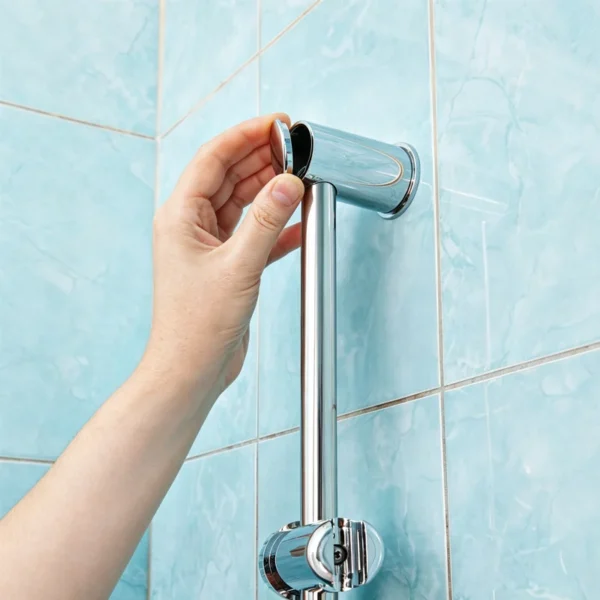
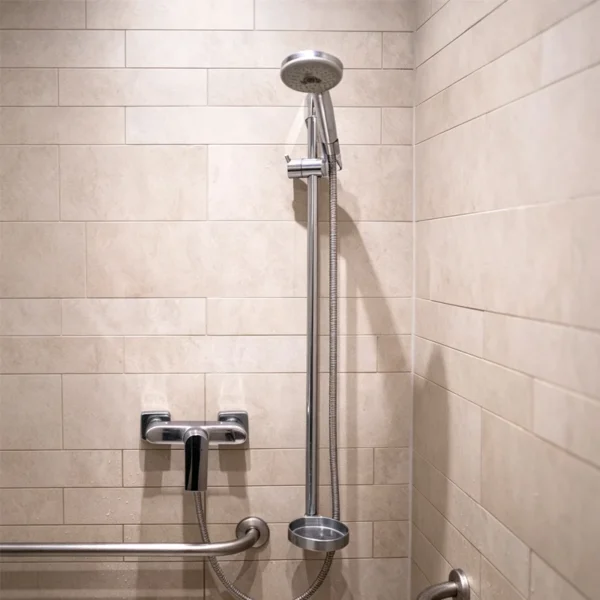
Mechanically, a slide bar system consists of a fixed vertical track mounted to the wall and a movable bracket that clamps or locks onto the track at a user-selected height, with the handheld shower head’s water supply connection routed through or alongside this bracket. The reliability of this system depends on the bracket’s grip mechanism maintaining position under the weight and water-pressure load of the connected shower head and hose.
Per the ADA Standards, Section 608.6, a shower spray unit must have a hose at least 59 inches (1,500 mm) long, be usable in both fixed and hand-held configurations, deliver water at a maximum of 120°F, and include a non-positive shut-off control. The hand-held component of a slide bar system is generally the same category of fitting addressed by ASME A112.18.1/CSA B125.1, the plumbing supply fittings standard covering hand-held showers with hose connection outlets — meaning the handheld portion of a slide bar assembly needs to independently meet standard fitting compliance, separate from the slide mechanism itself.
Industry guidance commonly recommends a slide bar length of 36 to 40 inches, with the water union (the fixed connection point where the flexible hose attaches to the wall plumbing) positioned 12 to 16 inches above the horizontal grab bar, allowing adequate hose reach for the hand-held unit across the bar’s full range of travel without the hose becoming a tripping or obstruction hazard.
Over the past several years, our engineering team has worked with global bathroom brands, distributors, and project suppliers developing wall-mounted handheld shower systems for residential, hospitality, and accessibility-focused applications.
A recurring issue identified during product evaluation is that many slide bar systems are treated as a simple mounting accessory rather than a complete mechanical system. Buyers often focus on appearance, bar length, and finish options, while overlooking the engineering relationship between the locking bracket mechanism, handheld shower weight, hose movement, and long-term structural stability.
During OEM product reviews, our engineers frequently find that standard slide bar designs are optimized around static samples rather than real installation conditions. When paired with larger multi-function handheld showers, heavier hose assemblies, or frequent height adjustments, insufficient bracket friction control can lead to gradual slipping, reduced user confidence, and increased after-sales risk.
Through DFM analysis, JEKARE evaluates the complete slide bar assembly before production — including bracket structure, friction material selection, pivot tolerance, track geometry, mounting strength, and compatibility with the selected handheld shower model.
By treating the slide bar as an engineered shower component rather than an isolated hardware part, brands can achieve more reliable positioning performance, better compatibility across product collections, and reduced warranty risks in long-term market applications.
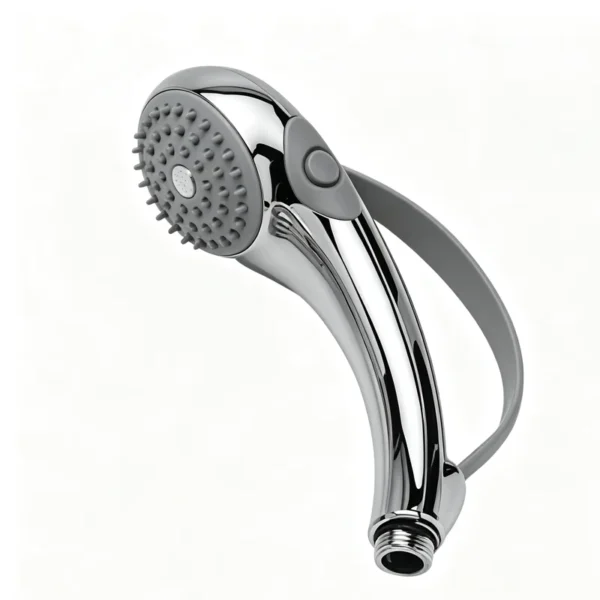
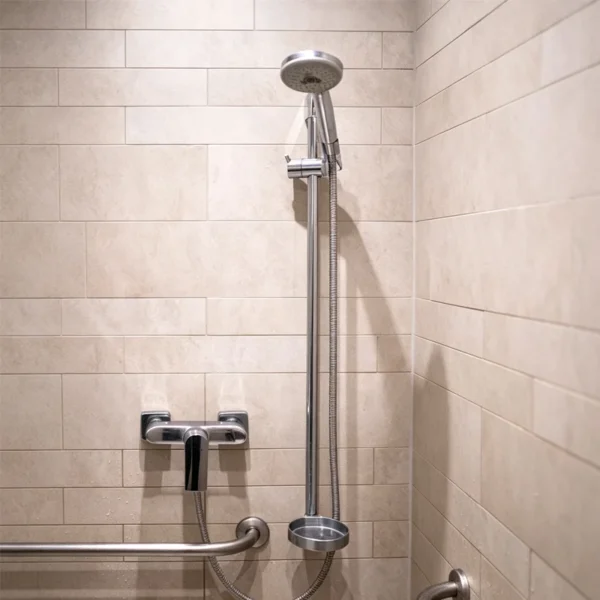
At JEKARE, we have found that successful slide bar programs are rarely determined by the rail itself — they depend on how multiple components work together as a complete shower system.
Through OEM development projects with global bathroom brands, our engineering team has repeatedly seen buyers encounter challenges when selecting slide bar suppliers based only on price, appearance, or standard dimensions. The hidden performance factors are often found inside the bracket mechanism: locking force consistency, friction durability, load-bearing capability, and compatibility between the holder and handheld shower.
For example, a slide bar designed for a lightweight standard hand shower may not perform reliably when upgraded to a larger multi-function model with higher weight and increased hose movement. Without proper engineering validation, the bracket can gradually lose holding force, creating installation complaints and unnecessary service costs.
To address these risks, JEKARE incorporates mechanism evaluation into the OEM development process, reviewing bracket design, material selection, structural reinforcement, and functional testing before mass production.
This engineering-first approach allows bathroom brands to develop slide bar solutions that are not only visually matched to their collections but also mechanically reliable for residential, hospitality, and accessibility-driven applications.
Ask a manufacturer specifically how the sliding bracket locks onto the track — friction clamp, spring-loaded pin, or another mechanism — and request data on how reliably it holds position under repeated use, since this is the component most likely to wear or slip over the product’s service life.
Confirm the handheld shower head’s hose meets the 59-inch minimum where accessibility compliance is required, and that the on/off control uses a non-positive shut-off design rather than a control that could remain locked open.
If the product is intended for accessible bathroom projects, confirm the manufacturer can provide guidance on slide bar length and water union placement relative to grab bar location, rather than treating the slide bar as a standalone component unrelated to the rest of the shower compartment layout.
Confirm whether temperature limiting (to meet the 120°F maximum where required) is addressed at the valve level upstream of the slide bar system, since the slide bar and handheld unit themselves don’t independently regulate water temperature.
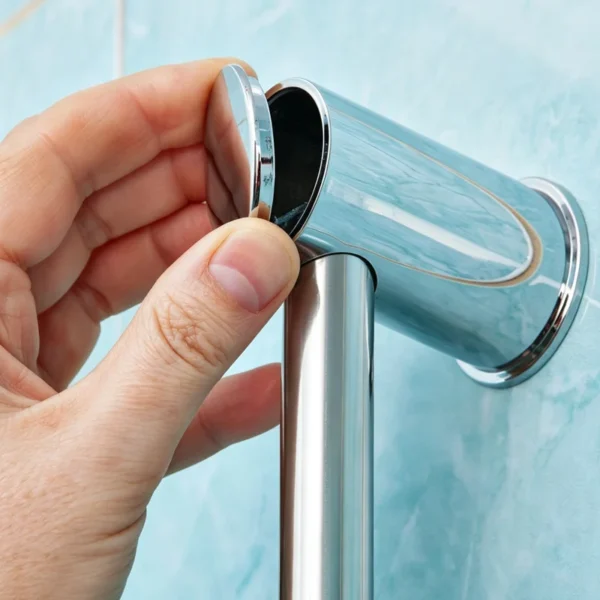
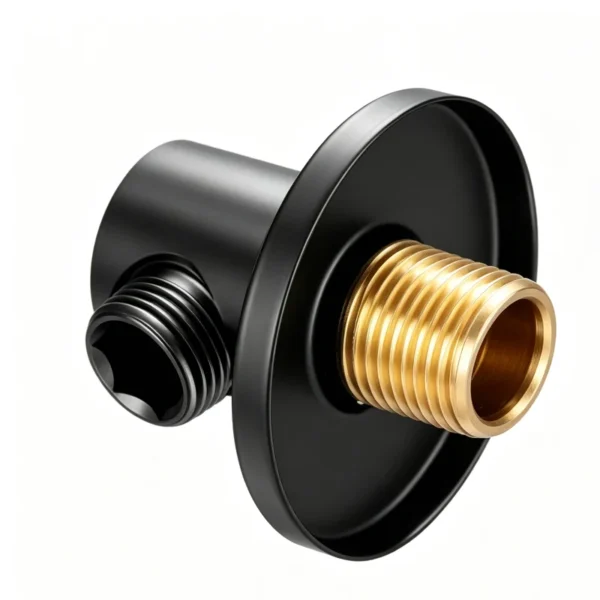
Understanding how a slide bar mechanism actually works — track, locking bracket, hose length, and water union placement — connects directly to whether a product can be credibly specified for accessibility-compliant hospitality, healthcare, or residential projects, not just whether it looks functional in a product photo. A brand sourcing a slide bar system without understanding these specific mechanism requirements risks selling into a market it can’t actually serve on compliant projects.
More broadly, as universal design continues to move into mainstream bathroom specification, brands that understand and can speak to the specific mechanism engineering behind a slide bar system — not just its general accessibility positioning — are better equipped to support both compliance-driven institutional buyers and mainstream residential and hospitality customers with the same well-engineered product.
JEKARE’s engineering process for wall-mounted shower components addresses locking bracket and track design as a core mechanism requirement, coordinated alongside the handheld shower head it’s designed to support — directly relevant to the bracket reliability question that’s central to how well a slide bar system actually performs over time.
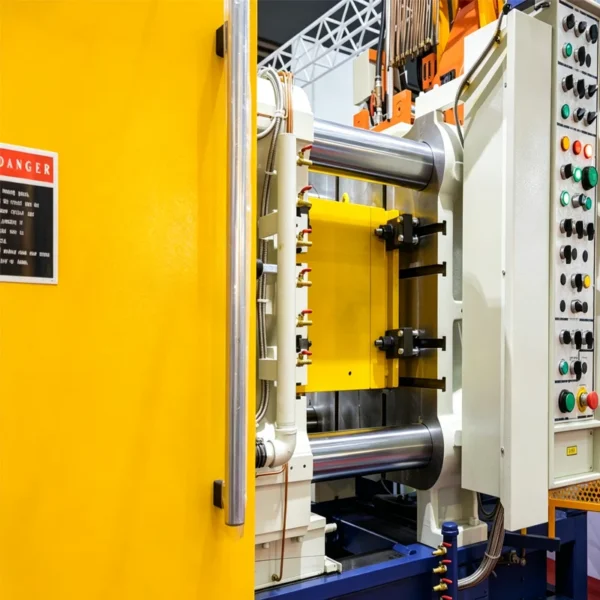
At least four specific advantages are worth weighing when evaluating a slide bar mechanism supplier: first, in-house component engineering that coordinates bracket, track, and hose length as a single system rather than sourcing them as unrelated parts; second, quality inspection that evaluates bracket locking performance and hose fitting compliance together, not as separately certified components; third, metal bracket and track components produced through in-house die casting, supporting consistent structural quality across production runs; and fourth, direct engineering coordination available through JEKARE’s OEM/ODM project process for brands needing to match slide bar length and mounting position to specific accessibility project requirements.
A shower slide bar “works” through the coordinated function of several specific, individually engineered components — a locking bracket that holds position under load, a hose meeting minimum length and non-positive shut-off requirements, and a track length and water union placement coordinated with grab bar positioning where accessibility compliance matters. For B2B buyers, the practical takeaway is to evaluate a slide bar system’s mechanism engineering component by component, rather than assuming general “accessibility hardware” positioning is sufficient evidence that the underlying mechanics meet the specific dimensional and functional requirements a compliant project actually needs.
Only where the installation is subject to ADA compliance requirements — residential installations without federal funding involvement generally aren’t legally required to meet this standard, though many manufacturers build to it as a baseline regardless, given how common accessibility-adjacent demand has become.
This depends on the specific product design — some slide bar systems are engineered to connect to a standard existing shower arm or valve connection, while others require a specific water union configuration; this compatibility should be confirmed against the target installation’s existing plumbing.
The most common failure mode is the bracket losing grip strength and slipping down the track under the shower head’s weight, typically due to spring or friction-element wear — cycle-testing data on the specific locking mechanism is the most reliable way to evaluate this risk before large-volume sourcing.
Not necessarily — the recommended 36 to 40 inch range balances adjustability with avoiding obstruction of grab bars and other fixtures in a typically sized shower compartment; a longer bar isn’t automatically an improvement if it interferes with other required accessibility hardware.
It applies specifically to the shower spray unit’s on/off control, not the slide mechanism — the slide bar’s function is purely mechanical positioning, while the shut-off requirement is a plumbing fitting control feature on the handheld unit itself.
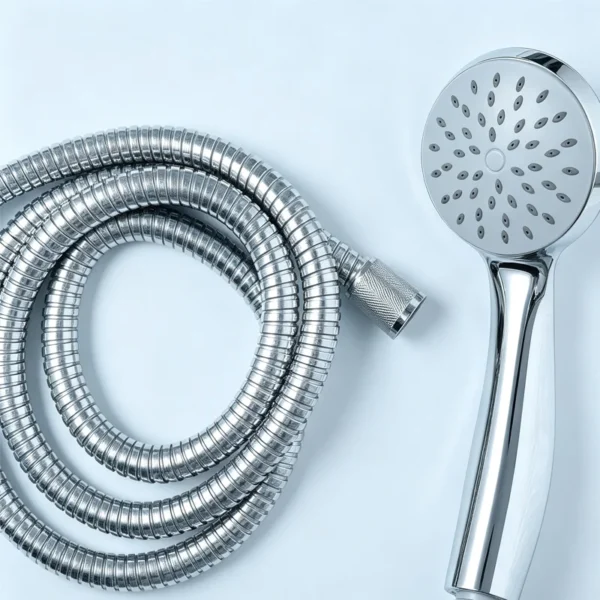
Mary is a Senior Shower Systems Engineer at JEKARE with over 20 years of experience in bathroom fixture development and OEM manufacturing. She specializes in mechanism engineering for wall-mounted shower components, hose and fitting compliance, and coordinated accessible-bathroom product development. With extensive experience supporting global bathroom brands and distributors through hospitality and healthcare-adjacent product programs, Mary focuses on helping buyers understand the specific mechanical and dimensional engineering behind slide bar systems, rather than treating them as a generic accessory category.
✔ 20+ Years of OEM & ODM Manufacturing Experience
✔ Coordinated Bracket, Track, and Handheld Shower Engineering
✔ In-House Die Casting for Structural Bracket Components
✔ Hose and Fitting Compliance Verified Alongside Mechanism Testing
✔ Flexible Configuration Support for Accessibility-Compliant Projects
✔ Reliable Manufacturing Partner for Global Distributors and Brands
Whether you’re sourcing a slide bar system for a compliance-driven healthcare project or a mainstream residential collection, JEKARE provides engineering-driven OEM manufacturing support from concept development through mass production.Contact our team to discuss your next bathroom product project.